

A timely premise, unevenly delivered: ‘In the Beginning’ at the Hudgens Center
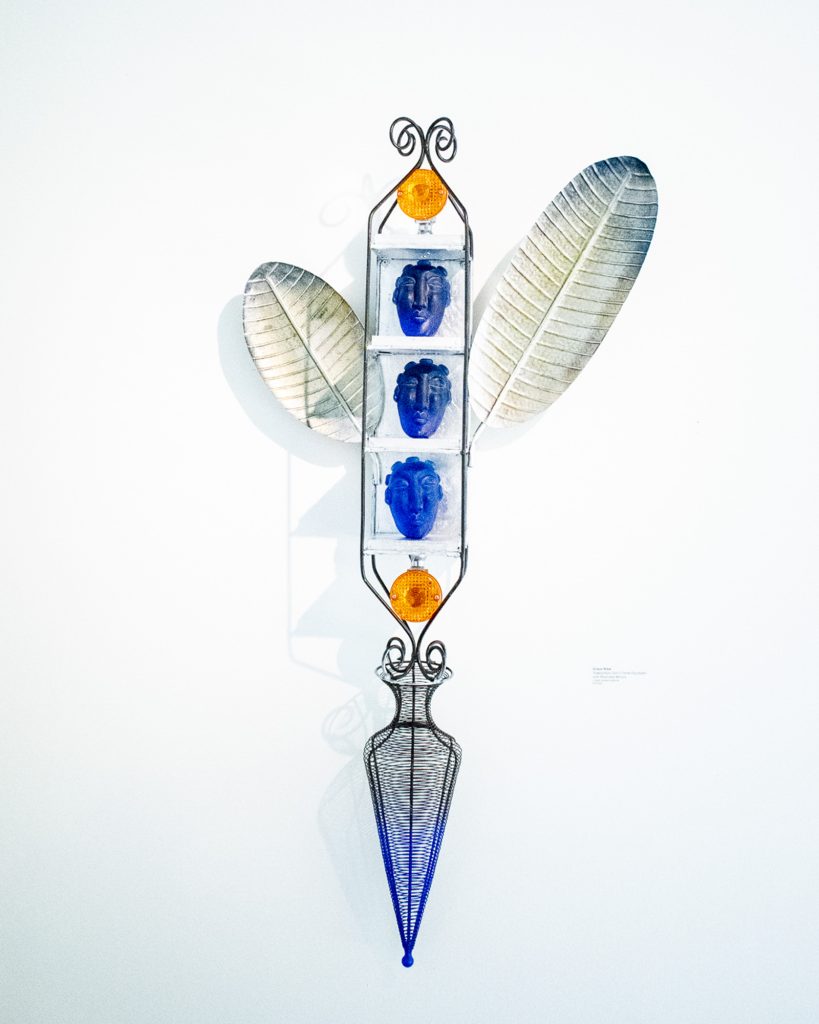
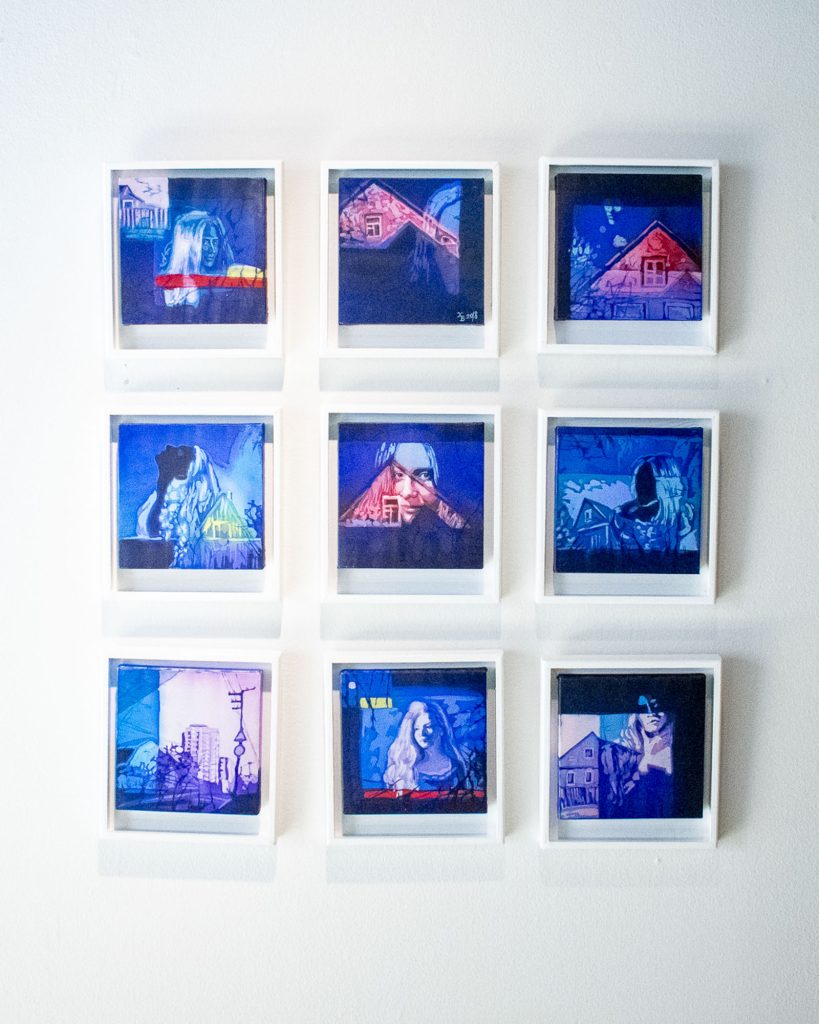
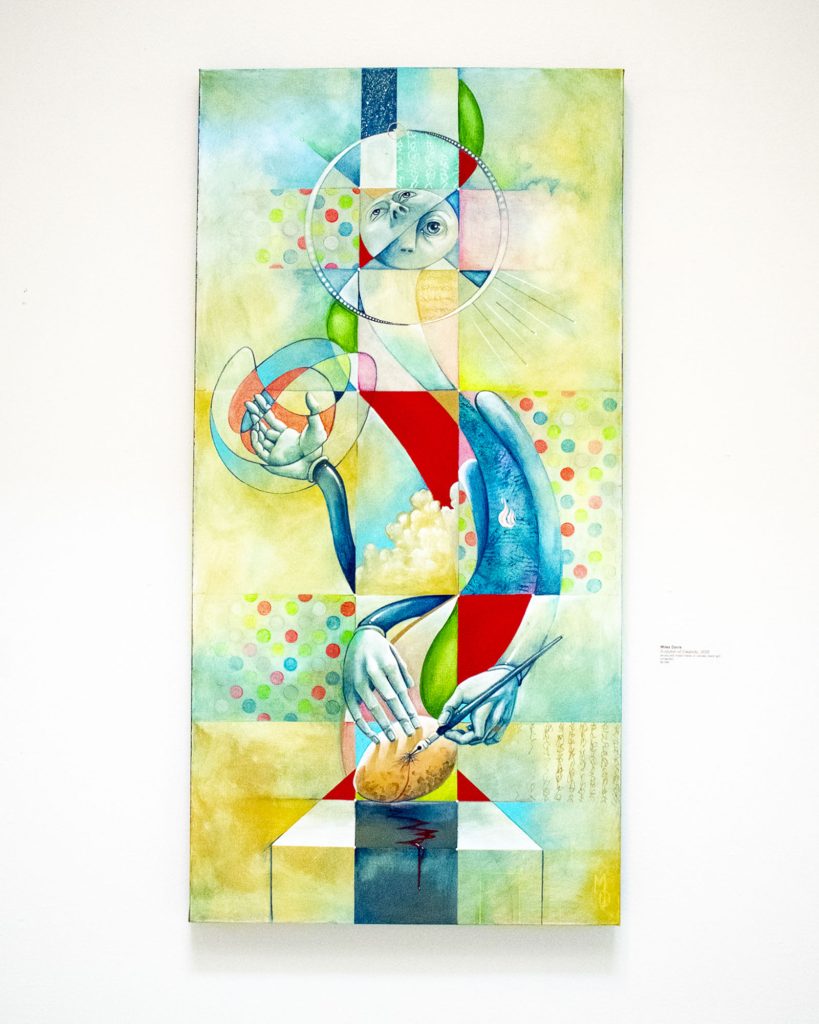
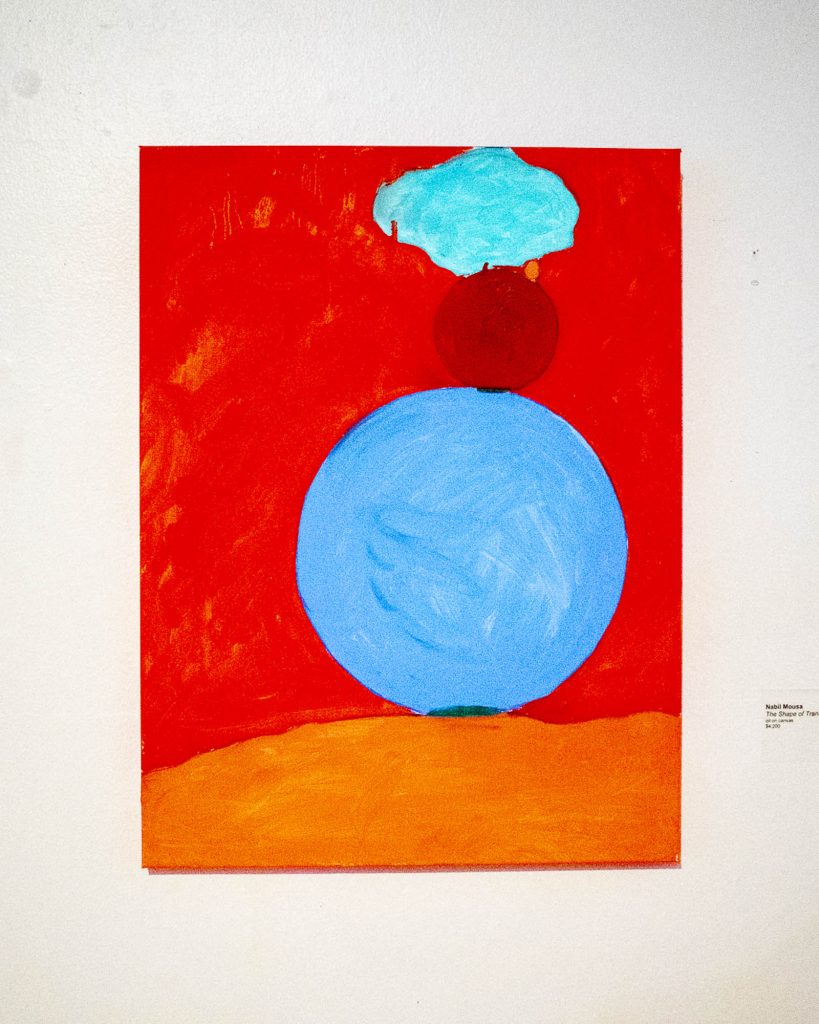
In the Beginning, a group exhibition curated by Carlos Solis at the Fowler Gallery of the Hudgens Center for Art & Learning, asks viewers to imagine a moment before borders, when human community preceded the differences we now navigate. That premise is worth voicing through art and especially so in a cultural moment when difference is increasingly weaponized.
Any exhibition built on inclusivity as principle will, by nature, span aesthetic registers, materials, scales and palettes; asserting that diversity is not incidental to the project but instead constitutive of it. Inclusivity may excuse this show’s aesthetic spread, but there are clear curatorial missteps here that cannot be explained away. Where the premise stops doing curatorial work, In the Beginning wobbles — first in the placement of its works, then in the caliber of the works it has gathered and finally in the operational professionalism for which inclusivity simply cannot account.
Solis is a Venezuelan-born painter and curator based in Kennesaw and is the founder of Contrapunto, a Georgia-based Latin American artist collective. He has spent more than a decade organizing exhibitions and artist collective work in the state. The Hudgens, Gwinnett’s flagship visual arts venue, gives the show a strong institutional platform, and Solis has populated this iteration with artists of significant accomplishment: Yuan Butler, Carla Contreras, Grace Kisa, Masela Nkolo and Carol Santos among them. Solis frames the exhibition around the tension of holding community and differences together at once.
To engage In the Beginning seriously requires accepting that diversity-of-form is the medium of the message, not a flaw in its delivery. One does not expect every artist gathered under such a premise to share a palette, a material vocabulary or a register; the work of these artists differs because their visions, histories and methods differ. That kind of spread is the friction good group shows can sustain, and the question of whether In the Beginning coheres visually is not, in the end, the most important lens for analyzing its success.
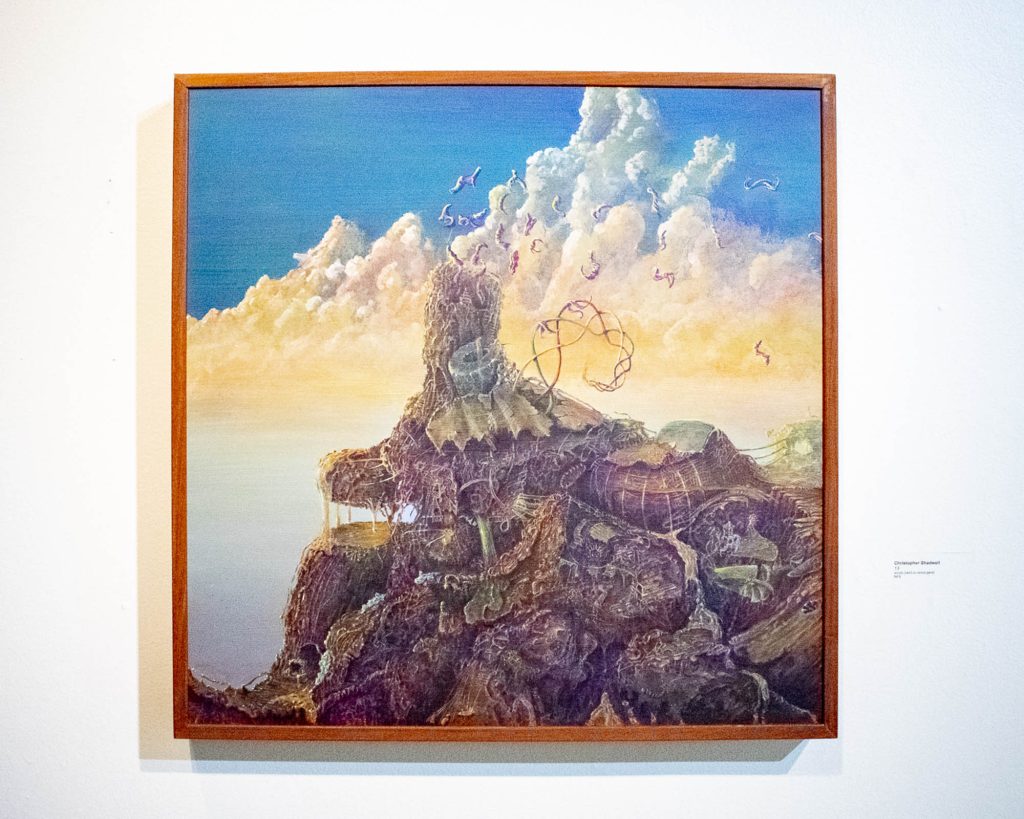
Where In the Beginning stumbles is in how its diverse register is presented. Within the gallery space, each artist’s works are largely clustered together, geographically isolating each artist’s voice. Intermingling these artists could have created a conversation and a more even distribution of their diverse visual languages across the space.
An example of the negative consequences of this choice can be found in the works of Christopher Shadwell. Shadwell’s pieces are dark and moody, which could bring a pleasing contrast to some of the lighter, more poetic works, like those of Butler. Instead, they are grouped together in a single row on the wall, producing a dark spot when viewing the gallery space as a unit. What should have been an anchor is instead a shadow: It smothers where it could ground or balance.
The unevenness in palette and hanging of this show is compounded by an unevenness of the works’ impact, such that the heavy-hitters overwhelm the other artists in the space. Contreras, for example, has produced a museum-quality wall-to-floor installation, with dramatic fringe descending from a large painted panel over a vertically-directed light while a geological form anchors the work to the floor, draped in delicate thread. The work is unquestionably stunning.

At the same time, there are numerous works in this space that are more appropriate for a residential interior than a contemporary art museum. So the gravitas of Contreras’ installation and its placement at the back wall of the gallery draw the viewer’s eye and attention immediately beyond a dozen of these more modest pieces.
To be clear, it is smart of Contreras to bring her best, and ultimately it is the curator’s responsibility to ensure that the intimate works are not drowned out by jaw-droppers. But the extreme dichotomy in the impact of individual works underscores a lack of curatorial precision that results in the exhibition feeling disjointed.
Unfortunately, the more impactful works are not only overrunning the quieter ones; they are, at times, sandbagged by pieces that are visibly of lower quality.
Consider, for example, the strong showing from Nkolo: realistic masks welded from repurposed metal — graters, screwdrivers, oil lamps and the like — resolved into faces with the kind of precision and compositional grace that commands attention even from a viewer who knows nothing about the difficulty of the medium. Meanwhile, other exhibiting artists have displayed works that do not hang level, triptychs and grid installations that are misaligned, works seemingly suspended from sagging twine, wood panels with visibly unfinished joints and works on canvases that are neither gallery wrapped nor professionally framed. Nkolo’s works demand to be displayed alongside artists who take their craft just as seriously.
While many of these issues are debatable, some mismanagement undermines the opportunity for a more generous interpretation.
The labeling is incomplete. A large black sculpture of a figure with a scarf, among the most arresting objects in the room, carries no perceptible wall label, leaving its maker uncreditable. Olu Amoda’s Ice #1 names “acrylic ice cubes” in its material list, but no ice cubes appear in the piece itself. One of Yubi Lee’s wall labels misspell her name. And the printed flyer fails in both directions: It lists Wilay Mendez Paez among the featured artists, though his work does not appear in the exhibition, while also omitting Nkolo and Soo Kim Yung entirely, though their works are present. None of this is a consequence of the curatorial premise or can be excused on the grounds of personal taste alone.
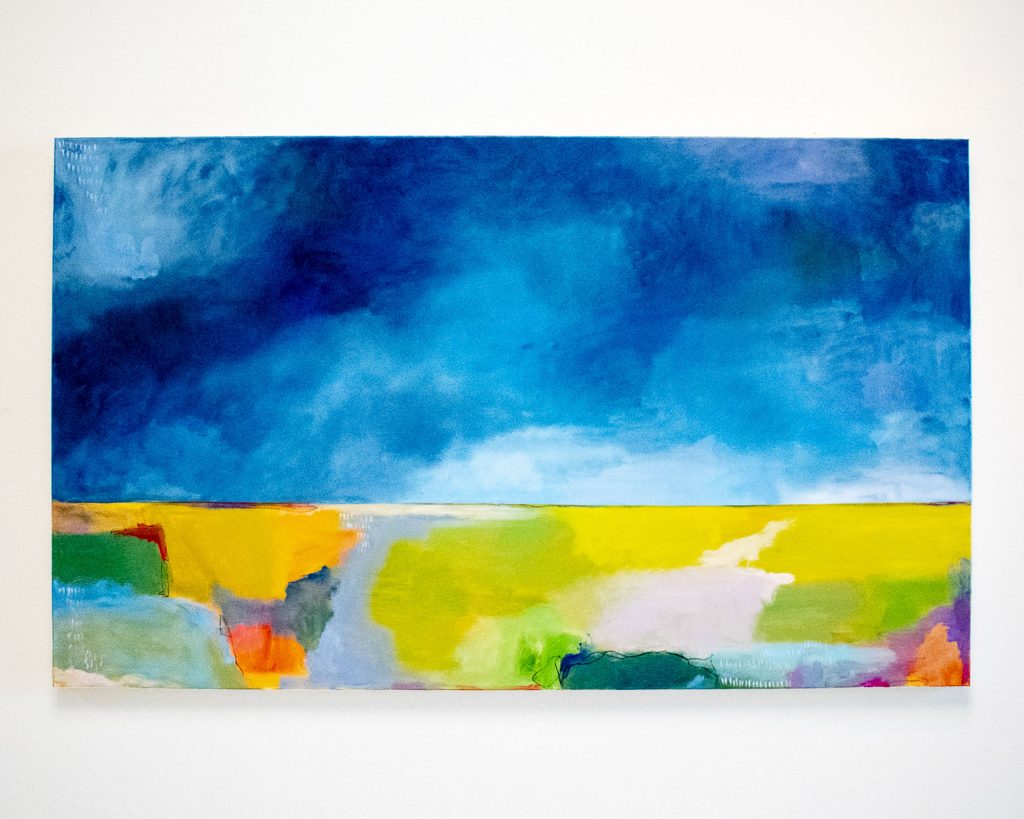
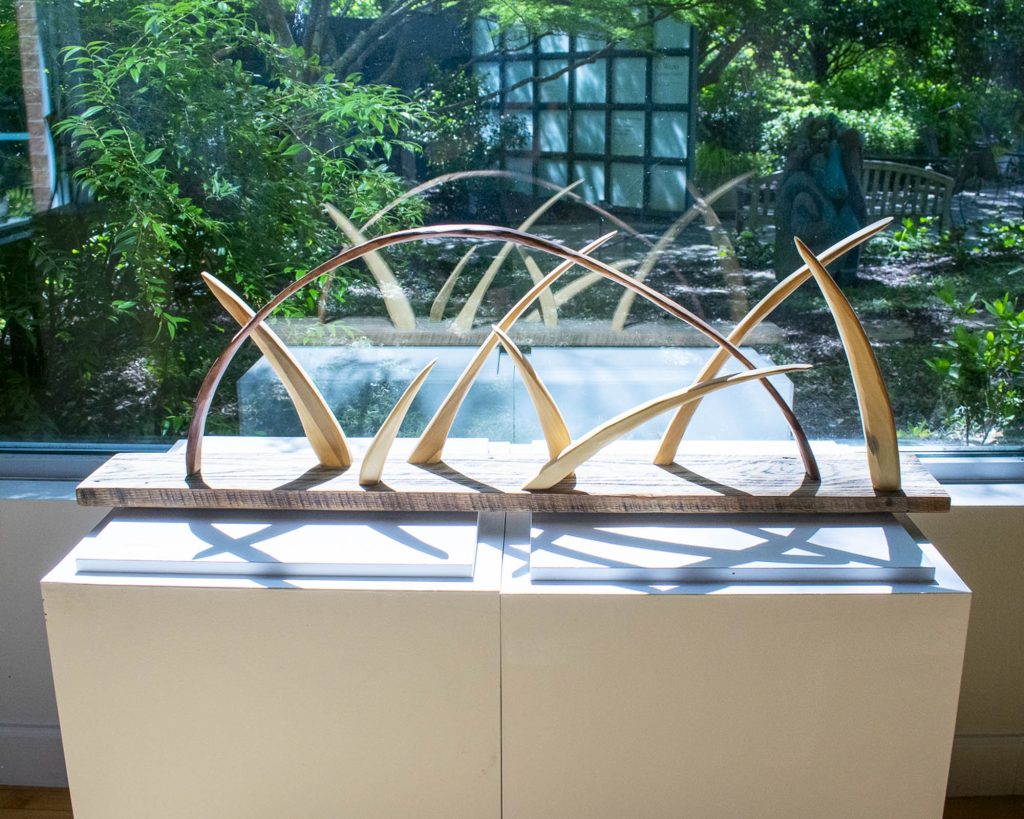

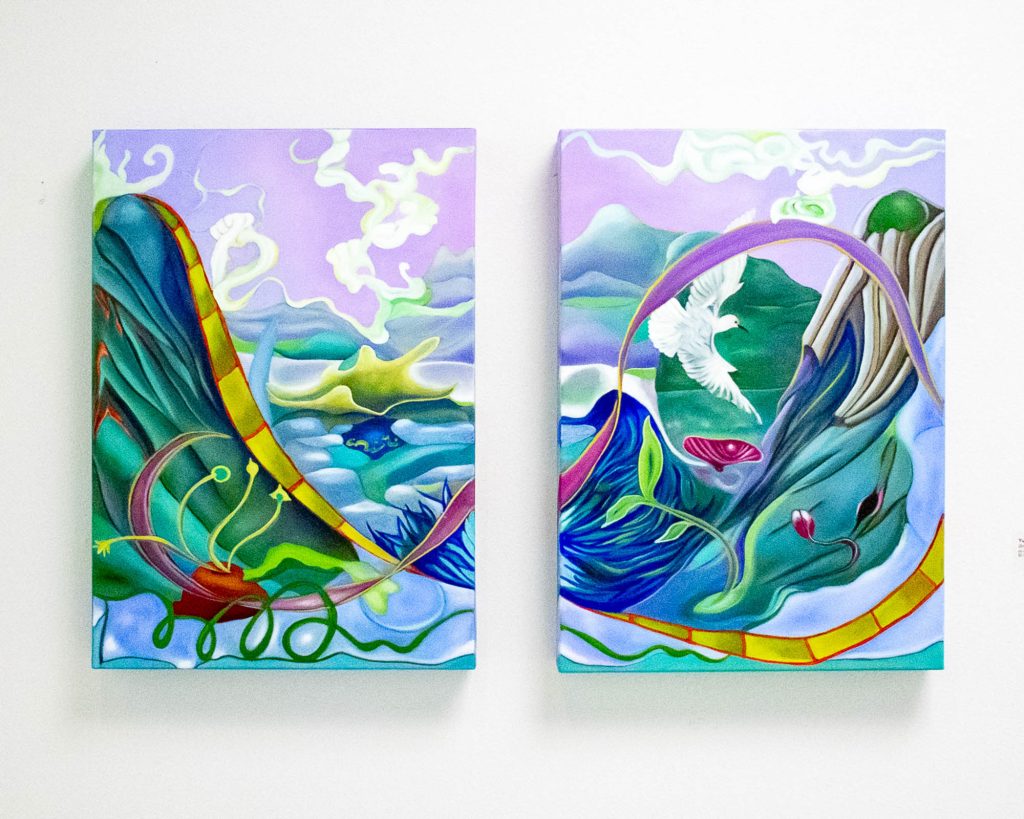


The inclusivity that gives In the Beginning its political meaning is what produces its visual diversity, and that diversity, on its own, is part of the project’s value. But inclusivity is not a substitute for curatorial precision and the lapses in placement, filtering and, most damagingly, at the level of execution, harm the overall impact of the exhibition.
The Hudgens’ broader programming standard, and the urgency of what In the Beginning sets out to say, both deserve a more rigorously realized version of this same show — one in which the room’s presentation matches the project’s ambition.
In the Beginning, curated by Carlos Solis, will remain on view at the Fowler Gallery, Hudgens Center for Art & Learning, through July 25.
::

Dr. Kevin M. Storer is a multidisciplinary computing researcher living, working and collecting art in Atlanta. His approach to art criticism and collecting prioritizes the discursive power of artistic practice over purely aesthetic qualities. This perspective is informed by his internationally-awarded scholarship on the complex relationships between people and the objects we create — especially as they shape our identities and social realities. Kevin earned his Ph.D. in informatics from the University of California, Irvine.
STAY UP TO DATE ON ALL THINGS ArtsATL
Subscribe to our free weekly e-newsletter.

