
You Live, You Learn: Megan Volpert traces Alanis Morissette’s wisdom over three decades
Swallow this book down — it’ll feel so good swimming in your stomach.
::
A conversation with Megan Volpert opened with a declaration that she loves Buddhism and witchcraft — two practices she says have kept her looking young and relate, if indirectly, to her writing. The Decatur resident’s latest book, Why Alanis Morissette Matters, effectively launched us into a discussion about the 1990s and how, as a 15-year-old growing up in the suburbs, Volpert saw the movie The Craft and immediately felt drawn to the occult. Unfortunately, after her parents found her “stash of incense and candles,” they grounded her and deprived of her new spiritual tools. That’s when she turned to music.
Admitting that indie rock and college radio didn’t cross her path in those early years, Volpert names artists such as Queen Latifah, TLC, En Vogue and, of course, Alanis Morrissette as beacons of artistic light in the dark hall of adolescence. Morissette’s angry yelling and guttural growling on the album Jagged Little Pill called to Volpert — here was a woman unafraid to tell the truth, no matter the cost.
“There was a sublevel that I registered in her music,” Volpert muses. “It’s kind of like a dog whistle — only certain people can hear those sounds in the way she meant them.”
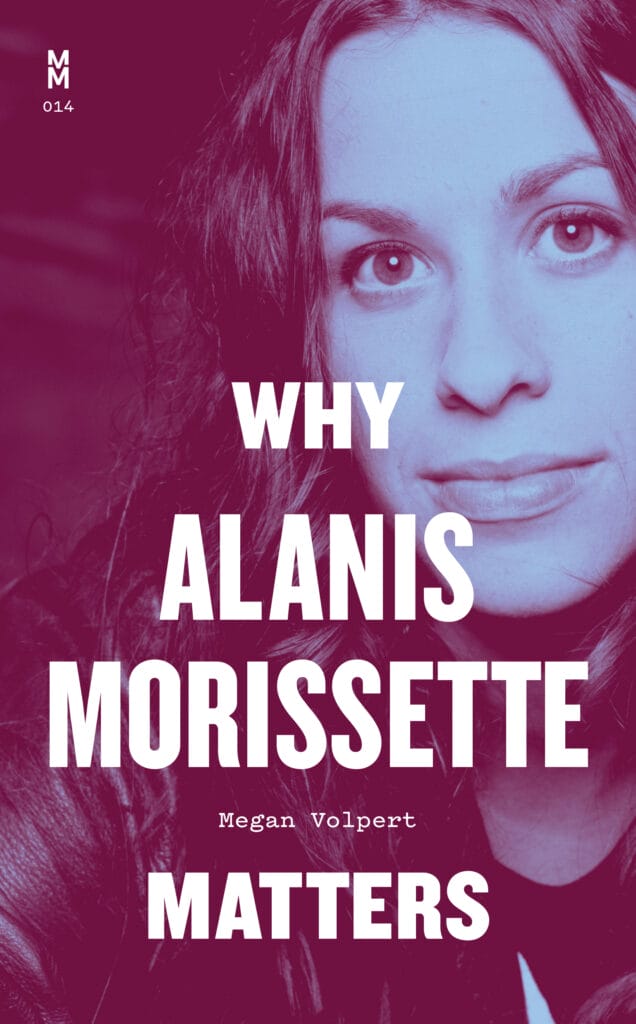
Now Volpert dissects the dog whistle throughout 13 robust chapters that feature cheeky and perhaps familiar titles such as “Yeah I Really Do Think” and “To Remind You.” I settled into reading the book wondering: Would I be interested? After all, I’m no Morissette scholar; I just enjoyed my repeat plays of Jagged Little Pill along with so many others in our generation.
But a few pages into Why Alanis Morissette Matters, I realized that Volpert hasn’t only performed a deep-dive on Morissette; she’s touched on a variety of related topics with a feminist, inquisitive perspective. A member of the LGBTQ+ community who is madly in love with her wife, Volpert is unafraid to speak for and to womankind — straight women included.
“These women are not letting so-called winners of the breakups be the only ones who get to write shared history,” she writes. “A woman’s refusal to let these wounds close up is a means of resistance to the patriarchal fantasy that men can get away with everything without paying any price for it.”
Some readers might shy away from Why Alanis Morissette Matters for its lean toward the academic. Chapter 7, “When the Smoke Clears,” introduces philosopher Jacques Derrida’s book Specters of Marx as well as “hauntology;” his term for the present being haunted by the past. But this is Volpert’s way of trusting her readers, just as she trusts her students of gender and pop culture at Kennesaw State. By writing a book that challenges rather than spoon-feeds information, she invites readers to become active in the discussion, as opposed to remaining the passive listeners we were as teens.
Volpert points out that Alanis’ body of work — now 30 years running — is worth a look for those of us who are now older and wiser feminists. “We don’t have just Jagged Little Pill to celebrate — Alanis is a working artist,” she says. “You can trace the seedlings of [ideas from Jagged Little Pill] to all kinds of plants and leaves — you can find them in subsequent works.”
Though there’s no denying the fame and influence of Jagged Little Pill 30 years later, Volpert points out that Morissette is better off outside the spotlight, quietly creating her art and cultivating her ideas.
“The A-list is not a happy place,” she says. “There’s pressure and scrutiny, and the more popular you are, the higher the stakes — the less control you have over your creativity. I’ve been without an agent for my entire literary career. I like to think of myself as a hero of the underground.”
::

Denise K. James is an ArtsATL senior editor.
STAY UP TO DATE ON ALL THINGS ArtsATL
Subscribe to our free weekly e-newsletter.

PLEASE SUPPORT ARTSATL
Your Gift Sustains the Coverage You Count On!
Related Posts