When the story has already been told — ‘Gordon Parks: The South in Color’ at Jackson Fine Art
To write about Gordon Parks is to arrive late. Not because there is nothing left to say about Parks but because so much has already been said — his work reproduced endlessly across books, screens and lectures, referenced again and again by my contemporaries and those before me.
Gordon Parks: The South in Color, curated by Dawoud Bey, is an exhibition celebrating the 20th anniversary of the founding of The Gordon Parks Foundation as well as the 70th anniversary of Parks’ images of segregation in the South in Life magazine.
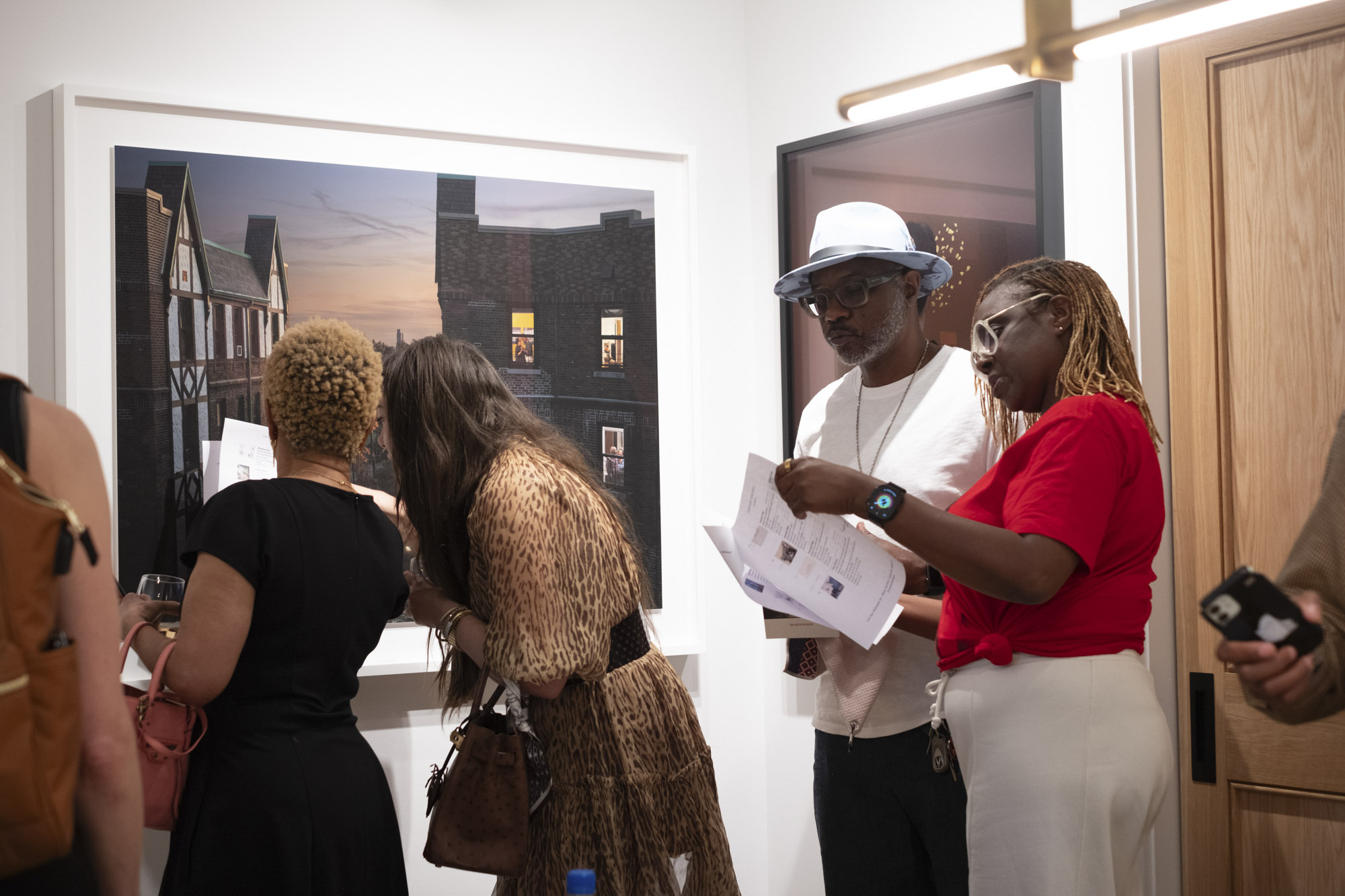
When asked by ArtsATL to write about the show, I found myself frustratingly hesitant. What could I say about Gordon Parks beyond my own admiration for the images that hung on the walls at Jackson Fine Art? Beyond the way he rendered rural Black life with a whimsy, which captured me and everyone else who came to the opening reception, what is left to say?
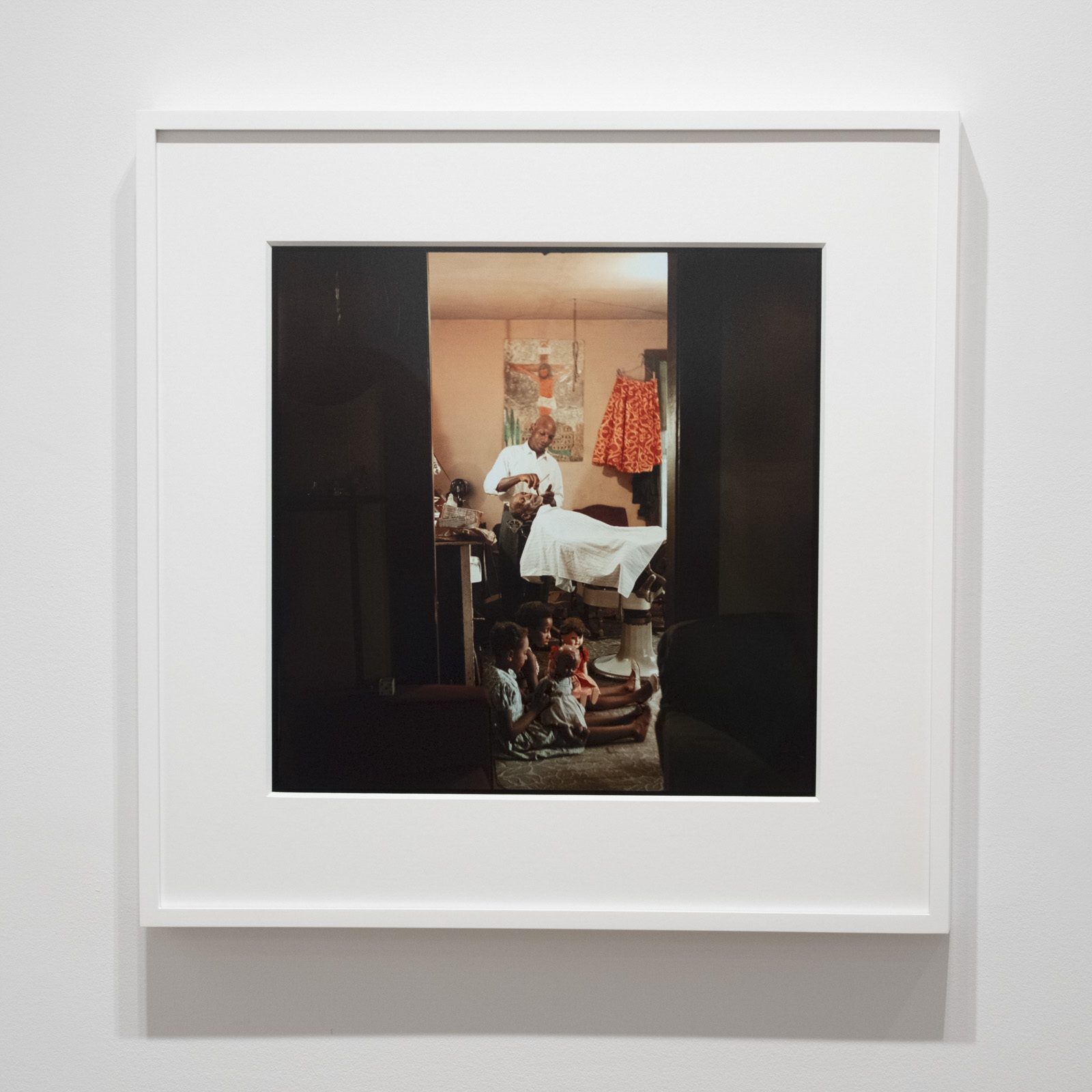
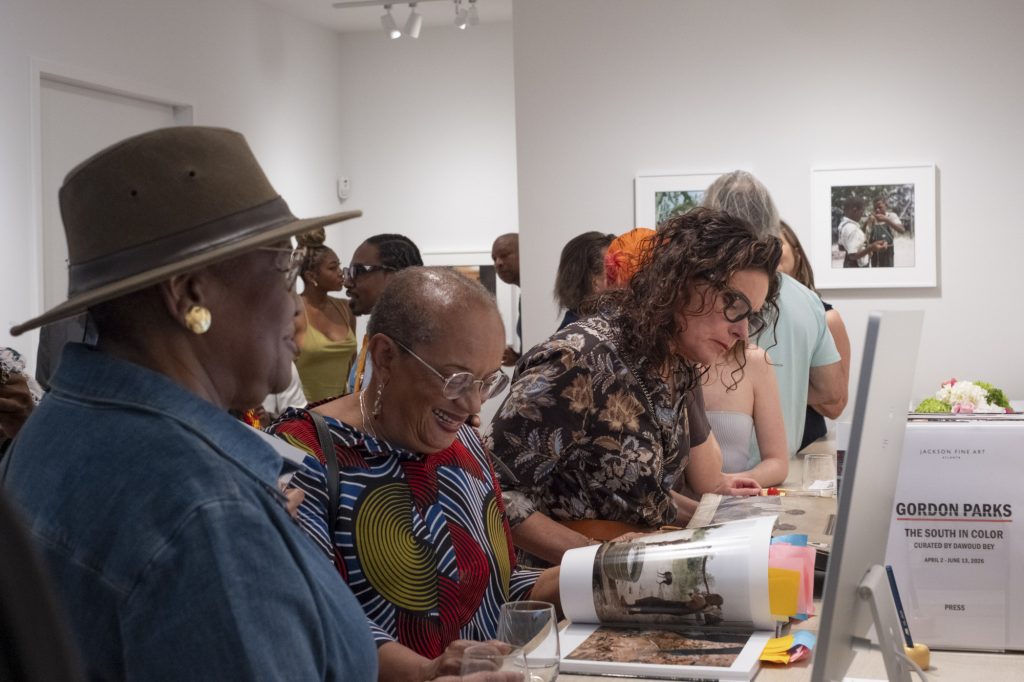
Walking into the opening, I was witness to countless striking images — rooms, hallways and stairways lined with Parks’ photographs. I found myself lost in front of one piece that I’ve loved since I first started photography. In-Home Barbershop, Shady Grove, Alabama, 1956, we peer through a doorway as a man sits mid-shave with presumably his children beside him, playing.
The image embodies precisely what I have long admired in Parks: a sensitivity to framing and, more importantly, an ability to fade into the background, allowing an intimate moment to unfold uninterrupted. This was my first time seeing his work in person, so the feeling should have been unambiguously positive. But standing there in front of this image I’ve loved for so long, I was — and I still am — conflicted.
I shared my uneasy feelings with local Atlanta photographer and Spelman professor Nydia Blas. In response, she pointed me toward an original issue of Life magazine that sat in the gallery, and, while flipping through it, something began to click. It was only 12 pages, only 26 photographs, a story of segregation and Black life tightly condensed into a neatly constructed narrative.
The Life magazine feature was not authored by Parks alone. It was constructed through an editorial framework that included Robert Wallace, who wrote the accompanying text, Richard B. Stolley, who reported from Alabama and Philip B. Kunhardt Jr., who operated within the magazine’s editorial structure. Beyond them were layers of editors and stakeholders who also shaped how and why Parks’ images were shared. Together, they determined how the lives of the Thornton and Causey families would be presented to a national audience.

And then the message of the show hit me. The gallery held far more than what Life printed, which brought to mind a question: How many hands touched his work before it reached the people it is meant to be seen by? In the magazine, Parks’ images were sequenced, contextualized and made legible by a publication invested in a particular narrative, one that rendered Black life “visible” but on terms that could be absorbed by white America.
Between the magazine and the artwork on the walls, a parallel began to surface. Having become accustomed to seeing exhibitions, on entering this space, I found I had forgotten that it, too, was shaping the work, representing the results of decisions made about what is seen and how its meaning ought to be visually constructed. I entered the space assuming a kind of neutrality I had already denied the magazine. As a working artist, I found myself pulled further into that question of who gets to tell your story . . . and what happens when that story is told again under new conditions?
In the exhibition, Parks’ work undergoes another round of filtering — it’s again sequenced, contextualized and made legible through an institution invested in its own narrative, though this time, that narrative is one that centers Parks himself. Standing in the space, I considered what it implies for these images to exist here — not only in the pages of a magazine but on the walls of a commercial gallery, where the degrees of separation between artists and their work is increased and the work takes on different conditions.
In conversations with other Black artists in Atlanta, a repeated sentiment surfaced: “I’ve seen these images online and in books already. Would I be missing anything by not seeing the show?” That question stayed with me as I moved through the space. If these images have already circulated so widely, what does it mean to see them again under institutional authority, one that pushes a neutral legibility?
The question extends beyond Parks. It points to a broader problem: How do we exhibit work that has already been canonized, reproduced and absorbed into visual culture? With Parks, the challenge in 2026 is no longer visibility but whether the work can still confront us or whether it has become stabilized through repetition, its meanings fixed.
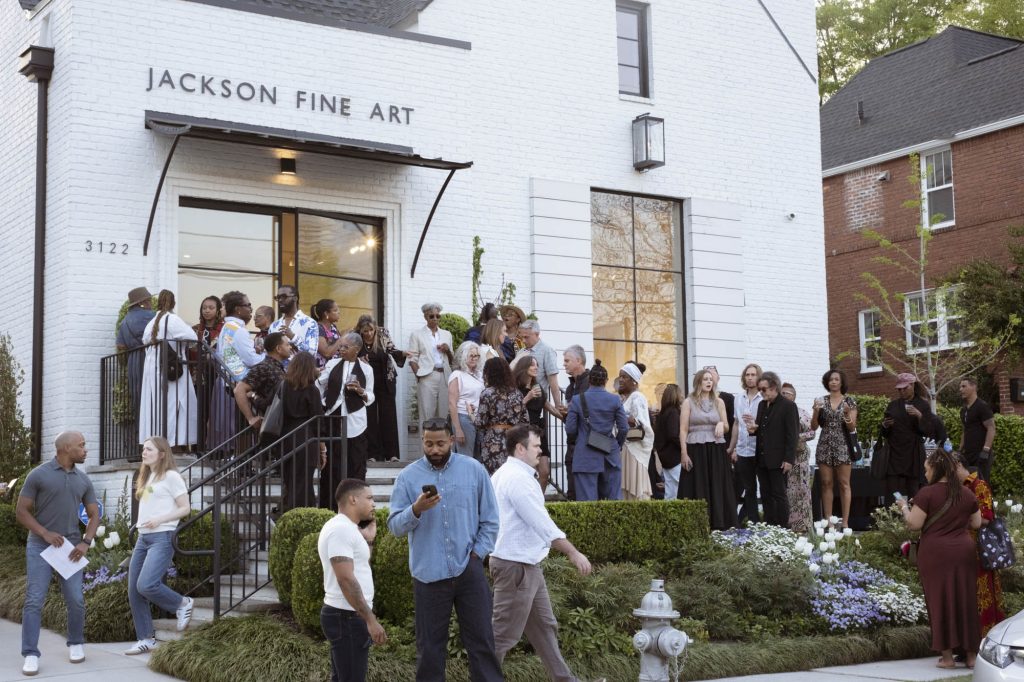
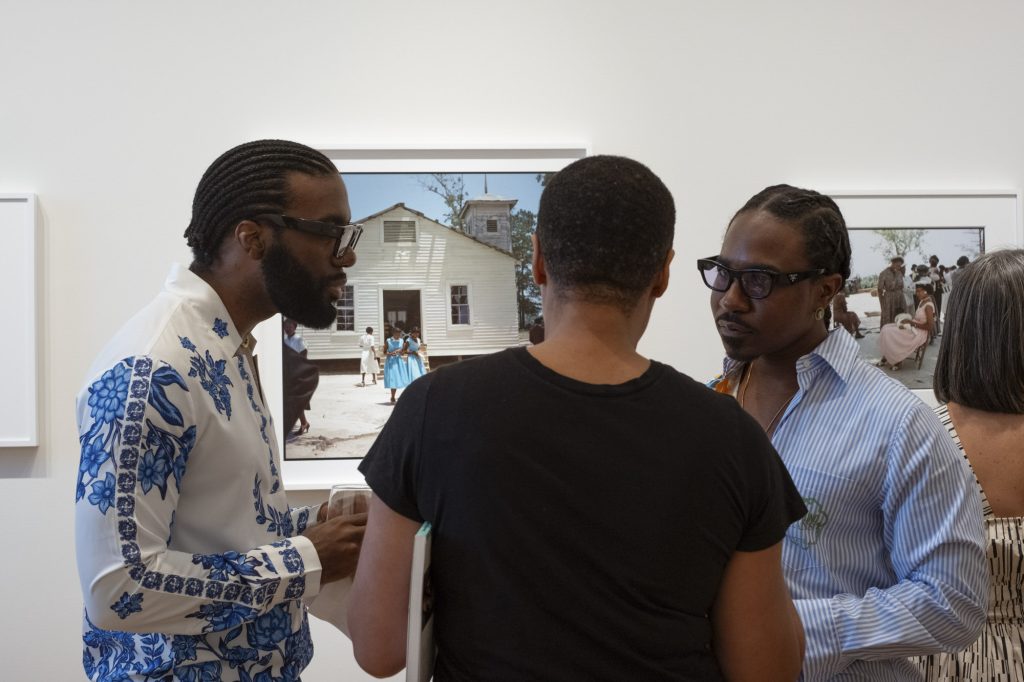
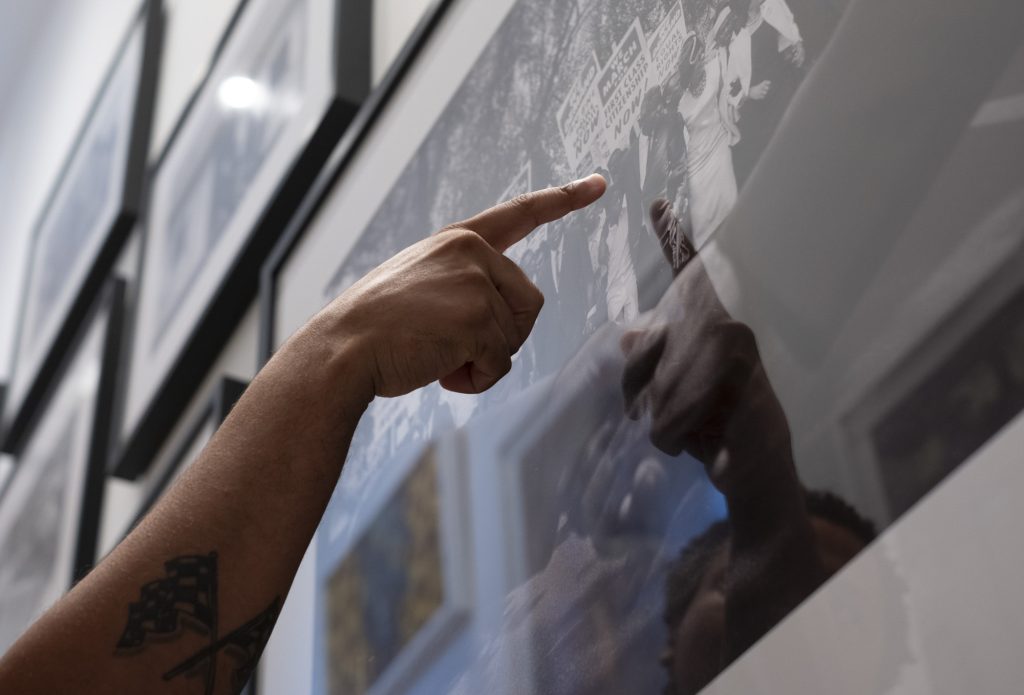
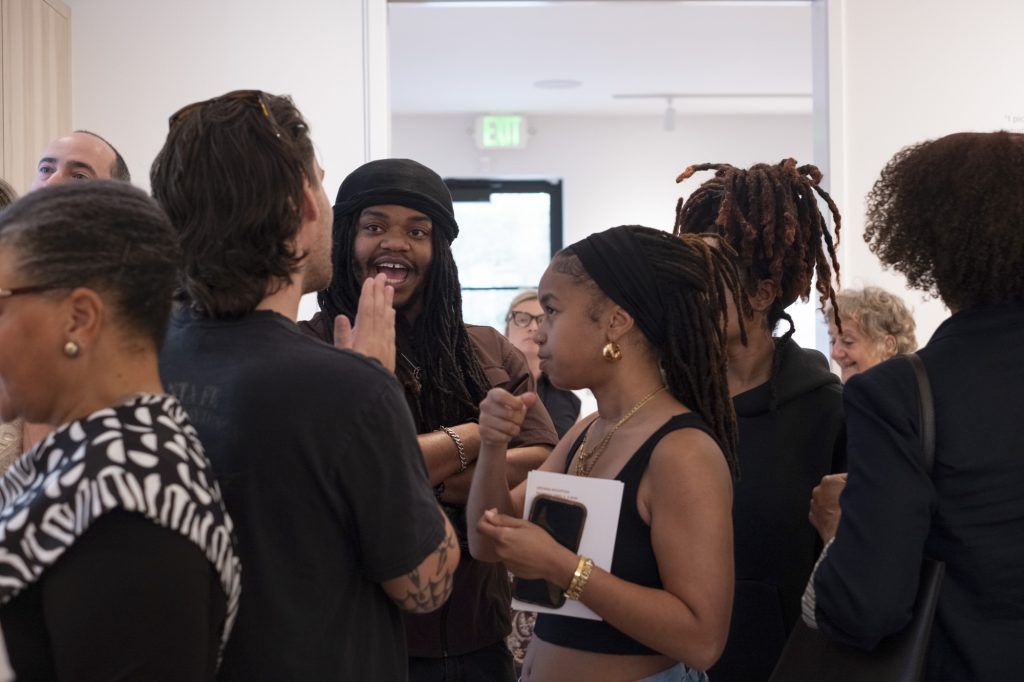
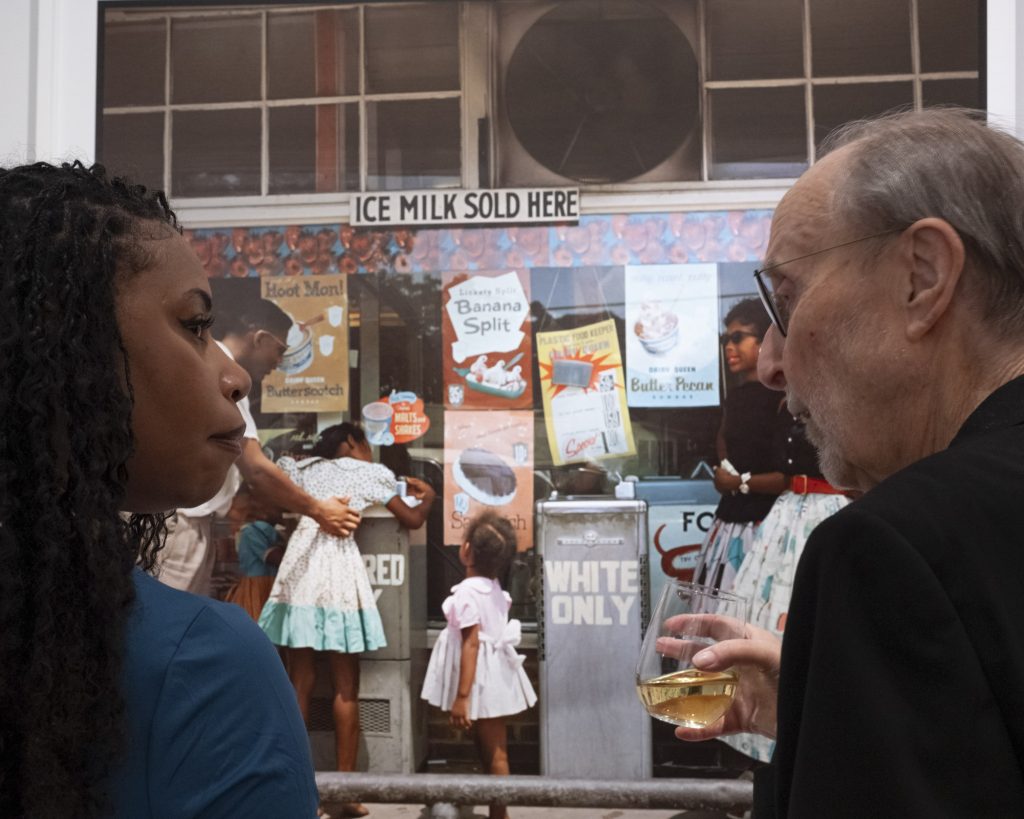
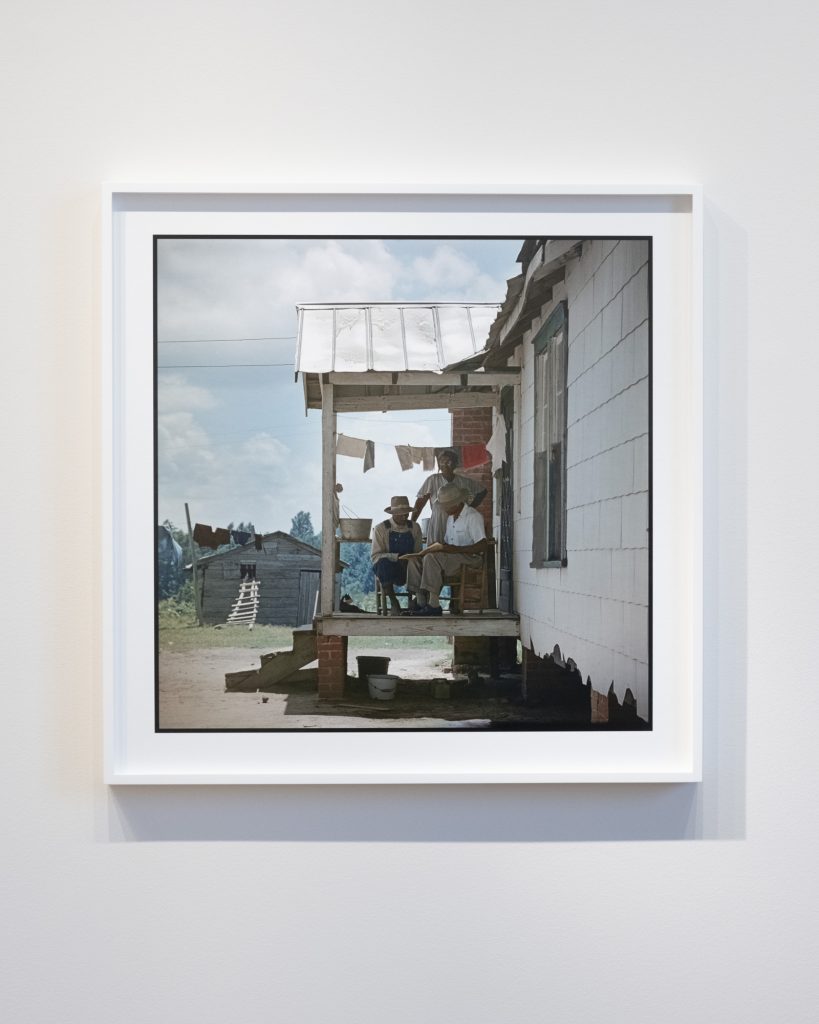

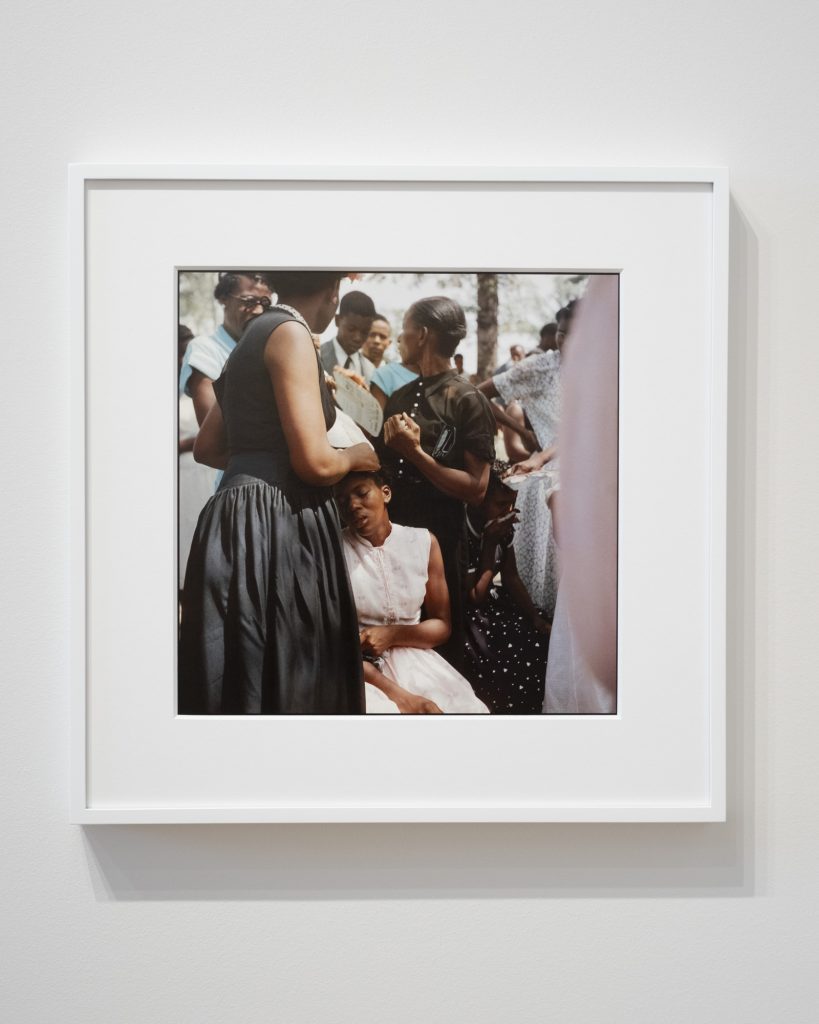
At this point, curator Dawoud Bey’s role within the exhibition comes into focus. If the original Life magazine feature constrained Parks through editorial framing, this exhibition had the opportunity to resist that structure rather than reproduce it. Instead, the show expands the number of images while leaving their interpretive framework largely intact. The result is not a dismantling or subverting of the original conditions but rather translating them into yet another institutional form. Authority changes hands, from magazine editors to the gallery, but the logic of mediation remains.
What were once editorial photographs produced for mass circulation now exist as limited objects within a space of economic and cultural capital. These images are not only being viewed differently but also valued differently. The exhibition is visually compelling but conceptually withholden, opting for institutional neutrality over a more rigorous interrogation of how these images function today.
Jackson Fine Art is not a museum like the High Museum of Art — one rarely enters a space like it without an existing relationship to art. This raises a larger question about the responsibility of commercial galleries. If spaces like Jackson Fine Art do not have an inherent responsibility to teach and educate but still shape how work is encountered and valued, why does that mediation so often present itself as neutral? I wonder: Must value be produced through curatorial restraint? Why not extend that authority toward more rigorous or destabilizing interpretations?
The assumption that experimentation belongs elsewhere — in places such as museums, biennials and contemporary art spaces — allows commercial galleries to position themselves as passive vessels rather than active producers of meaning. I argue that the conditions of this exhibition make clear that they are anything but passive.
I returned to the feeling that followed me throughout the exhibition — a conflict between admiration and limitation. At Jackson Fine Art, I encountered the work of an artist I deeply respect in a setting that fulfilled its stated intentions, and yet the works themselves remained constrained by the many hands that oversaw the exhibition’s creation.
So again I ask: Who gets to tell an artist’s life story? And what happens when that story is told again in a new time and place?
In writing this, the irony isn’t lost on me that I, too, exist inside that process. Like the editors who shaped Parks’ work for Life and the institutions that now present it on gallery walls, I am implicated as well. I am reframing and translating these images for yet another audience — another layer, another version, another retelling.
The conditions may have changed, but the structure remains. The challenge with Gordon Parks’ work is not simply to show the pieces again but rather to engage it in ways that do more than repeat what has already been made visible . . . and perhaps already made acceptable.
Gordon Parks: The South in Color will remain on view at Jackson Fine Art through June 13.
::

Montenez Lowery is a multidisciplinary Black American artist working in Atlanta and utilizing pinhole photography to explore identity, cultural memory and the complexities of interpersonal relationships. Lowery is interested in photographic material and process and how they can be incorporated to enrich the themes he tackles. He earned a BFA in photography from the Ernest G. Welch School of Art & Design at Georgia State University and was awarded The Larry and Gwen Walker Award and shortlisted for the Sony World Photography Awards Student Competition.
STAY UP TO DATE ON ALL THINGS ArtsATL
Subscribe to our free weekly e-newsletter.

PLEASE SUPPORT ARTSATL
Your Gift Sustains the Coverage You Count On!
Related Posts