Josh Russell’s essay collection ‘Commonplaces’ connects life challenges with everyday beauty
In college at the University of Maryland, Atlanta author Josh Russell used to make photocopies of poems that he read in literary magazines at the library. He couldn’t afford to buy everything he read, but, for 10 cents at the library photocopier, he could keep them forever. “I still have this three-ring binder that’s got a lot of these poems I photocopied back then,” he says.
Now the director of the Creative Writing Program and distinguished university professor at Georgia State University, Russell says he was keeping a commonplace book without knowing it.
An invention of the medieval age, the commonplace book typically contains recollections, copied text, ideas, quotes, recipes, advice, sketches and ephemera — anything the owner wants to remember or return to later. They’ve recently been popular among young people interested in a return to analog technologies.
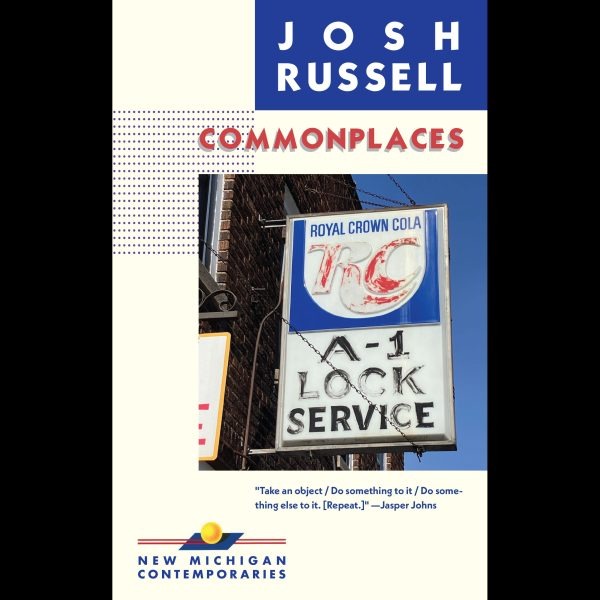
Russell’s commonplace book habit never ended, and Commonplaces (New Michigan Press/DIAGRAM), his new chapbook of flash essays, is the result. Covering Russell’s counterculture youth and young adulthood, followed by his colon cancer diagnosis and treatment plus the pandemic era, each essay ponders what connects us to art — and, through art, to each other. Each essay is dedicated to a specific artist, thinker or loved one, with titles such as “For Adorno,” “For Grandma Ruth” and “For George Frideric Handel.”
“I didn’t set out to write a chronological sequence, and I didn’t write them chronologically. They were about art and artists that have inspired me and still inspire me,” Russell says. “What happened was, I would be reading Adorno, and I would think, ‘Oh, I remember when my dad would talk about Adorno and the saxophone.’” He’d jot down connections as he made them and polish them later.
The essays in Commonplaces are laser-focused on the quotidian, even during extreme times. In “For Cy Twombly,” Russell juxtaposes the torso his surgeon drew on a notepad to indicate the incisions he’d make in Russell’s body during his colon cancer operation with the experience of going to the Met to see Twombly’s deceptively casual painting Dutch Interior.
“The ease of his doodles and scribbles and casual tick marks was practiced and precise,” Russell writes of the surgeon, though it applies just as easily to Twombly. “Happenstance? There is no happenstance.”
Comparing these disparate situations side-by-side, Russell explains, allowed him to defamiliarize the situation, focusing purely on its strangeness. “Everybody — everybody — has those moments where they’re talking to a doctor abstractly about their own body,” he says, adding that people instantly recognize those kinds of conversations but might not have the time or energy to digest them on their own.
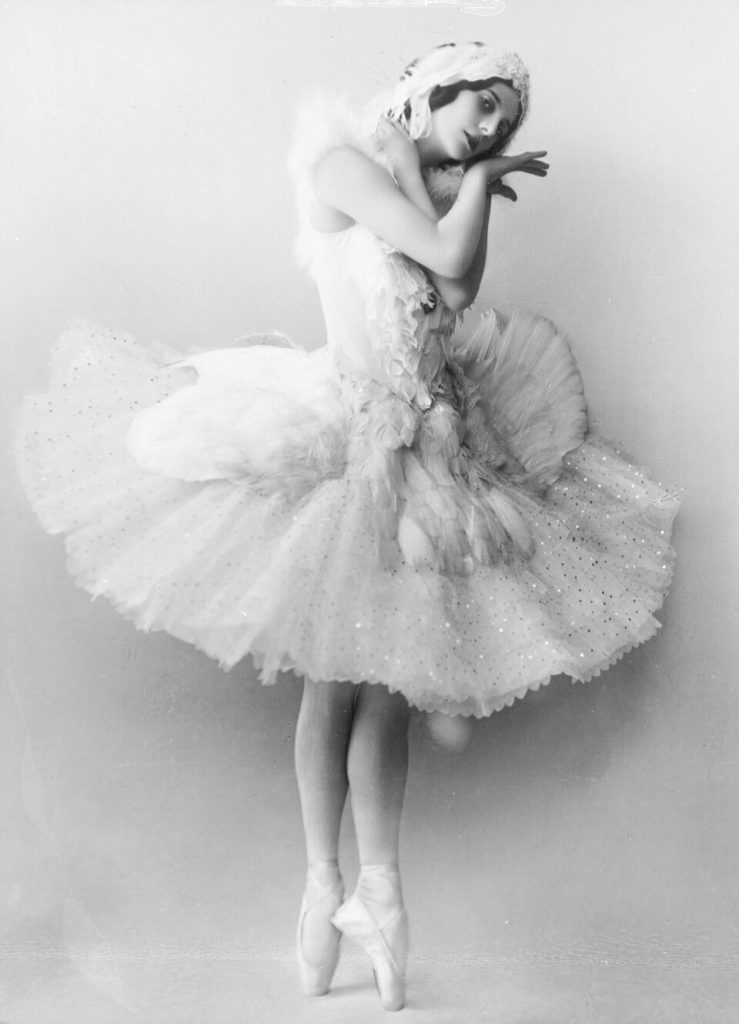
Russell considers the pandemic years with a mixture of nostalgia and shock. In the brief, poignant “For Anna Pavlova,” he sits in his car outside his daughter’s ballet school in December 2020, commiserating with a friend via text while inside his daughter rehearses The Dying Swan. Then his daughter sends him a video from the studio where she’s dancing: “Her arms flutter. En pointe, she glides across the room. She’s lovely and graceful and perfect.” At the dance’s end, when “she’s tucked into a tight shape, like a wounded bird, the ballet mistress says, ‘Don’t fidget when you’re dead.’”
Perhaps counterintuitively, he says, the more common an experience, the more important it is to highlight individual contexts and perspectives, as in “For Anna Pavlova.” Russell’s presentation of those ultrapersonal experiences highlights bittersweet moments of beauty that transcend the pandemic’s darkness in a way that many of its survivors can recognize.
Moreover, the pandemic essays are suffused with an odd sense of nostalgia, which Russell says allowed him to defamiliarize the lockdown experience. “Nostalgia provides this lens through which you can look back on things and single out the moments that were most interesting. Also the distance, I think, that we now have from that time allows me to make connections that I wasn’t able to make at the time.”
Making those connections helped Russell parse the strangeness of the lockdown era and the isolation of cancer, giving his experiences meaning that he could share with other people who felt similarly alienated.
“I think that reading about people’s specific trials — even if they’re not exactly the trials we’re suffering [ourselves] — is a way to feel part of something larger,” he says.
Get the Book:
Commonplaces by Josh Russell (New Michigan Press) is available to order on The Diagram. $15.
::

Rachel Wright has a Ph.D. from Georgia State University and an MA from the University College Dublin, both in creative writing. Her work has appeared in The Stinging Fly and elsewhere. She is currently at work on a novel.
STAY UP TO DATE ON ALL THINGS ArtsATL
Subscribe to our free weekly e-newsletter.

PLEASE SUPPORT ARTSATL
Your Gift Sustains the Coverage You Count On!
Related Posts