
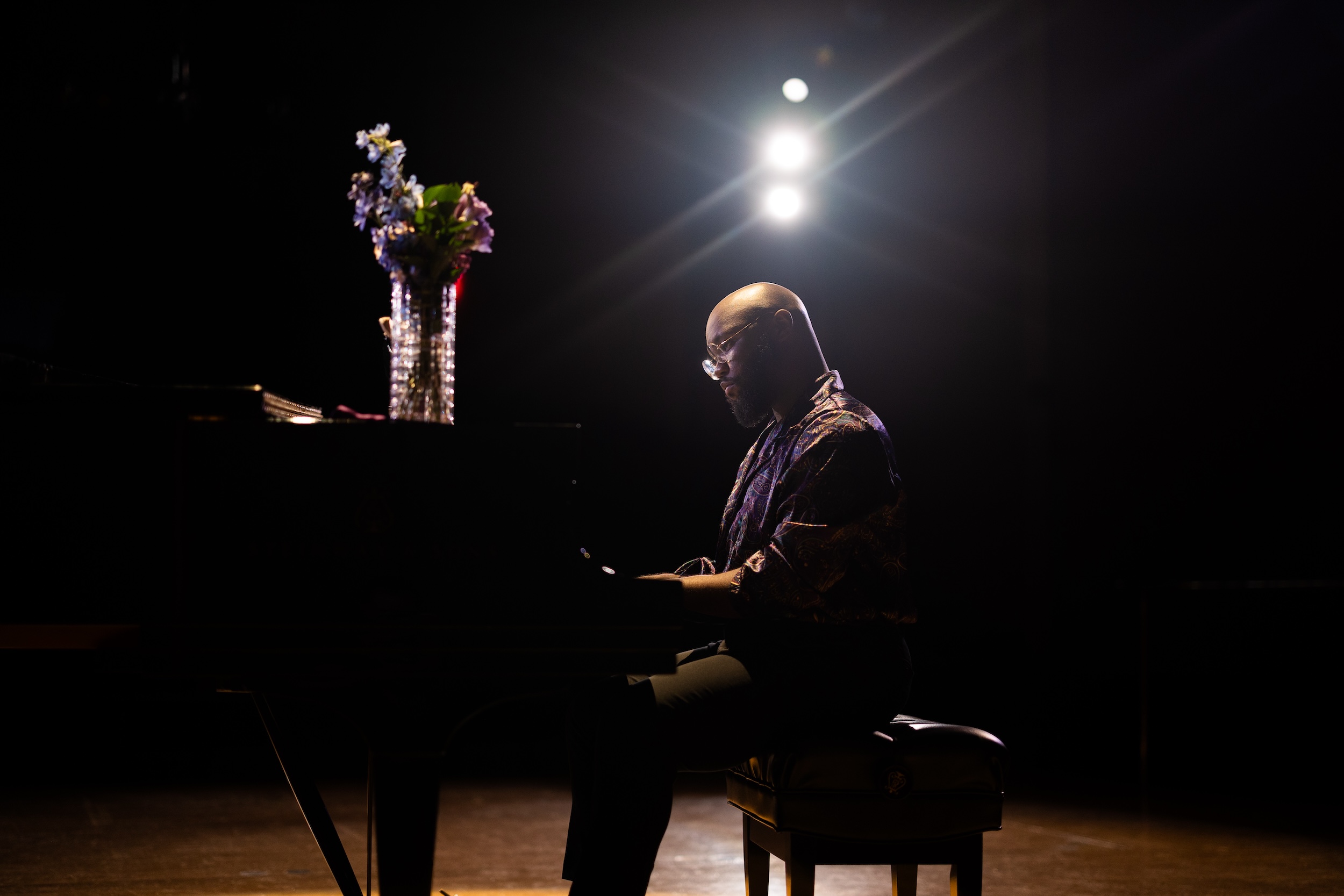
Atlanta native Travis Hall makes music ‘in between places,’ from opera to soul
When Travis Hall was a teenager, he hid his voice in a hoodie.
Singing in the choir at Cedar Grove High School, he would wear the garment as a protective cloak. It allowed him to draw in a breath, pause and then let out a melodious tenor.
It was his superpower, the shield and sword of a shy, only child finding his voice. His friends in the choir nicknamed him “Turtle.”
But then something happened one day that helped him ditch the shell.
“I would never get a solo or anything to stand out,” he says over a cup of joe at Portrait Coffee in Atlanta’s historic West End. “And I remember the choir director told me I couldn’t sing and I shouldn’t pursue music.
“That was devastating for me,” he said, his body straightening and chest pushing forward in defiance of the memory. “That lit a fire in me.”
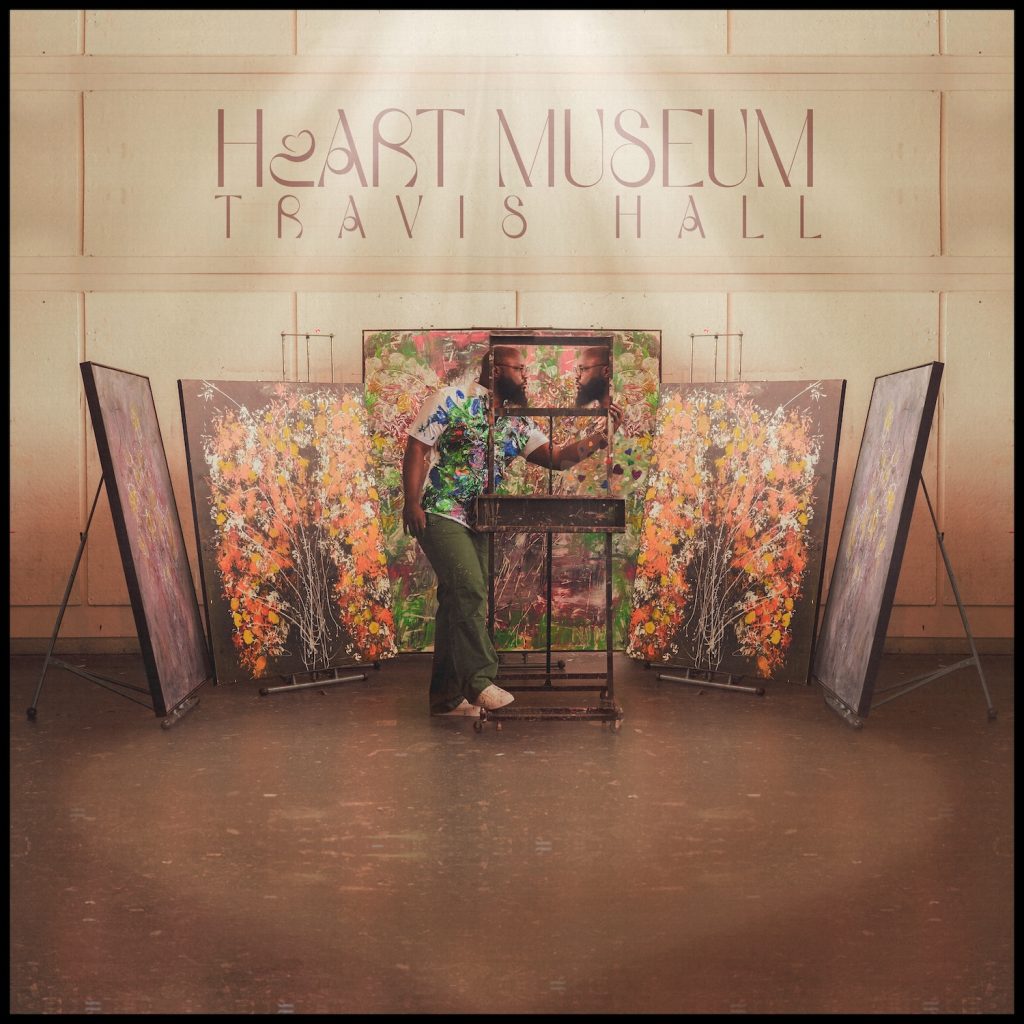
Hall, 31, released his debut album, HeART Museum, last fall, featuring the singles “Fireflies” and “A Day.” The album was conceived, written, and produced by Hall over three years.
“When I commit to things, I really commit,” he said of HeART Museum, a blend of R&B, soul, jazz and funk inspired by the sounds of Luther Vandross, Ashford & Simpson, Brenda Russell and Minnie Riperton. “I really wanted to make a great album.”
The Atlanta native — he proudly emphasizes he’s a “Grady baby,” born in Grady Memorial Hospital, a badge of honor in Georgia’s capital — even made a pitch for NPR’s revered Tiny Desk platform. The independent singer said he submitted in 2024 a performance of “A Day,” complete with a backing band and an eye on the power of social media and putting yourself out there.
More recently, he pitched to FIFA a show featuring traditional Black American music for this summer’s World Cup 2026 matches at Mercedes-Benz Stadium in downtown Atlanta. The show would be part of the Mayor’s Office of Cultural Affairs’ ATL Culture House platform.
Hall’s path in music has been atypical. After high school, he studied music for two years at Georgia Perimeter College, now part of Georgia State University.
But he didn’t sing soul. He sang opera.
“I knew nothing about music formally,” he said, saying he was surprised that higher learning was geared more toward jazz and classical music. “But after I started singing, other students said, ‘You have a knack for this. You sound like you already sing classical music.’”
Like many Americans, Hall’s knowledge of opera was limited to Saturday morning Looney Tunes — Bugs Bunny’s rendition of Wagner’s “Ride of the Valkyries” scene was a particular standout. And as an African American male, he didn’t have a lot of opera role models to look to for inspiration.
But the shy kid in the hoodie was finally being seen, and Hall was not about to throw that away.
“I was like, OK, let’s give it a try,” he said.
Trying became succeeding. Hall would go on to earn a bachelor’s in vocal performance from Columbus State University and a master’s in vocal performance from Georgia State. He began with Atlanta’s Capitol City Opera after displaying a willingness to push his vocal boundaries.
“It was 2019, and Capitol City Opera was seeking a baritone for a production of Romeo and Juliet,” he said. “I’m a tenor, but me being ambitious, I sent them a message saying I will sing as a baritone. Fortunately, they were looking for a tenor, so I got my first professional job in the show’s chorus.”
After the pandemic shut down the world in early 2020, he moved to The Atlanta Opera the next year, singing in the chorus of Rossini’s The Barber of Seville and Gilbert & Sullivan’s The Pirates of Penzance. In 2023, he won the role of Count Almaviva in the touring company of Barber, doing more than 200 performances.
In the background, however, was a nagging desire to cut a soul album.
“So many things were happening at that time,” he said. “I was pursuing my vocal performance master’s and touring. But a little voice was guiding me to my next goal, and that was recording an album.”

After leaving Barber in 2024, he focused on learning to write, produce and arrange, skills he didn’t know he had, he said. But he feels it was a calling.
“It was a lot compacted in a small period of time,” he said. “I think that’s why when I think of those years, I always sigh, because I don’t know how I did it.”
But he’s thankful for each experience, he said. His classical training, work with the Capitol City and Atlanta operas and the recording of his album complemented each other, he said.
“I’ve spent my life in between places,” he said. “In opera, I was in a predominantly white space where I wasn’t white. In soul music, I was told I was a little too classical, so I wasn’t Black enough.”
But through classical music, he learned breath support, diction, vowel placement and projection, he said. In soul music, he channels his grandmother’s living room, the feeling of family, the transcendence, spirituality and connection with people.
“I spent my life trying to figure out who I am, and what I’ve realized is that merging all of this is who I am,” Hall said.
Today, Hall is focused on building his name recognition through live performances, including a sold-out show last year at Vinyl at Center Stage Atlanta, a tour last fall and, most recently, a performance at Perfect Note Live Atlanta. He is also in the process of recording his second album, which he hopes will expand the sonic feel of HeART with a live-and-in-person feel.
He is also back in school, this time pursuing a master’s degree in business administration. He doesn’t want to just understand music as a performer; he wants to know the business side as well.
“I own 100% of my material and everything in my publishing, which I think is important, being a Black artist,” he said. “We’ve been swindled in the past.”
But he also wants to give back to a musical community he believes is rich with creativity and brilliance.
“Atlanta gave me culture, history and a sense of possibility,” said Hall, who wants to be an EGOT — a winner of an Emmy, Grammy, Oscar and Tony award. “From the church to the streets, from local radio to LaFace Records, it showed me that Black artists could dream big and create deeply.”
“My work isn’t just personal — it’s a bridge for the next generation to see what’s possible,” he added.
::

Leon Stafford is an award-winning journalist with more than 30 years of experience at various newspapers, including The Atlanta Journal-Constitution, the Lexington Herald-Leader and the Knoxville News-Sentinel. He has covered municipal government, business, education, hospitality and the arts during his career.
STAY UP TO DATE ON ALL THINGS ArtsATL
Subscribe to our free weekly e-newsletter.

