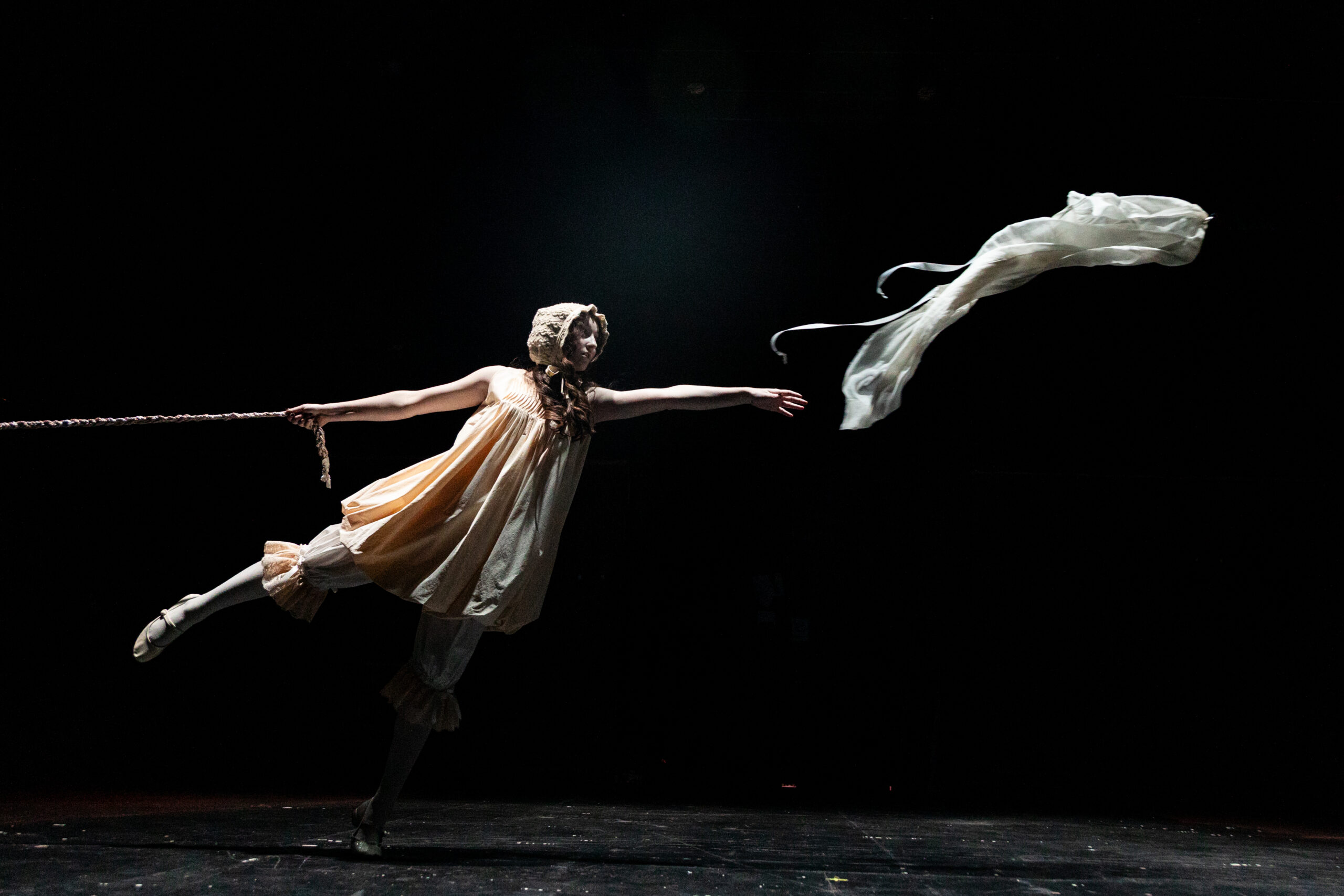
Theater Emory’s ‘Other Shore’ captures tension between self and society
Under the guidance of choreographer Annalee Traylor, students at Theater Emory are experimenting with an interpretative production that began as an actors’ exercise.
::
Imagine you are a freshman or sophomore in college, your previous theater experience either nonexistent or leaning toward the traditional and someone hands you a copy of a strange, melancholy play that rivals the complexities of Samuel Beckett and Eugene Ionésco. That is the challenge that the cast of Theater Emory’s production The Other Shore has taken on with aplomb, and the fruits of their labor will be on display at Mary Gray Munroe Theatre November 21 through November 24.
Written by Chinese writer Gao Xingjian, The Other Shore is an avant-garde work that follows a group of actors as they journey to the “nonexistent other shore” and find themselves with no memory or language with which to communicate. What follows is a seemingly unconnected series of scenes, which thematically capture the tension between individual identity and the collective.
Conceived as an exercise for actors, the plot of The Other Shore is less important than its interpretation — and interpretations have varied wildly since it premiered in 1990. The avant garde nature of the script was one of the biggest draws for Director Annalee Traylor when she was approached by Theater Emory Artistic Director Caitlin Hargraves to direct the production.
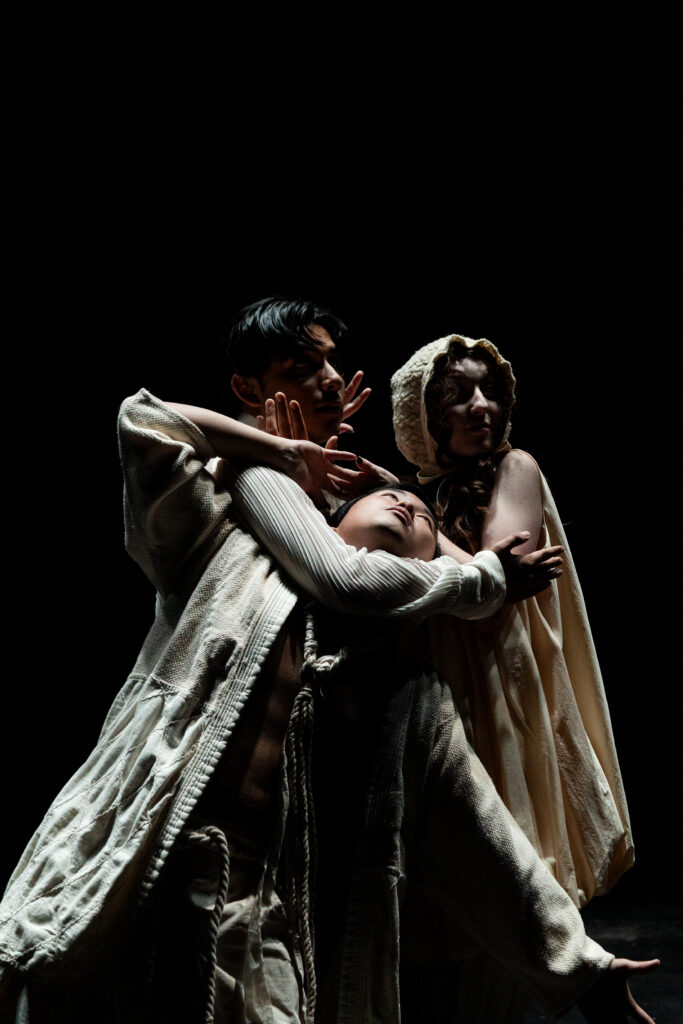
“[When she said] those two words, ‘avant garde,’ my interest was piqued,” said Traylor. “My research in the past three years, particularly after grad school, has encompassed absurdist notions. It’s definitely nonlinear; it’s heightened. I work a lot with artifice. These were the things that I latched onto when I first read the play.”
Traylor’s background is not in theater but in dance. Last year, she served as an artistic fellow in Emory’s dance program, having previously attended the California Institute of the Arts, where she immersed herself in multidisciplinary studies. She worked with many acting students on dance theater pieces, and, while The Other Shore is not a dance piece per se, Traylor has used her training to lean into the physicality of the show.
“Gao describes his ideal performance as one that combines somatics, language and psychology,” she explained. “I took that as an opportunity to pull from my practice of devising and working in collaboration with performers. Particularly imbuing some of my own experience, I wouldn’t say with dance, but with movement and physicality.”
The approach Traylor describes is inherently collaborative, leaning into the natural proclivities of the performers, many of whom do not have notable dance backgrounds. The production is advertised as “improvisation-based,” in large part due to the improv exercises that Traylor brought to the early rehearsals to see how the actors naturally moved.
“A lot of them are extremely organic movers!” she said. “A lot of them feel very comfortable on the floor doing some very extreme physicality. I didn’t necessarily choreograph anything; it all was prompted and came from their own bodies, and I was just coaching and directing them.” This improvisational element not only gives the actors greater ownership over the production but encourages them to come together as an ensemble.
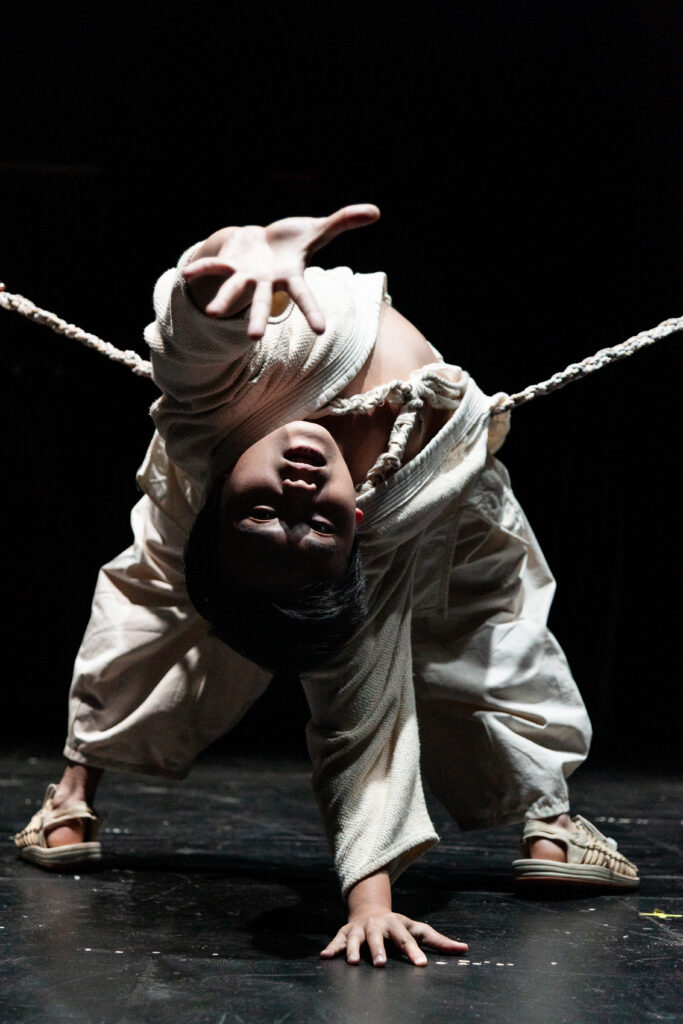
When asked about any moments of discomfort she has seen, Traylor points to the heightened, nonrealist nature of the script. While technically falling under the umbrella of symbolism, The Other Shore draws a lot on absurdism and surrealism, neither of which undergrad actors typically have much experience with. Gestures, vocalizations and facial expressions must be more exaggerated than a typical realistic acting style would demand. Traylor has also incorporated masks into the costume design for certain scenes, introducing another performance style to the mix.
It would be easy for the young cast to become overwhelmed by all of this newness, but, instead, they have embraced it. It helps that the experience is new to Traylor as well; she has never directed a nondance performance before. Combined with her communicative and collaborative approach, there is a sense of community where the actors feel safe to simply play.
Of course, the flip side of play is maintaining the necessary specificity and coordination. Much of the movement in the show, while exaggerated, needs to be precise — and as opening night approaches, the students find themselves needing to rein in that playfulness and start to fine-tune the specifics. It is no small wonder that Gao devised The Other Shore as a training exercise or that Theater Emory would select the piece to challenge students. Yet what Traylor remains the most impressed by is how keen the students are to rise to the occasion.
“It’s been a delight working with these students. Their enthusiasm has carried me through. They have been so eager to fully dive in, and that has really given me the inspiration to keep dreaming, pushing and imagining how much further we can go.”
::

Luke Evans is an Atlanta-based writer, critic and dramaturg. He covers theater for ArtsATL and Broadway World Atlanta and has worked with theaters such as the Alliance, Actor’s Express, Out Front Theatre and Woodstock Arts. He’s a graduate of Oglethorpe University, where he earned his bachelor’s degree, and the University of Houston, where he earned his master’s.
STAY UP TO DATE ON ALL THINGS ArtsATL
Subscribe to our free weekly e-newsletter.

PLEASE SUPPORT ARTSATL
Your Gift Sustains the Coverage You Count On!
Related Posts