Streaming in January: Michael Jackson, John Lennon, marriage, murders, more
NETFLIX: Maestro
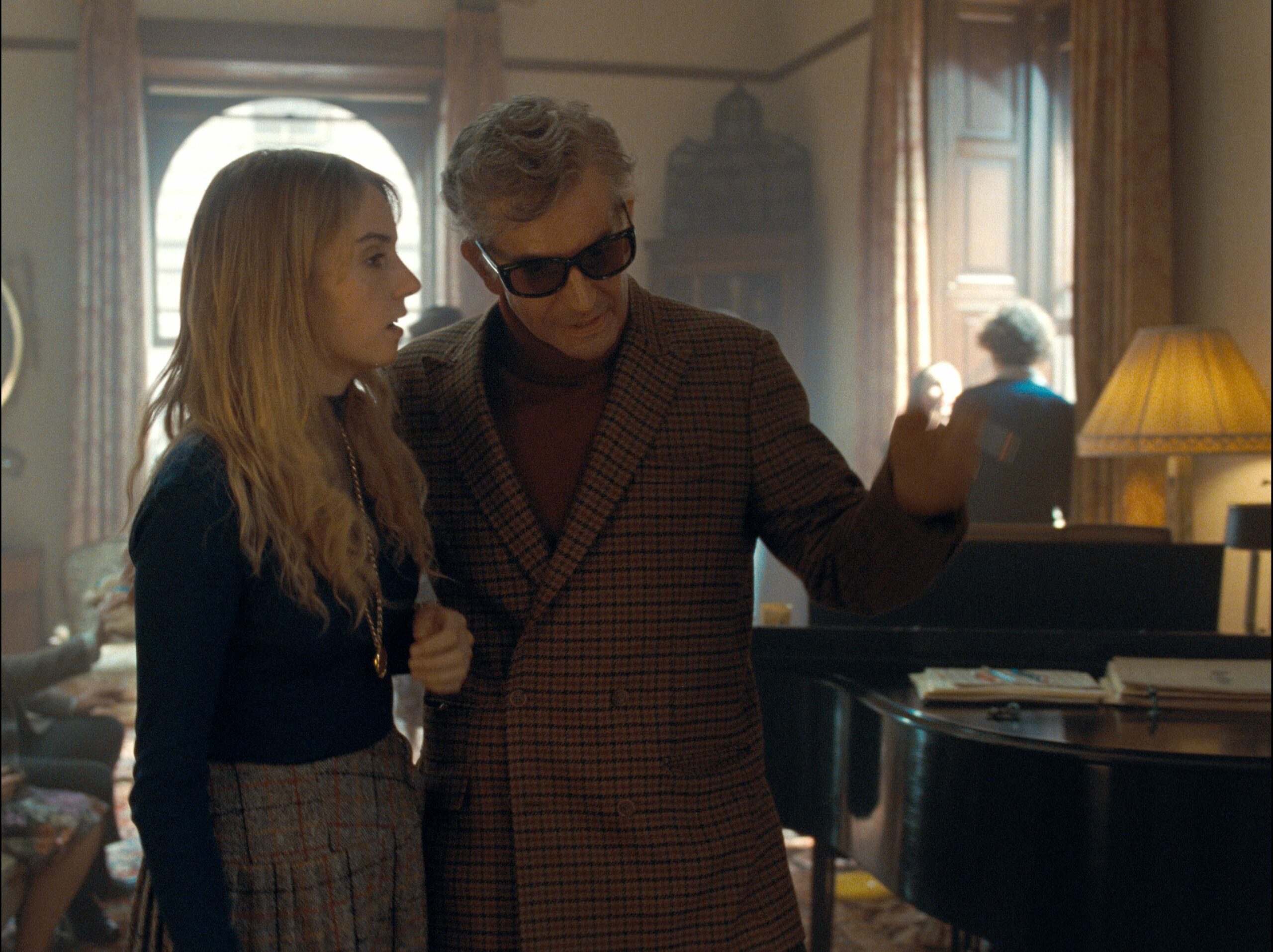
A ghost story of sorts, Bradley Cooper’s Netflix film could be called Scenes from a Marriage. Its real title is Maestro, and that can mislead you into expecting a traditional biopic of conductor-composer Leonard Bernstein. It isn’t. Instead, it’s the observation and dissection of a deeply loving but very complicated marriage. Career highlights and musical motifs from Bernstein’s life play like background noise and color around the edges of the scene; they’re not the main event.
Co-writing, directing with tremendous verve and starring as Bernstein with a prosthetic schnoz that only briefly distracts, Cooper is the big man at the center of the action. But he cedes the movie to Carey Mulligan in a performance that’s a best among many remarkable ones in her short career. She plays Felicia Montealegre, an actress who meets Lenny at a party and winds up snogging him onstage in the empty theater where she’s rehearsing.
The audience having seen Lenny wake up beside his boyfriend, David (Matt Bomer, who’s having an out, proud season with this and Showtime’s Fellow Travelers), we know something Felicia initially doesn’t. But Bernstein’s bisexuality, with a bias toward boys, is an open secret, and Felicia ultimately gets savvy to what she’s getting when she says, “I know exactly who you are — let’s give it a whirl.”
Their life together proves to be as much welter as whirl and as invigorating and challenging as the Mahler symphony we see Bernstein (Cooper, who actually leads the performance of the orchestra on-screen) conducting near the movie’s end. In its ambitious, kaleidoscopic look at the composer’s fierce, loving and spiteful bond, Maestro can be confusing. A second viewing can clear things up, and, for me, anyway, it deepened my appreciation of the movie.
Cooper may be credited as a co-writer, but the screenplay’s other author is Josh Singer, who showed in Spotlight, The Post and First Man that he’s a pro at building sturdy bones for even a story as intentionally fragmented as this one.
By the end, Maestro shows us two individuals both strengthened and compromised by their union. Here’s where it is a ghost story: We first meet Lenny in the final years of his life, dwelling on Felicia after her death, when she’s rumored to be appearing at their Connecticut home as a literal apparition. In another way, the movie sketches in the ghosts of the people Bernstein and Montealegre might have been, had they walked down individual paths — the ghosts of the talents and opportunities they dismissed in the process of creating a unified front as a power couple.
::
NETFLIX: Leave the World Behind
There’s another power couple at the center of Leave the World Behind, adapted from Rumaan Alam’s novel into this film by director Sam Esmail. He’s the man who helped usher Julia Roberts from big screen to small with Prime Video’s Homecoming in 2018.
Here, Roberts plays Amanda Sandford, a Manhattan ad exec who unilaterally books husband Clay (Ethan Hawke), teen son Archie (Charlie Evans) and tween daughter Rose (Farrah Mackenzie) for a getaway at a luxe modern rental house on Long Island. The reason is apparently to get away from her own work-related stress. She drags the family with her, excluding them from her mantra, “I [bleeping] hate people.”
She soon has more people to hate: mannerly G.H. Scott (Mahershala Ali) and sardonic Ruth (Myha’la Herrold). The Black father and daughter show up at the door in tux and evening gown, claiming they’ve driven in from a symphony in the city. And, oh, by the way, G.H. is the owner of the house, thus their temporary landlord. Can he and Ruth stay overnight in the basement suite because some weird shit is happening in the outside world?
The Sandfords have noticed some weirdness themselves, like their phones and Wi-Fi not working. But Amanda goes full Karen. The politest thing she says is, “I think we need to look at the terms and conditions here,” all the while trying to find grounds to keep the Scotts out.
These scenes call back to the mistrust of others many felt during the height of the pandemic, and also memories of the racial awareness, positive and not, triggered by the murder of George Floyd. Then, what looks like it might be a tense chamber drama becomes apocalyptic. Oil freighters and jets start crashing where they shouldn’t; propaganda flyers in Arabic and Korean shower down from passing aircraft; and wildlife — especially looming herds of deer — start to menace the families.
As he did in Homecoming, Esmail shoots like a faux-Hitchcock, layering the film with overhead and tracking shots that are sinuous, elegant and ultimately pointless. As you’d expect from a cast this strong, World is worth watching scene by scene. But it’s an overlong tease.
To roll back to the previous movie, among the many career markers Maestro does not include is the time the Bernsteins hosted the Black Panthers at their home. Writing about it, Tom Wolfe gave the event the deathless, damning term: Radical Chic. World deserves a similar description. It’s Catastrophe Chic, given the imprimatur of a premier power couple of the 21st century: executive producers Barack and Michelle Obama.
World is a feature-length version of what I like in zombie and other disaster movies — those eerie, unsettling scenes that indicate something is off and that bad stuff is about to go down. Here, that’s the whole show. It’s elegantly and expensively done, but it’s little like a carny whetting your appetite for a show he never actually lets you inside the tent to watch. Put another way, it’s a giant helping of creepiness with no side dishes or dessert. And that non-ending? I’d say it’s perfect yet terrible, all at the same time.
::
HULU: A Murder at the End of the World
The seven-episode series A Murder at the End of the World mixes high-tech gadgetry with old-hat plotting. It’s Agatha Christie for the age of AI. It reflects our era of tech bros who charge onto the scene looking like messiahs before turning out to be toxic, under-socialized nerds, released into society too soon from their garages.
Emma Corrin stars as Darby, a hacker and true-crime groupie whose book about her citizen-detective search for a serial killer, alongside fellow hacker and semi-boyfriend Bill (puppy handsome but blank Harris Dickinson), earns her a surprise invitation to an exclusive summit of big thinkers at the remote Icelandic compound of billionaire Andy Ronson (Clive Owen). They include characters played by Joan Chen, Alice Braga, Raúl Esparza and Brit Marling (who co-created the show with her longtime collaborator Zal Batmanglij).
Snowed in at the luxe resort, before this gathering of brains can even figure out why Ronson wants them there, one of their members and then a couple more guests encounter the one problem there is not an app for: death. As Darby snoops around the climate-controlled interior of Ronson’s enclosure (equal parts igloo and five-star hotel), her search for the killer is alternately abetted and blocked by Ray (Edoardo Ballerini), the digital AI overlord baked into the resort’s central nervous system.
The setup and the details of Murder are more interesting than its payoff, though you could argue that applies to most mysteries. In her quest to uncover the killer, Darby spends a lot of time using technical gizmos and hacks that are meant to look cool but come off as conveniences. Though she was a breakout star playing the young Diana Spencer in the fourth season of The Crown, Corrin still feels a little unseasoned to carry a series. But for mystery watchers, A Murder at the End of the World is fun enough. And unlike that other show with World in the title, this one actually solves the mystery at the end.
https://www.youtube.com/watch?v=AnPl4PuNb5U
::
APPLE TV+: John Lennon: Murder Without a Trial
There’s no real mystery, per se, at the core of John Lennon: Murder Without a Trial. But the makers of this three-part documentary try to make that nonmystery a mystery itself: Why in the world did a schlub from Decatur, after a time spent living in Hawaii, murder a member of the world’s biggest band?
In December of 1980, at age 40, Lennon was emerging from a long retirement with plans to start performing again when Mark David Chapman door-stepped and shot him in front of the Dakota, the apartment building where Lennon and wife Yoko Ono lived. Because Chapman pled guilty, his back story and possible motivations weren’t dragged through court and the court of opinion, as happens with even the smallest public case in our now-24/7 news cycle.
Why did he do it? And what did Salinger’s The Catcher in the Rye have to do with it, if anything? The series’ second episode floats the idea that “hidden forces” might have been behind the murder. It introduces the history of a CIA mind control program before dismissing the subject and all other tin-hat, conspiracy-driven stuff. The psychiatrist hired by the court, Dr. Naomi Goldstein, testifies on camera for the first time about her findings on interviewing Chapman; she found him fit to stand trial, but his guilty plea kept that from happening.
Ultimately more a curiosity than a compelling documentary, the series doesn’t really solve its nonmystery but poses a new one: With everything we know — and with the latest mass shooting in the United States being just another bit of background noise on the news — why do we still have no sensible gun control more than four decades after Lennon died?
::
Paramount+/Showtime: Thriller 40
For older people, JFK’s murder was the where-were-you-when-you-heard moment of their generation. Next in line was Lennon’s killing. Two years after that came another, kinder cultural milestone.
Many of us remember when we first saw Michael Jackson reclining in his white suit, seeming as relaxed as his Jheri curl on the cover of Thriller. Or when we were startled out of our everyday experience by the opening chords of “Billie Jean” or saw its music video — rudimentary now but a groundbreaker at the time. Music journalist Steven Ivory rightly demarcates our cultural timeline as BT/AT: “Before Thriller and after Thriller.”
Thriller 40 is a deep dive into the making of that 1982 album, featuring interview clips from some of the studio artists involved in its making. We also get some unexpected commentators, noting not only the album’s power but the singularity of its artist — before that singularity turned to the peculiarity of Jackson’s later years. After the singer broke the world’s mind by doing the moonwalk in a 1983 televised celebration of Motown, to see a Black man dance on his toes has made generations “feel anything is possible,” said Misty Copeland, principal dancer of American Ballet Theatre.
Like the John Lennon documentary, the movie’s main takeaway is of a brilliant gift wasted, though, in Jackson’s case, the culprit wasn’t a man with a gun but the singer himself and the people he kept in his circle. But that’s a tale for many other documentaries.
::
NETFLIX: Rustin
I wish I liked Rustin more than I did. Focusing on Bayard Rustin, the Black leader largely responsible for organizing Martin Luther King Jr.’s march on Washington, the biopic shows the man struggling not only with prejudice against his skin color but also his love for men. But it’s largely a boring, by-the-numbers piece. The movie tries to liven up the historical facts with a melodramatic side plot about Rustin’s involvement with a closeted minister, his wife and Rustin’s own long-suffering White boyfriend. None of it works. The screenplay, partly written by Dustin Lance Black, may have won an Oscar for Milk because the topic was worthy and of its time, not because it was actually a strong script.
Likewise, director George C. Wolfe (Angels in America on Broadway and Ma Rainey’s Black Bottom for Netflix) tends to be earnest and technically fine but never that exciting or innovative. And though the great Colman Domingo plays Rustin, a part he seems born for, he feels stymied and a little self-conscious at playing a great man here. He’s making more of an impression on other screens right now, as the vile but ultimately redeemable Mister in The Color Purple.
::
LOOSE ENDS
Though it has caused me more cringing than all seasons of HBO’s Curb Your Enthusiasm combined, Paramount+/Showtime’s The Curse continues with its ninth episode this weekend and concludes with its 10th episode January 14. I’m excited (?) to see how badly it ends as Whitney (Emma Stone) and Asher (Nathan Fielder) launch their horrible HGTV show.
Also on the same platform, the South Korean Bargains wants to be the new Squid Game. It certainly shares that show’s bitter view of human nature. Except for a surprising first episode, though, the series is a slog as a handful of people struggle to escape a building destroyed in an earthquake, doubting each others’ motives the whole way. The show’s true stars are the camera handlers, who follow the actors through tight and twisting spaces in what often feels like real time. Worth sampling, but you may not want to stick with it until the ending.
::
Steve Murray is an award-winning journalist and playwright who has covered the arts as a reporter and critic for many years. Catch up to Steve’s previous Streaming columns here.
STAY UP TO DATE ON ALL THINGS ArtsATL
Subscribe to our free weekly e-newsletter.

PLEASE SUPPORT ARTSATL
Your Gift Sustains the Coverage You Count On!
Related Posts