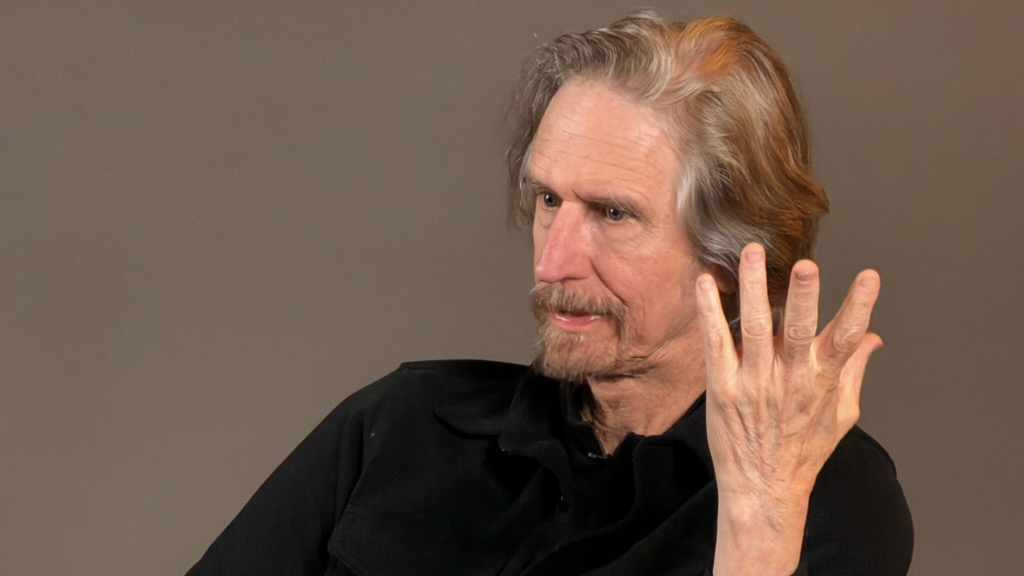
Actor Ray McKinnon launched his career in Atlanta in the 1980s, and he’s still in demand today
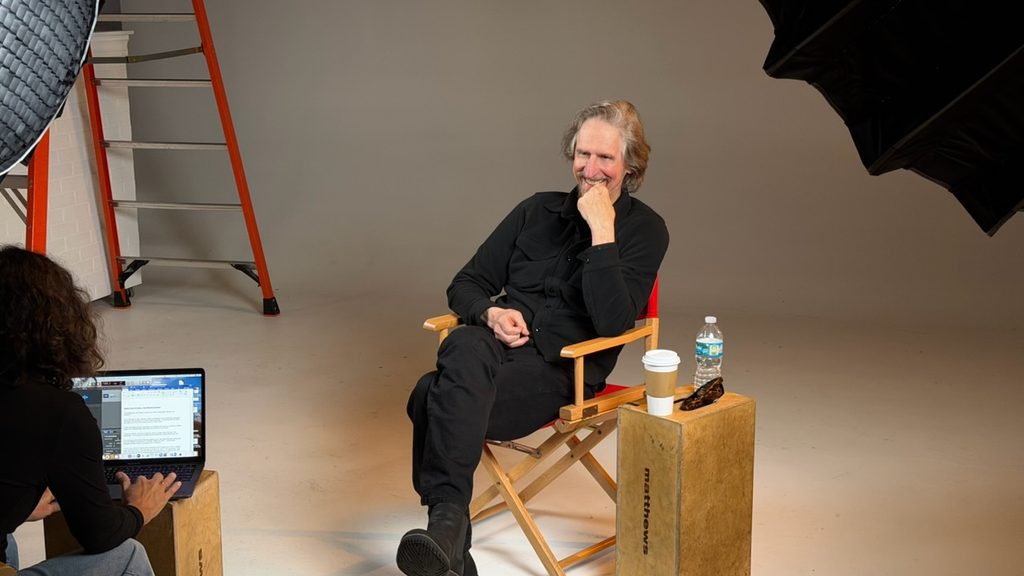
When you ask Adel, Georgia-born Ray McKinnon how he has achieved such a kaleidoscopic career as an actor, he considers carefully. And his eyes and energy blaze into yours in a very present way.
“If you want to express your being through this kind of medium, using your body and your psyche and your emotionality, and that’s your paintbrush, and you’re wanting to do that, my only advice is study the craft of acting. That’s what I did. Don’t make it about the result, because the result will almost always disappoint you. It’s the process. Even now, as an actor, the most energizing thing is being in the moment,” McKinnon says.
And he adds, “Once you start judging that moment, you’re out of the moment.”
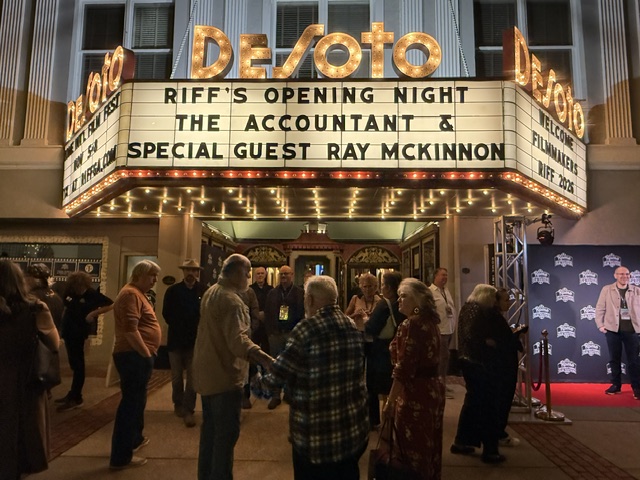
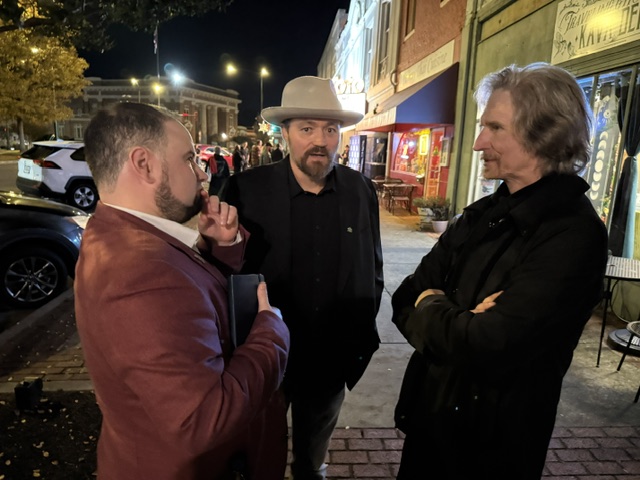
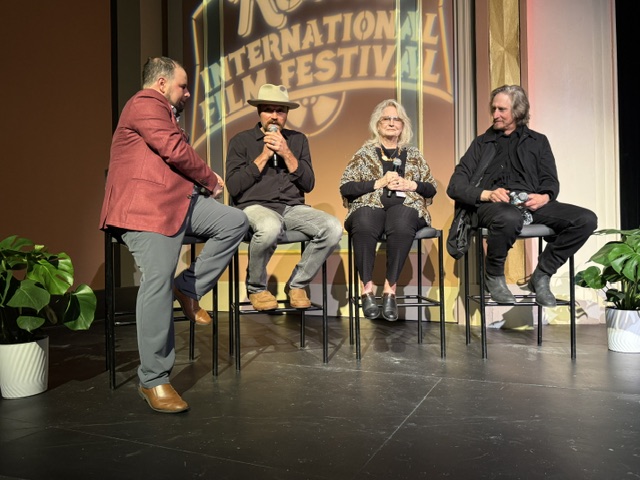
McKinnon, in town following the 23rd Annual Rome International Film Festival (RIFF) November 5 through November 8 in Rome, Georgia, has jumped straight into his latest role in an undisclosed film currently shooting in Senoia, the stomping grounds of The Walking Dead.
While he can’t say much about the role at this stage, he did offer this: “A delicious villain. A modern-day, sociopathic villain.”
Being intently present for each psychologically complex, eclectic character he has played has taken McKinnon deeper and deeper into a seriously notable body of work throughout the years. Looking at just a sliver of his career, there are roles such as Jerry Bostick in Ron Howard’s Apollo 13 (1995); Vernon T. Waldrip in the Coen brothers’ O Brother, Where Art Thou? (2000); Coach Burt Cotton in The Blind Side (2009); Phil Remington in Ford vs. Ferrari (2019); and many more titles, including The Accountant, which McKinnon wrote, directed, starred in, and won an Academy Award for in the Best Live Action Short Film category in 2002. The latter is a dark comedy about Southern landowners trying to keep their farm, which screened for its 25th anniversary at RIFF.
“The Accountant really was an opportunity for me to play the lead role, but also a great character role for me, and I like [its] physical comedy, and I don’t get to do a lot of that in film and television,” McKinnon says of the Oscar-winning film short.
Even before the Academy Awards, in 2001, The Accountant won the Oscar-qualifying Atlanta Film Festival’s Jury Award for Best Narrative Short, along with the Festival’s Southeastern Media Award.
“Partly because of The Accountant and how that gave me confidence and other people had seen it and [began] thinking of me as more than just a character with no name, they started seeing me in maybe a little bit deeper way,” McKinnon notes.
“David Melcher, who created Deadwood (2004-2006), gave me an extraordinary role [Reverend H.W. Smith in season one] that wasn’t a role until he made that role,” he says. “That was really the first time anybody had given me that type of break, as an artist, like ‘You belong.’ And that was huge. I’m forever grateful for that.”
All the way around, multiple acclaimed TV series — such as Sons of Anarchy (2008-2014) and Mayans M.C. (2018-2023) — put McKinnon’s characters to work. And most of the time, the success of these series seemed to indicate that when McKinnon is present, his work synchronizes with the zeitgeist.
Eventually, McKinnon began to create the stories, too, moving beyond roles for himself.
“For the first time, I didn’t put myself in the story,” he says of the TV series he created, Rectify, a Peabody Award-winning Southern Gothic drama about an inmate released from Georgia’s death row. McKinnon was also the writer, showrunner and executive producer of the series, which ran on Sundance TV for four seasons (30 episodes) from 2013 to 2016.
“I had this idea in my head for a long time and an interest in the death penalty,” McKinnon says of Rectify. “The kind of draconian way that people are kept in cages and how that could affect you and small-town family dynamics.”
He adds, “All those things just kind of came together in this story … that’s probably the most intense, hypercreative time of my life because I got to push this beautiful rock up the hill every day for four seasons, and it was hard and it was heavy and it was beautiful.”
Throughout his career in film and television, McKinnon recalls countless opportunities to watch other creators push that rock upward. One example: the experience of being on set with the Coen brothers for his role in O Brother, Where Art Thou?
As McKinnon describes, “It was exactly like you would expect it to be. [The Coen brothers] have the storyboards out there, and they were not the guardians of the secrets; [they] shared it with everybody. Then, you watched them behind the camera, and they were like those original, intellectual college students who were snickering back behind the camera because people were doing these crazy, foolish things, and [this incredible experience] was all that I expected of it.”
He adds, “It was a great role for me, very physical comedy, and you don’t get a lot of opportunity to do that in film and television.”
Going all the way back to the beginning, before the early days in the arts scene of 1980s Atlanta, which McKinnon describes as “electric — we just had the best time,” he grew up in Adel, a Southern town of less than 6,000, three-and-a-half-hours down I-75 south from Atlanta.
While the tiny Georgia town may seem an unlikely place to spawn an actor like McKinnon, it turned out to be nearly ideal.
“When you’re a kid, you don’t know any different. That’s where you’re from, and that’s where you live,” McKinnon notes. “You have no perspective.”
In his early teens, the experience of small-town Southern living began to change. As McKinnon puts it, “The village became more complicated … a paradox of light and dark.”
So McKinnon began writing and connecting his upbringing to stories.
“We sat around and told stories, my family and the elders, and I think that shaped my understanding of how stories worked and what made them compelling,” he says. “And I understood that the truth should never get in the way of a good story, and you could stretch things.”
By 15, McKinnon was exploring the world without leaving home.
“I was reading Carlos Castaneda and Ken Kesey, and I was listening to Todd Rundgren and David Bowie,” he says. “I subscribed to Psychology Today at 15, and it was very dry back then.”
McKinnon also got his first glimpse into theater when his big sister won Best Actress in the Region during her sophomore, junior and senior years of high school. “My mother directed the plays,” he notes.
Secretly, McKinnon was intrigued.
“I was around [acting], and I was a class clown, but the idea of getting up on stage and doing something just terrified me,” he recalls. But then, he graduated from high school and attended Valdosta State University, which he says was really a college at the time.
“I felt like it was a good place to not have to work, but then I realized I had to pass my classes to stay,” McKinnon says. “Eventually, a young woman friend of mine signed me up for an audition because she knew I really wanted to do it.”
As a result of that audition, McKinnon got a small part and a look at a world he hadn’t encountered before. “The village of that theater company was so outrageous and so different, and I loved all of it,” he says. “I fell in love and really never fell out of love.”
Today, from the vantage of a decades-long, highly successful career in film and television, McKinnon continues to tout the power of the present for any aspiring actor.
“What we all hope for is, you finish a take and you go, ‘What the fuck did I just do?’ You know that was something great because I wasn’t judging it. I was just doing it,” he says. “And part of that is working the craft and practicing — and practicing letting go.”
::
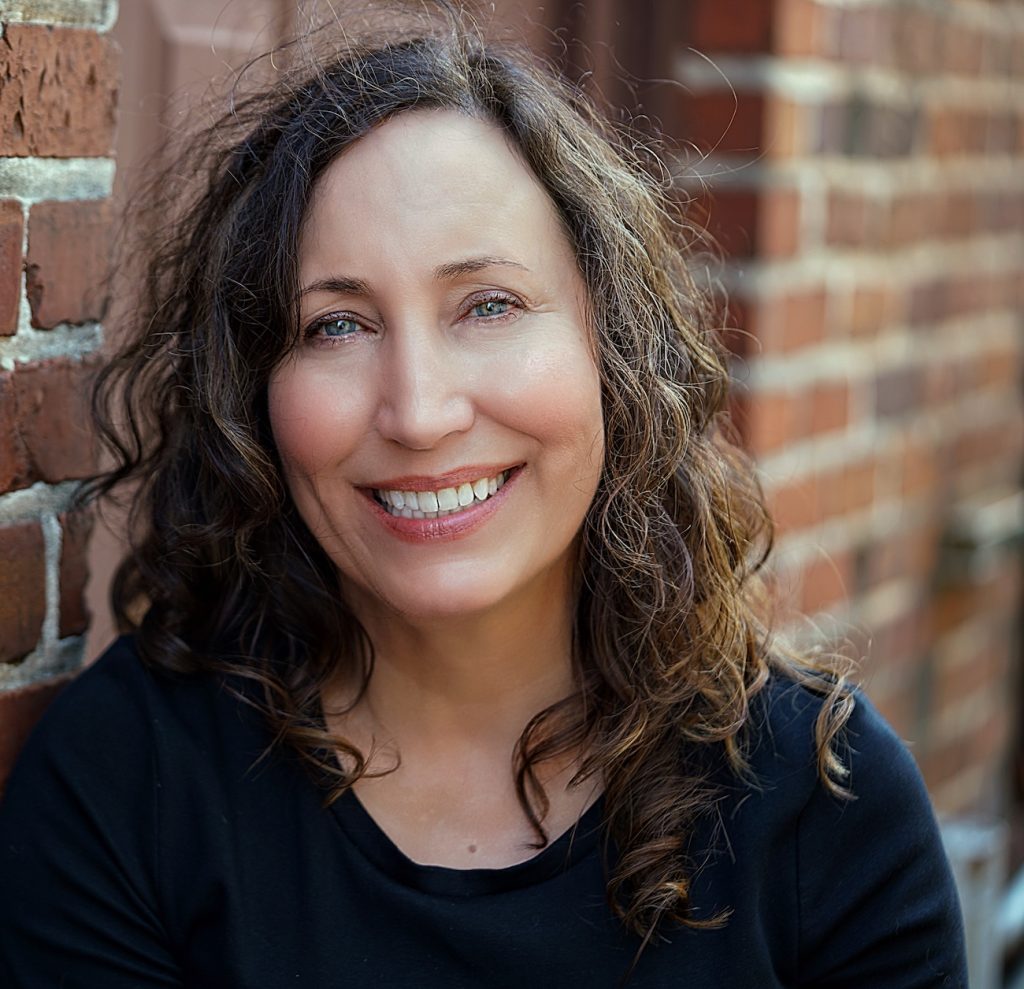
Carol Badaracco Padgett is an Atlanta-based freelance writer who focuses on film and television, the automotive industry, architectural design and collaborative storytelling projects.
STAY UP TO DATE ON ALL THINGS ArtsATL
Subscribe to our free weekly e-newsletter.

PLEASE SUPPORT ARTSATL
Your Gift Sustains the Coverage You Count On!
Related Posts