Still incubating: Lillian Blades reveals an evolving practice in ‘Sanctuary’
Lillian Blades’ Sanctuary occupies a dedicated gallery space within the Emma Darnell Aviation Museum and Cultural Center, where it serves as the centerpiece of EmpowerHer, an inclusive, women-focused community exhibition featuring more than 100 artists. Curator Tisha Smith’s decision to book Blades as anchor for an event of this scale speaks to the artist’s standing in Atlanta’s art community, and Blades does not disappoint.
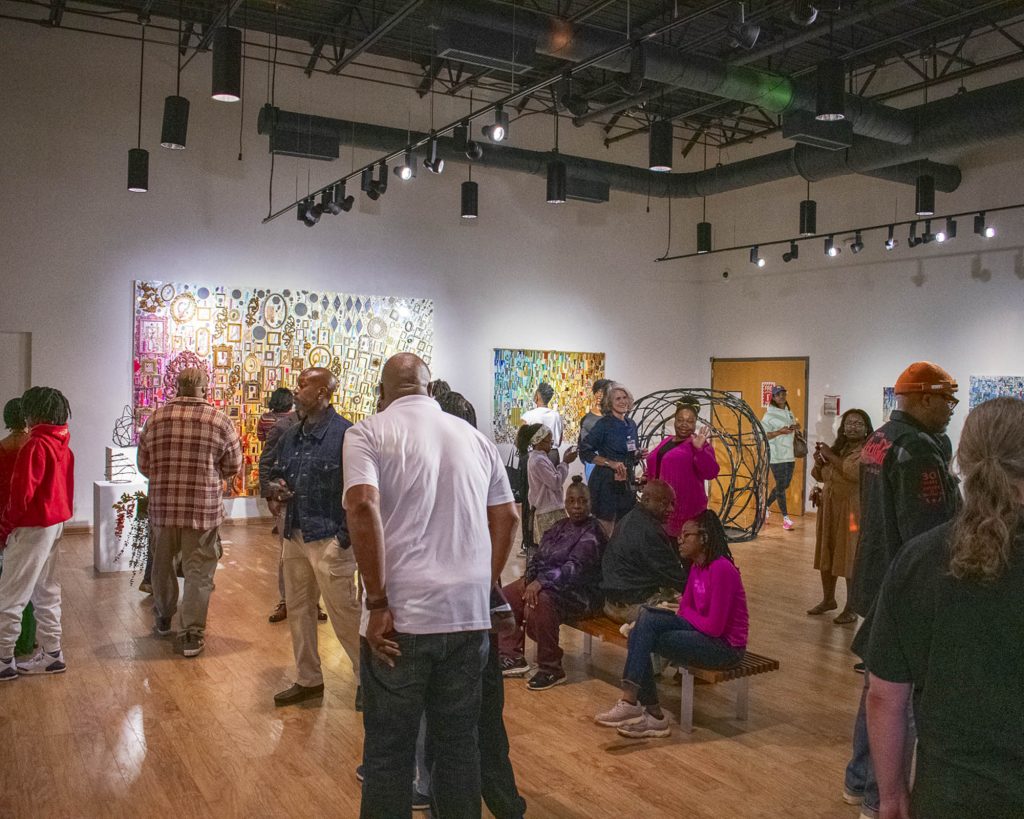
The wall assemblages in Sanctuary offer the vibrant, maximalist command we have come to expect — fully formed and undeniable. But the exhibition’s most significant offering may be its least resolved: a series of pedestal studies and floor-scale Womb Pods that reveal an artist still growing, still incubating new ideas and generous enough to let us watch.
Blades is one of the most formidable artists working in Atlanta today. She is Skowhegan-trained, collected by the Birmingham Museum of Art, commissioned for Hartsfield-Jackson Airport and is responsible for one of the most memorable installations the Atlanta Botanical Gardens has hosted in recent years. Her mixed media assemblages draw on her Bahamian childhood, West African ancestry and the memory of her late mother, a seamstress — influences that surface in her color palette and in the found objects employed in her work.

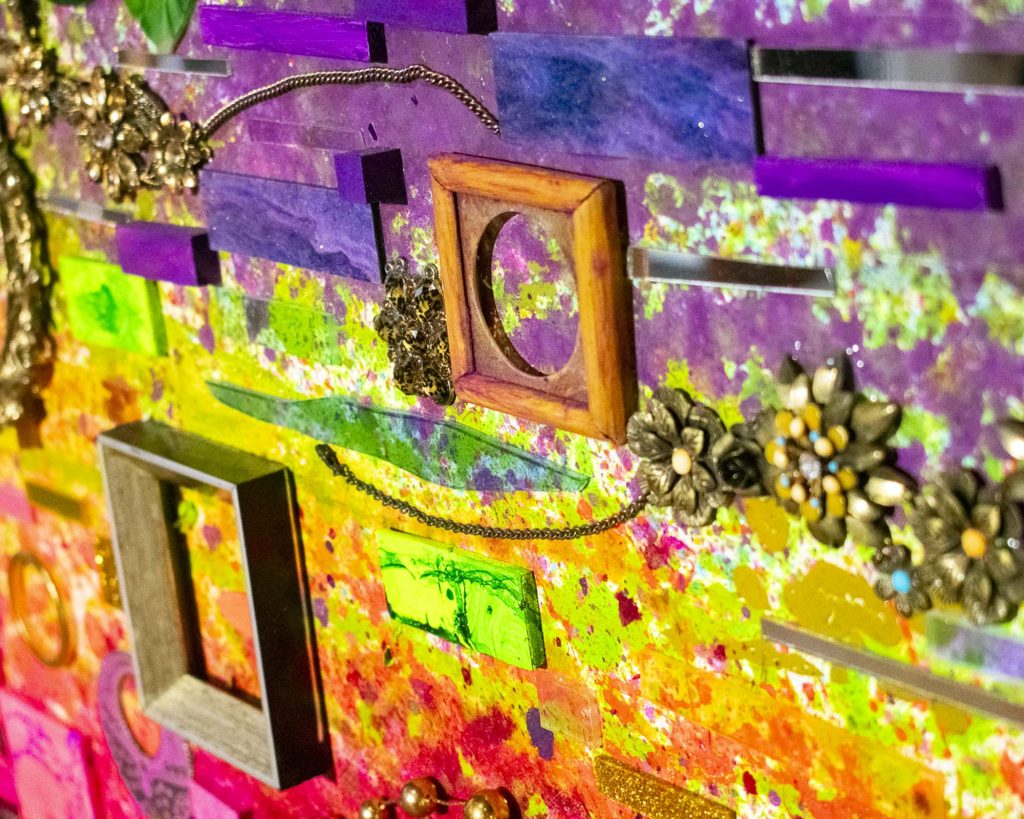
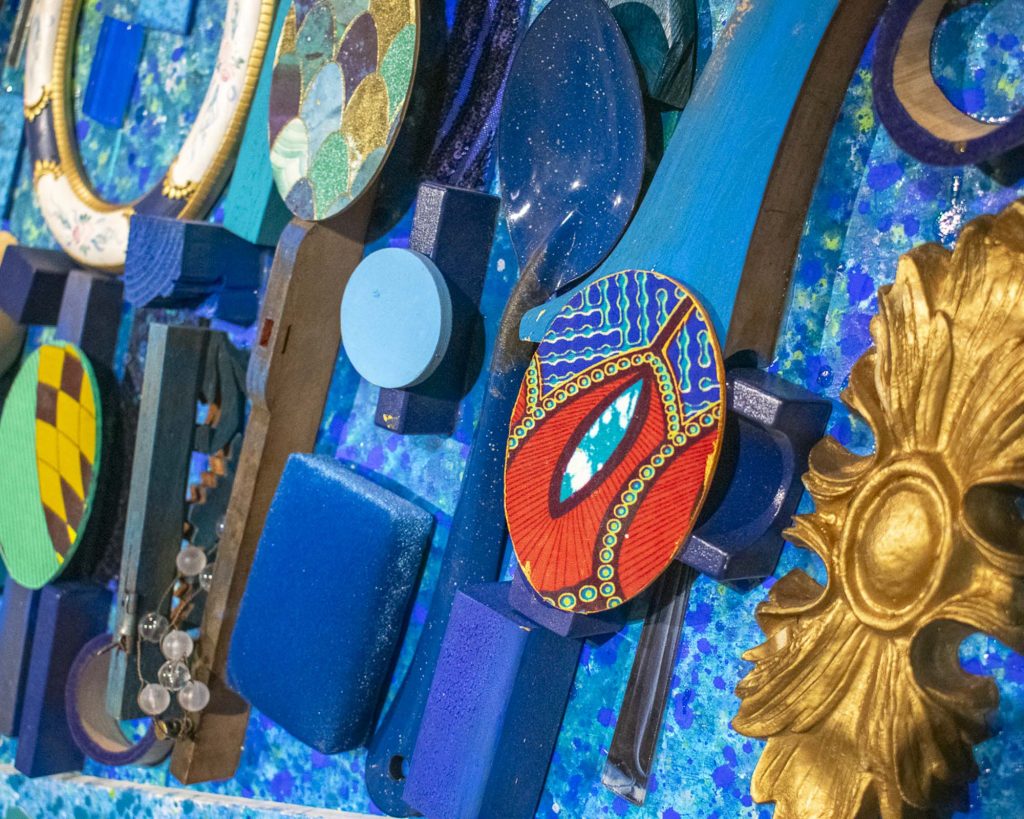
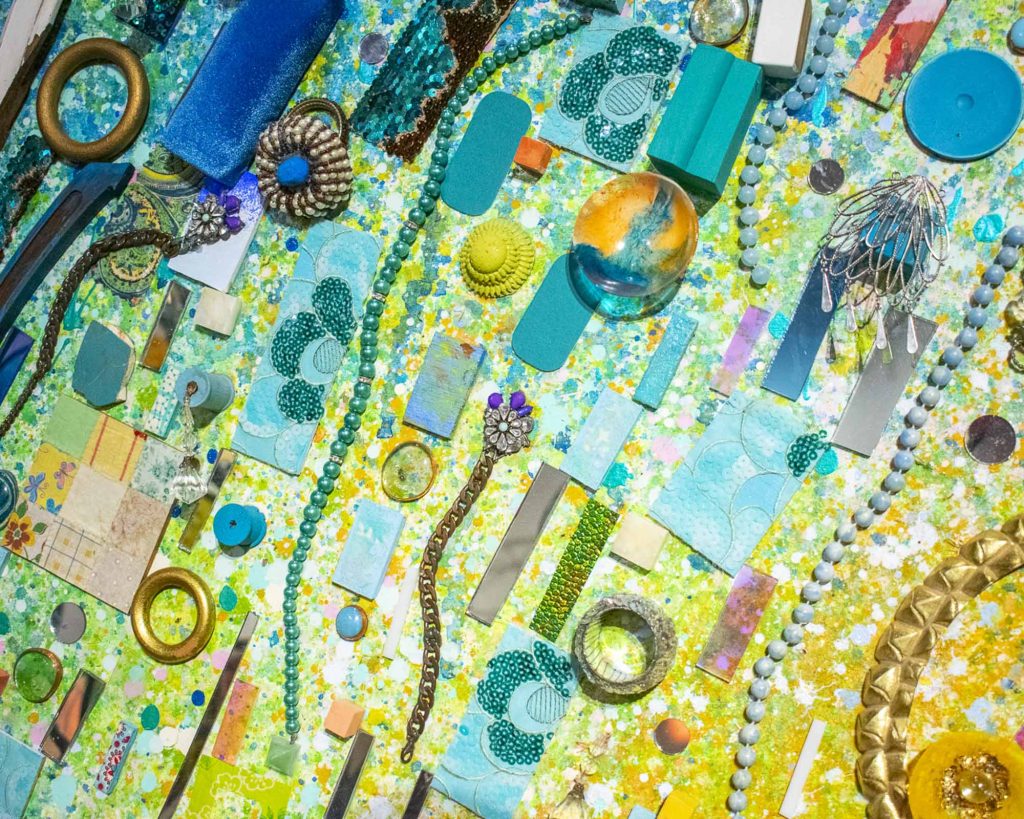
Perennial, the largest piece in the room, is a commanding work from Blades’ Atlanta Botanical Gardens installation. It lends Sanctuary the gravitas that viewers familiar with her career will expect. Pamle’s Aura (Homage to Richard Mayhew) and Summations offer gallery-scale variations on the same rich saturated pinks and greens that are characteristic of much of Blades’ work. Seashore and Sunset on the Beach employ a more muted register, drawing on a coastal palette of blues and sand that connects to her Bahamian roots. These are the pieces viewers likely show up hoping to see and they are engaging, vibrant and impactful.
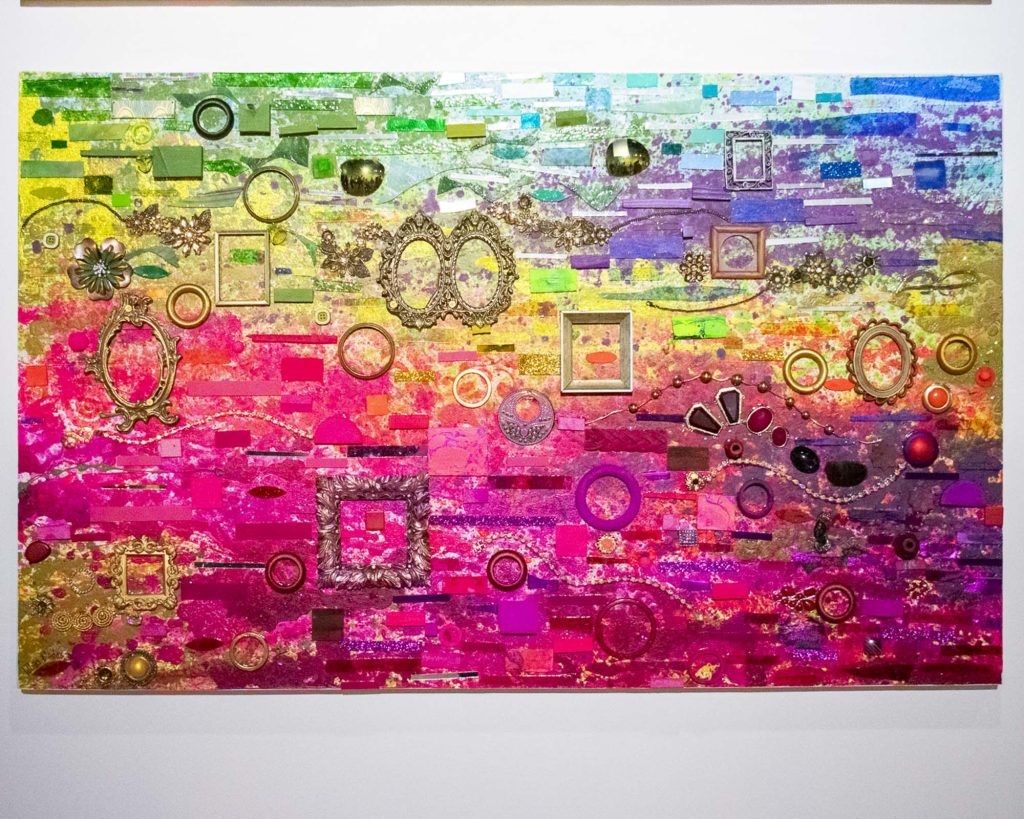
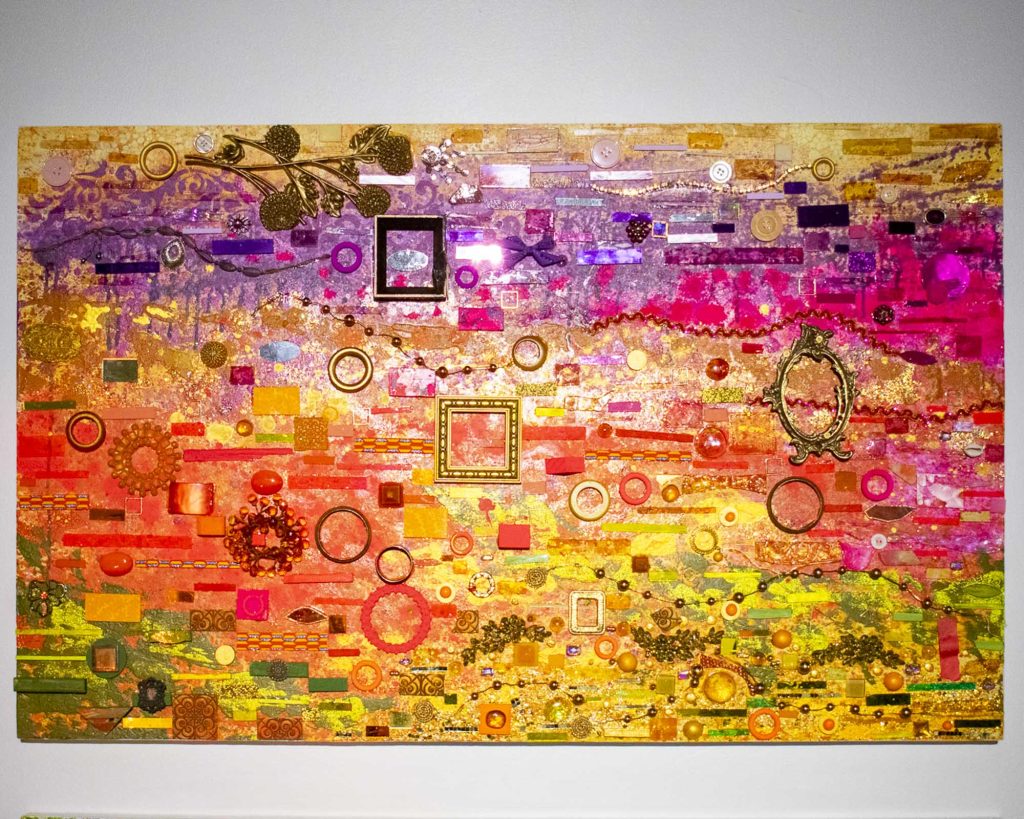
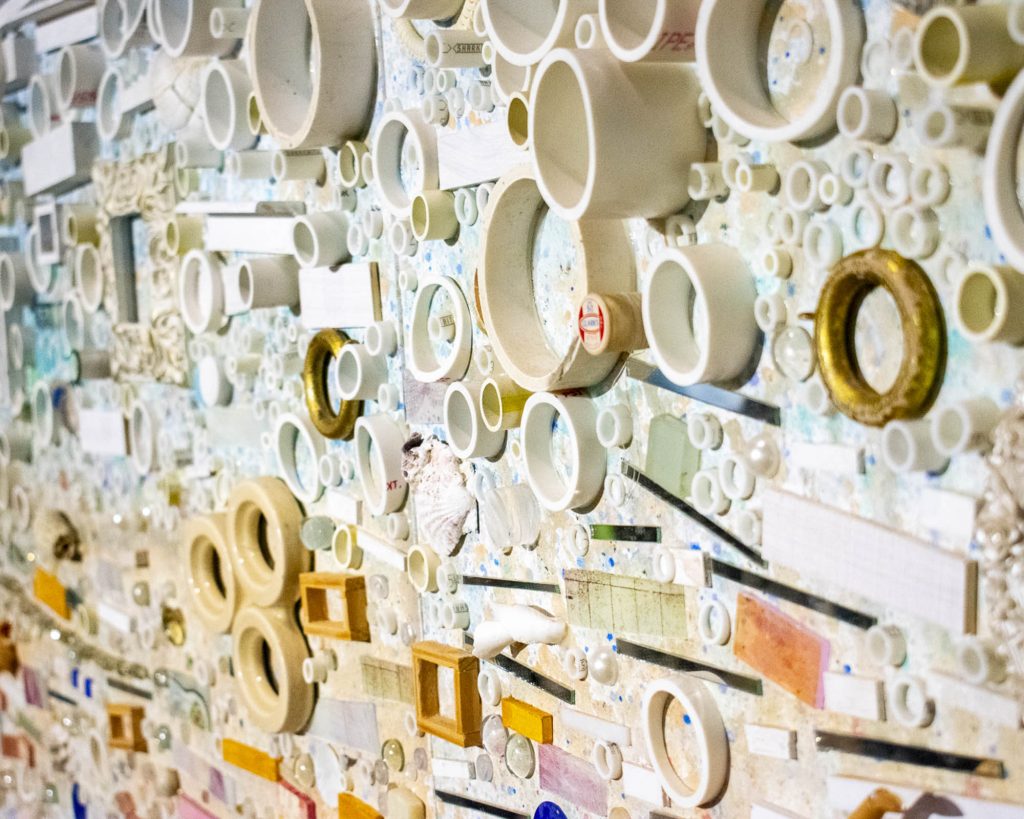
Sandy Beach offers some of the exhibition’s more notable moments of material interest. PVC pipe is cut so that from the front it reads as white, but from the side its red commercial labeling remains visible. An artist’s mannequin appears whole and preserved rather than repurposed for texture alone. There is an honesty in these choices; found objects retain their identity rather than dissolving entirely into surface. This willingness to let the materials be recognizable and, in small ways, imperfect, speaks to Blades’ maturity as an artist. It is these confident and seemingly effortless moments that allow her to place unfinished sculptures in this conversation without raising eyebrows.

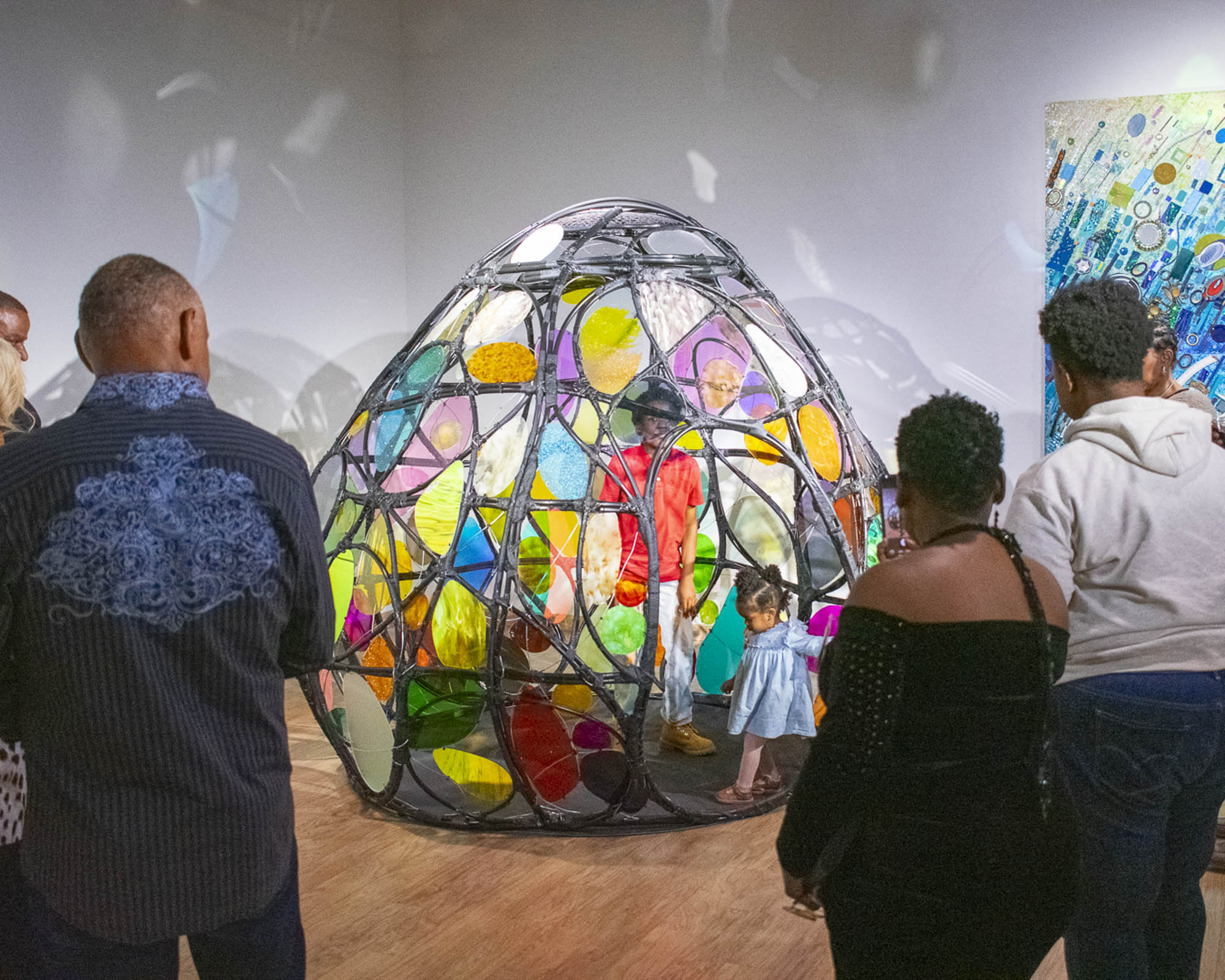
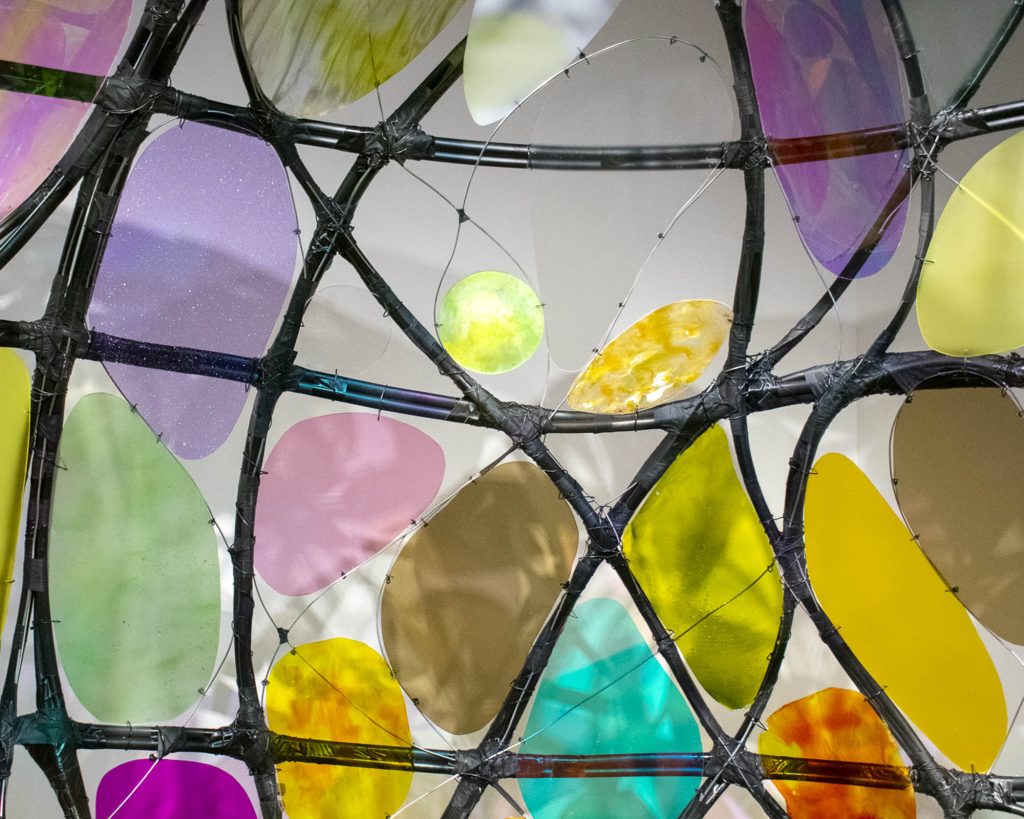
Three pedestal-mounted Sanctuary Studies trace a visible progression toward the freestanding Womb Pods as explicit tests, maquettes for a new formal territory that Blades is mapping. Womb Pod I, the most fully realized of the sculptural works, incorporates acrylic panels and mirror; it is large enough to enter and visitors did so immediately, drawn into an interior space that feels at once sheltering and generative. Womb Pod II is darker and less resolved. Its armature suggests acrylic panels that have not yet arrived, and it reads as, frankly, unfinished. Together, the sculptures form a chronology of an evolutionary moment in Blades’ career, which is evidently ongoing.
Those familiar with Blades’ longer trajectory might recognize Womb Pods as something of a natural extension of her recent explorations. Her 2024 installation at the Atlanta Botanical Gardens made heavy use of suspended curtains of acrylic, displayed on the ceiling, enveloping viewers with light from the sun above. Her 2025 solo exhibition Through the Veil at Sarasota Art Museum brought these curtains down toward the floor, allowing viewers to pass through them, forming walls within the gallery space. Here, we see Blades pushing the relationship between viewers and the light cast through her acrylic veils to an even more intimate level of immersion.
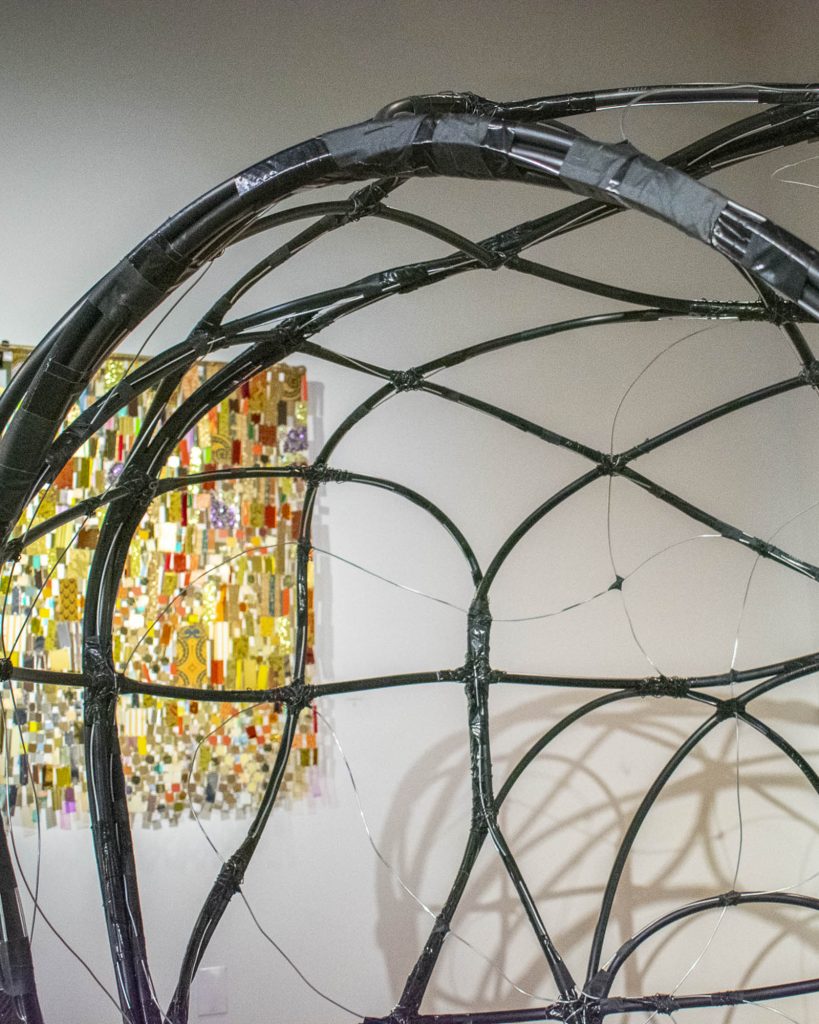
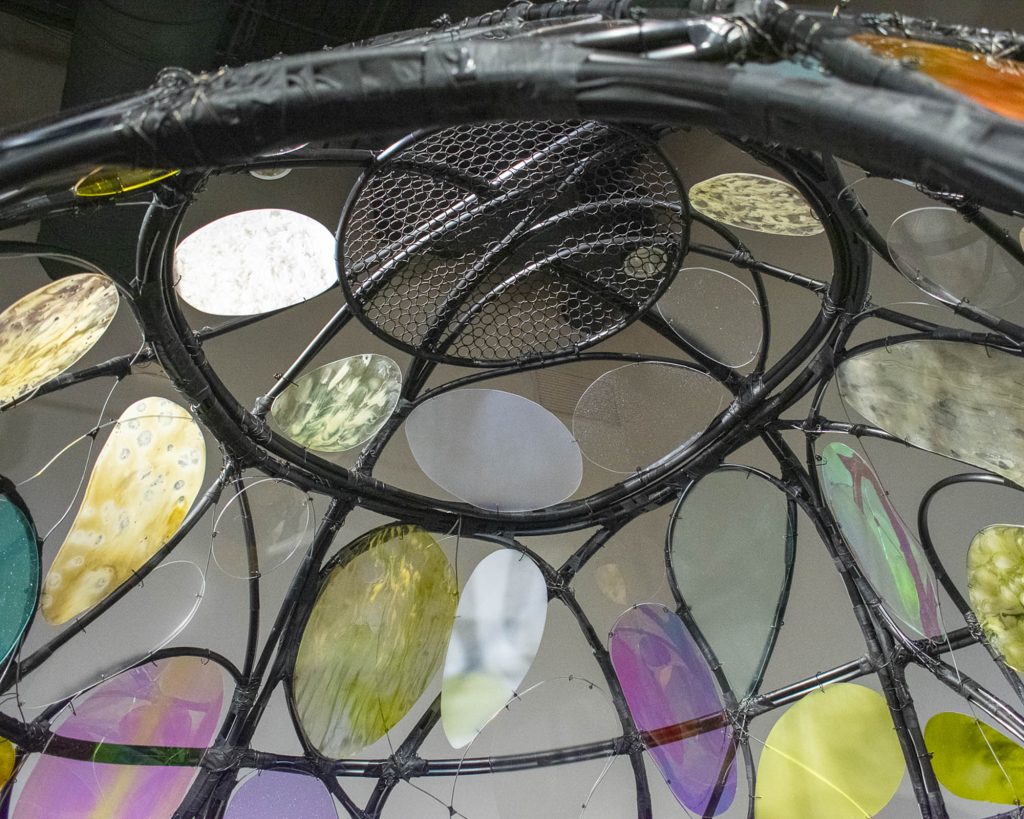

A viewer engaging Sanctuary without this additional context might reasonably assess it as uneven. The Sanctuary Studies and Womb Pod II do not carry the authority of the wall works, and nothing in the exhibition’s presentation explicitly frames them as in-progress. But to an eye familiar with Blades’ practice and the rhythms of a working artist’s output, the signs are there: These pieces belong to an active investigation rather than a finished body of work. Sanctuary reads less as a perfectly curated statement than as a candid selection of where Blades is right now, and it must be understood on those terms.
For an artist of lesser stature, showing in-progress work is a risky choice. It can easily be interpreted as wanderlust and lack of commitment or, at best, a needless opportunity for misstep. Here, the perfection of the wall pieces is sufficient proof that Blades is in full control, even for an unfamiliar viewer. It reads not as uncertainty but as ambition. It signals to the audience not that she is lost but rather that she is still evolving. Blades has more than earned our trust and patience, and this makes sharing work in progress feel both generous and intriguing. What might appear as unevenness, at second glance is actually the mark of an artist mid-stride. That is a far more exciting thing to witness than perfection.


Though Sanctuary is not Blades at her most polished, that is precisely what makes this exhibition so significant. Many Atlanta artists at this level of accomplishment settle into repetition, content to refine what already works. But Blades is clearly not the sort to rest on her laurels. Overall, Sanctuary is a compelling exhibition for those unfamiliar with her work and a thrilling signal of even more to come for those who can read between the lines.
Sanctuary by Lillian Blades is on view at the Emma Darnell Aviation Museum and Cultural Center through April 25.
::

Dr. Kevin M. Storer is a scholar, critic and collector living and working in Atlanta. His internationally-awarded research spans engineering, design, the social sciences and the humanities, examining the complex relationships between people and the objects we create — especially as they shape our identities and social realities. Kevin earned his Ph.D. in informatics from the University of California, Irvine.
STAY UP TO DATE ON ALL THINGS ArtsATL
Subscribe to our free weekly e-newsletter.

PLEASE SUPPORT ARTSATL
Your Gift Sustains the Coverage You Count On!
Related Posts