Review: ‘Untitled’ charts legacy, fatherhood and transformation on a changing Peters Street
Sustaining an art space through self-funding alone is fragile, often thankless work. Yet Miya Bailey, artist, tattooist and cultural steward, continues to keep the doors open, not only at Peters Street Station and Hidden Gallery 333 but also at the newly reopened City of Ink and two recent neighboring additions, the Old Rabbit Art Gallery and the Nina Baldwin Gallery. Together, these spaces form The WALKER & PETERS Project, Bailey’s long-term initiative to build an ecosystem where artists and community can evolve in tandem.
Old Rabbit Gallery hosts solo exhibitions for Atlanta artists who have demonstrated both presence and impact within the local scene. The Nina Baldwin Gallery, named in honor of Nina Simone and James Baldwin, centers queer artists and offers space for experimentation often absent in more commercial corridors. Bailey funds all four galleries through an intricate, self-sustained model: selling his own artwork and tattooing. Half of City of Ink’s proceeds flow back into supporting the four art spaces. In turn, the galleries provide free classes, pro bono space rentals and artistic resources for emerging creatives. Bailey acknowledges the system is delicately reliant on community investment, personal sacrifice and sheer determination, but he insists the cycle holds because the community needs it.
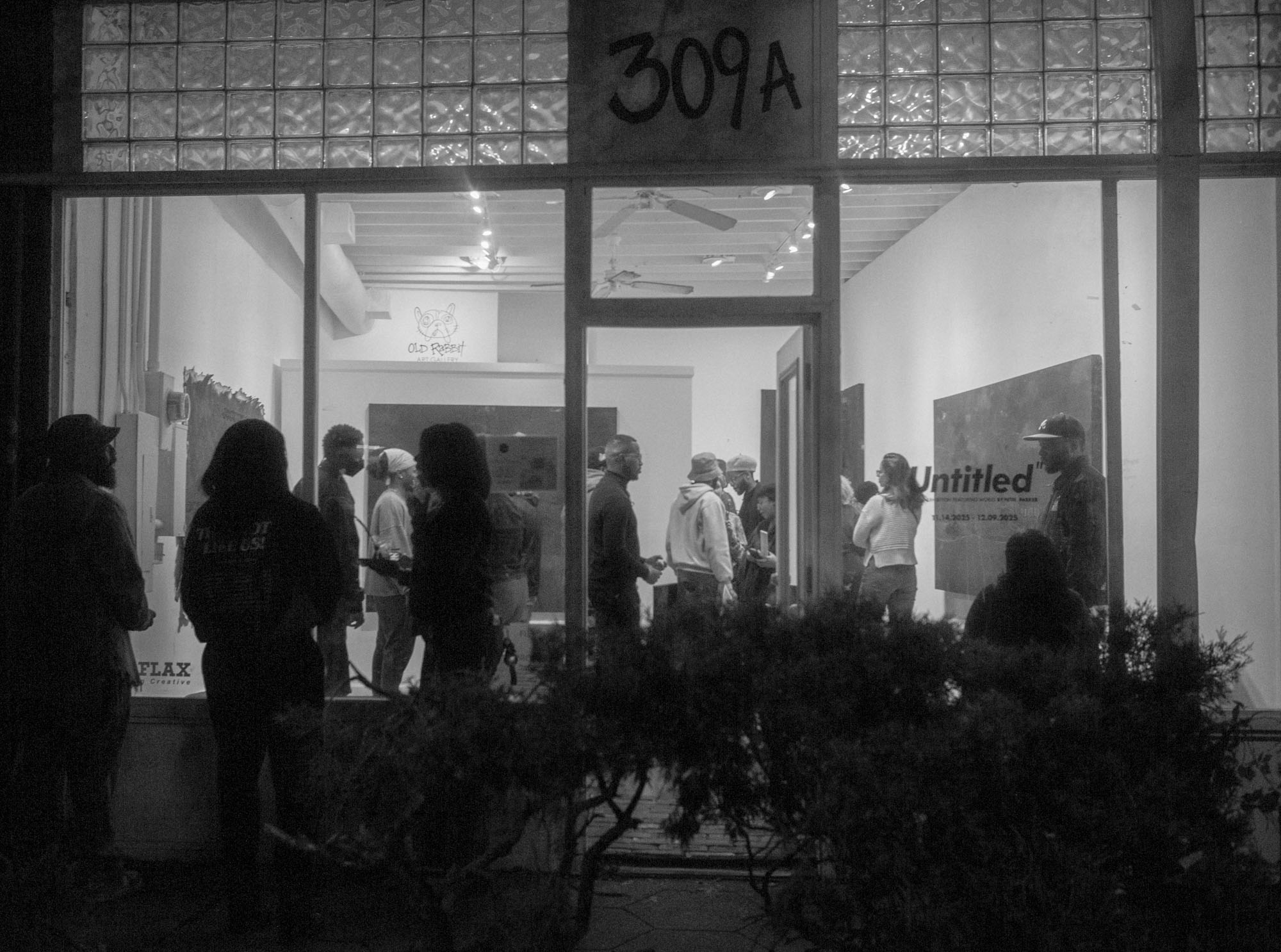
According to Bailey, the name Peters Street Station was developed in partnership with Petie Parker, who debuted his solo show Untitled at the Old Rabbit Gallery on November 14. Parker discovered painting during the quiet interiority of quarantine. Though he mentions he has “always been an artist,” he credits his PSS family with nudging him toward the brush.
He and his partner Kieta came up with the name for the exhibit, Untitled, simply due to their inability to land on a title. But the absence of a name also reflects a deeper shift. “I go overboard with promotion. Last year I made a video game, apps and amazing videos for marketing. This year is kind of like a case study to see if I could just minimize everything, and the hope was that the show would be so impactful that it wouldn’t need all of that to get people in there,” said Parker.
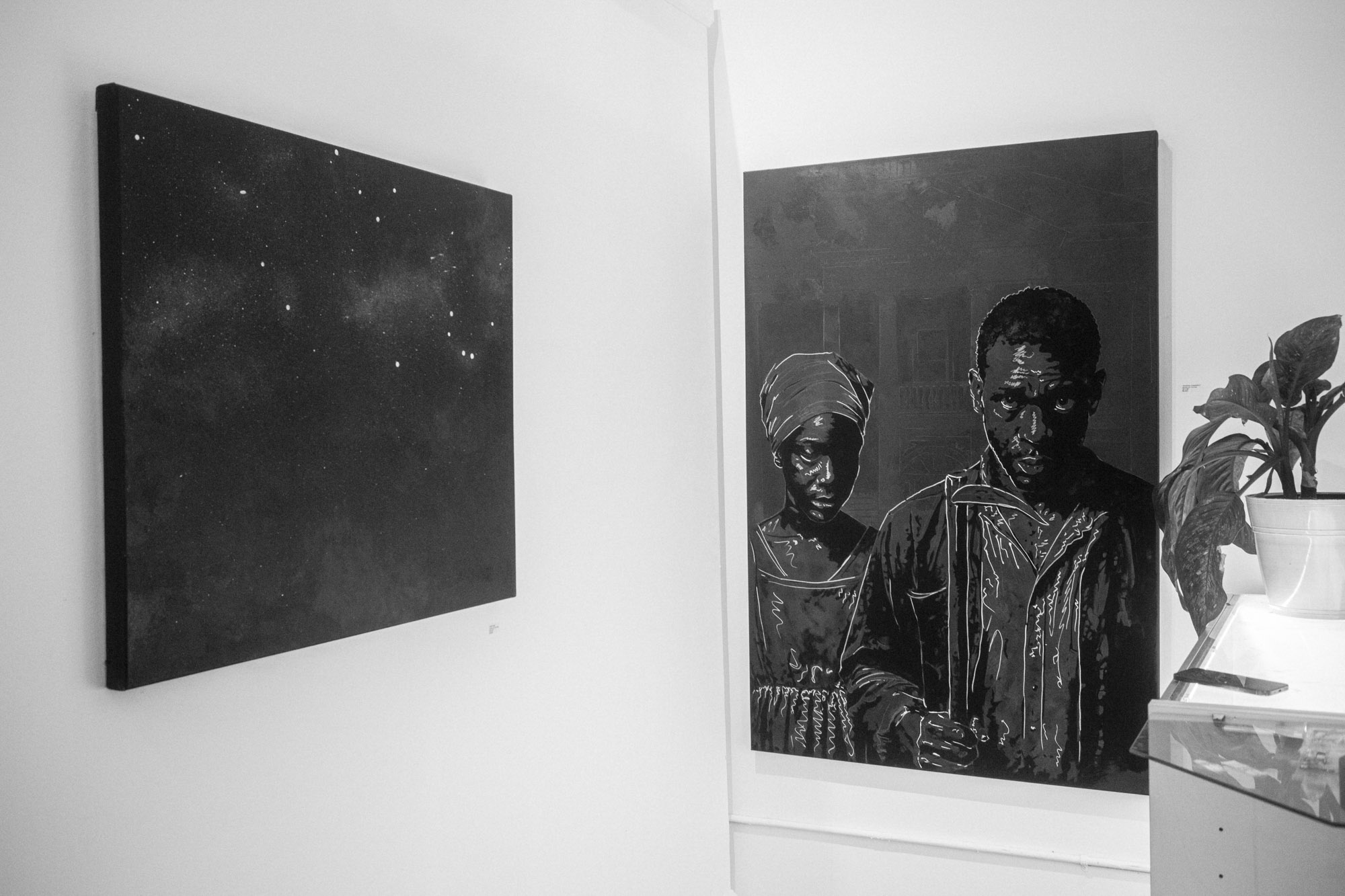
Parker’s visual language is immediately recognizable. He paints almost exclusively in black, using subtle flashes of bright color that push through matte and gloss finishes. “I always liked the idea of black gloss on matte black or vice versa,” he shared. “The best way to move within our world is if you have a brand that’s recognizable. So I wanted to come up with a style I don’t have to sign for you to see and know it’s my work.”
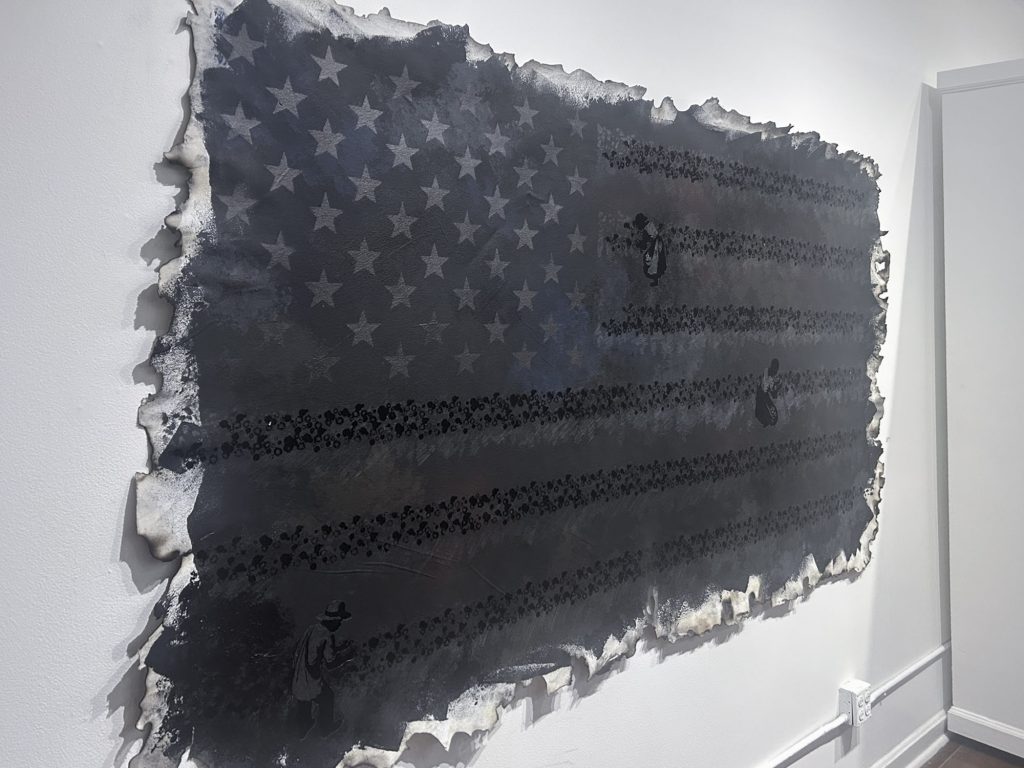
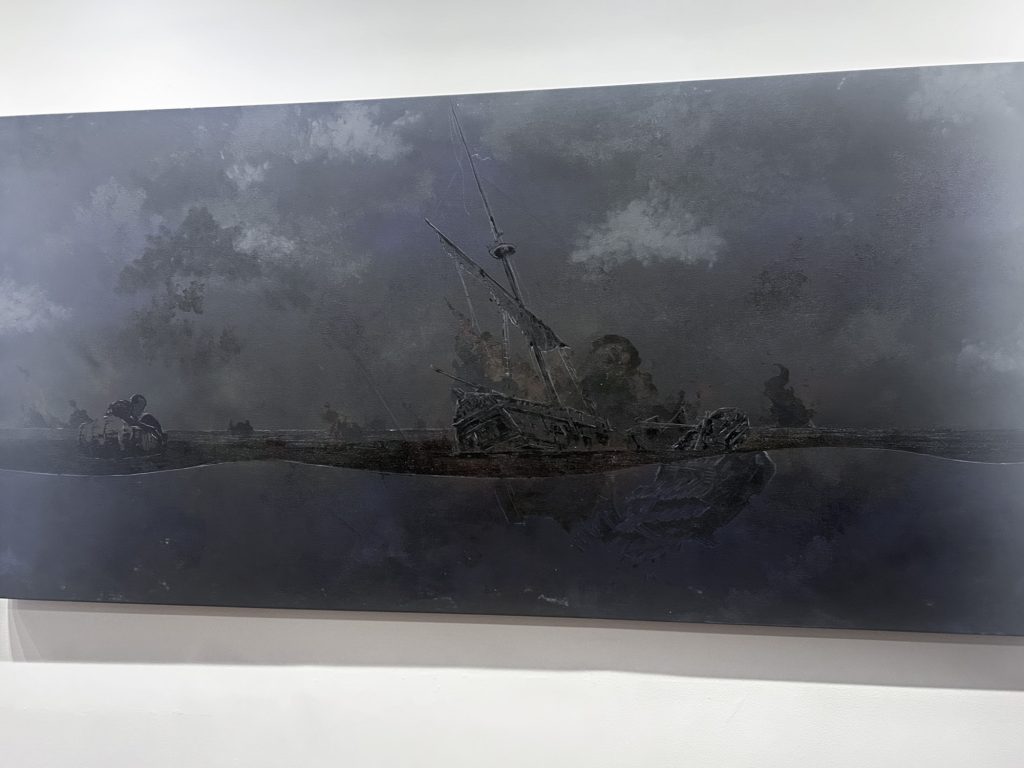
Off Our Backs, a piece depicting the American flag on a large black painted canvas, features the stripes of the flag as rows of cotton being harvested by African ancestors, which establishes the emotional gravity of the exhibition. “I want people to feel nervous and emotional. Someone cried and a man almost fainted. I didn’t expect all of that, but it was very rewarding and humbling,” said Parker.
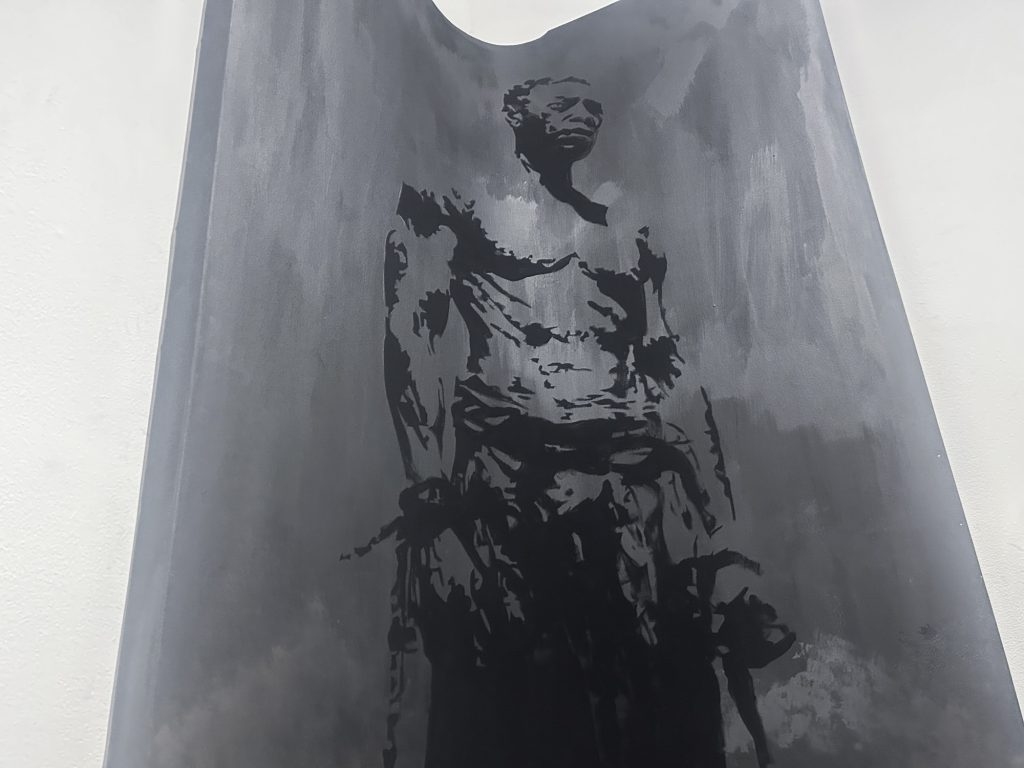
Every piece in Untitled carries a similar weight. American Antebellum, a re-interpretation of American Gothic, arrests viewers with white pencil outlines and eyes sharp enough to pierce through the canvas. Nearby, an unfinished work depicting the Middle Passage anchors the show; Parker describes it as the conceptual heart from which all other pieces emerge. Still only “60% complete,” it will evolve throughout the month, an accidental but compelling tactic that may draw visitors back for repeat viewings. Parker admits this was not the original plan but finds that the process-based openness mirrors his life at the moment as he is navigating the demands of being a full-time artist, partner and new father.

Parker shared his love and appreciation for Kieta and her ingenuity; she played a substantial role in bringing life to the exhibition. “This is the first time I’ve had true help with the entire process. I feel like it was her show just as much as mine,” Parker continued. “She said she wanted to build a corner piece that curves, and, if she said she wants to do something, she’s going to figure out how to do it.” Through movement, the piece reveals a powerful enslaved figure on one side and a frail, diminished version of him on the other. This piece is an accidental yet divine moment the couple created in this show.
“We’re on the same wavelength, and I know it’s very rare for creatives. For my partner to be the mother of my daughter, I’m inspired,“ said Parker. “Our greatest collaboration is our daughter, and now she’s picking up a brush and trying to paint as well. I’m excited to see how this impacts her because she’s with us all day creating and learning. It’s a dream come true for me.”
Old Rabbit Gallery, along with Nina Baldwin Gallery, Hidden Gallery 333 and City of Ink, were created to provide spaces and tools to help artists flourish. These opportunities allow creators like Parker to feed their families and give back to the community.
As Peters Street evolves again, this time through deliberate re-investment and the interlocking of art, business and community, both Parker and Bailey acknowledge the significance of this moment. Bailey, who turned 50 this year, briefly toyed with retirement before deciding instead to expand the block. “Everything is out of pocket,” said Bailey. “We need more people to buy art. We need funding from the city.” He hopes to grow the team, which currently includes Stretch, an artist who recently celebrated a sold-out exhibit. Bailey hopes to pay and expand the team of volunteers who support the maintenance of this project.
Parker, Bailey and the artists who move through these spaces are collectively shaping a new chapter for Atlanta’s creative corridor. Their work, rooted in legacy, community and experimentation — demonstrates how sustainable growth emerges when art and business evolve together. Untitled will remain on view at The Old Rabbit Gallery until December 9.
::
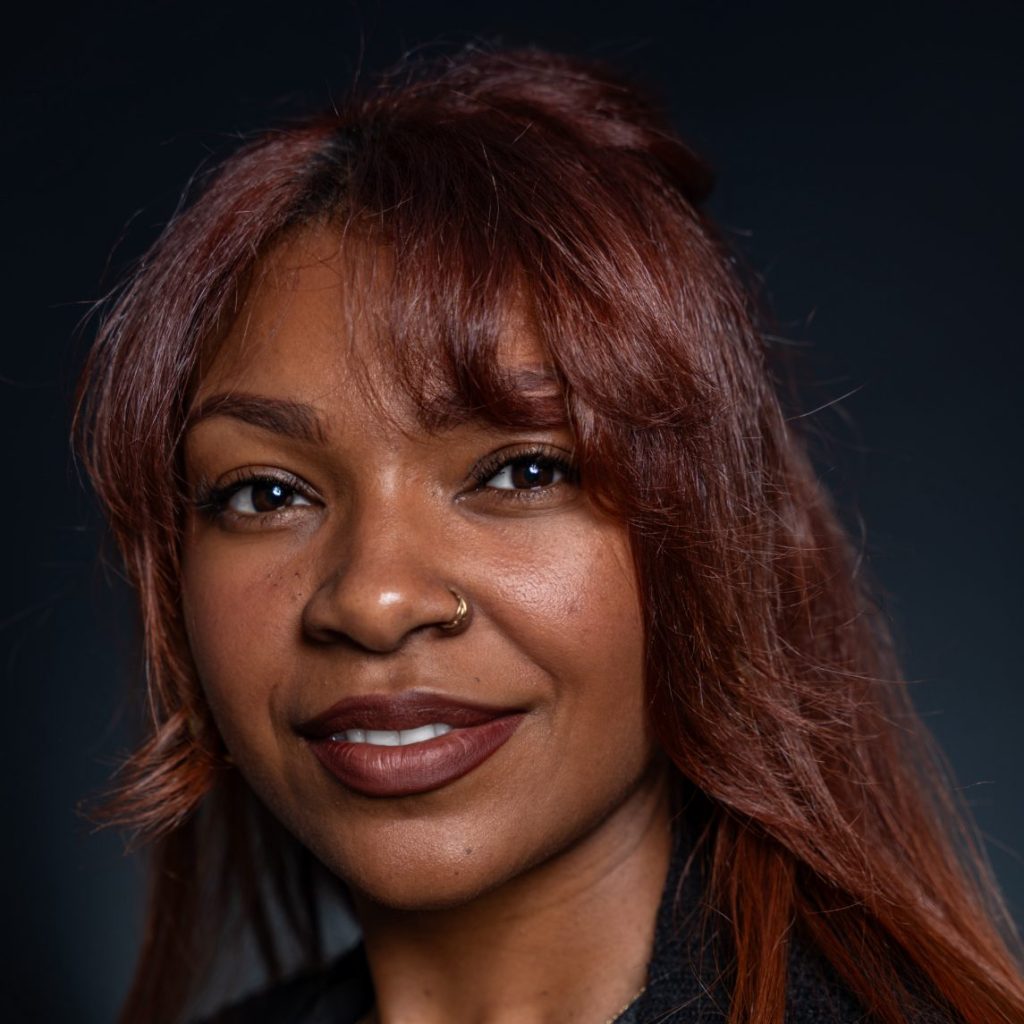
Brittany Mackins is an Atlanta-based writer and creative with a deep love for the intersections of art, healing and community. Blending her background in journalism, brand storytelling, creative writing and event production, she writes to honor the stories behind the art, the lived experiences, emotions and cultural roots that shape creative expression. Her lens centers diverse artistry in all its expansive forms.
STAY UP TO DATE ON ALL THINGS ArtsATL
Subscribe to our free weekly e-newsletter.

PLEASE SUPPORT ARTSATL
Your Gift Sustains the Coverage You Count On!
Related Posts