Review: Outfit’s “Bright Half Life” a Valentine to love’s glory, complications
Any romance that leaves us better than it found us is a success, no matter its ending. If you learned something or if the love you felt was real, even just a little real, you carry it into your future, together or apart.
With Bright Half Life, the two-person play by Tanya Barfield onstage at Theatrical Outfit through February 27, the audience will find much to love. Bring your sweetheart. Bring an open mind. Bring tissues. This is a very good show. It feels deeply personal, and it might have audience members reflecting on the highs and lows of their own past loves.
Bright Half Life shows us two characters, Erica and Vicky, in an enduring love of decades. Sometimes, as with life when navigating a course with another persnickety individual, this romance requires Erica and Vicky to endure a whole lot.
The script jumps back and forth along the timeline of their relationship, juxtaposing moments of bliss with moments of heartbreak. There are arguments and weddings, doctor’s appointments and job offers, explosions and proposals. The story is full of the stuff of life, yet the audience is intentionally thrown from one event to another without a map.
The narrative hook that drives Bright Half Life is the mystery of the timeline. It is never immediately clear to the audience what happened when with this couple, as though we’re being shown a slideshow out of order, and our brains must put the puzzle together. It seems to last from the Challenger explosion in 1986 to sometime after now. The moments do add up to something satisfying. The full picture, once we see it, is really quite beautiful.
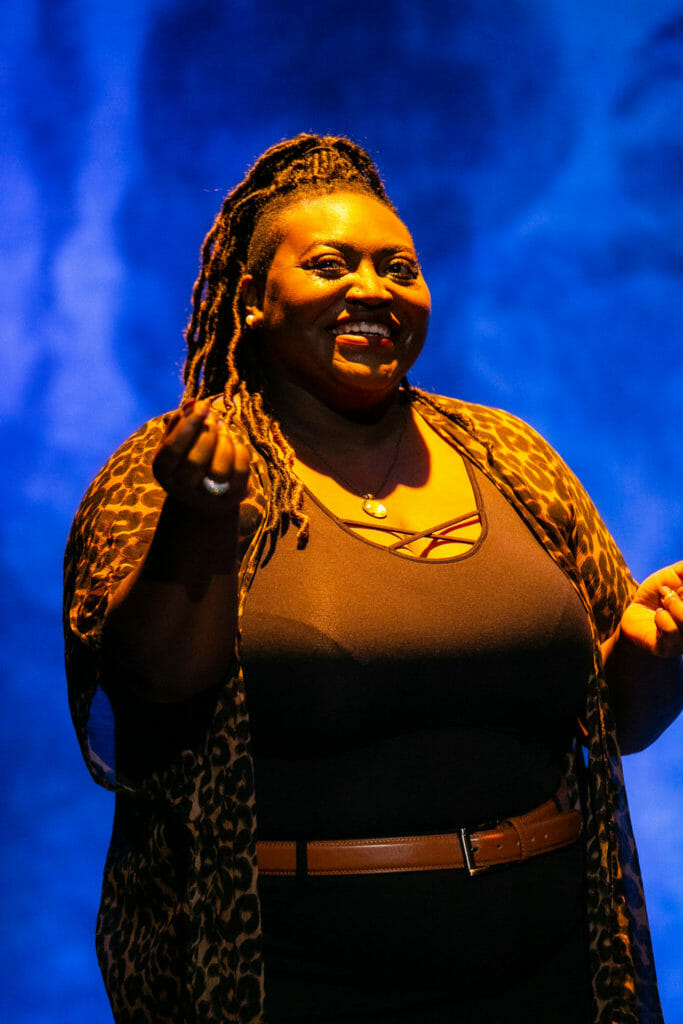
Actors Park Krausen and Candy McLellan, who never leave the stage or even get a break because there’s no intermission, know exactly where they are at all points in this story. The script requires them to shift on a dime. They’ll be in the middle of a shared laugh, then the lights change suddenly, and their characters are at a different point in their 40-year relationship. Sometimes the same argument is played over again with the same dialogue, but with a different tone.
Erica, played by Krausen, is a pragmatic and neurotic woman working as a textbook writer. She’s frustrated by her job, occasionally dissatisfied and moody, and she puts her foot in her mouth all the time. When she’s faced with change in her life, she becomes more impulsive, yet she often regrets those impulses later. The story “begins” when she starts flirting with her supervisor Vicky.
Erica’s fear of heights, weak stomach and physical awkwardness give Krausen moments that are very funny. And when she has a moment to explain how love is like starlight, evoking the title, it’s genuinely moving.
McLellan gives Vicky authority, playfulness, spark and wit. There are two moments when McLellan lets Vicky react with a beat and a glance before delivering a line, showing feelings in her eyes that are different from what her character is saying. Those are among the best moments in the play. Since the entire show involves shifts in time and shifts in feeling, it’s very impressive when we see Vicky’s mood change within one single conversation
When McLellan made Vicky’s entire body language shift during the moment that a celebration with Erica turned into a devastating squabble, a lady in the audience on opening weekend muttered an audible, impressed “Damn.”
Indeed, lady.
This play seems like, on the page, it could be a minefield. One misstep, and the whole thing is wrecked, yet Krausen and McLellan dance right through it with infectious vulnerability, humor and joy. The dialogue is quick and poetic. Their chemistry is great. Everything works.
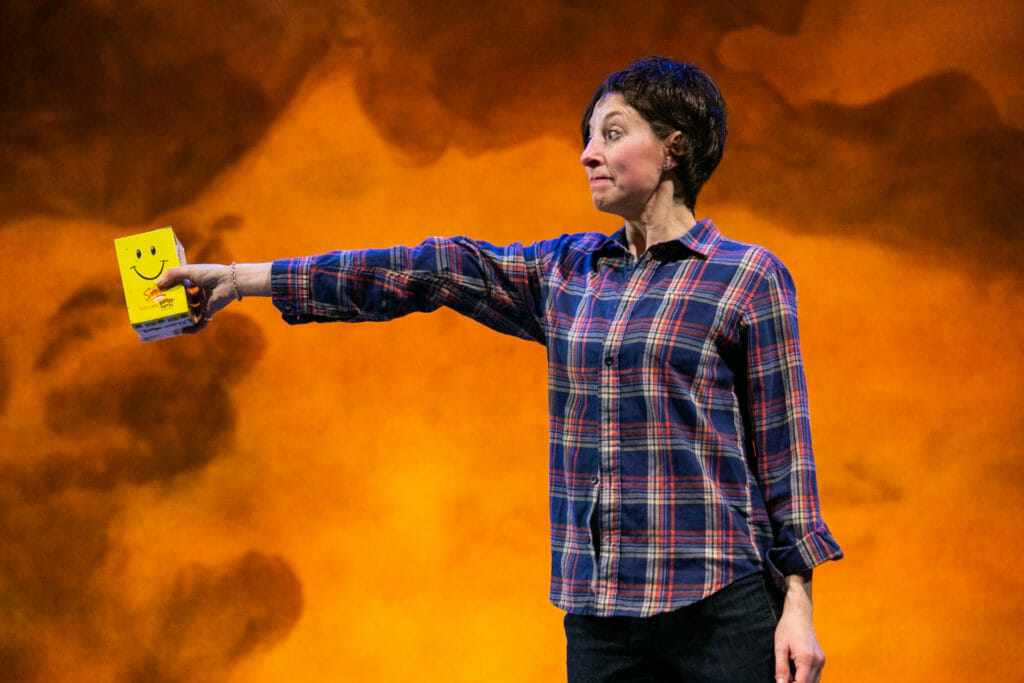
The set, designed by Ming Chen, looks like a star chart painted on a labyrinth, a winding spiral of rising platforms that the two performers have to navigate. In the background, there is a giant moon, and the lights that shine from it can cast the show in a romantic light or a darker one. Hidden within compartments on the set are a number of period-specific costumes and objects — an IBM keyboard, a box of Pop Tarts, a wedding bouquet among them — selected by costume designer Dr. L. Nyrobi N. Moss and prop designer Nick Battaglia to quickly cue what era we’re in.
The performers must be on the correct platform, on the right foot, holding the right prop at just the right moment, without ever leaving the stage or losing the pace of the story. Director Melissa Foulger and her team make that incredibly complicated mix of blocking and juggling look effortless.
Other stage shows, such as Jason Robert Brown’s The Last Five Years and Harold Pinter’s Betrayal, have shown us glimpses of relationships on a shuffled timeline before. Bright Half Life shows us an interracial lesbian relationship. The challenges faced by gay couples and interracial couples at this time are different than romances we see onstage more often.
But Bright Half Life gives us a story of love that changes, breathes and grows as its lovers connect and collide. It is relatable, romantic and dazzling.
::
Theatrical Outfit requires proof of vaccination or a negative test (for ages 12 and older), a temperature check and masks during the performance.
::
Benjamin Carr is an arts journalist and critic who has contributed to ArtsATL since 2019. His plays have been produced at The Vineyard Theatre in Manhattan, as part of the Samuel French Off-Off Broadway Short Play Festival, and the Center for Puppetry Arts. His first novel, Impacted, was published by The Story Plant in 2021.
STAY UP TO DATE ON ALL THINGS ArtsATL
Subscribe to our free weekly e-newsletter.

PLEASE SUPPORT ARTSATL
Your Gift Sustains the Coverage You Count On!
Related Posts