Review: Gwaltney’s ‘Sing Down the Moon’ is high drama cloaked in lush, surreal prose
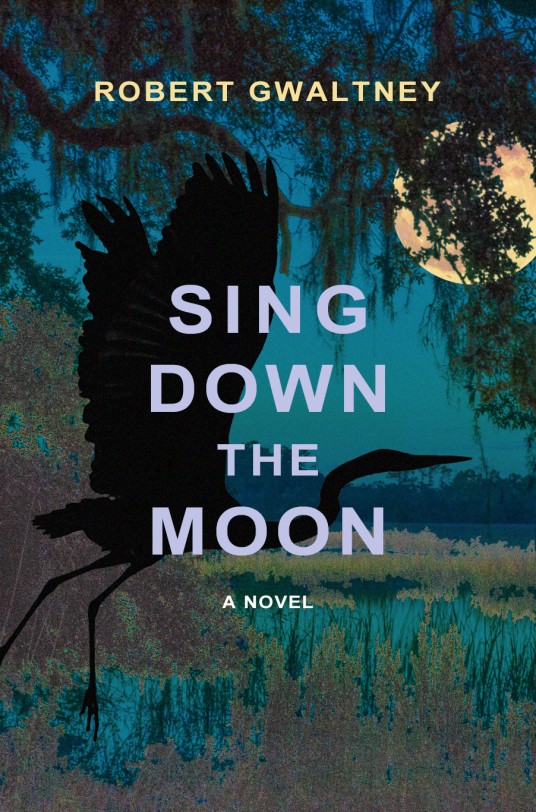
“Imagine how dull the world would surely be,” says a character in Atlanta author Robert Gwaltney’s Sing Down the Moon (Mercer University Press, March 3), “if we carried our histories about scribbled on our sleeves.”
Luckily, it’s a sin that none of the eccentric characters in Gwaltney’s dreamlike second novel are guilty of. The story follows Leontyne Skye, a naïve and isolated amnesiac teenager living on Good Hope, a remote, magical island off the Georgia coast where it is always night. There, a “haint-trapping tree” named Damascus grows predatory figs that feed on the island’s population of fishlike ghosts. The women of Leontyne’s family turn these “pregnant” figs into a potent, addictive liquor called “Redemption” — work that slowly deteriorates their minds and bodies.
When Leontyne’s mother, Eulalee, dies, leaving Leontyne as the last remaining Skye woman, she flees to the decaying Morningstar estate, home of the beautiful and talented Longwood twins, whose family owns the island, and Willadeene, the only haint that has ever escaped Damascus. Over the course of the rich, surreal and sometimes grotesque story that follows, Leontyne begins to discover the extent of the power and responsibility she has inherited — and how much of her past her friends are keeping from her.
In fact, every major member of the novel’s cast is keeping at least one major secret from the rest. Over time, the plot becomes almost Shakespearean in its complexity, building a constant stream of high drama from the lies, mysteries, competing interests and mistaken or lost identities of its characters. Between the eavesdropping, tell-all diary-keeping and tearful (or wrathful) confessing, Sing Down the Moon often elicits the same delicious feeling you get from juicy gossip — and the gossip is far too juicy to spoil here.
Gwaltney delivers all that gorgeous tea in densely lyric prose that demands slower consumption, rewarding readers with fresh metaphor and slant turns of phrase that echo and repeat. That symbolism’s meaning shifts as Leontyne navigates the liminal spaces between learning from the past and being haunted by it — between what connects us and what tears us apart.
Though it’s billed as magical realism, Sing Down the Moon is not that easy to pin down. It contains elements of folklore, horror, camp, domestic thriller, poetry and high fantasy that defy genre. It evokes Francesca Lia Block’s Dangerous Angels series as much as it does Gulliver’s Travels and speaks to Samanta Schweblin and Jesmyn Ward as much as Gabriel García Márquez and Charles Dickens.
Reading Sing Down the Moon feels like peeking into a distinct and vibrant psyche, one filled with damask and feather and lace, color and sparkle, violins and theater, flowers and haints, intrigue and unrequited love. But Gwaltney’s greatest trick in the novel is that he manages, amid everything else, to make Leontyne’s struggle to reconcile the perils and benefits of being true to herself feel fresh and exciting. Through her complicated relationships, Gwaltney considers anew the reasons people lie to each other, the differences between liking and loving a person and how much one person can hurt another before the love fades away.
::

Rachel Wright has a Ph.D. from Georgia State University and an MA from the University College Dublin, both in creative writing. Her work has appeared in The Stinging Fly and elsewhere. She is currently at work on a novel.
STAY UP TO DATE ON ALL THINGS ArtsATL
Subscribe to our free weekly e-newsletter.

PLEASE SUPPORT ARTSATL
Your Gift Sustains the Coverage You Count On!
Related Posts