Q&A: “Beautiful” director and star on playing the life and songs of Carole King
When Beautiful: The Carole King Musical was new to Broadway in 2014, Aurora Theatre co-founder and artistic director Ann-Carol Pence knew she had to get her hands on the rights to the jukebox musical as soon as they were available. Centered on the singer/songwriter of the 1960s and ’70s known for hits like “Will You Love Me Tomorrow,” “I Feel the Earth Move” and “(You Make Me Feel Like A) Natural Woman,” Beautiful chronicles King’s life and career from obscurity to chart-topping stardom. The title role is atypical for a Broadway ingénue, calling for an actor who can accompany herself on a piano.
From their seats in the Stephen Sondheim Theatre all those years ago, Pence and her colleague, David Rossetti, dreamed of an Aurora Theatre production of Beautiful. In the same breath, they asked themselves which multitalented woman had the chops to lead it. The answer? Bethany Irby. Today, their vision is a reality August 17 to September 17.
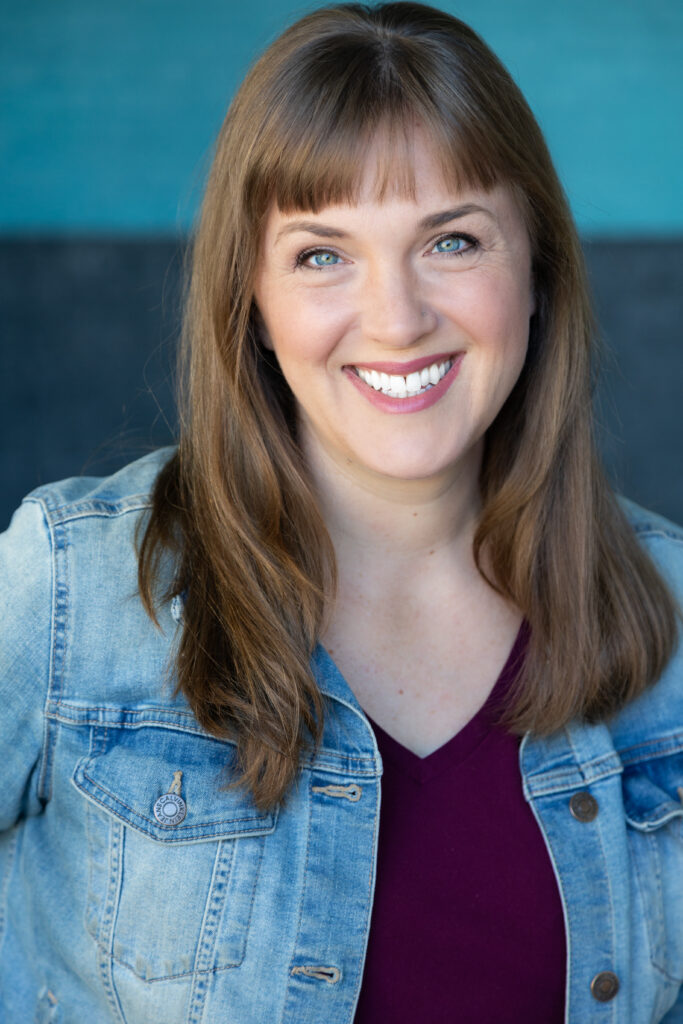
When Pence initially shared her vision with Irby, the actor was interested but not available — she was teaching at an international school in India. Before moving across the world, Irby had been a staple of Atlanta theater for years, appearing in shows from Lawrenceville to LaGrange. Despite this seeming obstacle, the persistent Pence continued to pursue the show.
Irby eventually returned to the States, and, in January of this year, when Pence told her Aurora now had the rights to Beautiful, Irby officially accepted the challenge.
For the past seven months, Irby has been learning the score and steeping herself in research alongside her dear friend of over 20 years, Beautiful director and choreographer Rossetti. The duo recently sat down with ArtsATL to talk about bringing this iconic songstress to the stage.
ArtsATL: Have you played instruments in character before?
Irby: I have. I played piano in Buddy Holly at Georgia Ensemble. In Big River at Theatrical Outfit, I played, like, five instruments — and [I played instruments in] other shows. When I first got into [professional] theater out of college, I thought, “I don’t want to tell anyone I play piano because then I’ll be in the pit all the time.” I fought that a little bit in college, [hearing], “We don’t need you on stage for this show, but will you [play] piano?”
So when I got to Atlanta, I felt like I wanted to keep it a secret, and then it started to be a little useful. I do feel most comfortable playing [an instrument] and singing, so it’s been really fun to use that specific comfort zone on stage.
ArtsATL: What has the research and preparation for this show been like?
Irby: I’ve just been sort of binging on all material I can get from that era and anything that’s referenced — watching a lot of documentaries, watching a lot of interviews with Carole King. I think we’re similar in a lot of ways. We both see ourselves as normal people, like a “why would anyone wanna put me on stage?” kind of person. But, at the same time, her energy is different from mine. She is so goofy and silly, which . . . I can be. And so I’m trying to let that out.
Obviously, I don’t physically look like her as much, but I’m just trying to capture her essence. I love in her memoir [how] she talks about how she just plays loud. She likes to bang things out on the piano. And I’m like, “I can do that! That is me!”
Rossetti: Bethany and I have been texting [things like], “Oh my gosh, did you know that [Carole] did this?” or “Had you heard that story before?” I think when you do a lot of research, and you really dive in, it’s just easier to make decisions. When I wonder how [the characters] would handle something, [I’ll say], “Well, if we think about this and this, [they would react this way].”
ArtsATL: Is there anything you learned from your research that might not appear in the show but still influenced it?
Rossetti: The research really tells us that King was just naturally driven. [To have] that internal drive to, at 16 [years old], just cold show up [at a record label] to sell her first record — it’s just kind of bananas. And then you look from that moment to where she’s been over decades in pop music, and it doesn’t sound real.
Irby: The guy who’s playing Donnie Kirshner, the record producer [Cory Phelps], sent me a quote that Donnie wrote that said he was taken by her confidence and the fact that she played every song she wrote like it already was a hit, even though they were not good at first, that he was like, “I’m gonna believe in her.”
ArtsATL: David, what has this show been like as a director?
Rossetti: I think it is a little deceiving ’cause you kind of think, “Oh, it’s a jukebox musical; it’s easy.” And I’m like, well, 22 scenes in Act I, all different locations . . . That is not easy. And we’ve got a nice two-level set. We have a turntable. So we have a lot of fun elements that I think Aurora audiences haven’t really seen before, and you don’t really see in a lot of regional theaters.
And it’s literally a show where [the audience] just sits there and goes, “Oh! That song? Oh, I didn’t know she wrote that one!” There are audible gasps from people, not realizing that she was the soundtrack for their life.
::
Sally Henry Fuller is a theater nerd and performing arts journalist with a passion for telling people’s stories. Her work has appeared on BroadwayWorld.com, Encore Atlanta and the AJC. When she’s not interviewing artists, you can find her at a local coffee shop or on an evening stroll with her husband and baby girl.
STAY UP TO DATE ON ALL THINGS ArtsATL
Subscribe to our free weekly e-newsletter.

PLEASE SUPPORT ARTSATL
Your Gift Sustains the Coverage You Count On!
Related Posts