
Photographing Fear: Mimi Plumb’s ‘Blazing Light’ at The High Museum
“How do you photograph a fear?” Photographer Mimi Plumb asked herself this question at the beginning of her career. Blazing Light: Photographs by Mimi Plumb, currently on view at The High Museum of Art through May 10, presents an absorbing selection of Plumb’s photos of lives and locations in and around San Francisco. While much of this work dates from the mid to late ’70s and ’80s, the fundamental disquietude and portentousness pervading much of it could not be any timelier.
Plumb grew up in Walnut Creek in the East Bay area of San Francisco in the 1960s and ’70s. During a podcast interview with A Photographic Life in March of 2022, Plumb explained how during her junior year of high school, frustrated with the poetry she was writing, she picked up a camera and instantly found the process of photography “easy and intuitive.” She would go on to study photography as an undergraduate and later as a graduate student at the San Francisco Art Institute. Much of the work presented in Blazing Light stems from this period, a photographic project she sees as subjective and personal histories.
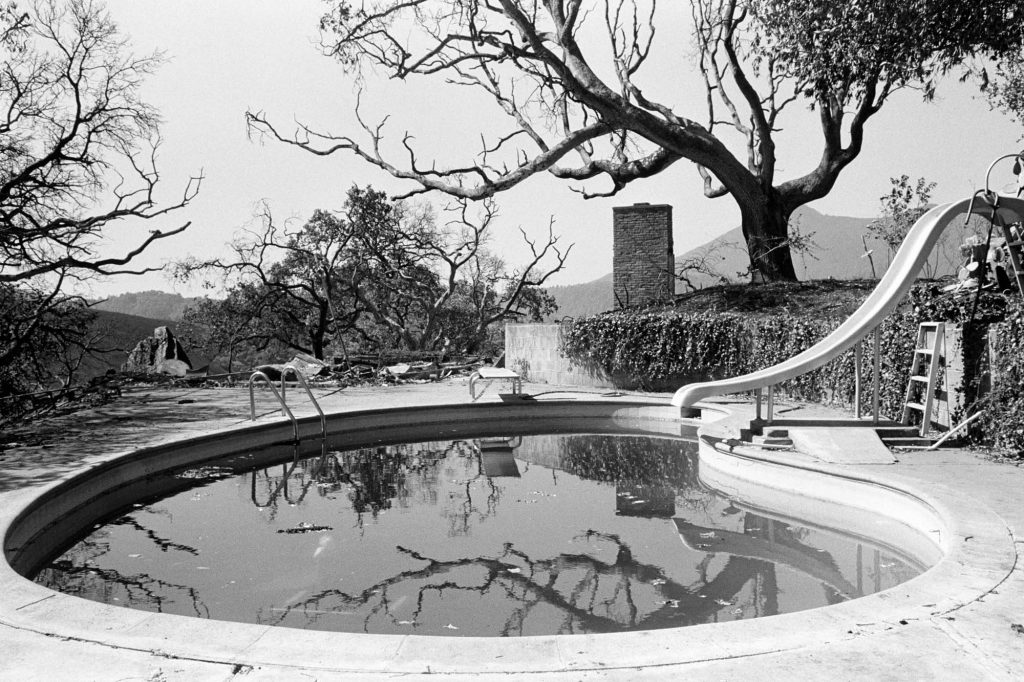
Finding inspiration in the work of Diane Arbus, Plumb began taking pictures of her surroundings in the San Francisco suburbs, described in the High’s press release as “images of natural cataclysms, fires, man-made scars and refuse.” That body of work went largely unappreciated until she began publishing books of photography in the 2000s, including The White Sky (2018), Landfall (2020) and The Golden City (2022). Blazing Light draws from this body of work as well as her current series, The Reservoir, presenting a quietly unsettling picture of American suburbia.

Plumb’s images sit at the intersection of documentary and memoir. Lamp, Brewster Street Fire (1985) typifies her unique point of view. The photograph is one of several that Plumb took of the aftermath of a house fire in the Bernal Heights district of San Francisco. The photograph displays a lamp, sitting atop a charred dresser, its seared, ragged lamp shade askew, revealing a naked bulb.
There’s something at once beautiful and unnerving about the picture — a mournfulness and vulnerability. In retrospect, Plumb came to see the image as strangely connected to her childhood fears about impending war. Plumb has stated that the lamp reminds her of how she felt as a 9-year-old girl when her mother discussed the possibility of nuclear warfare during the Cuban Missile Crisis in 1963.
The superficial security and serenity of America’s suburbs were largely dependent upon two industries: the military industrial complex and car culture. Plumb’s photos document the prevalence of both, her photos often locking in on something unsettling and ominous in both. Touching Plane, Hamilton Air Force Base, 1987, depicts what looks like a father and son touching the skin of a giant military cargo plane, the two figures dwarfed by the plane’s enormity.
Another photo presents a young woman in civilian clothes with what looks like her young sons as they admire heavy-duty artillery. A boy peers through the scope of what appears to be a grenade launcher, imaginatively taking aim as a soldier in camouflage cradles his head. Yet another photo shows a group of people at tables and kids on bikes in a scene that could easily be taken for a picnic but for the two U.S. Air Force fighter jets in the middle of the throng, a couple of young girls casually poised on the nose of one of them. Images like these suggest the overlap of military and middle-class civilian life, an everydayness that has only grown more pronounced in recent years.
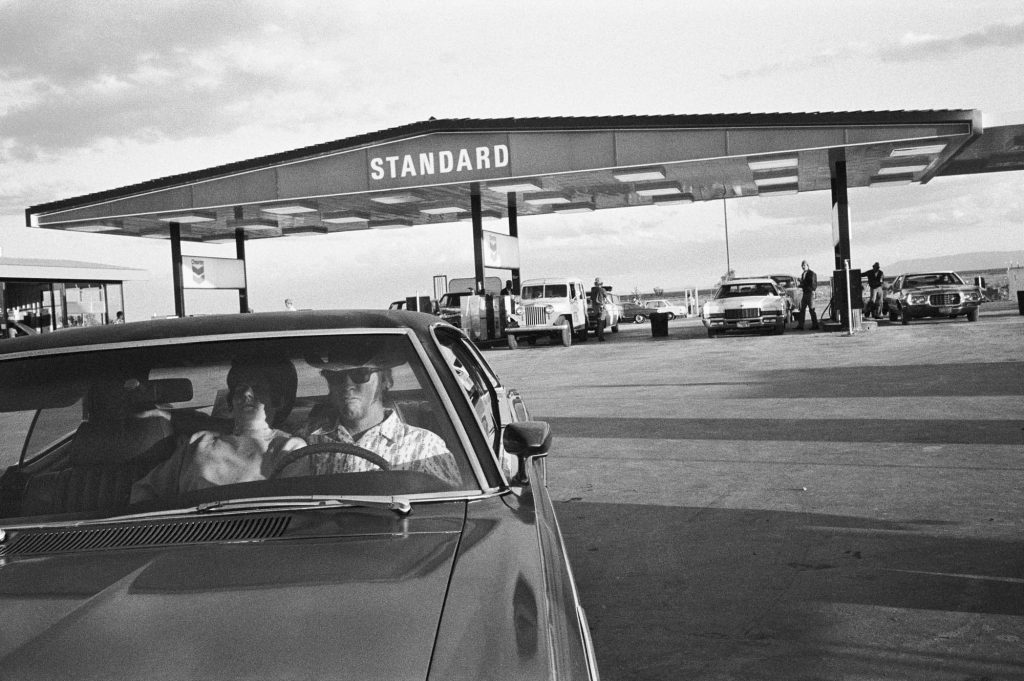
The ubiquity of car culture – a central feature of postwar American life, especially in California – represents another motif of the exhibit. Couple at the Gas Station (1972) takes its place alongside Ed Ruscha’s Twentysix Gasoline Stations (1962) or Dennis Hopper’s Double Standard (1961) as an icon of vernacular highway architecture and signage. Plumb’s photo, however, stakes out its own territory by capturing the awkwardness of the couple in the car, cramped uncomfortably next to one another in the front seat, with the woman awkwardly leaning toward the man driving the car in a cowboy hat. The giant signage above them proclaiming “Standard” might offer a sly commentary on the stifling nature of gender norms.


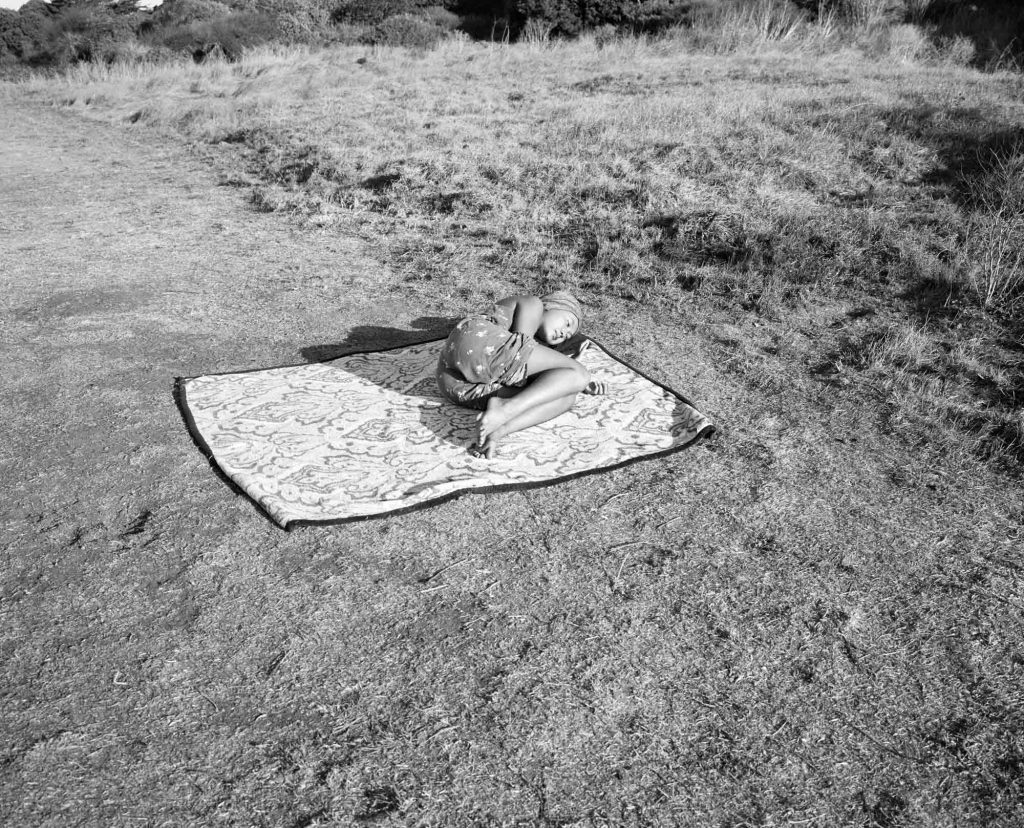

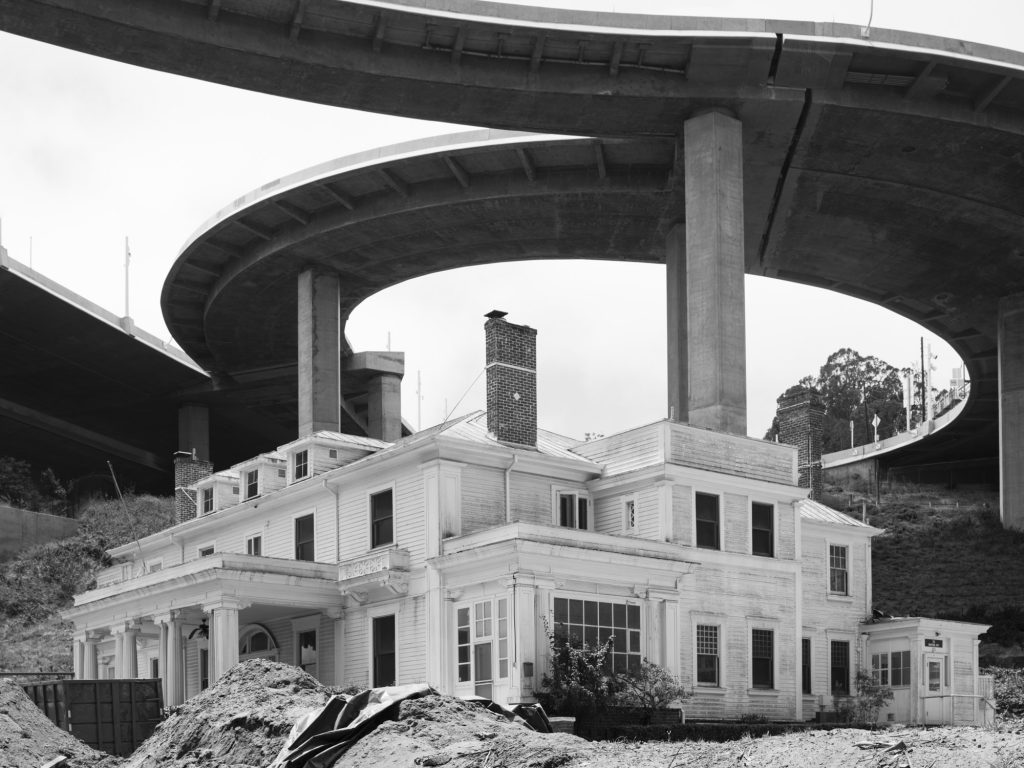
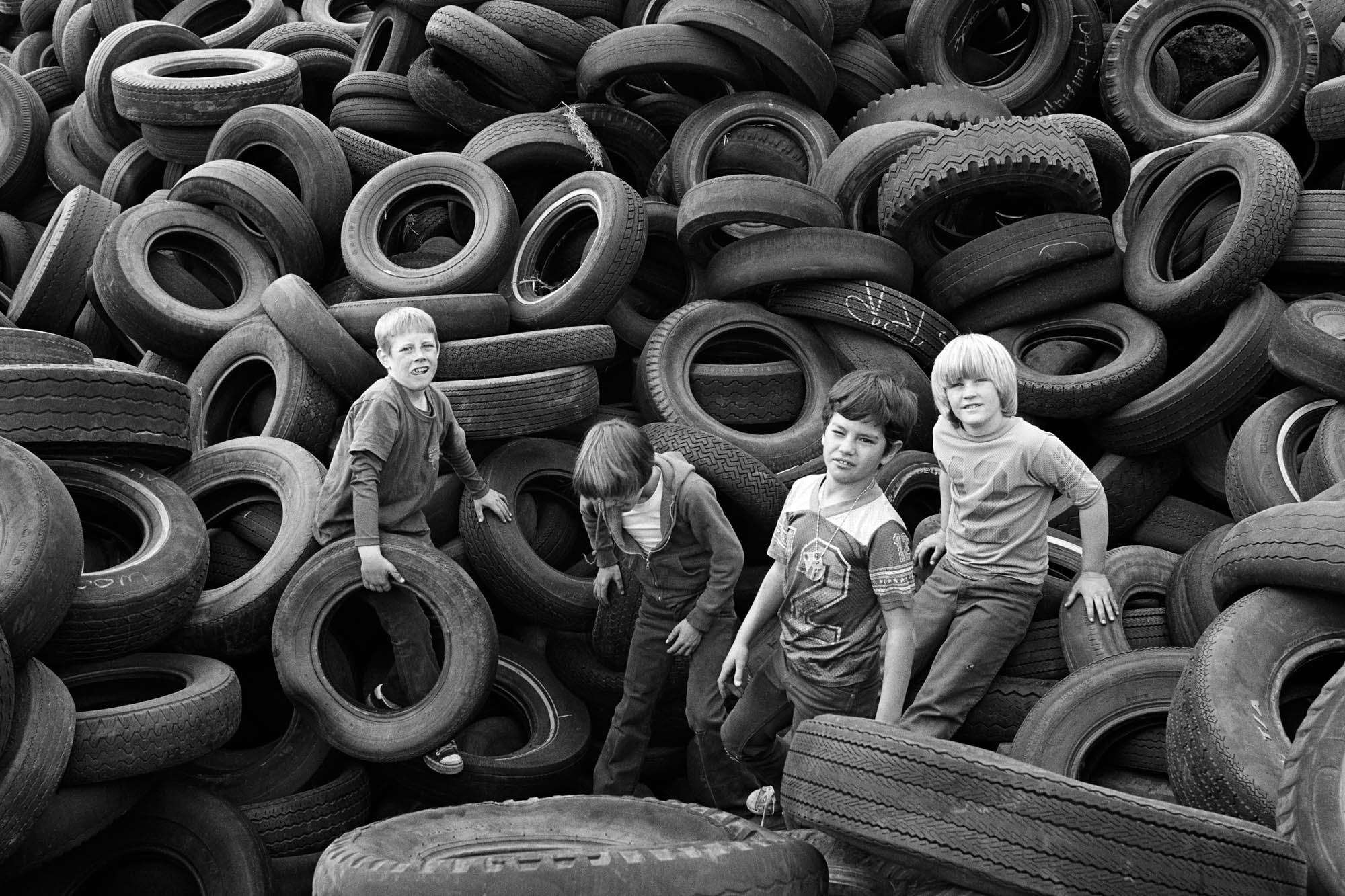
Other photos of abandoned and overturned cars capture the aftermath of untold mishaps, but unlike, say, Warhol’s Disaster series of tabloid depictions of car crashes, the wreckage Plumb captures speaks to loneliness and melancholy rather than shock. Boys and Tires, Sears Point (1976), for example, seems innocent enough at first blush. In the photo, a small group of young boys poses on top of an enormous pile of used tires, the detritus offering to them an unexpected playground. The colossal mound of tires towering over the boys suggests the magnitude of the waste, hinting at another important motif of the exhibit: the environmental degradation that comes at the expense of American industry.
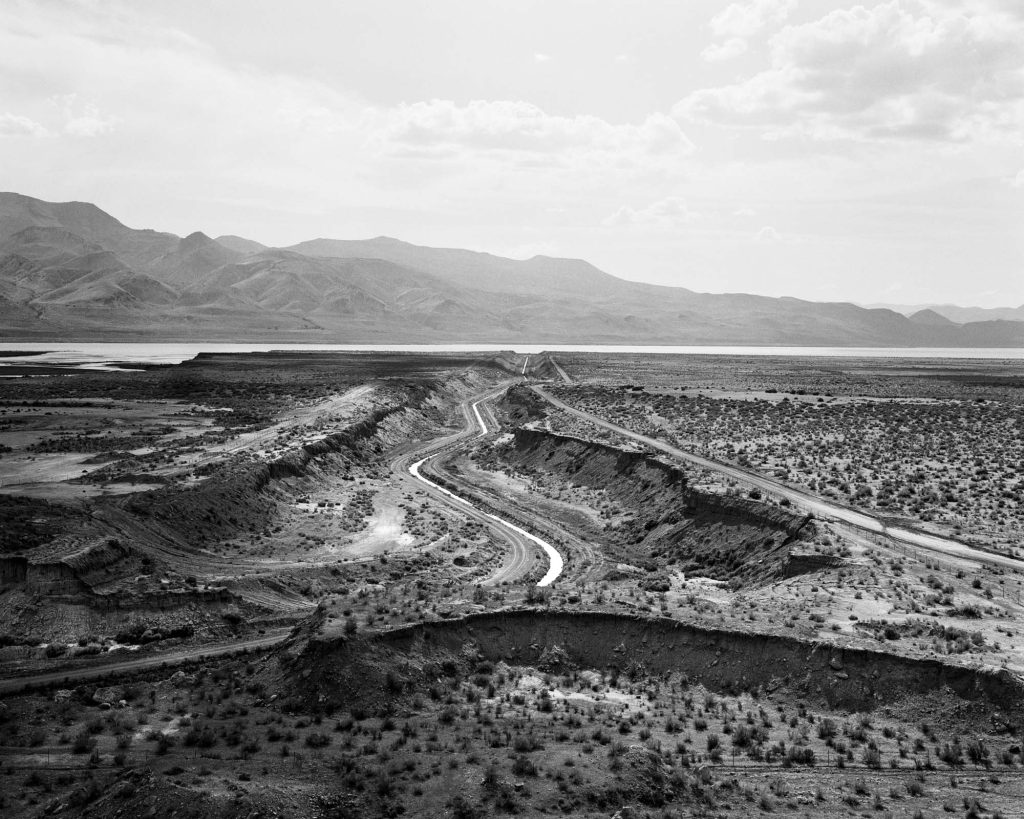
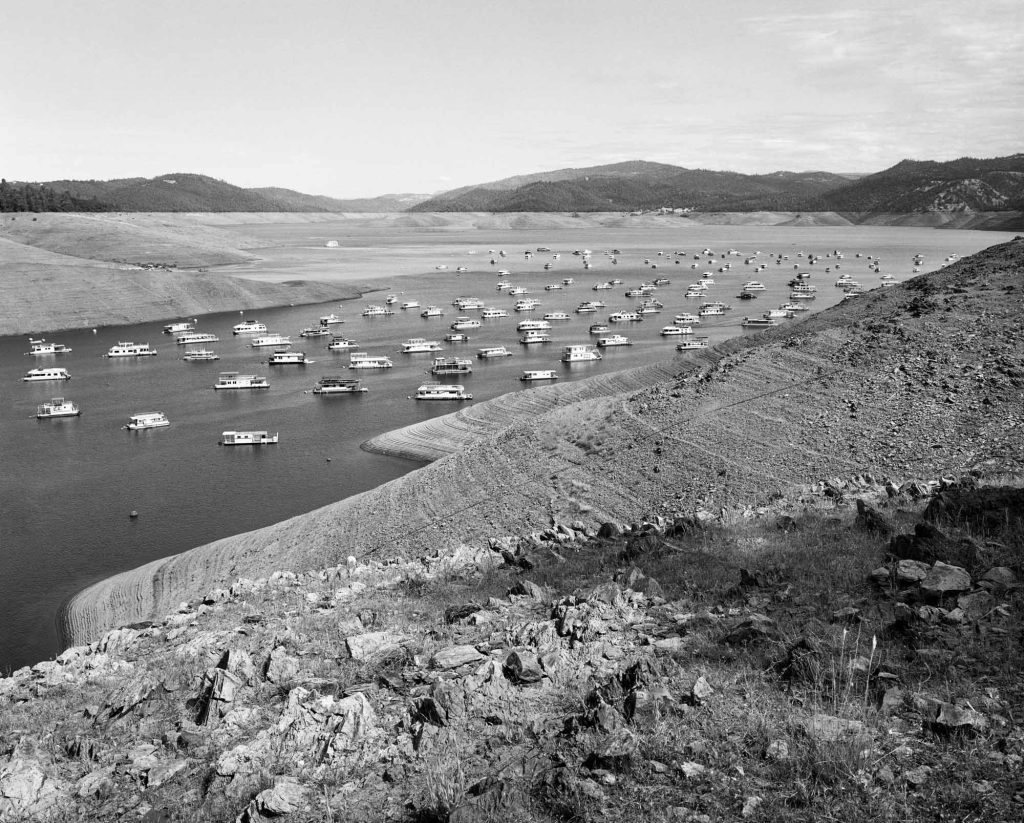
Environmental catastrophe is central to Plumb’s most recent series, The Reservoir. Here she documents the spoliation resulting from the 23-year megadrought in the Central Valley of California, a devastation presaged in Plumb’s earliest photos. Receding lakes, dried-up riverbeds, cracked earth, spoiled landscapes — Plumb’s photos depict what she calls “a land of smoke and fire and drought.”
Blazing Light, on view through May 10, presents a compelling and “eerily prescient portrait of America that highlights the environmental cost of a culture so focused on expansion that the world itself is left bare.
::

Robert Stalker is an Atlanta-based freelance writer who writes about modern and contemporary art.
STAY UP TO DATE ON ALL THINGS ArtsATL
Subscribe to our free weekly e-newsletter.

