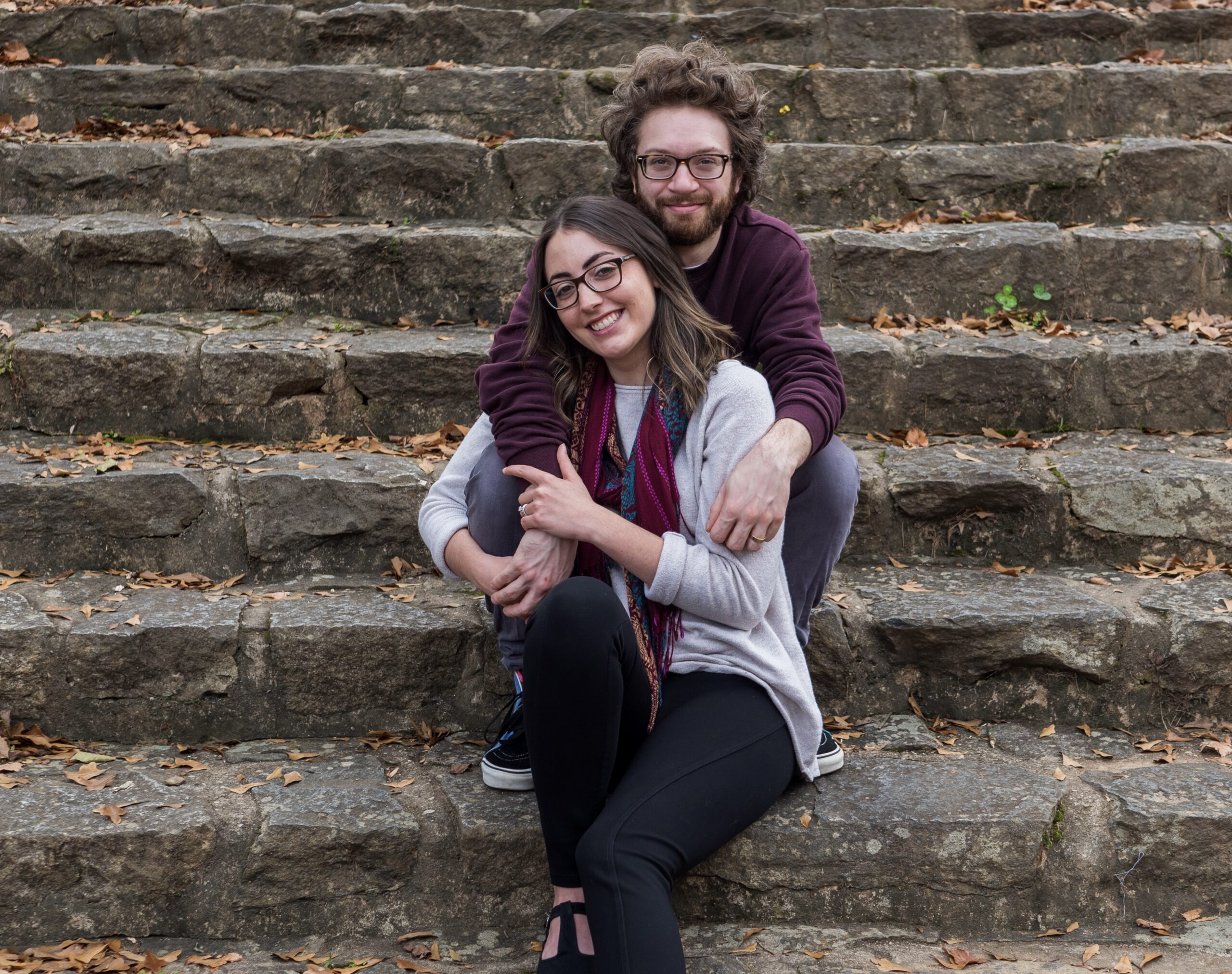
Partners in the Arts: Madeline Beck and Ben Rawson deliver art and light
Lighting designer Ben Rawson and museum curator Madeline Beck discover a good marriage requires as much advance scheduling as the shows they work on.
::
Watching Ben Rawson and Madeline Beck at work reveals similarities in how they each contribute to the Atlanta arts scene. Most significantly, perhaps, they each participate in the sometimes invisible but essential labor that takes place before opening night. They are both versed in the languages of color, mood, focus and ambience, and their jobs involve using their own talents to create a setting in which the art of others will show to best effect.
When ArtsATL observed them in action, Beck, curator at the Marietta Cobb Museum of Art, was hanging Metro Montage XXIV, the museum’s annual national juried exhibition, which is on display through September 8. Rawson, a professional lighting designer, was preparing the stage at Actor’s Express for the company’s run of Blues for an Alabama Sky. He illuminates Atlanta stages for several notable companies, including Atlanta Ballet, Terminus Modern Ballet Theatre and The Alliance Theater.
Rawson and a colleague were adjusting the lighting while the set designers put finishing touches on the stage construction. As he worked, Rawson explained that in a venue like Actor’s Express, located in the King Plow Arts Center, the lighting design is completed in situ. He would stand on stage or at different places among the seats and direct his colleague to adjust individual lights, one by one.
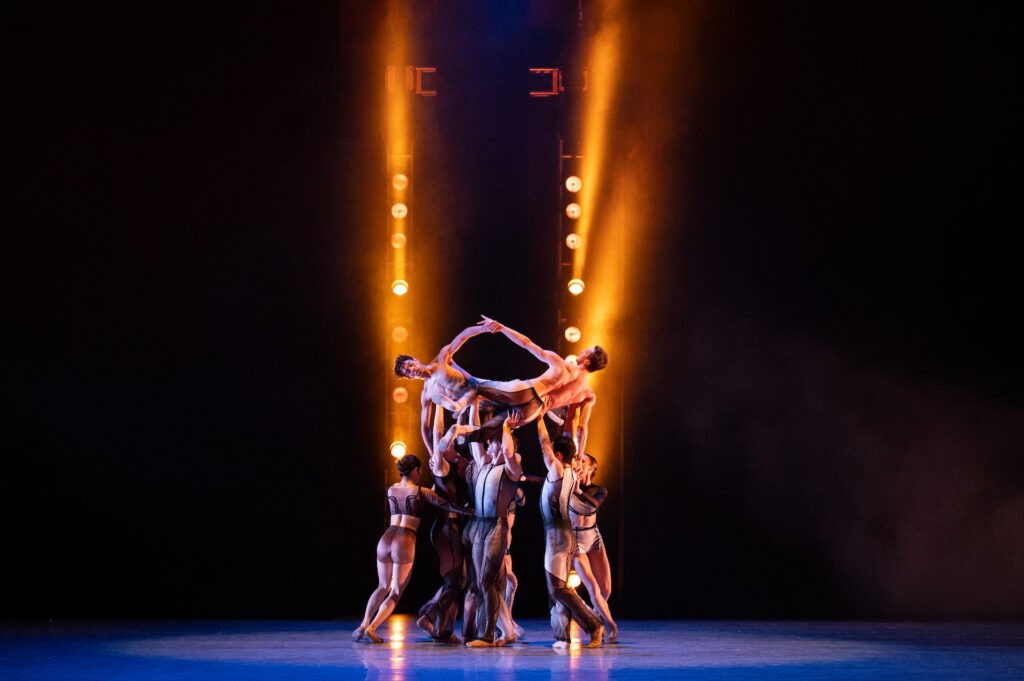
At a larger venue, for example when he lights the Atlanta Ballet at the Cobb Energy Performing Arts Centre, the suspension framework for almost all the lighting is lowered to the stage from above. The theater’s technical crew mounts and adjusts the lights according to Rawson’s pre-orchestrated design, and the framework is then “flown” back up into the rafters.
The Marietta museum was closed when ArtsATL visited Beck. She was busy unboxing photography, sculpture, paintings, ceramics and textile art that had been submitted by artists from all over the country and accepted into this year’s Metro Montage show.
She explained that with an exhibition like this one — featuring new work with broad thematic and media variety — she likes to begin to hang the walls that are in the first line of site from the entrance and the room-to-room flow points within the galleries. In those spots, she places work that is almost sure to capture the eye — pieces that because of their size or vitality will inevitably set the tone of a given space. From there, she lets attributes such as line, perspective or subject matter suggest how smaller pieces might be creatively grouped together on a wall or in the middle space.
As much as their careers in and shared love for the arts bring Rawson and Beck together, their work also presents a challenge for their relationship because it makes extraordinary demands on their personal time, outside of normal 9-to-5 hours.
“As the public face of the museum,” Rawson said, “Maddie has to attend events where she builds relationships with patrons and donors and artists.” Beck added: “Think opposite schedules. We really have to work to keep communication going and the household functioning because sometimes Ben is leaving for work just as I’m getting home for the day.”
Particularly difficult are those periods where Beck is slammed at the museum and Rawson is out of town, so no one is around to pick up the slack at home. “I travel all over the country,” Rawson said. “Shows happen at night, requiring a lot of late hours.” Creating balance with periods where they can take a break together at the beach or rent a cabin in the mountains requires scheduling meetings: Together, they look six to nine months out. As a freelancer, Rawson has more control over his schedule, so the couple identifies where Beck can take some time off, and Rawson avoids bookings during those dates.
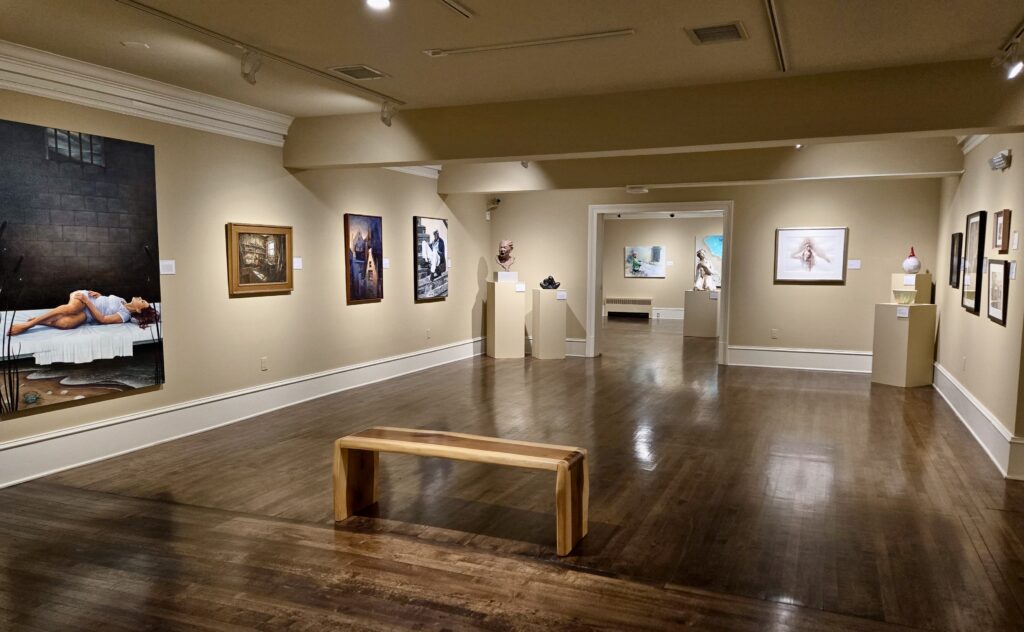
Beck and Rawson met in high school in Augusta, Georgia. Rawson was a sophomore, Beck was a freshman and they were in the same Latin class. “Looking back now,” said Beck, “we were just a couple of babies. We have done so much growing up together over these 15 years.”
They continued to date when Rawson graduated and moved to Atlanta to attend Kennesaw State University. Beck joined him a year later. He has a degree in theater with a concentration in lighting design, and she majored in art history with a minor in classical studies.
In early 2020, the couple decided to get married in a formal wedding to be held on May 27, 2021. Their save-the-date invitations were mailed just a few weeks before Covid-19 deaths began to overwhelm emergency rooms across the country, and shelter-in-place orders shut everything down. The public health crisis brought a new sense of urgency as the young couple confronted the question of what they would do if one of them had to be hospitalized.
They were worried about visitation rights and wanted to avoid a nightmare situation where, if they weren’t married, one partner was unable to make medical decisions on behalf of the other and instead would have to relay their decisions through their parents. So they obtained a marriage license at the Gwinnett County courthouse, the only place in metro Atlanta where they could get an appointment.
They were married in a quick outdoor ceremony at Oakland Cemetery on May 27, 2020, in the middle of the pandemic and 10 years to the day after they started dating. “It was sort of a guerilla wedding,” Beck recalled. Her sister was ordained online and officiated. The flowers and cake came from Publix.

At the time, upended wedding plans were the least of their worries. Like many theater artists, Rawson watched his work disappear practically overnight. Shortly before Gov. Brian Kemp issued a shelter-in-place order for Georgia on April 3, 2020, Rawson was working on a show for Terminus Modern Ballet Theatre at Kennesaw State University and planned to board a flight to light another for the Palm Beach Opera the following weekend.
“The [Terminus] show opened on Friday night,” he said. “On Saturday they shut it down, and, by Sunday, everything was starting to fall through.”
Beck remained employed at the museum and continued to draw a paycheck, but she didn’t have health benefits. Many of their close friends also work in the arts and were experiencing similar financial straits. Nonetheless, many people sent gifts when they found out Beck and Rawson had moved ahead with their wedding. “Coming at a time when everyone was dealing with so much, those thoughtful gestures were very meaningful for us,” Beck said.
More than four years later, the two have yet to celebrate formally with friends and family or take a honeymoon; they are just starting to think about how to commemorate their fifth anniversary next year.
Professionally, their careers post-pandemic have stabilized, but, during the time they have been studying and working in Atlanta, they have both noted significant shifts in the city’s arts and culture scene.
Rawson described how a convergence of rising costs in established culture centers like New York and Los Angeles and the migration of workers in tech and other high-paying jobs has worked in Atlanta’s favor. “People following opportunities to cities like Atlanta or Salt Lake or Detroit still want the art and culture that they had in New York or L.A. Artists and arts professionals from the Southeast pursuing career options see Atlanta as an attractive destination.”
Beck pointed to the trend among millennials and Gen Z, especially post-pandemic, to invest in experiences rather than stuff. After spending months in social isolation, she said “People want to go out and do something and see something in front of them, to connect with humans face to face, eye to eye. That has played beautifully into both of our industries, because art is the encapsulation of an experience — a memory; a feeling.”
Rawson and Beck both observed how the tastes and wallets of this new demographic of arts patrons are shifting institutional programming in key ways. According to Rawson, plays with a Southern cant or featuring more diverse casts have drawn record crowds and new patrons into theaters around town. He cited The Alliance’s staging of Fat Ham this spring as one example.
Beck said a market is emerging among new collectors for distinctive art at more accessible price points. “Collecting is no longer seen as only for millionaires with $20,000 to spend on a single painting. And, for younger collectors, it’s not about having the same art that everyone else has. It’s about finding work and artists that you connect with.”
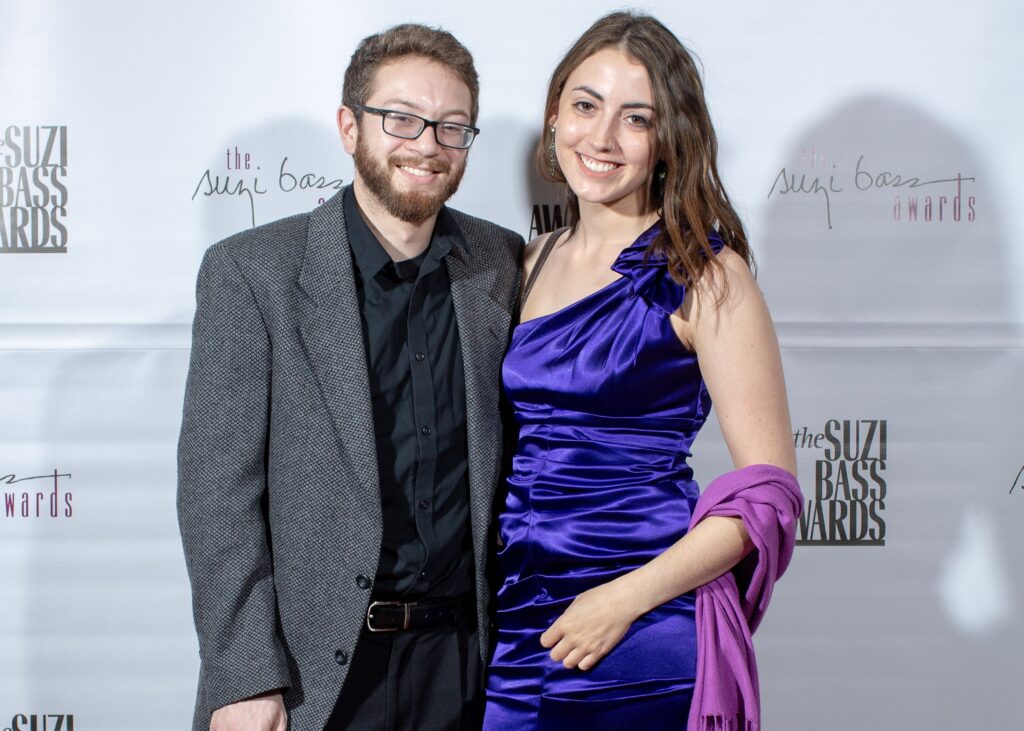
For a small, independent museum like the Marietta Cobb Museum of Art, said Beck, the connection between art and the local community is vital. The museum is not an entity of the city of Marietta or Cobb County government. “We have some big name corporate sponsorships from national brands, but a lot of the money comes from shops, dentists and law offices, like the businesses you see on the [Marietta] square,” Beck said. “Those are the dollars that allow us to bring in artists from all over to exhibit their work.”
Similarly, in the performing arts in Atlanta and elsewhere, Rawson has seen the role smaller companies and theaters play in creating a sense of place and reaching a broader audience. People who get their first taste of the arts in a place like the Marietta Cobb Museum of Art or Actor’s Express and have a good experience may broaden their horizons to bigger venues such as the High Museum of Art or The Alliance.
As Atlanta continues to attract national and international attention — including as host of eight FIFA World Cup 2026 matches, including one semifinal game — the couple expressed hope that the city experiences more than a “balloon moment,” where interest surges and then just as quickly fades.
“We’ve seen it with the movie industry,” said Rawson, “where tourists come to town to see a location where something was filmed and will see a show or check out a gallery. Maybe that drives an interest in returning.” Tourists, he said, also take art back home with them, and out-of-town patrons have the potential to establish relationships that lead to expanded opportunities in other cities for artists who call Atlanta home.
Rawson and Beck look forward to these trends continuing as they discover new dimensions in both their work and their lives together.
::
Robin Wharton studied dance at the School of American Ballet and the Pacific Northwest Ballet School. As an undergraduate at Tulane University in New Orleans, she was a member of the Newcomb Dance Company. In addition to a bachelor of arts in English from Tulane, Robin holds a law degree and a Ph.D. in English, both from the University of Georgia.
STAY UP TO DATE ON ALL THINGS ArtsATL
Subscribe to our free weekly e-newsletter.

PLEASE SUPPORT ARTSATL
Your Gift Sustains the Coverage You Count On!
Related Posts