New biography of Carson McCullers sketches a fated child and troubled adult
In Carson McCullers: A Life (Knopf, 2024), author Mary V. Dearborn renders a meticulous portrait of a brilliant but difficult artist who was raised, for better and for worse, to be a genius. This sensitive, energetic portrayal of the Georgia-born writer’s short, tumultuous life explores the effects of McCullers’ unusual upbringing on her career, psyche and loved ones. Dearborn, who has published seven other books, including biographies of Ernest Hemingway and Norman Mailer, uses newly available archival materials (including session notes from Carson’s therapist-turned-lover, Mary Mercer) to provide nuanced reflections on the author’s mental and physical health, alcohol abuse and sexuality, recontextualizing McCullers’ life.
 Carson McCullers was born Lula Carson Smith in Columbus in 1917. Her mother, Bébé, believed “that [Carson] was a genius and that the way for her to fulfill her destiny was for Bébé to smooth her path.” The Smiths encouraged Carson’s creativity, surrounded her with a diversity of artists and granted her special freedoms like staying home from school in favor of creative pursuits. Dearborn paints a lively picture of their extravagant support for Carson’s presumed genius, noting the “slightly weird idea of a mother admiring her child.” This strange, exalted treatment continued into Carson’s adulthood. Having “been buoyed by a support system of family and friends as far back as she could remember,” Dearborn suggests, “some mechanism also left Carson needy, and she sought to construct a support system made of other people who loved her unconditionally.”
The first recruit to that support system was James Reeves McCullers, whom Carson married at 19. Reeves had the same faith in Carson that her mother did, and their turbulent relationship would last for the next 16 years, dogged in particular by Reeves’ alcohol abuse and Carson’s romantic pursuit of women. Carson could be cruel in her enactment of new romances, flaunting her infatuations in flowery letters to Reeves. In their marriage, Dearborn portrays a husband self-destructively besotted with his wife and a wife who relies on her husband’s deeply flawed love.
In 1940, when she was 23, McCullers’ first novel, The Heart Is a Lonely Hunter, was published. Its profound and near-instant literary success is perhaps no wonder, given her family’s faith and commitment, and it reinforced, both for Carson and others, the aura of fated genius surrounding her. In the next year, she published another novel and several short stories. Her social circle expanded to include high-profile artists and business people, including poet W. H. Auden, novelist Richard Wright and playwright Tennessee Williams.
As Dearborn notes, “part of Carson’s appeal” was that she believed “she was special and never doubted it — as her mother had made her feel from birth.” That charm and confidence served her well at the dawn of her career, drawing admirers and, for a time, leading many to forgive her being, as McCullers herself later put it, “a bit of a holy terror.” Dearborn illustrates that terror in entertaining detail: In one memorable scene at Yaddo, the famed artists’ retreat in upstate New York, writer Katherine Anne Porter opened her cabin door to find Carson prostrate at her feet. Acquainted with the younger writer’s theatrics, Porter stepped over her and walked away. McCullers feels somewhat like a modern rock star in these moments: wild, alluring and a little bit objectionable.
In youth, McCullers came up against three hurdles that worked in tandem, each difficult enough to overcome on its own: steadily deteriorating health, unacknowledged alcohol abuse and persistent romantic turmoil. The final decades of her life were marked by slow physical and creative decline brought on by a series of strokes before the age of 30. Reeves’ 1953 death and Bébé’s death in 1955 left her in need of significant outside help.
Fortunately for McCullers, she had that circle of devotees.
Unfortunately for the devotees, McCullers, who had been placated and doted on all her life, was a demanding and self-sabotaging patient. She at times took advantage of her friends’ attention, requiring, for example, nightly aid in an elaborate, hours-long bedtime ritual. Like a child, she woke sometimes in the middle of the night, crying and demanding kisses.
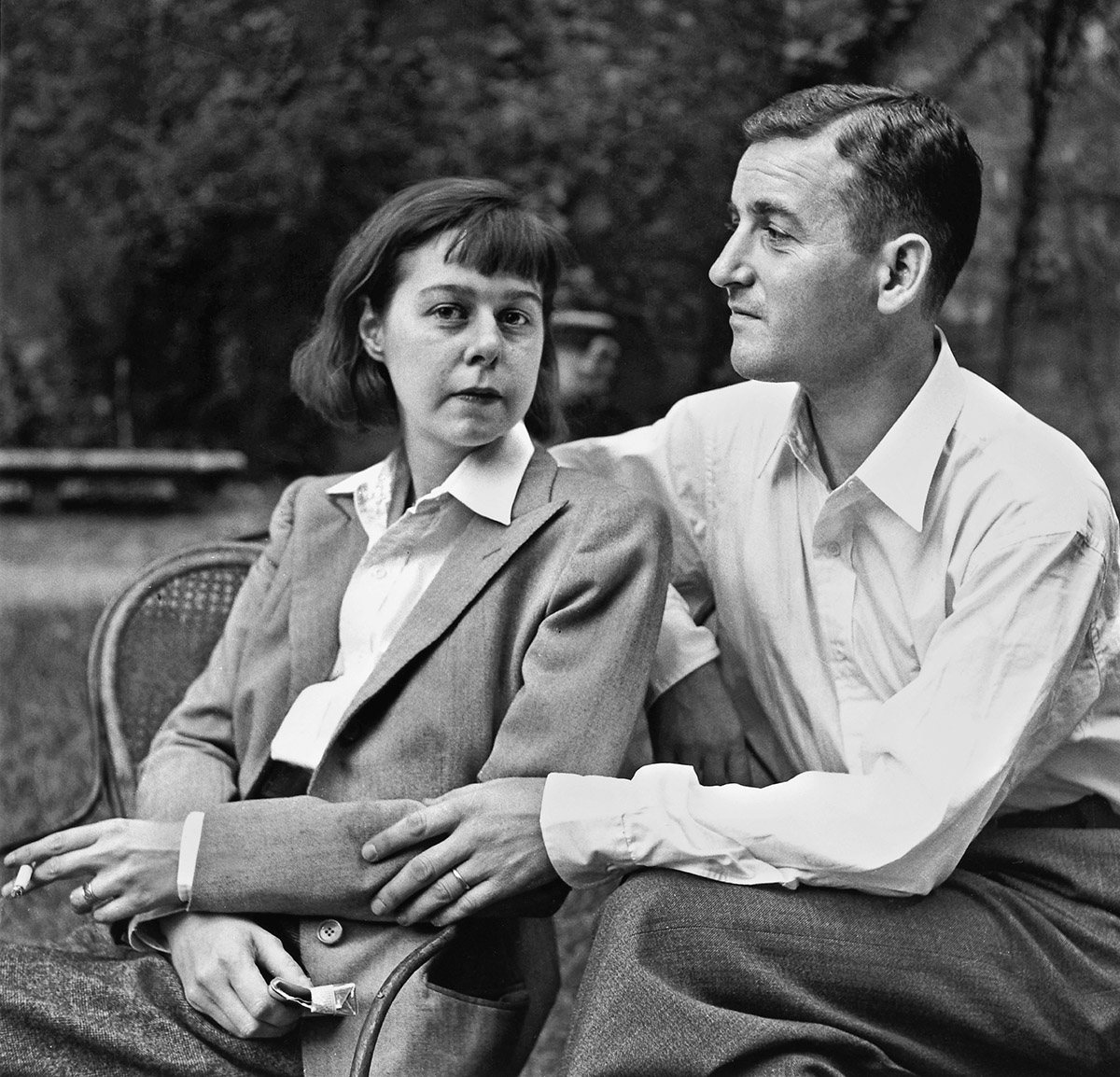
McCullers prioritized herself and her work over all else, as she’d been raised to do, skipping her mother’s funeral, for example, to attend Yaddo. Her drinking was a particular problem, costing her several friendships and a therapist and gaining her a bad reputation. Truman Capote wrote in a letter that she was “too exalted, and usually too drunk, to recognize my poor presence.” By this point, McCullers began to seem less like a rock star and more like an aging child star, embittered by hard luck and self-medicating into oblivion.
Increasingly snarky letters between her friends demonstrate the extent to which this behavior tried their patience, and many in her circle faded away during her decline. Still, a significant number, including Tennessee Williams, Mary Mercer and writer Janet Flanner, delivered painstaking care and companionship and assisted McCullers in writing and publishing work until her death in 1967. In this circle, Dearborn portrays a community whose extraordinary devotion to McCullers, as both a human being and an artist, allowed her to achieve her artistic potential, if just for a short time. At a time when books and writers are (sometimes literally) under attack, it’s easy to feel, at least in this one way, a little bit jealous of Carson McCullers.
::
Rachel Wright has a Ph.D. from Georgia State University and an MA from University College Dublin, both in creative writing. Her work has appeared in The Stinging Fly and elsewhere. She is currently at work on a novel.
STAY UP TO DATE ON ALL THINGS ArtsATL
Subscribe to our free weekly e-newsletter.

PLEASE SUPPORT ARTSATL
Your Gift Sustains the Coverage You Count On!
Related Posts