MODA’s ‘Public Notice’ exhibition celebrates the power of the poster
A LEGO-like grid of hundreds of colorful boxes covers every inch of Polish designer Michal Zamirski’s poster, Overproduction. Woven throughout the battered red, blue and yellow squares, a handful of white outliers function as letter-forming pixels that spell out the title of the piece. The text is difficult to parse, peppered with shadows and divided into awkward line breaks that urge viewers to pause for careful inspection. Look closer and the meaning becomes clear: These tiny blocks are actually shipping containers in a towering mass of global trade. Consumerism, the boxes scream, is out of control.
With this seemingly effortless combination of image and text, Zamirski forces a sudden mental connection that might otherwise require several paragraphs to convey. That instant synaptic leap illustrates the power of the humble poster, currently featured at the Museum of Design Atlanta’s (MODA) newest exhibition, Public Notice: The 2025 United States International Poster Biennial (USIPB).
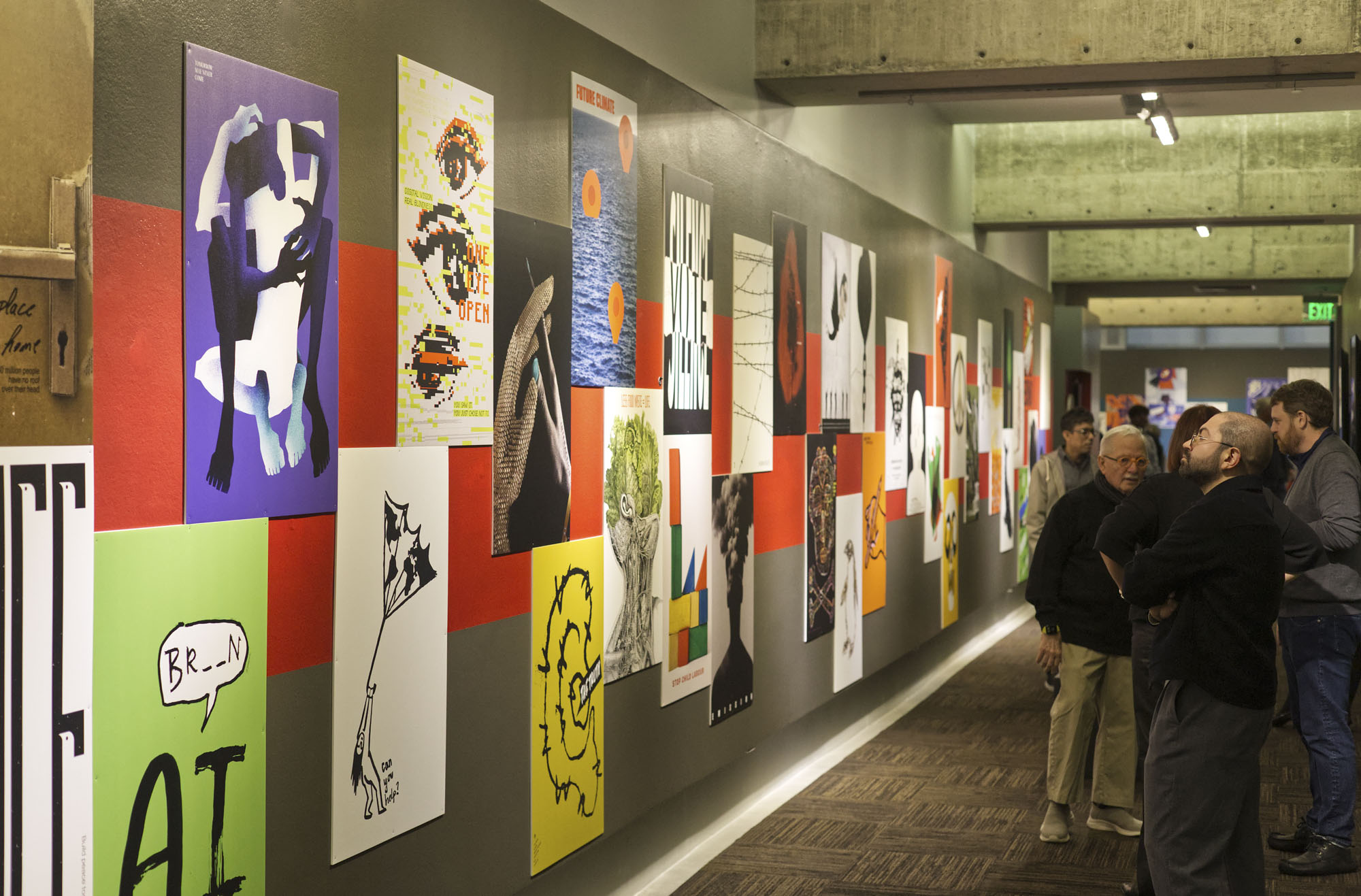
Founded in 2022, the titular USIPB organization is a small American nonprofit dedicated to elevating posters as an art form, and its 2025 competition brought in submissions from nearly 12,000 artists spanning 93 countries. Entries are divided into categories — Social, Cultural, Motion and National Parks — which MODA has organized into separate galleries and walls within its Midtown space.
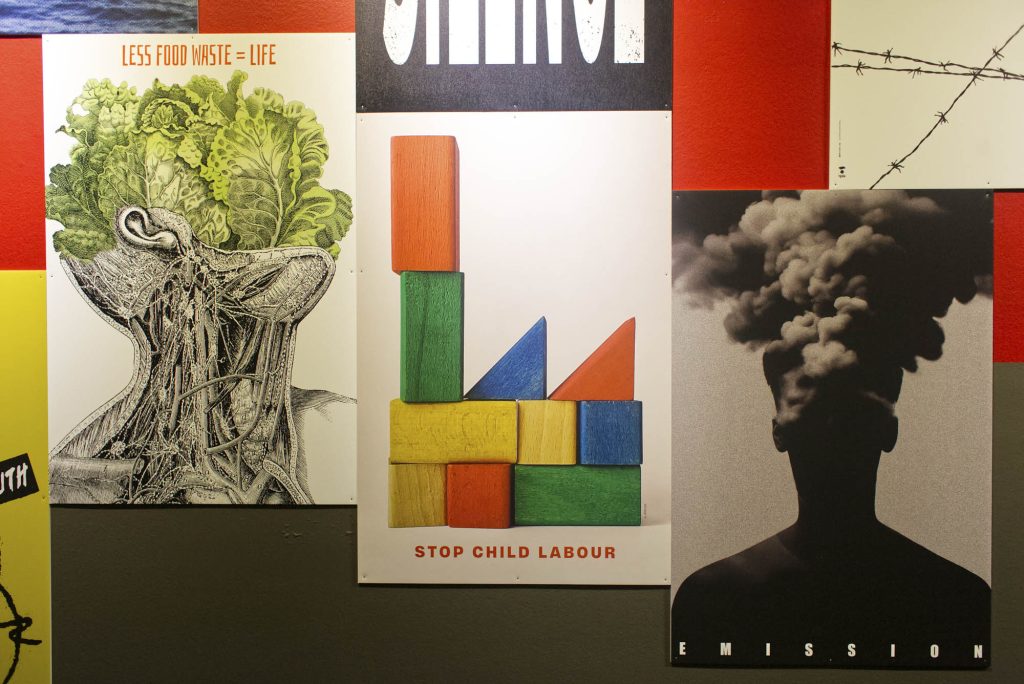
Constructed to deliver maximum emotional impact on political, commercial, environmental and ethical issues, many of these works combine recognizable icons into uncomfortable or ironic associations to drive home their point. Innocent building blocks form an imposing factory in Aleksandra Kortas’ Stop Child Labor. Gaja Bumbar’s No Place Like Home imagines a front door handle made of fragile cardboard to impart its message about worldwide homelessness. More subtle designs require a second take to comprehend, such as Jamie Wu’s Human Rights, in which the tiny barbs on a wire fence are actually flailing human bodies.
This creative impulse to address topics urgently and succinctly stems from the medium’s hypercompetitive environment. Posters have been ubiquitous since the 1840s, when advancements in lithography first allowed for fast and affordable reproduction of large, full-color images. Many genre-defining artists supplemented their careers as poster advertisement designers, including Art Nouveau pioneers Henri de Toulouse-Lautrec and Alphonse Mucha, but the art form has often been dismissed from serious artistic consideration due to its commercial and ephemeral nature. The relevancy of a poster’s content and the material it’s printed on are typically short-lived, and most prints are abandoned or discarded after serving their purpose. For many creators, this fleeting quality is part of the format’s appeal.


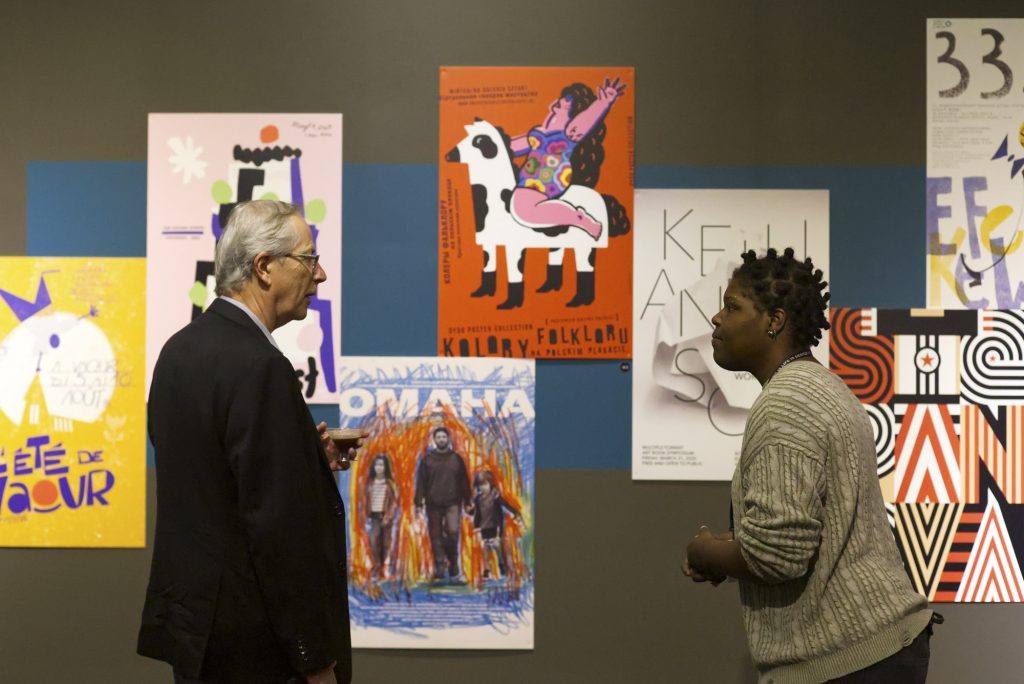
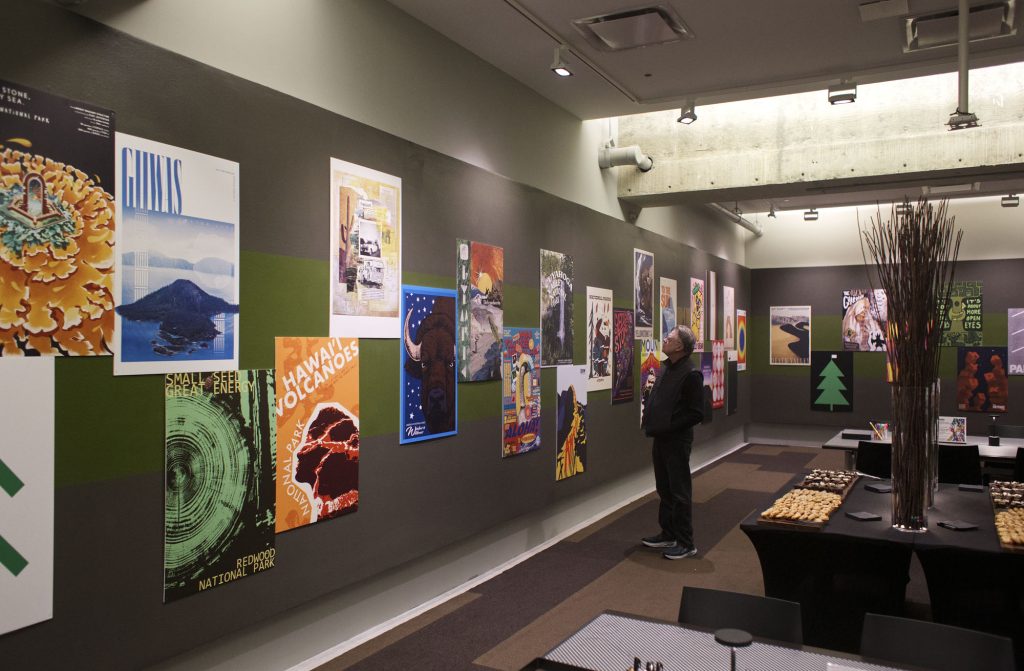
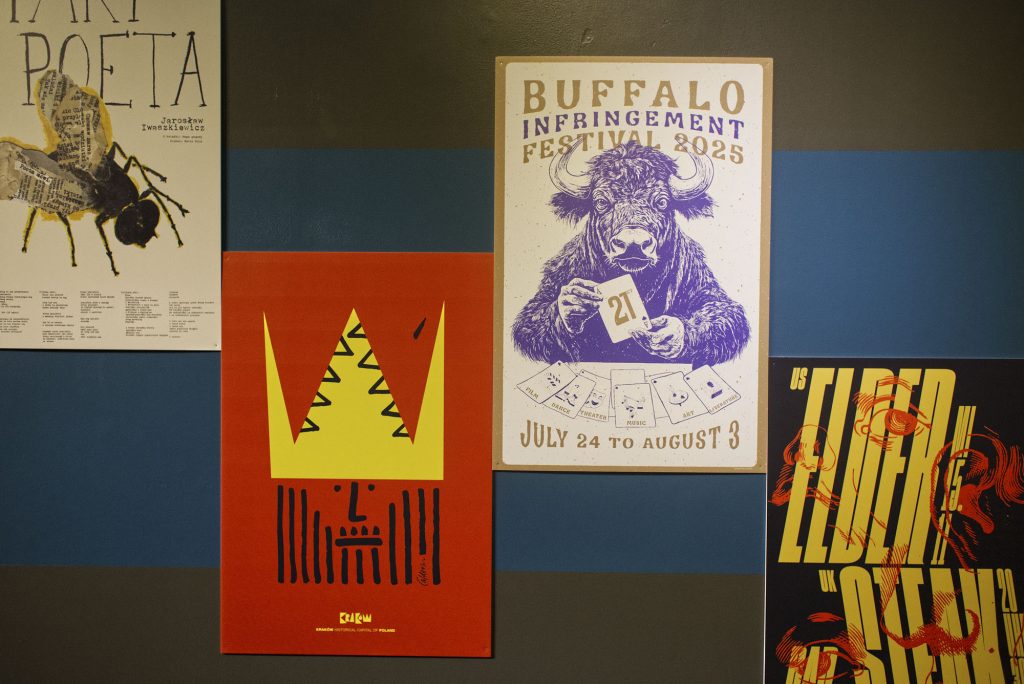


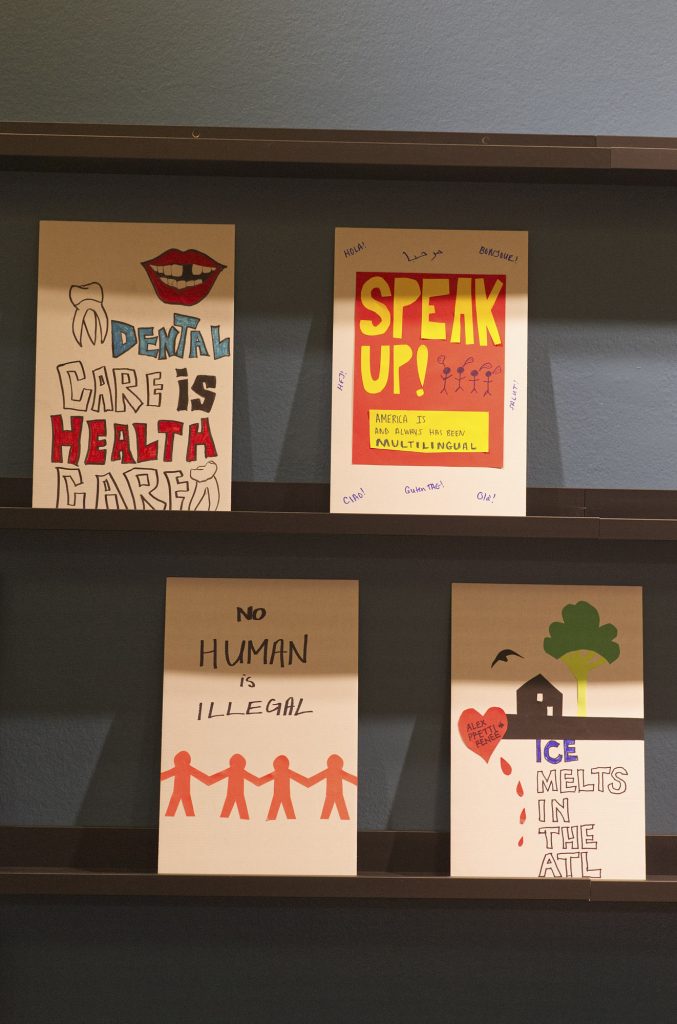
“I like that they didn’t frame them,” observed Mario Bocanegra about the display at MODA. A graphic design instructor at Auburn University whose work is on view in the Motion category of the show, Bocanegra argued that overformalizing posters undermines their inherent purpose. “I mean, they’re already here in a museum, but they actually perform better in the real world. By not framing them, you get to experience them as you might see them out there.”
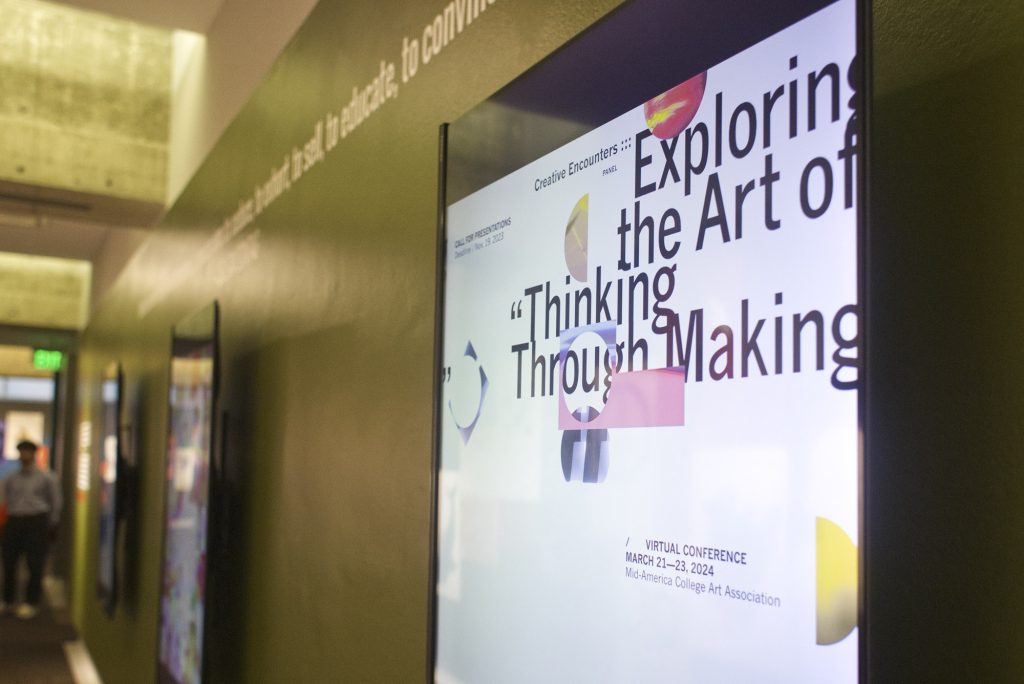
Real-world implementation in the digital age also allows for interactivity. Bocanegra’s animated poster, Creative Encounters, is displayed on a TV screen for the MODA exhibition but was originally a printed design that jumped to life when scanned with the augmented reality app, Artivive.
Fellow Auburn design instructor Courtney Windham created her motion piece, Typotecture, with a combination of traditional design techniques, AI-coded Javascript and After Effects animation. For Windham, interactivity is an additional opportunity to communicate with an audience after a static layout has captured their interest. “What’s the attention span of someone who’s going to scan it? There’s got to be some kind of reward for actually looking at the animated version,” she explained.
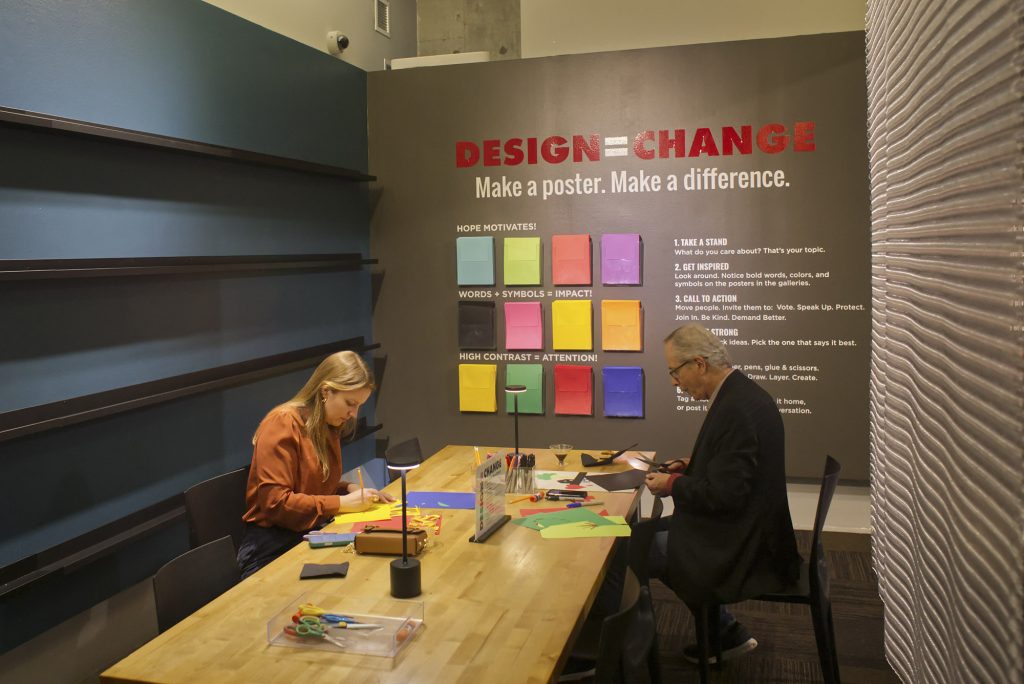
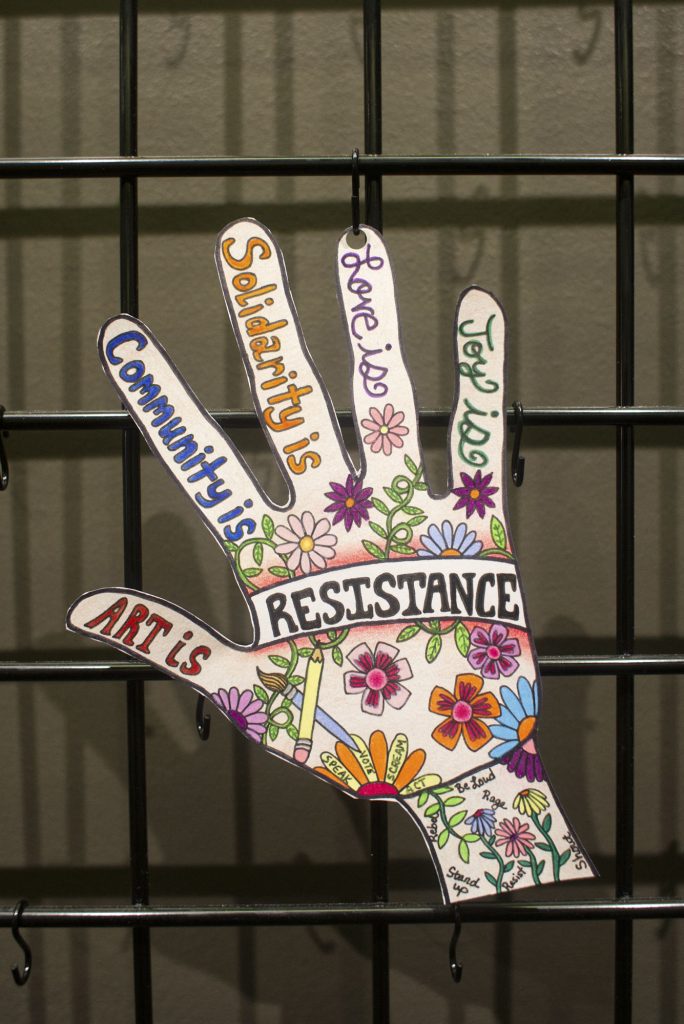
Some of the most powerful posters employ no tech at all, particularly the impassioned pleas seen on hand-lettered protest signs. MODA’s do-it-yourself stations provide space and materials for visitors to craft and display their own statements. “Keep it strong,” reads a short set of instructions. “Try a few quick ideas. Pick the one that says it best.”
Such straight-forward guidance is exactly in the spirit of the USIPB itself, a celebration of imaginative approaches to unambiguous communication. “In design, we always aim to be clear,” Bocanegra emphasized. “No matter what.”
Public Notice is on view at MODA through May 17.
::

Dustin Timbrook is a creative generalist working in art, film and music. He volunteers on the board of directors for the Avondale Arts Alliance. Timbrook loves spending time with his family, playing with dogs and gardening.
STAY UP TO DATE ON ALL THINGS ArtsATL
Subscribe to our free weekly e-newsletter.

PLEASE SUPPORT ARTSATL
Your Gift Sustains the Coverage You Count On!
Related Posts