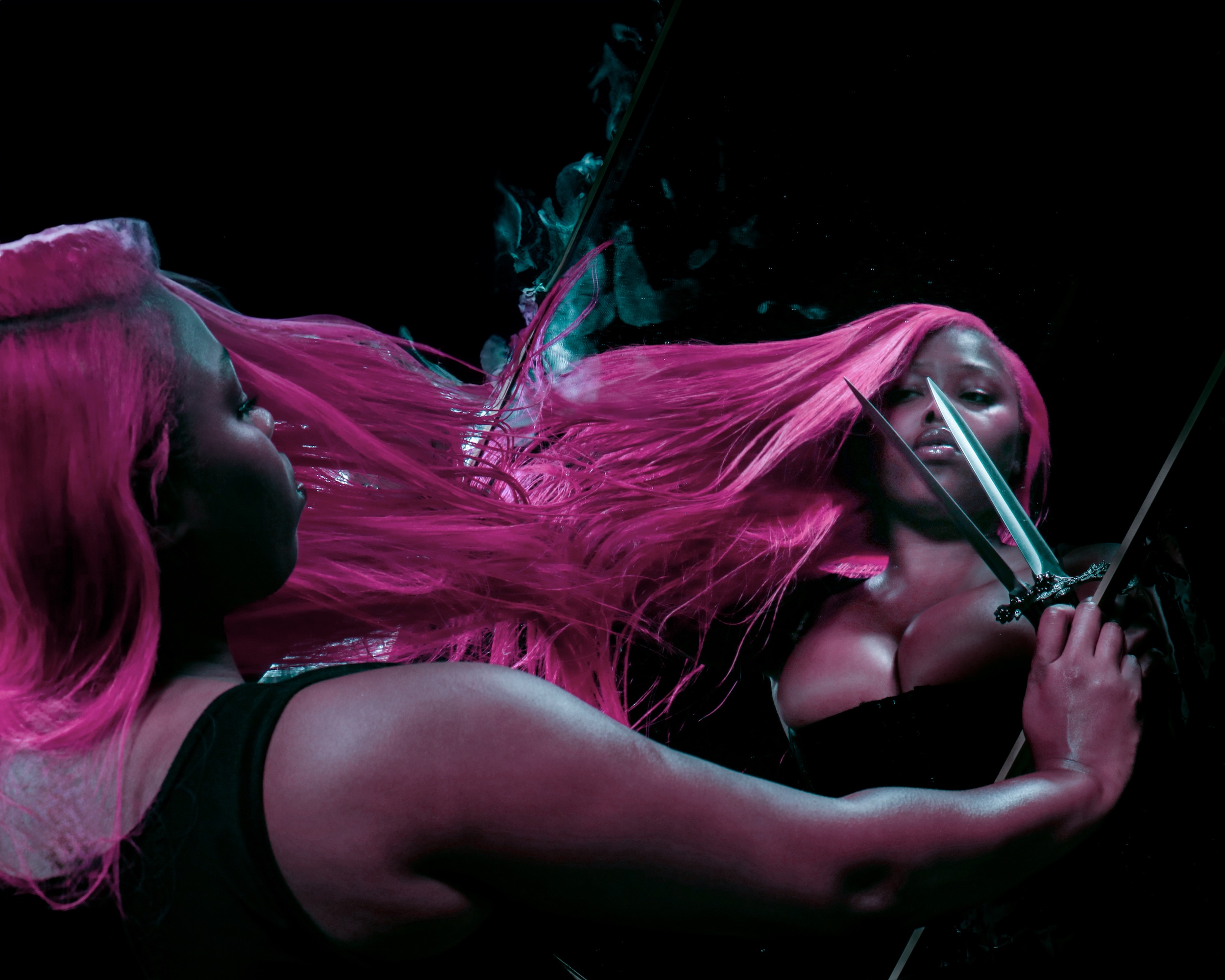
Meet the electro-hip-hop duo stewarding Atlanta’s Black, queer underground
Accessibility and affordability increasingly create barriers: “You can’t have a scene when you don’t have a place for people to experiment and explore.”
::
Long before Ruqiyah was opening sold-out rooms for CupcakKe or commanding packed dance floors from Banshee’s DJ booth, the practice of music as memory began in the stillness of her grandmother’s car.
Still half-asleep, she and her two cousins would pile into the back seat for early-morning newspaper deliveries, the darkness of pre-dawn New Jersey wrapped in the cassette tape sounds of Sade, Chaka Khan and Anita Baker. Such moments become an introduction to inheritance, an understanding that music is carried as much by the people and places that gather around it as by the songs themselves. For artists like Ruqiyah and her producer, Crai, that understanding leads to an increasingly urgent question: When the places that have long held that inheritance begin to disappear, to whom does it pass?
Ruqiyah and Crai (otherwise styled ruqiyah. and craibbyy, respectively) first met in 2022 at Atlanta’s now shuttered Revery: VR Bar. Situated at the corner of Monroe and Ponce de Leon, the once beloved club attracted celebrities and emerging local artists alike with its diverse roster of dance-ready DJs. At the time, Ruqiyah was taking a break from making music. Crai, who had been creating sound design for art installations while immersing themself in Atlanta’s rave and DJing culture, couldn’t understand why. “I was like, her shit hard. She’s hard,” they recall.
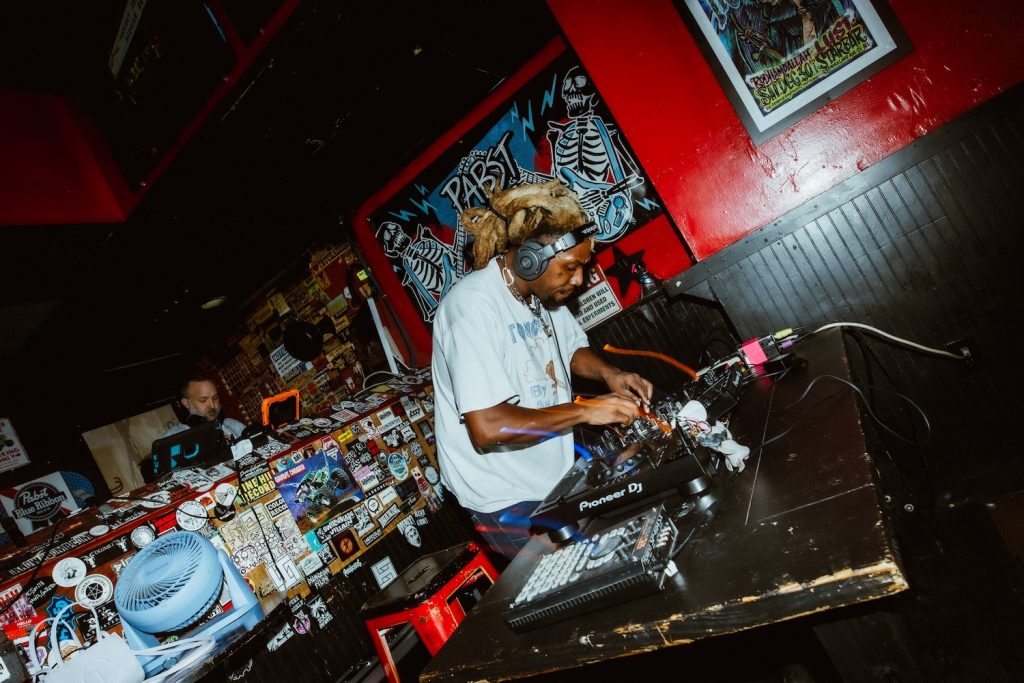
After Ruqiyah began hosting and emceeing raves organized by Crai, the two began building a creative partnership. In conversation, the chemistry of that partnership is immediately apparent — they finish each other’s sentences and can hardly go five minutes without extending an affirming compliment to the other. In their music, that chemistry becomes texture.
Bounding seamlessly between rap and electronic music, the duo traces a lineage too often obscured by the whitewashing of electronic dance music. Inhalation becomes percussion. Staccato. Ballroom-indebted house gives way to searing waves of sub-bass that roll from the speakers like heat rising off Georgia asphalt. Ruqiyah’s sensuous bravado lands sharp as a fresh set of stiletto nails over the Jersey club rhythms of her New Jersey upbringing, while Crai answers with the freaknik pulse of Miami bass and ghettotech that soundtracked childhood summers spent on Atlanta’s west side.
“As a Black, alternative person, coming from doing hip-hop and then going into doing full techno and house, I’m in a weird place,” Ruqiyah explains. “I have my old fans who listen to me just for hip-hop and friends who were booking me for hip-hop shows, but I’m out of place because this is not really hip-hop. It’s hip-hop adjacent at its core, but it’s not that. But if I go over here, [to another scene], I’m also not in a band.”
That in-between space, though at times unsupported by Atlanta’s present booking and venue offerings, only feels sonically unusual if the histories of EDM and hip-hop are told as separate movements. While today’s mainstream conception of EDM is often filtered through a Eurocentric lens — one shaped by commercial festival culture and celebrity DJs — its foundations are deeply rooted in and symbiotic to the same diasporic exchanges that shaped hip-hop. The ’90s rave boom of UK garage and jungle is beholden to West African polyrhythms and the sound system culture of Jamaican dub, a genre that would later nourish the development of Miami bass. Samplers and drum machines sit at the center of the toolkit Venn diagram shared by house, techno and hip-hop. Grandmaster Flash, a pioneer of early rap and electro-hip-hop, is no less tied to the possibilities of synthesizers than Kraftwerk or Giorgio Moroder, the latter of whom worked with Donna Summer to create what is widely considered the first major EDM song. That song is, of course, “I Feel Love.”
Atlanta, too, has its own history of cultivating these overlaps. Organized Noize and the Dungeon Family built an ecosystem where Southern rap, funk and R&B could coexist, producing records for artists ranging from OutKast and Goodie Mob to TLC and En Vogue. In the 2010s, Awful Records carried that spirit forward, fostering a network of cross-genre, DIY-born infrastructure where artists like Abra and Tommy Genesis could move freely between R&B, electronic music, pop and experimental hip-hop. For Ruqiyah and Crai, the challenge is not finding a lineage but finding the spaces willing to recognize and preserve one.
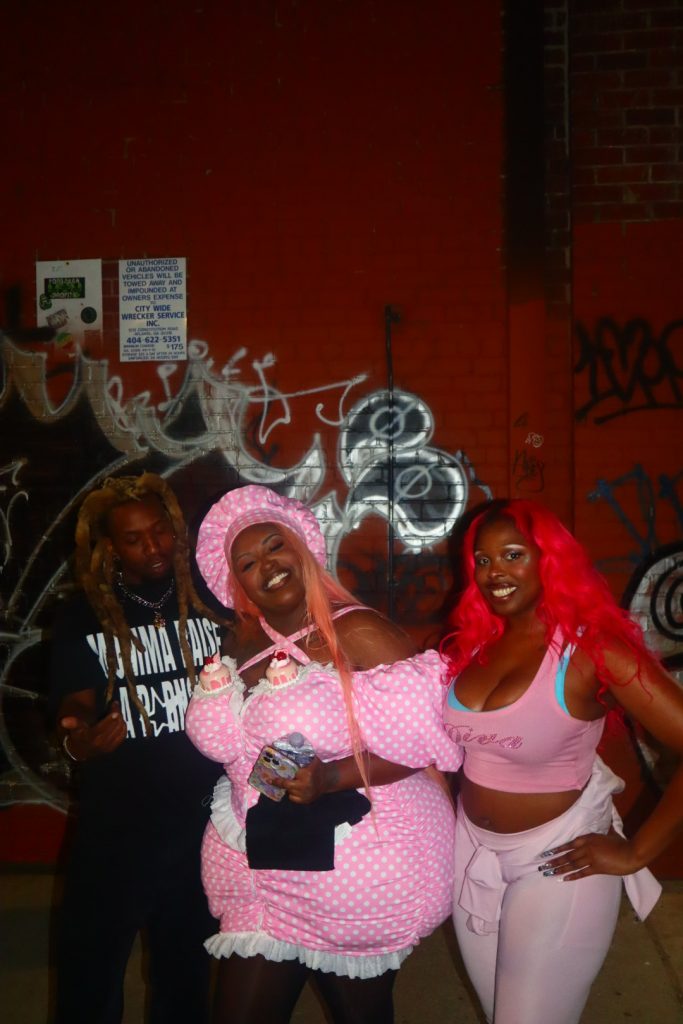
“There are still spaces where you can get the best of both worlds,” Ruqiyah says. “But it’s like a rare fossil.”
One of Ruqiyah’s first memories of the Atlanta music scene was the aforementioned Awful Records’ 2015 Boiler Room session, which featured a stacked roster of burgeoning artists (including Playboi Carti and label-founder Father) eager to take the underground culture of the music blogosphere offline and above ground. It took place in a residential backyard.
“Atlanta has, historically, benefited from affordable housing,” Crai explains of house show culture. “I don’t think we really have a scene now because it’s just increasingly becoming less and less affordable. You can’t have a scene when you don’t have a place for people to experiment and explore. A house costs way more now than it cost in 2016, and we’ve lost so many venues.”
As the cost of living continues to outpace income for many Atlanta residents, the accessibility of house shows and local venues becomes progressively endangered. The city’s long-troubling outlook for upward mobility does no favors for the time, resources and flexibility required to meaningfully participate in local art and subculture either.
A 2025 report from the mayor’s office on Atlanta’s nightlife economy found that 49% of Atlantans reported going out less often in 2024 than they had the year before. Such data, however, is indicative of the challenges facing nightlife, not a lack of desire for it. On any given weekend, rooms such as Banshee continue to spill onto the sidewalk, while newer spaces like Pisces (opened by longtime Atlanta DJ and promoter Ree de la Vega, in the building previously occupied by The Sound Table) and Lore have quickly become proof of the city’s appetite for diverse, genre-expansive programming beyond that of the “mainstream.”
That momentum extends beyond the dance floor. Alongside a forthcoming collaboration with BbyMutha, Ruqiyah and Crai each have albums in the works. Crai has also begun teaching Ruqiyah how to produce herself.
The question then is not whether Atlanta still desires the kind of mixed-genre scene embodied by Awful Records but who has the means to steward it. “We need spaces, and we need investors,” Ruqiyah says. “We need people who actually give a fuck. If they take something, they gotta leave something.” For Crai, that investment extends beyond the brick and mortar. “We’re also missing the journalism aspect of it. That matters so much. We need more people documenting this shit. If all of this crashes, we want physical media that says this happened and in these conditions.”
In many ways, the archive has never belonged solely to the tangible or to the past. It lives in the phone numbers exchanged after last call and in the sampled tracks reimagined on a Roland SP-404. It lives in the oral histories of shared memory — quiet moments in the backseat of your grandmother’s car, recollected aloud to another. It lives in the music that is, as Ruqiyah insists, “Black as hell,” sweated out on queer dance floors where “We outside. We with the dolls.”
The rooms may change. The addresses may disappear. But subcultures have never relied on permanence to preserve themselves. Like those cassette tapes, Atlanta’s underground has always found ways to keep playing.
Where and When
Ruqiyah performs at 7 p.m. August 16 at Aisle 5, 1123 Euclid Ave., Atlanta. aisle5atl.com.
::

Lindsay Thomaston is a photographer and culture writer with a background in media and politics. Her work has also appeared in Paste Magazine, Rolling Stone, i-D, Dazed, Fashionista and Immersive Atlanta, among others.
STAY UP TO DATE ON ALL THINGS ArtsATL
Subscribe to our free weekly e-newsletter.

PLEASE SUPPORT ARTSATL
Your Gift Sustains the Coverage You Count On!
Related Posts