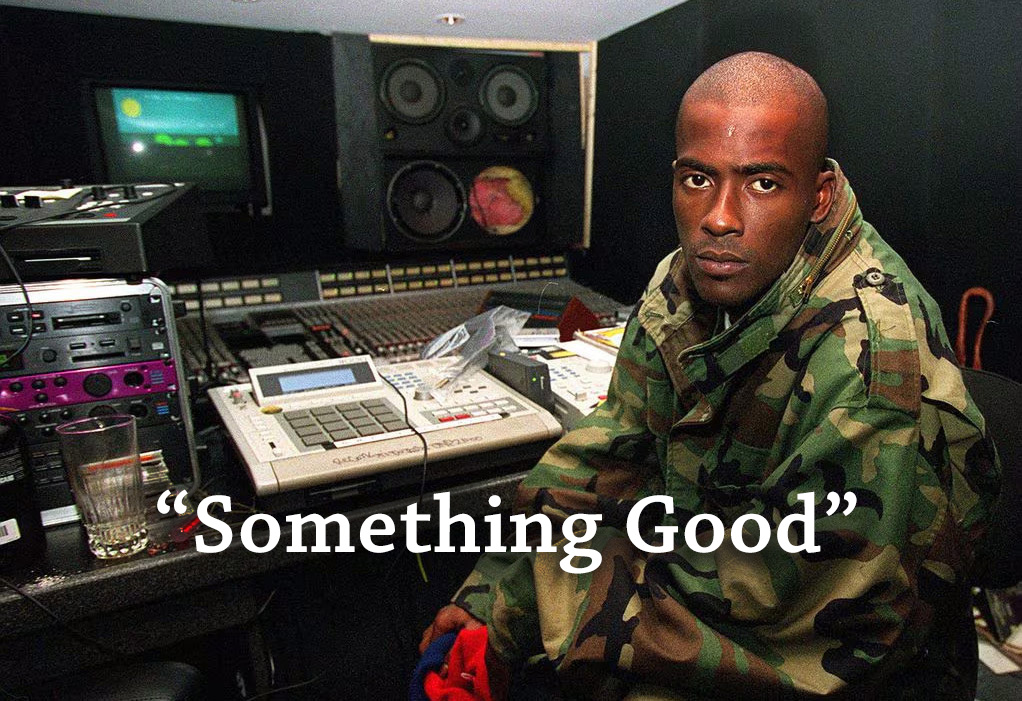
Rico Wade, producer and pioneer of the Dirty South (1972-2024)
When Rico Wade and friends laid down tracks in “The Dungeon” for then-unknown rappers such as Outkast and Goodie Mob, they birthed a production company, Organized Noize, and Wade went on to play a pivotal role in developing the sound of Southern hip-hop.
::
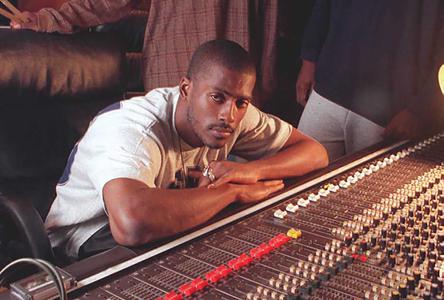
Down the rickety wooden steps of a one-bath house in Lakewood Heights lay the unfinished basement-turned-studio from which Atlanta would become the epicenter of hip-hop. Stacks of records, sleeves caked with years of dust, spilled across its red clay walls, while busted speakers served as makeshift tables on which drum machines could be balanced. Permanent marker signatures lined the room’s low ceiling, and, in the dull glow of a pull-chain light, a rafter split the name, “OUT/KAST.”
This is how production trio Organized Noize recall their humble beginnings in the 2016 documentary, The Art of Organized Noize. Comprised of then-teenagers Rico Wade, Ray Murray and Patrick “Sleepy” Brown, Organized Noize laid the groundwork for some of Atlanta’s most influential acts, shaping the sound of the Dirty South in the process — and all from beneath the kitchen floorboards of Wade’s mother’s home. Though cramped in space, the simple studio (dubbed, plainly, the “Dungeon”) would see Organized Noize working tirelessly into the night to create tracks for the young rappers in their troupe, including the likes of Outkast and Goodie Mob.
As the founder of the group, Wade would often spend his own paychecks supplying food for the collective, fueling those after-hours jam sessions with an everybody eats mentality that would become the backbone of the Dirty South’s enduring impact and, ultimately, of Wade’s legacy.
Rico Renard Wade was born in Atlanta in 1972, to Gus Griggs and Beatrice Wade. After graduating from Tri-Cities High School in 1990, Wade worked as a manager at Lamonte Beauty Supply, located in an East Point shopping center at the intersection of Headland Drive and Delowe Drive. It was here that fellow schoolmate Tionne “T-Boz” Watkins would first introduce Wade to Sleepy Brown, who in turn introduced Wade to Ray Murray.
One year later, that fateful shopping center would also be where Andre Benjamin and Antwan Patton — then-students at Tri-Cities — would crank their car stereo in an audition for Wade, rapping over A Tribe Called Quest’s “Scenarios” for 10 minutes straight. As Outkast would later memorialize on their sophomore record, ATLiens, that encounter on Headland and Delowe was, indeed, the start of “something good.”

The chance to prove this something good arrived with left-field fortuity. LaFace Records was assembling a Christmas record, and label president L.A. Reid wanted to showcase new signees Outkast on a production deal with Organized Noize. Cautious of being cornered into triteness but determined to seize a potential break, Wade agreed, recalling in a 2012 interview for Complex, “Thing is, we don’t really fuck with Christmas like that. I told Outkast, ‘We gotta do a Christmas song, but we’ll just talk about what we don’t do on Christmas or what it means to us.’”
Thus, “Player’s Ball” was born. Outkast’s debut single and the first of many charting hits for Organized Noize, “Player’s Ball” marked a paradigm shift in the cultural zeitgeist, where hip-hop had been formerly divided along geographical lines of East and West, the Dungeon collective were now situated as pioneers of a looming third coast.
While airwaves from Los Angeles to New York City were dominated by the sample-laden (expensive) sounds of Dr. Dre and Public Enemy, Organized Noize was going live, pulling from the sounds of funk, soul, rock ‘n’ roll and gospel to create a pastiche that was historically Black, distinctly Southern and, above all, quintessentially Atlanta.
Crucially, its drawled delivery invoked a sense of regional identity, celebrating the strengths of Southern hospitality while emphasizing the realities of Black Americans in a post-Civil Rights, post-Reagan Atlanta. As an usher of this new era, it is, fittingly, the voice of Rico Wade that first escorts us onto the scene and into Atlanta’s future:
Man, the scene was so thick
Lowriders, ’77 Sevilles, El Dogs
Nothin’ but them ’Lacs
All the players, all the hustlers
I’m talkin’ ’bout a Black man heaven here
You know what I’m sayin’?
The music video for “Player’s Ball” was directed by Sean “Puff Daddy” Combs and features scenes from around Atlanta, including the kitchen of Wade’s Lakewood home.
Goodie Mob, another group of Dungeon affiliates, would soon follow Outkast’s headway with the release of Soul Food in 1995. Like collard greens and hoecakes, Organized Noize had soul — and far beyond that of the sonic sense. “He [Wade] was our mouthpiece,” recalled former Organized Noize manager Dee Dee “Peaches” Murray to 11 Alive. “He was our salesperson. If you didn’t get it, Rico would explain it to you eloquently, and then you’d get it. We saw how unselfish Rico was, in the business as he was in his personal life.”
Organized Noize was creating a brotherhood and, within that ethos, a mentoring infrastructure that would underline Atlanta as a musical mecca for decades to come. Wade’s knack for forging partnerships functioned within this movement as a conduit, connecting talent with opportunity and opportunity with visionary foresight.
Such foresight is short-lived sans versatility. The release of TLC’s “Waterfalls” would prove that span immortal, hooking pop sensibility with the grit and groove Organized Noize had come to perfect and again with En Vogue’s career-resuscitating smash, “Don’t Let Go.”
“Waterfalls” spent seven weeks at No. 1 on the Billboard Hot 100.
The lineage of artists elevated and influenced by Organized Noize has long since outgrown that humble basement studio in Lakewood, but its sinuous sprawl still traces its roots back to those red clay walls and to the innovative spirit helmed by its founder.
More than a beats-maker, Wade was a liaison, an enduring microphone, ever-amplifying what the South had to say. Those acoustics reverberated through the 2000s, guiding Dungeon-mentees like Killer Mike, Janelle Monae and Future, while priming the possibility for the rise of crunk and trap. “He was the big brother that I needed,” Killer Mike told Channel 2 Action News. “He was someone who challenged me, someone who encouraged me. I didn’t have the courage to just pop up.”
Wade’s commitment to bringing up those around him was an undeniable display of Southern hospitality, a table spread of soul food nourishing something good for generations to come.
::
Lindsay Thomaston is a photographer and culture writer with a background in media and politics. Her work has also appeared in Paste Magazine, Rolling Stone, i-D, Dazed, Fashionista and Immersive Atlanta, among others.
STAY UP TO DATE ON ALL THINGS ArtsATL
Subscribe to our free weekly e-newsletter.

PLEASE SUPPORT ARTSATL
Your Gift Sustains the Coverage You Count On!
Related Posts