Leia’s Long Look: The tumultuous, minimalist paintings of Kim Ouellette
Leia’s Long Look is a monthly column providing focused looks at individual artworks, prompting slow looking and deeper reflections.
It’s easy to feel overwhelmed after walking into Emerald Tears, a solo exhibition by Kim Ouellette at Marcia Wood Gallery through November 28. Across the dozen or so paintings included, colors coagulate, marble and overlap, boiling the surfaces. This churning sensation suffuses the space with pelagic rhythms — a constant unrest. But to say this exhibition is maximalist or abstract expressionist would be inaccurate, as Ouellette’s paintings are more aligned with minimalist abstraction.
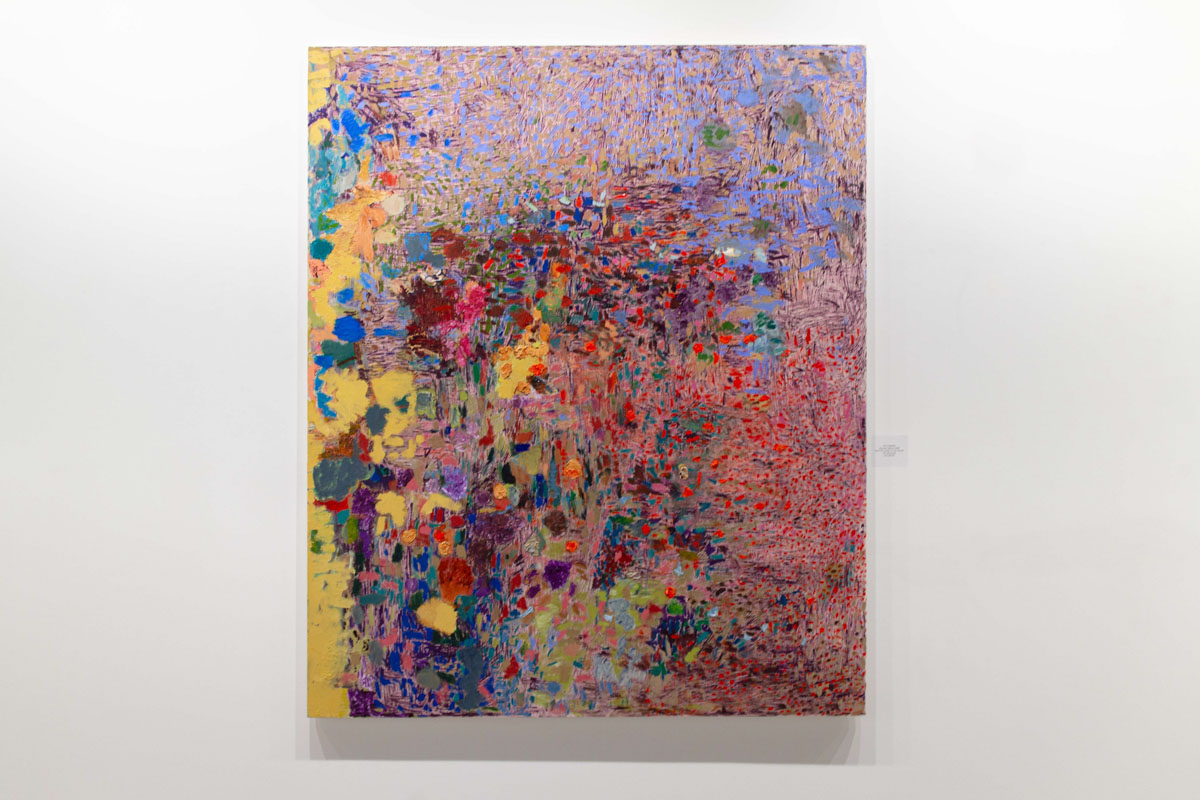
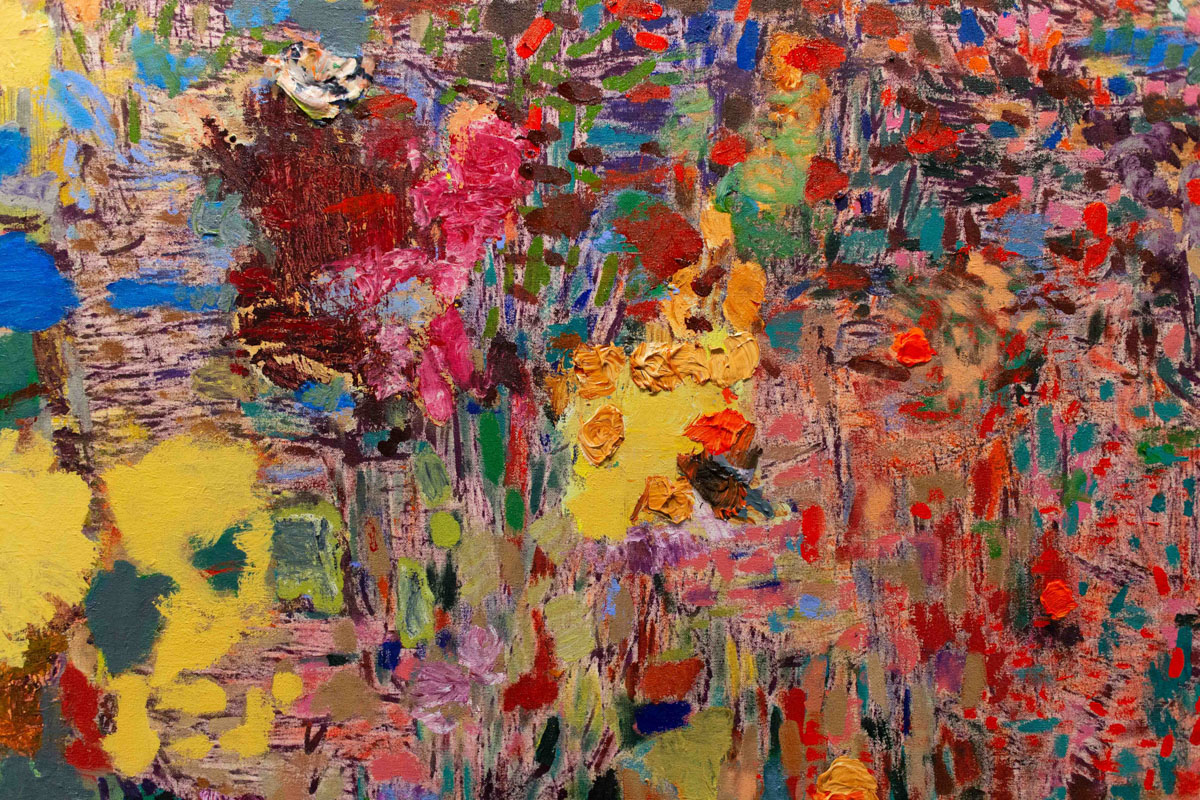
Discreet Yellows (2026) is a vertical, rectangular painting. A laundry list of colors — including mustard, fuchsia, ultramarine, plum, crimson, emerald, olive and teal, among others — blanket the surface with small, multifarious marks — near-round dots, dashes, smudges and sketchy lines. While sometimes the paint is applied thickly, creating a sculptural effect, the underlying, raw canvas peeks through everywhere as if the painting is a thin, porous membrane through which the canvas breathes. The evidently handmade marks and enveloping, nonrepresentational composition connote painting styles like abstract expressionism, but the painting’s lack of bravado indicates that comparison is misleading.
In a 1972 interview, when American minimalism was well established, the painter Frank Stella, whose black stripe canvases helped define the movement, said his style arose from a desire to create all-over abstraction: like abstract expressionism but without the grandiose gestures, preserving handmade qualities while deliberately considering the entire surface. While Discreet Yellows does not feature the geometric rigor of Stella’s paintings, nor its monochromatic palette, it does share similar deliberateness. Ouellette’s brushstrokes are tiny and varied in color, thickness, texture and shape. None of them bleed or blur, which indicates a slow, wet-on-dry technique. The result is controlled chaos.
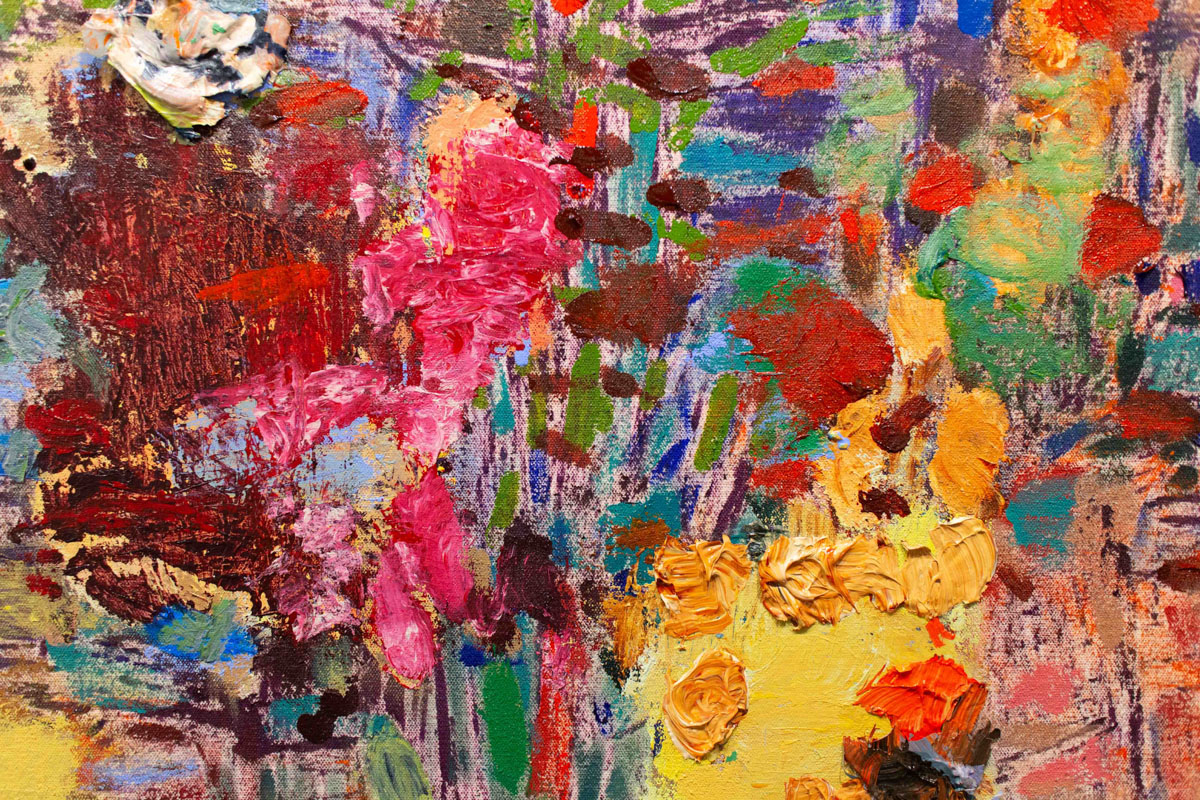
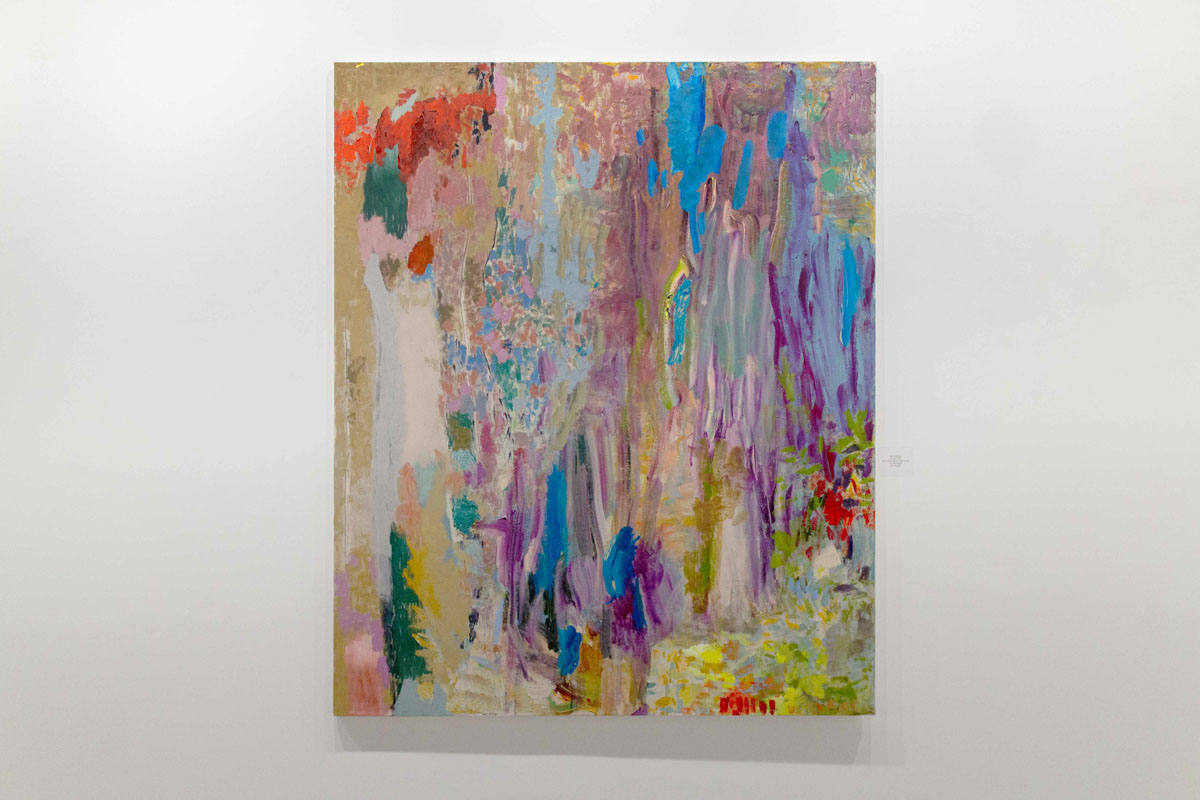
Careful (2026) is another vertical, rectangular painting. The artwork is somewhat subdued chromatically, with a palette of twine, slate, dusty rose, blue steel, violet, scarlet and cerulean, among others. Paint is applied in streaks, blots and conjoined strokes, creating a more languid, romantic composition. Though these discursive marks cover more of the surface, as with Discreet Yellows, the substrate remains omnipresent, like graffiti with its artistry inextricable from the wall on which it’s seen. This painting, as with others in the exhibition, is more visually complex and emotive than canonical, minimalist abstraction, but complexity is not incompatible with minimalism.
One of Constantin Brancusi’s most famous sculptures is Bird in Space (1923) — a tall, thin, marble sculpture featuring a short, conical shape at the base, supporting an oblong, rounded cylinder, crowned by a faceted tip. The sculpture has a continuous, smooth silhouette connoting simplicity, but the form itself is complex. It does not sit neatly into defined geometric forms, nor is it easily described. This also extends to the animal of inspiration, its airborne form featuring a graceful silhouette, a shape made possible only by incredibly complex biological structures and evolutionary traits.
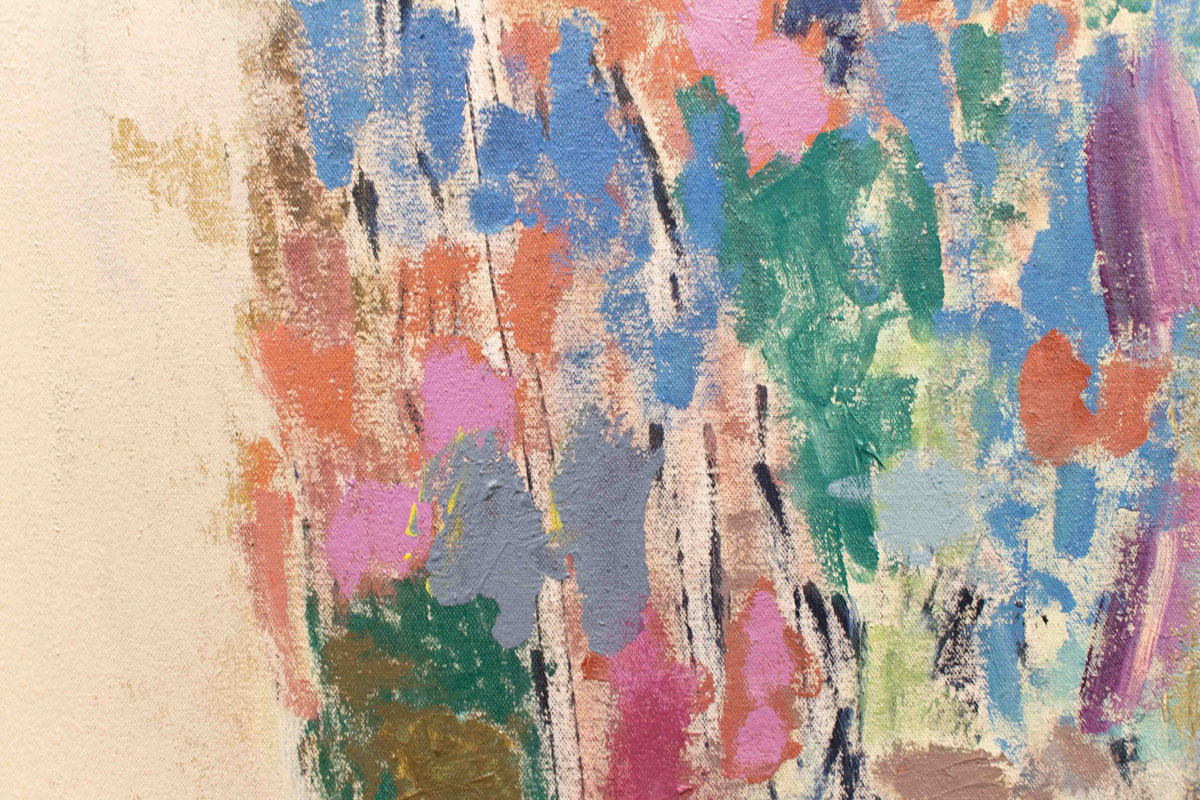
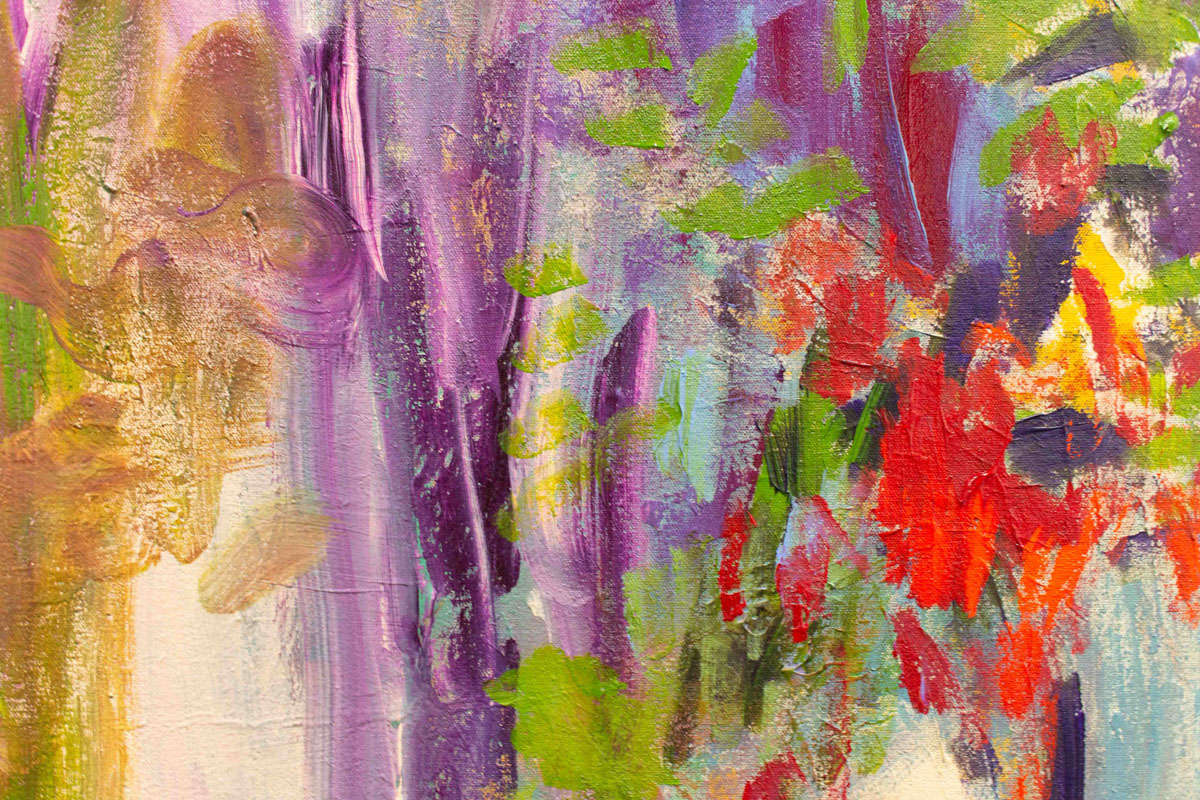
Careful features aberrant moments, larger or longer brushstrokes and a dearth of smooth or lucid forms, but its restrained color palette and selectively applied brushstrokes communicate a sense of just enough; the painting contains only essential components. It just so happens that the essentials require elaborateness. While understandably tempting, reading this painting as stream of consciousness or purely intuitive ignores the visual evidence of meticulous discernment. Emotion and romanticism can be deliberate.
Describing tumultuous, multicolored paintings as minimalist seems contradictory, but this tension invigorates the exhibition. After thousands of years of painting, it’s easy to assume everything has been done. Emerald Tears states quite clearly that painting has far from exhausted its potential.
Emerald Tears. Through November 28. Marcia Wood Gallery. 761-D Miami Circle, Atlanta. marciawoodgallery.com.
::

Leia Genis is a trans artist and writer currently based in Atlanta. Her writing has been published in Hyperallergic, Frieze, Burnaway, Art Papers and Number: Inc. magazine. Genis is a graduate of the Savannah College of Art and Design and is also an avid cyclist with a competition history at the national level.
STAY UP TO DATE ON ALL THINGS ArtsATL
Subscribe to our free weekly e-newsletter.

PLEASE SUPPORT ARTSATL
Your Gift Sustains the Coverage You Count On!
Related Posts