Jeffrey Gibson adds layers to Indigenous art at Kennesaw State


Cornucopious.

The word has not been used since the 17th century, according to the Oxford English Dictionary, but the art of Jeffrey Gibson could bring it out of retirement.
Its gobsmacking abundance — of media, materials, ideas, emotions, cultures, politics and heart — are on display in Jeffrey Gibson: They Teach Love, From the Collections of Jordan D. Schnitzer and His Family Foundation at Kennesaw State University’s Bernard A. Zuckerman Museum of Art. The exhibition, which encompasses work of the last 15 years, is on view through December 7.
The vast world of making is Gibson’s oyster. Gibson, who is of Choctaw and Cherokee descent, draws from traditional Indigenous crafts, (including beadwork, basket-making and birch-biting), modern and contemporary art, music and pop culture.
As he said during a recent visit to KSU, “Everything is up for grabs.” That includes his own art, which he recycles and rejiggers, even as he continues to explore new things.
Consider:
All I Ever Wanted All I Ever Needed (2019), a fringed punching bag overlaid with beads in his signature geometric patterning and emblazoned with the title’s words from Depeche Mode’s 1990 synth-pop hit Enjoy the Silence.
They Play Endlessly (2019), a dizzying quilt using fabrics digitally printed with photos and images of previous works, embellished with elaborate curvilinear stitching.
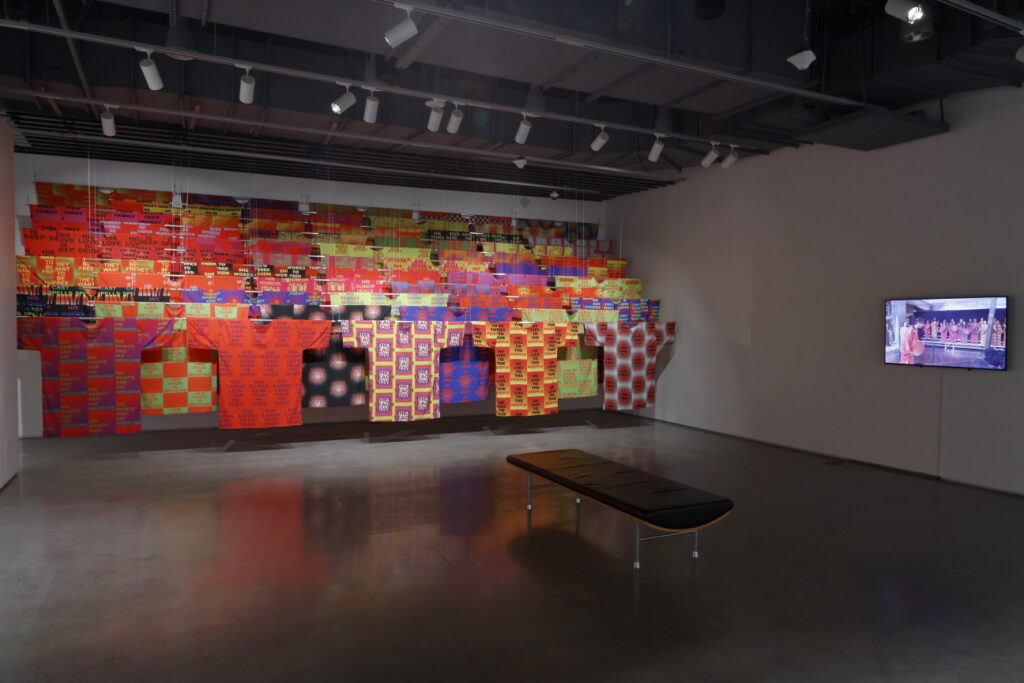
To Name An Other, a 2018 performance on the relationship between injustice, marginalization and identity. Fifty volunteers who identified as Indigenous, queer or of color wore screen-printed garments and banged screen-printed elk hide drums. The garments and drums are displayed along with a video of the performance.
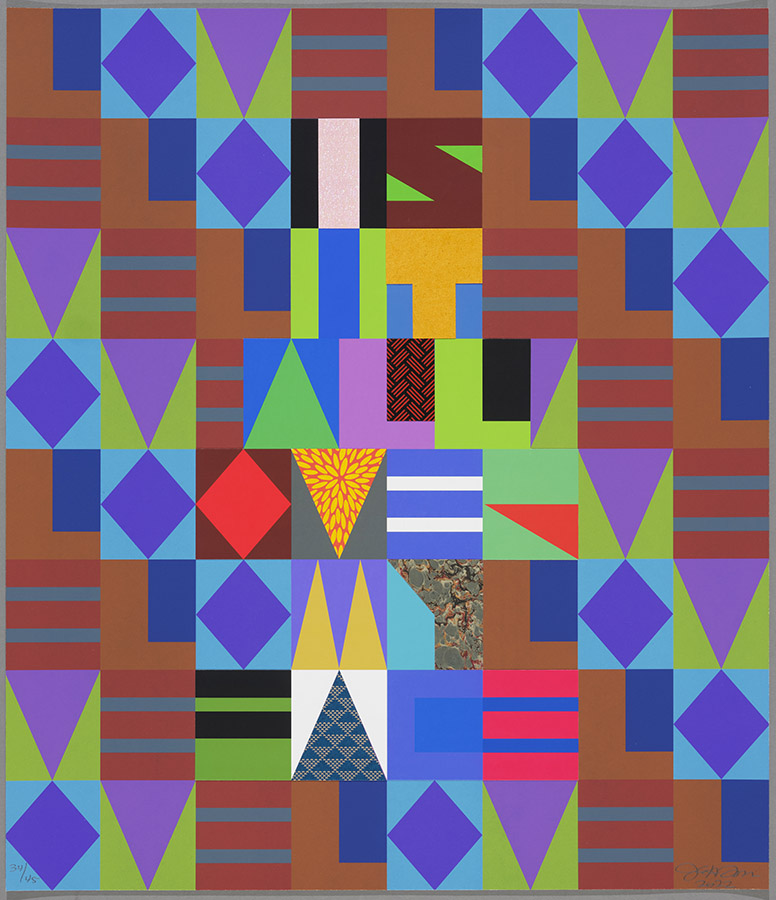

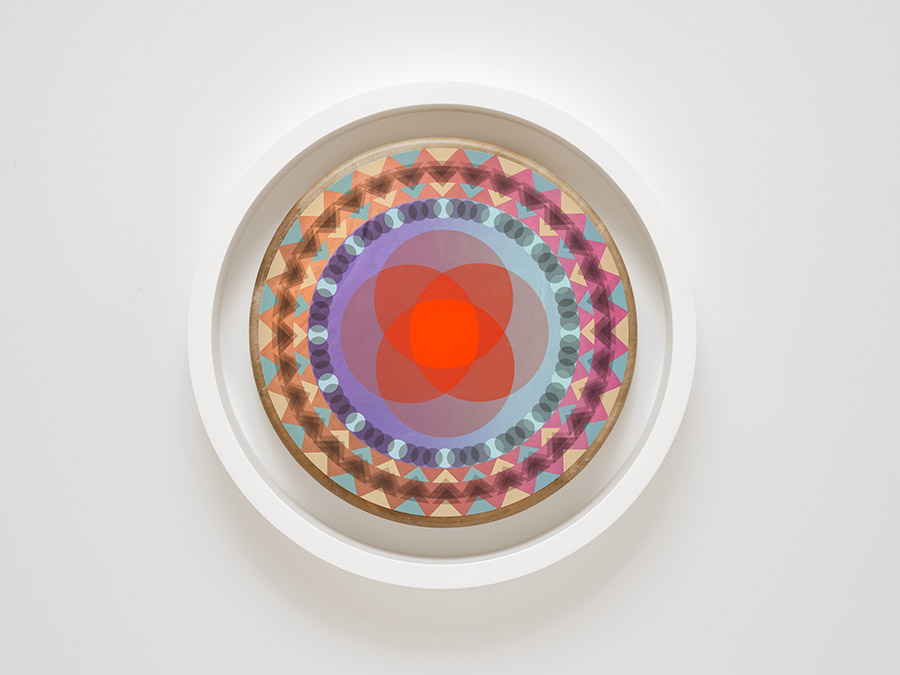
Gibson’s art celebrates (and celebrates defining) his layered identity as a gay, Indigenous contemporary artist. His Cherokee and Choctaw heritage is the bedrock of his spirit and drives artistic exploration. Yet he is trained and steeped in contemporary art and calls Ellsworth Kelly a hero.
The art is similarly layered. His colorful, hard-edged geometry, for instance, references both Indigenous patterning and modernism.
The recurring garment form, whose accretive accumulation of materials put me in mind of Nick Cave’s Soundsuits, alludes to Indigenous Ghost Dancing regalia as well as the ecstatic gay club culture and ’80s pop music of his youth.
There is, unsurprisingly, anger and sadness here as well as joy. It is suggested by references to caricatured Indian dolls and tourist-trade blankets, the kinds of thing that imprison Indigenous identity in stereotypes. It is implicit in To Name An Other. But as critic Phillip Barcio has pointed out, Gibson is more interested in “resistance and transcendence.”
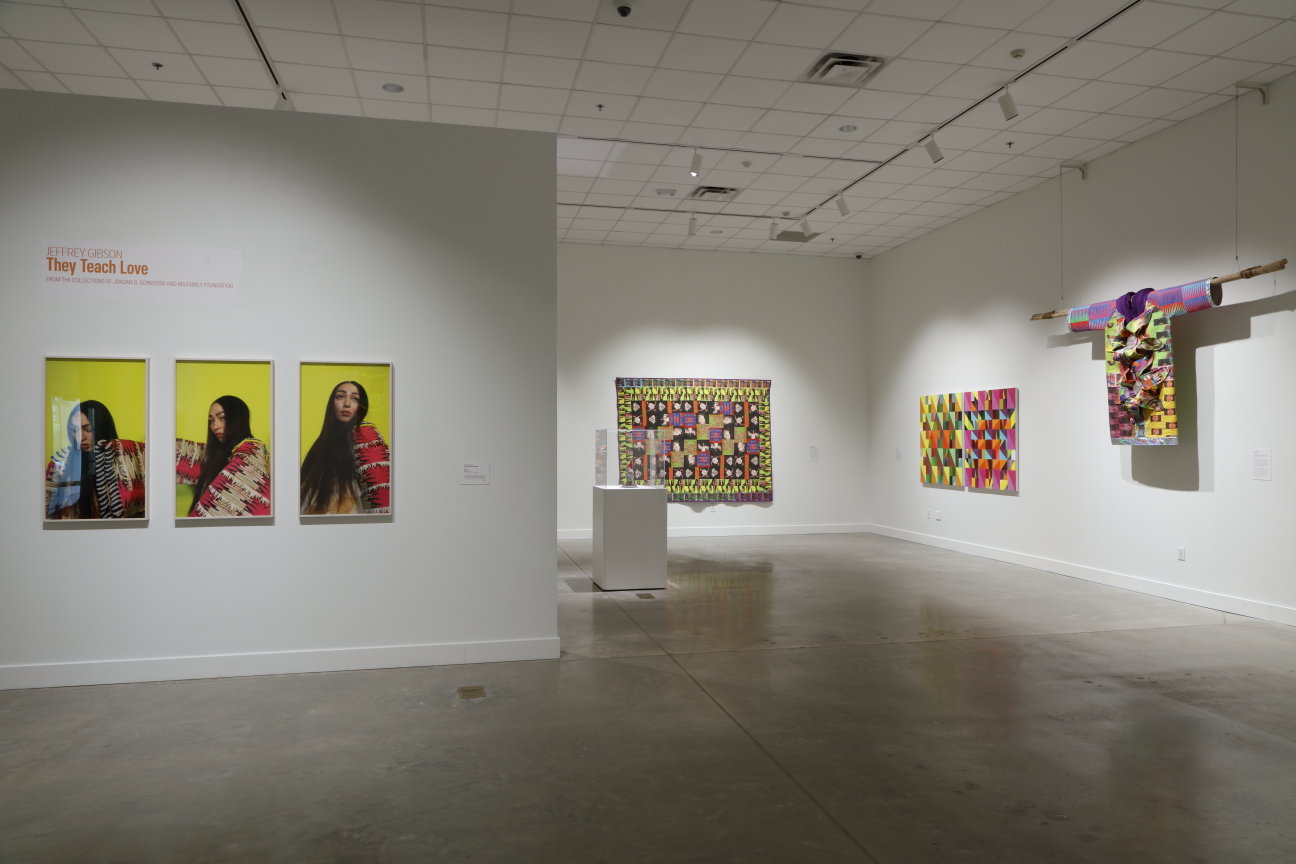
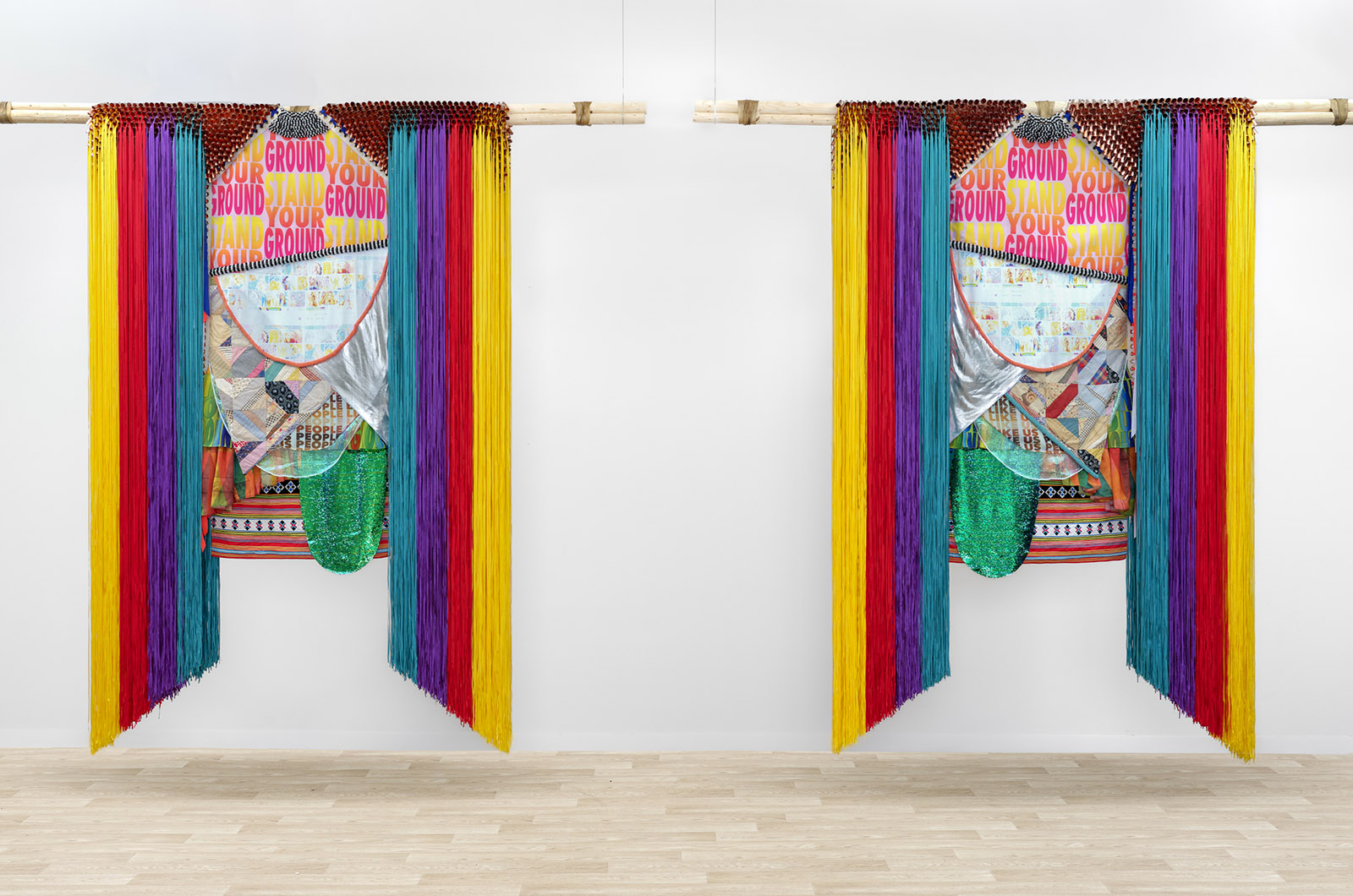

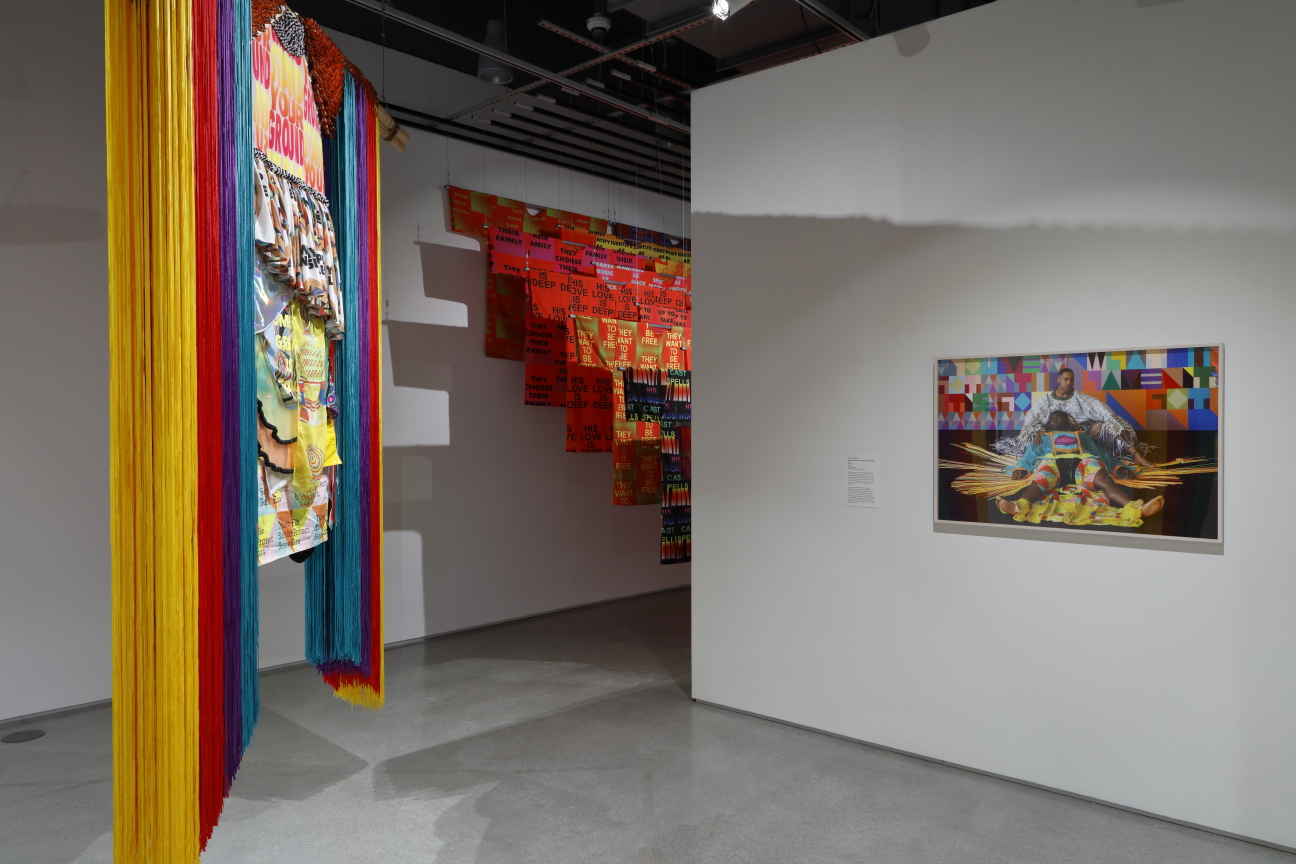
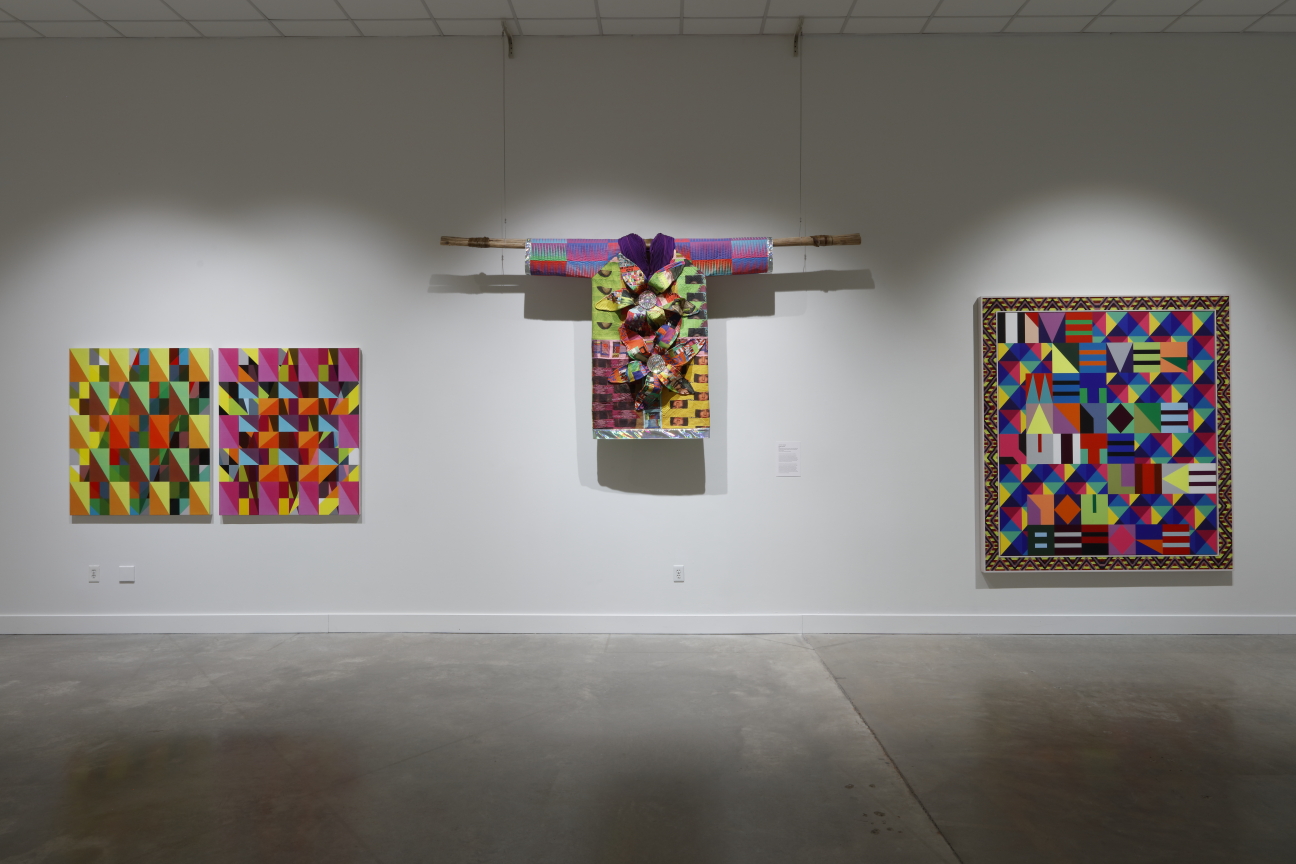
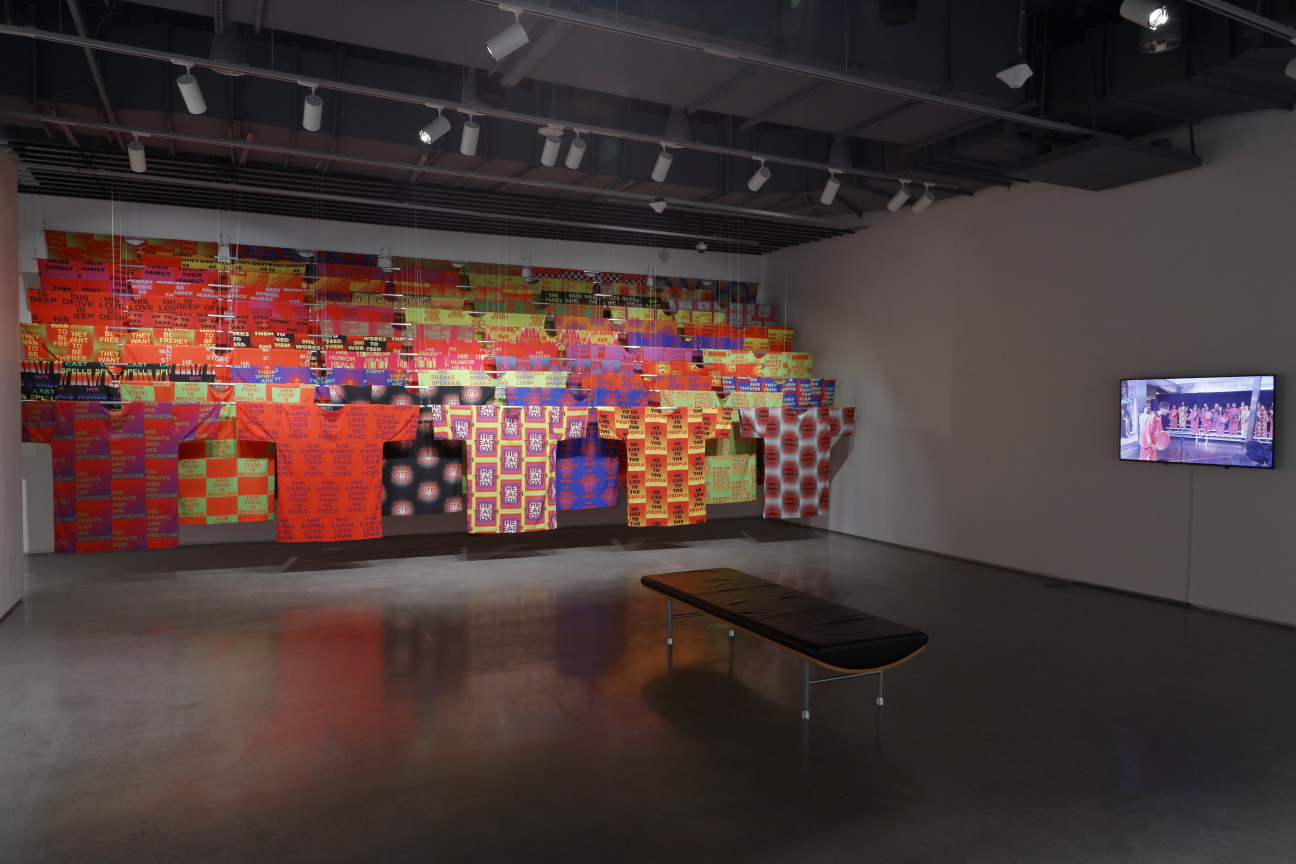
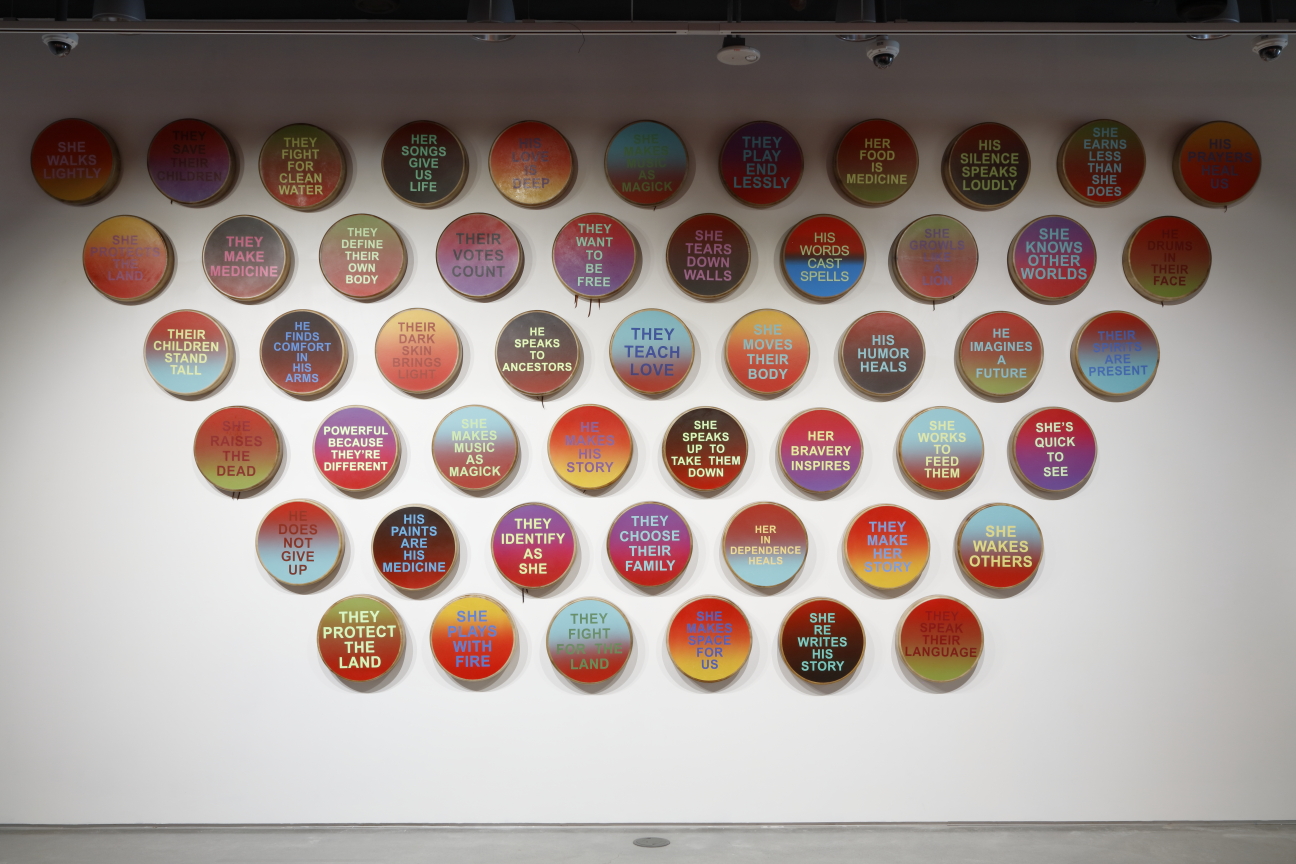

Considering the cultural politics of the art world, Gibson, 52, seems the perfect choice to represent the United States at this year’s Venice Biennale. But it’s not only because of his concerns. Gibson knows how to make aesthetic experience an equal partner of relevance.
And he is as cheeky as he is serious. With a rollicking symbolism, he painted the neoclassical facade of the American pavilion Marilyn Monroe-lipstick red and garnished it with his signature geometric patterns.
Gibson’s Venice exhibition is titled the space in which to place me. As if. Gibson is all about breaking down walls and expanding his universe. It’s not for nothing that his 16,500-square-foot, multimedia installation at MASS MoCA, opening November 3, is titled POWER FULL BECAUSE WE’RE DIFFERENT.
::

Catherine Fox, an award-winning art critic, co-founded ArtsATL and served as its executive director and executive editor for five years. Fox was the art critic for The Atlanta Journal Constitution from 1981 to 2009.
STAY UP TO DATE ON ALL THINGS ArtsATL
Subscribe to our free weekly e-newsletter.

PLEASE SUPPORT ARTSATL
Your Gift Sustains the Coverage You Count On!
Related Posts