History, art and nature merge in the plans for the Molly Blank Center for Opera & the Arts
The Atlanta Opera’s ambitious Beltline-adjacent facility began construction in February. Take a look at the site’s past, present and future.
::
Not unlike a certain group of popular fictional space travelers, for the past 13 or so years, the Atlanta Opera has been on a mission to explore strange new worlds, to expand the audience for an art form hidebound by historical convention and to boldly go where no earthly opera company has gone before.
With General and Artistic Director Tomer Zvulun at the helm, The Atlanta Opera has evolved from a struggling institution with a supportive but insufficiently philanthropic audience into an internationally renowned enterprise lauded for its innovative productions, creative programming and a robust multimedia infrastructure. Before the opening of the 2024-25 season, OPERA America deemed the Atlanta Opera one of the Top 10 companies in the United States, based on reaching the $15 million operational budget threshold established by the industry’s national service organization.
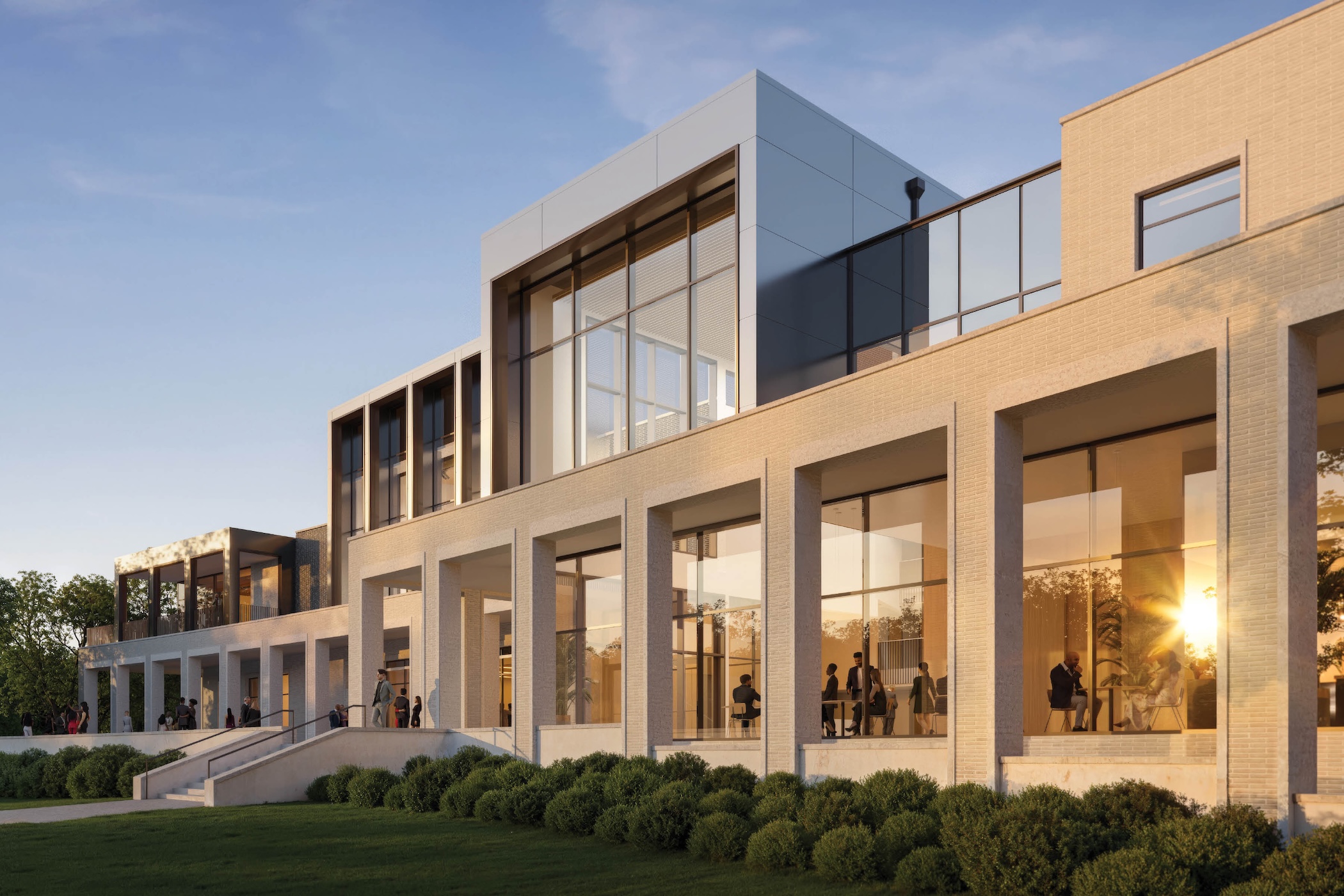
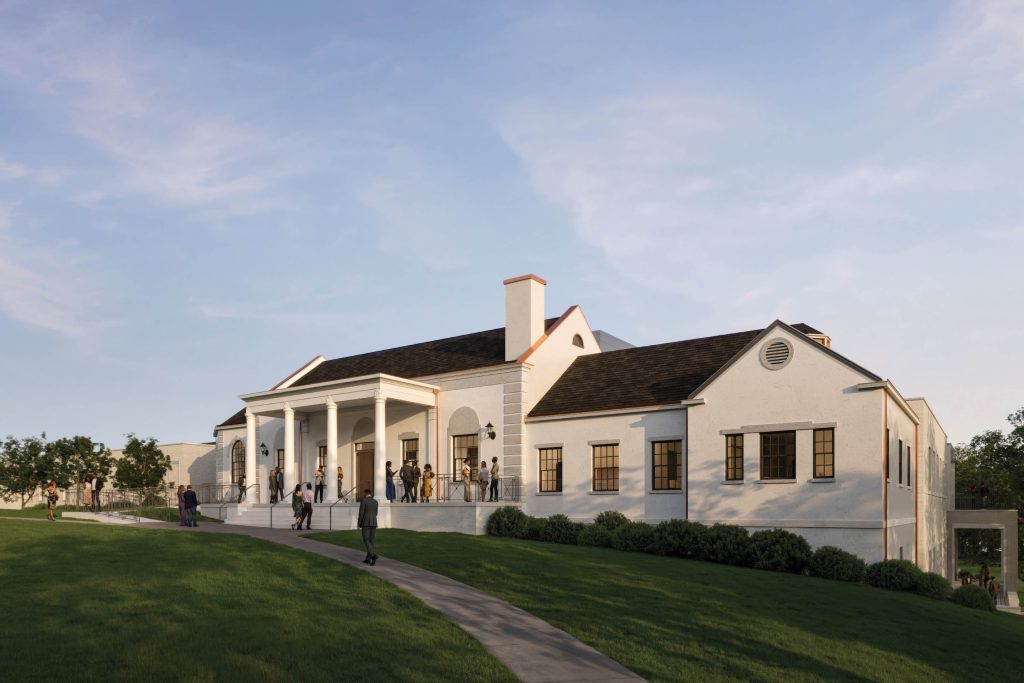
In the fall of 2024, Zvulun announced the next major mission for the starship under his command: a $110-million fundraising campaign, including funds to build a $43-million multidisciplinary facility on a 6-acre parcel of land adjacent to the Atlanta Beltline in Buckhead. The 56,000-square-foot campus complex, which encompasses the historic Bobby Jones Golf Course clubhouse, will include production and administrative offices, a “black box” theater, educational classrooms and an outdoor green space with the potential to host special events.
The Arthur M. Blank Family Foundation donated $27.5 million to the fundraising campaign. In return, the co-founder of The Home Depot and owner of the Atlanta Falcons named the opera’s new project after his mother, Molly Blank, a dancer and sculptor who loved music, theater and opera. In February, construction of the Molly Blank Center for Opera & the Arts began in earnest, with completion slated for fall of 2027. Even with the facility completed, the Cobb Energy Performing Arts Centre will remain the venue for the Atlanta Opera’s main stage productions. (The Atlanta Opera will be debuting a new production of Puccini’s Turandot there this weekend.)

“The mission of the Atlanta Opera is to break boundaries and provide exceptional performances for audiences, an idea that is exemplified in this performing arts center,” Zvulun said in a phone interview with ArtsATL. “Atlanta is a city in a forest, and this new center is nestled in a section of the forest. We’re strong believers in the alchemy and synergy that happens between the arts and music on one hand and nature and community on the other.”
The city-owned Bobby Jones Golf Course was built in 1932. The formal clubhouse was completed in 1941 under the auspices of the Works Progress Administration. In 1951, a foursome of African American golfers, including Alfred “Tup” Holmes, a talented amateur who won collegiate titles while attending Tuskegee University, were prevented from teeing off at the course based on a municipal code banning Black citizens from playing on publicly funded golf courses. The men brought a federal lawsuit challenging the ban, which resulted in a 1955 Supreme Court ruling in Holmes v. City of Atlanta that outlawed segregation of public recreational facilities.
“The golf course and clubhouse represent a very important piece of American and Atlanta history,” Zvulun said.
The Molly Blank site sits mostly within the Peachtree Creek 100-year floodplain. From the beginning, the Atlanta Opera has been consulting with organizations such as the Haynes Manor Foundation, the Peachtree Battle Alliance, the Atlanta Memorial Park Conservancy, the City of Atlanta Department of Parks and Recreation, Breedlove Land Planning and Davey Resource Group to address the environmental impact of the construction of the Molly Blank Center and the long-term health of the floodplain ecosystem.
Primary concerns include storm water management, erosion mitigation and creek rehabilitation, tree canopy restoration and structural impact. When completed, the site will be contoured based on the natural landscape in a way that works in cohesion with Peachtree Creek and addresses neighborhood concerns about conditions on FEMA-managed lots and the Northwest Beltline Connector Trail.
“When this place came to the fore as an opportunity, it stood out as a place where we could connect with the community, lean into the history of the site and building and lean into the art and nature all in one place,” said Micah Fortson, managing director of the Atlanta Opera.
Plans call for the construction of bio-retention ponds or “vaults,” which will slow down the flow of water into Peachtree Creek during storms. The vault concept could also allow for the development of small wetland areas to help combat erosion. Dealing with the flora, particularly the originally planted trees, presents a different challenge.
“Back when they were planted about 80 years ago, there wasn’t a lot of knowledge around the diversity of tree species that could be planted in a floodplain, so they picked a lot of water oaks,” Fortson explained. “They grow up real big, real fast, but they don’t live long, about 30 to 50 years, according to the U.S. Forestry Service.”
The trees on the Molly Blank site are about 80 years old. In the last two years, five have fallen down on the property, according to Fortson, raising safety concerns around the remaining trees.
“We had arborists come out and evaluate all of the trees to determine which ones would survive over the course of construction and which ones were just completely unsafe and needed to be removed,” Fortson said.
Because the site is a former golf course, the trees left standing are essentially the only trees in the area. The solution developed by Fortson and his team of arborists and land planners involves creating a succession plan, which begins by planting native species to provide a measure of canopy diversity, followed every few years with other plantings.
“We’ll be working with Atlanta Memorial Park Conservancy, Trees Atlanta and the neighborhood to do volunteer plantings overseen by a certified arborist,” Fortson explained. “As the trees grow over the years, you’ll have these multigenerational trees coming up.”
Atlanta-based architecture firm Post Loyal is lead designer of the Molly Blank Center for Opera & the Arts, with Theatre Projects and A’kustiks responsible for the recital hall. The exterior of the clubhouse will be restored and blended within the facility, which incorporates a lot of open spaces and glass walls. The campus is designed to encourage pedestrian and alternative transit access, with vehicle parking limited to around 120 spaces
The Molly Blank Center will house two modest performance venues: Rosemary Hall, a 200-seat recital hall, and the Atlanta Opera Coca-Cola Theatre, a 200-seat immersive theater. The theaters will be used to present smaller format programs, such as operettas, musicals, plays, voice recitals, chamber groups, jazz ensembles, lectures and films. The outdoor grounds may also provide an opportunity for special programming.
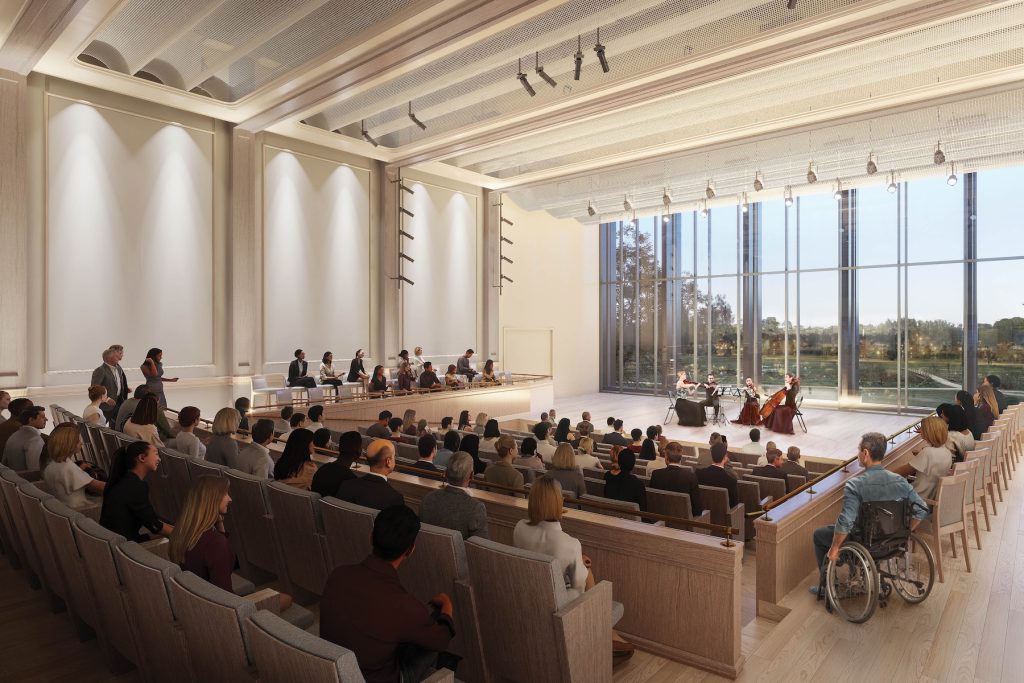
“It’s all meant to connect the community to the performance space and the performance space to nature,” said Zvulun.
With completion of the Molly Blank Center for Opera & the Arts anticipated in the fall of 2027, Zvulun sounded an optimistic yet cautionary note, indicating that the first public events may not occur until 2028.
“We are keeping two things as our North Star focus,” he said. “Number one is quality. We don’t want to attempt too many things, so that the quality of what you come to expect at the opera is maintained. Number two is to present a thoughtful cadence of events in harmony with the neighborhood so that folks are happy with what is happening there.”
And so begins another chapter in the voyages of the Atlanta Opera and the Molly Blank Center for Opera & the Arts.
::

An Atlanta native, Doug DeLoach has been covering music, performing and static arts in his hometown and beyond for five decades. Doug is a regular contributor to Songlines, a world music magazine based in London, and his ruminations on arts and culture have appeared in publications such as Creative Loafing, Georgia Music, ArtsGeorgia, The Atlanta-Journal Constitution, High Performance and Art Papers.
STAY UP TO DATE ON ALL THINGS ArtsATL
Subscribe to our free weekly e-newsletter.

PLEASE SUPPORT ARTSATL
Your Gift Sustains the Coverage You Count On!
Related Posts