Frankie’s Blues Mission delivers heart and soul with authenticity
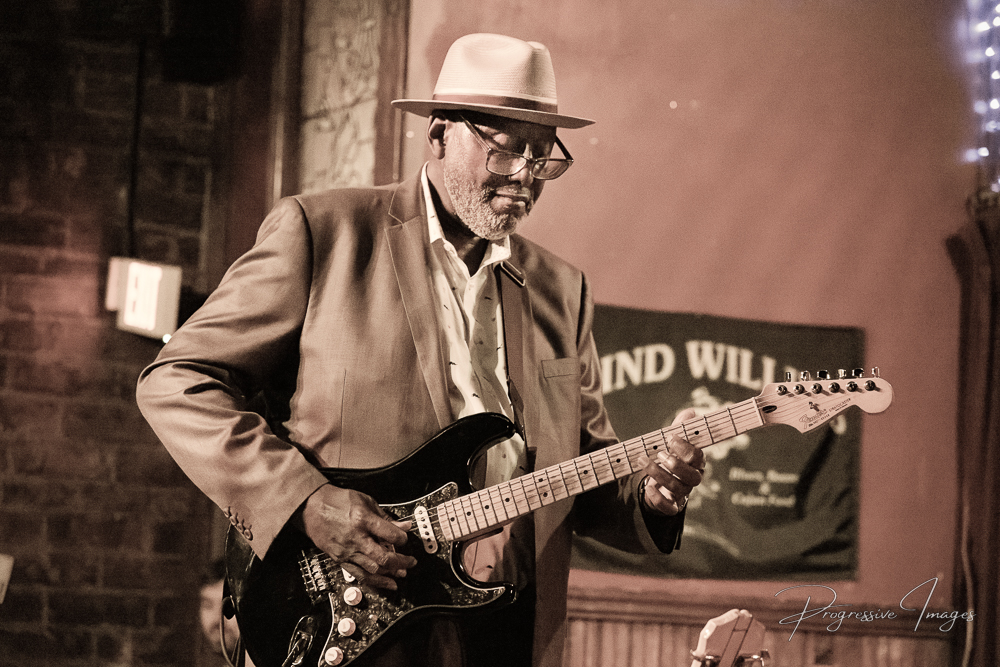
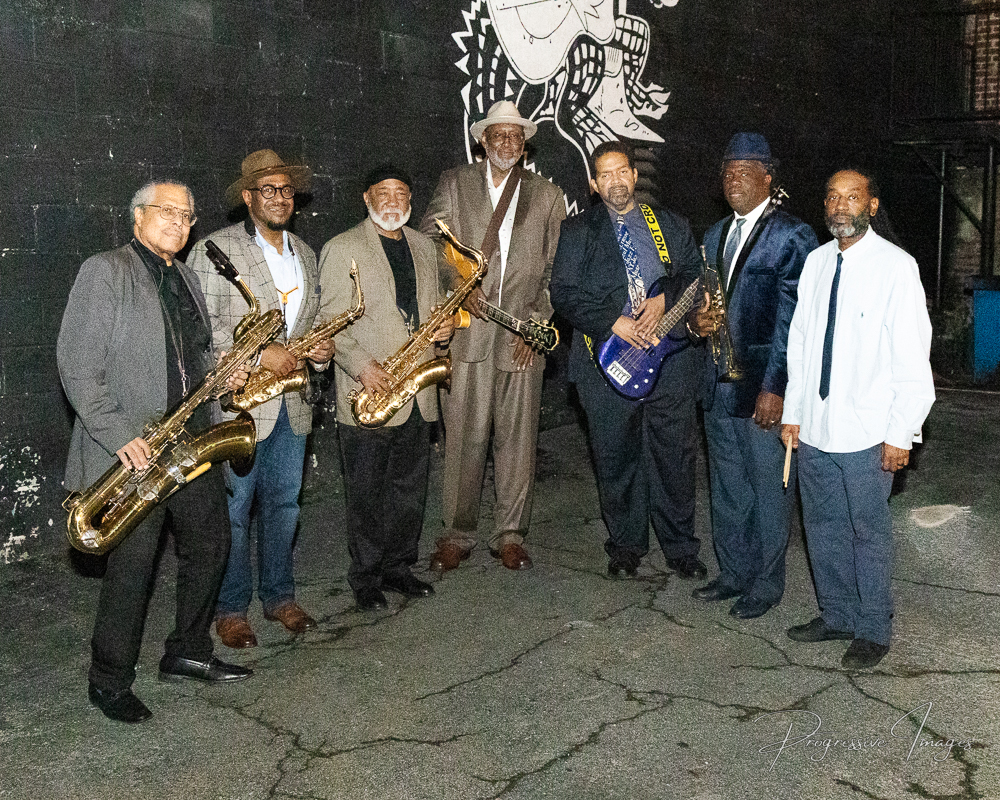
At a Frankie’s Blues Mission show, the music rarely stays onstage for long. The audience responds in real time to the band’s give-and-take approach, led by Frank “Frankie Lee” Robinson (vocals, guitar), with support from Kurt McManus (vocals, bass guitar), Rod Breland (vocals, drums), Hayward Redd (tenor saxophone), Charles Edwards (baritone and alto saxophones) and Christopher “Dryzdale” Williams (trumpet). Clapping, foot-tapping, dancing and laughter all become part of the band’s sound.
Robinson was steeped in blues and gospel from childhood. As a teen, he began tracing the musical lineage of artists he enjoyed, such as Stevie Ray Vaughan and The Fabulous Thunderbirds, back to their blues origins. While he started as a saxophone player, he changed his course after seeing a video of B.B. King.
“It was just this whole vibe,” Robinson recalls. “His interaction with the crowd, his interaction with the band — the fact that this man could just play two or three notes and carry a whole song, while a lot of guitar players can play 15 to 50 notes and can’t carry. That guy just had so much soul.”
He learned to play the guitar not only by listening to greats such as B.B. King, Buddy Guy, T-Bone Walker and Kenny Burrell but also from his mentor, Roy Lee Johnson, a nationally known songwriter and guitarist. “Roy Lee Johnson changed my life. He changed my playing style; he changed my approach,” Robinson explains.
One vital lesson he learned — long-embedded in blues phrasing — is that less is more. “You’re speaking with the instrument, and the way you phrase is a language. If you leave space in between the notes, it gives the audience a chance to respond. I didn’t believe that until I started actually doing this. Then I realized less really is more, because if you leave space in what you’re doing, it invites people in.”
That allows the audience to become part of the common stories that music can tell, Robinson explains. “The biggest one is heartbreak and getting past losing the one you love. Losing something. Something that meant something to you. It’s the big riddle of life. What do you do with yourself? How do you handle loss? That’s what music is for, to come up with ways to find a way to deal with all that loss or finding love, finding your purpose, finding happiness.”
That sense of space is built into the structure of the blues. Much of the art form is built on a call-and-response structure, communicated through the instruments and lyrics via an AAB structure within individual verses and sometimes the song as a whole. One of the band’s set list staples, “The Thrill is Gone,” is an exemplar.
The first “A” vocal line (“The thrill is gone; the thrill is gone away”) is followed by a musical response. The second “A” line repeats the first, sometimes with slight variations in the music. The “B” line then provides a resolution. Throughout the song, the same two “A” lines anchor each verse, while the third line varies to build the story: There is anger in the first verse: “You know you done me wrong, baby. You’ll be sorry someday.” Then grief in the second: “Although I’ll still live on, baby, so lonely I’ll be.” Hope begins to emerge in the third verse: “Someday I know I’ll be open-armed baby, just like I know I should,” and in the last verse there is forgiveness and moving on: “Now that it’s all over, all I can do is wish you well.” The emotional progression of the “B” lines moves the listener through the process of sadness and ultimately to acceptance. The musical interludes — particularly the extended jam after the third verse — create space for the listener to respond to the singer’s emotions and to possibly reflect on their own.
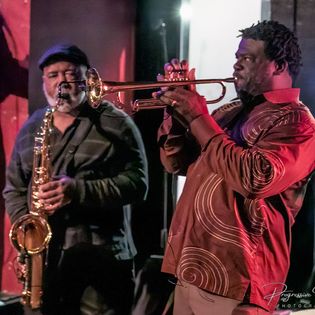
But the blues aren’t solely defined by sorrow. They also celebrate resilience. “They can also be about finding love and joy. It’s a communication about life,” Robinson says. The horn players provide a foray into joyful, high-spirited, blues-influenced jazz territory with songs like “Moanin’,” written by Bobby Timmons and famously recorded by Art Blakey and the Jazz Messengers.
Blakey’s band stood out in the late 1950s by re-affirming jazz’s blues and gospel roots at a time when cooler, more restrained jazz styles were in vogue. By leaning more heavily on call-and-response and blues-based harmony, the music feels immediately engaging without sacrificing depth. Frankie’s Blues Mission calls and responds as they trade lines and build momentum in a way that keeps the performance lively. “We’ll depart from the arrangement and just go with it, seeing where the feel takes us,” Robinson says. “That’s what makes it fun.” That sense of give-and-take extends to the audience: “We just want to have some fun with y’all — just back and forth.”
To Robinson, the music carries a weight far beyond entertainment. “To me, it’s not just notes and structure. It’s communicating my experience and my ancestors’ experience to the greater world,” he explains. “The blues are an African response to being in a foreign land that you didn’t ask to be in. You’ve lost your homeland, your possessions, your family. People are trying to take away the thing that makes you human. You have to find a way to deal with that. That’s why I called my band the Blues Mission. That’s my mission — having people really listen and not just hear the words on a page, like a book or whatever, but feel it or know as much as somebody can feel something that they haven’t experienced.”
But for Robinson, acknowledging that pain isn’t the end of the story — it’s the starting point for a deeper connection. “Presenting African American music as authentically as we can makes everybody more human. We want to have fun together celebrating our differences. It’s a brief flashpoint of the kind of world I would like to see. At the end of the day, we’ve got way more in common than we do differences. We’re all just people trying to find a way to the light.”
Ultimately, Frankie’s Blues Mission offers an opportunity to engage with the blues in real time rather than just observing them. “What I’m going to do is play these songs for you with all my heart and soul,” Robinson says. “And you’re welcome to come along with me.”
Where & when
Frankie’s Blues Mission. 9 p.m. March 7 and April 3 at Blind Willie’s, 828 N. Highland Ave. NE; and 9 p.m. March 20 (trio show), at Atkins Park Tavern, 794 N. Highland Ave. NE
::

Shannon Marie Tovey is a freelance music journalist and educator who covers the jazz, blues and rock scene.
STAY UP TO DATE ON ALL THINGS ArtsATL
Subscribe to our free weekly e-newsletter.

PLEASE SUPPORT ARTSATL
Your Gift Sustains the Coverage You Count On!
Related Posts