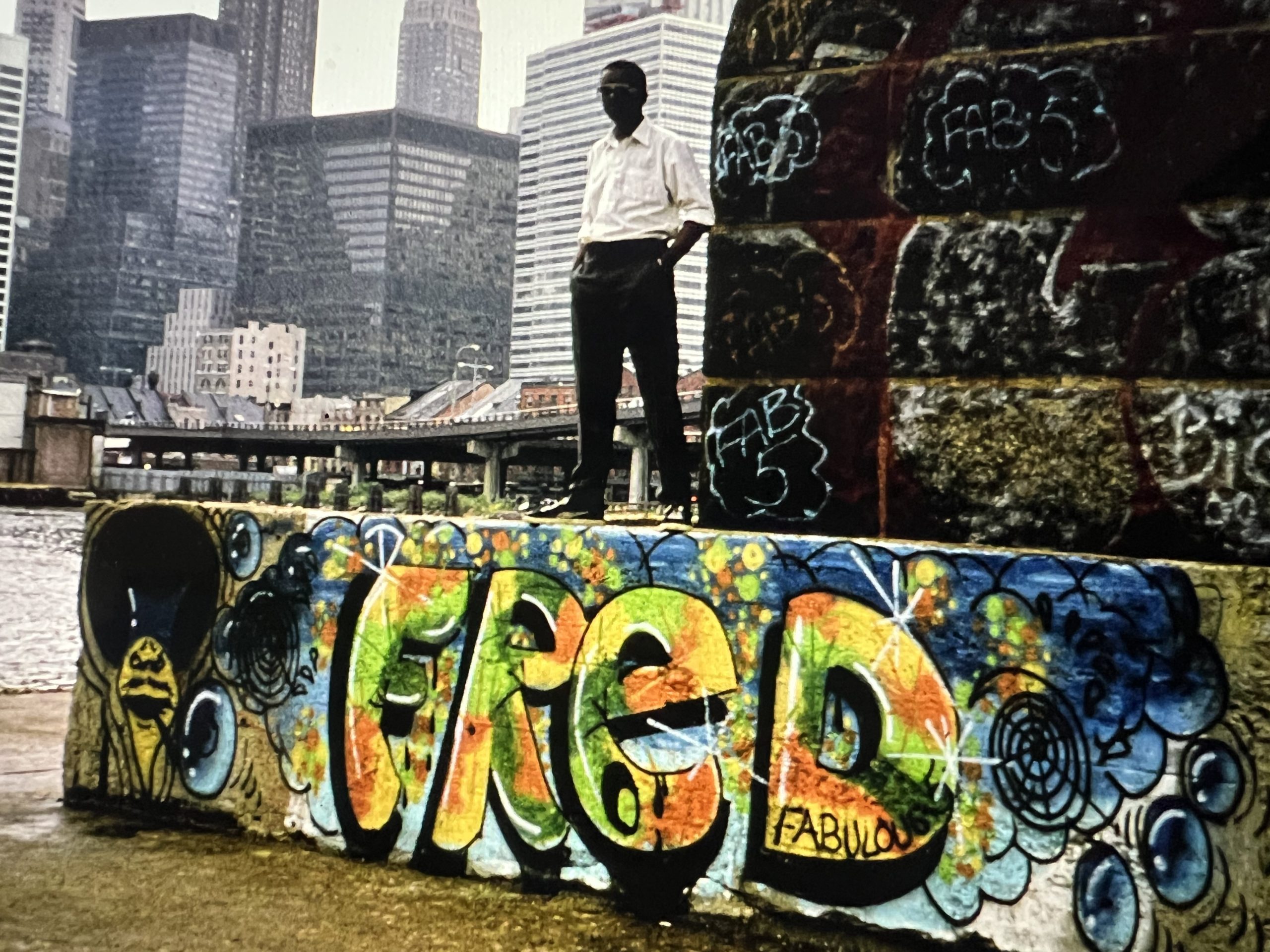
Fab 5 Freddy’s new book documents his role in the rise of hip-hop culture
He’ll be at the Tara Theatre this week for a book discussion and a screening of the 1982 film Wild Style.
::
A 2009 article in The New York Times proclaimed Atlanta as “hip-hop’s center of gravity.” A 2017 NPR report referred to the capital of Georgia as America’s “hip-hop capital” and “the city too player to hate.” Just last year, Billboard ran a feature story listing the many reasons why “Atlanta still drives hip-hop culture.”
One can argue over the validity of those accolades all one wants, but there’s no denying one thing: Once upon a time, such was not the case. Atlanta’s rise to the top of the hip-hop heap has transpired over the last couple of decades, while the origins of the cultural juggernaut date back at least a half-century.
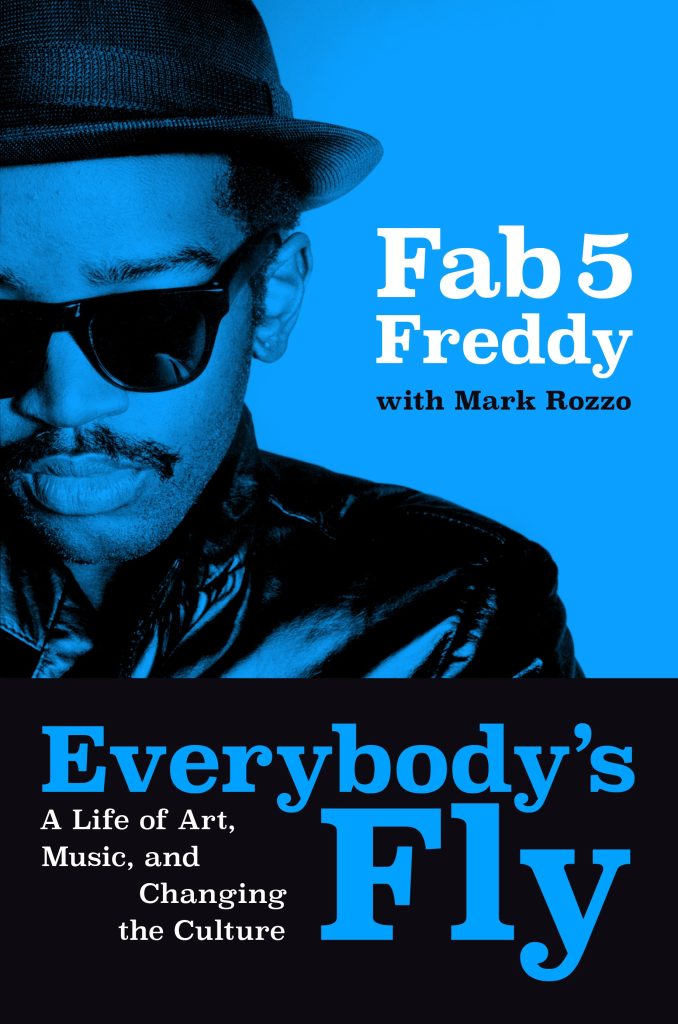
Which brings us to Thursday, March 12, at the Tara Theatre, where A Cappella Books is presenting a combination book signing and film screening focused on pioneering hip-hop artist Frederick Brathwaite, better known as Fab 5 Freddy, whose memoir, Everybody’s Fly: A Life of Art, Music, and Changing the Culture, was released this month by Viking. AJC cultural reporter Christopher Daniel is moderating the event, which includes a discussion with Freddy and a screening of Wild Style, a 1982 feature film directed by Charlie Ahearn and co-produced by Brathwaite, who also created the film’s original score.
As a foundational (if fictional) hip-hop document, Wild Style follows the exploits of Raymond “Zoro,” played by Puerto Rican graffiti artist and Brathwaite’s real-life running buddy Lee Quiñones (street tag “Lee”). In the film, Brathwaite plays Phade, a hip-hop club promoter and retired graffiti artist. In addition to Fab 5 and Quiñones, Wild Style features major figures from the developmental days of hip-hop, such as Lady Pink, Busy Bee Starski, Rock Steady Crew, Cold Crush Brothers, Rammellzee and Grandmaster Flash.
Co-authored with Vanity Fair Contributing Editor Mark Rozzo, Brathwaite’s Everybody’s Fly is a highly readable, smartly paced recounting of the career trajectory of an artist whose talent, imagination and ambition ultimately produced the ambassador of a global cultural phenomenon. As hip-hop evolved from a New York borough-based, underground, subcultural movement encompassing graffiti art, break dancing, music production and fashion, Fab 5 Freddy was either adjacent to or central to the process at nearly every pivotal point.
“I [was] determined to bring graffiti-inspired art into the art world for real,” Brathwaite writes in the prologue to Everybody’s Fly. “I hooked up with the downtown post-punk scene, where everything was avant-garde: art, music, film, fashion. I connected that scene to the new underground sound coming from uptown: rap. Together, we helped evolve it into the global force we call hip-hop. Later, I would become the face of hip-hop on MTV, back when that network had the cultural zeitgeist in a headlock. Through it all, I stayed focused on living creatively, making connections, catalyzing culture and pushing back against any boundary that dared to block my path.”
Born in 1959 in the Bedford-Stuyvesant neighborhood of Brooklyn, Brathwaite was nurtured by loving, progressive-minded, middle-class parents. His mother, a nurse, encouraged her son’s artistic inclinations. His father was an avid reader, shortwave radio listener and jazz aficionado whose BFF from Boys’ High School in Brooklyn was legendary drummer Max Roach. One of the progenitors of bebop, alongside Charlie Parker, Dizzy Gillespie, Thelonious Monk and a few others, Roach served as an early mentor and remained a continuing source of guidance and inspiration to Brathwaite. “Max was my godfather, one of the biggest influences on who I would become,” writes Fab 5 Freddy.
In addition to jazz and ready access to some of the world’s finest art galleries and museums, Brathwaite’s artistic temperament was shaped by streaks of rebellion, which he witnessed in the form of graffiti tags and extravagant designs sprouting on walls and subway cars trundling around the boroughs of New York and in media coverage of the tempestuous struggle for civil rights.
“On TV, we saw the endless demonstrations filling streets coast to coast: antiwar protests, Civil Rights marches, women’s rights rallies,” he writes. “That countercultural attitude was still in the air when graffiti blew up — doing your thing, disrespecting authority, shaking up the hierarchy, expressing yourself, pushing back against the Man, the system, all the bullshit that created oppression and ghettoes and tried to keep people down.”
Unlike some of his peers, Brathwaite channeled his rebellious inclinations into making art, not war, in response to the oppressive milieu into which he was born. Extracurricular studies brought him into the domain not only of the teachings of Malcolm X, Dr. Martin Luther King and Marcus Garvey but also of the great subversive artists of generations past.
“I loved reading stories about the camaraderie of radical European art movements: the Futurists, the Impressionists, the Surrealists,” he recalls. “They felt like gangs, like graffiti crews — groups of artists held together by a common vision. Having come close to slipping off the edge and getting sucked into the hustle, I was thinking more about the kids in my orbit — graffiti writers and DJs — as the young creatives they really were.”

Brathwaite based his street moniker on an association with the Fabulous 5, a graffiti crew that specialized in painting entire sides of New York City subway cars. In 1980, inspired by Andy Warhol and pop art in general, Fab 5 Freddy caused a minor disturbance in the universe by painting a subway train car with huge cartoon likenesses of Campbell’s Soup cans. The art was quickly obliterated by the New York Transit Authority, but the impression boosted Fab 5’s status among denizens of the burgeoning street art subculture and attendant dance party scene.
Another powerful formative influence was Albert Murray, the renowned Alabama-born novelist, biographer, philosopher and music critic who helped found Jazz at Lincoln Center in the early 1990s. In 1978, Murray was a writer-in-residence at Emory University in Atlanta.
“[Murray] said that for a culture to be complete, it must have its own music, dance and visual art — an interconnection among three elements,” Brathwaite writes. “I filed that away.”
In 1979, Freddy and Fabulous 5 crewmate Quiñones were invited to exhibit at Galleria La Medusa in Rome, becoming the first graffiti artists to officially show their work outside the United States. Operated by Claudio Bruni, the gallery’s reputation was based on exhibiting European masters and modern art luminaries. “The Fabulous Five: Calligraffiti di Frederick Brathwaite, Lee George Quiñones” was a sensation.
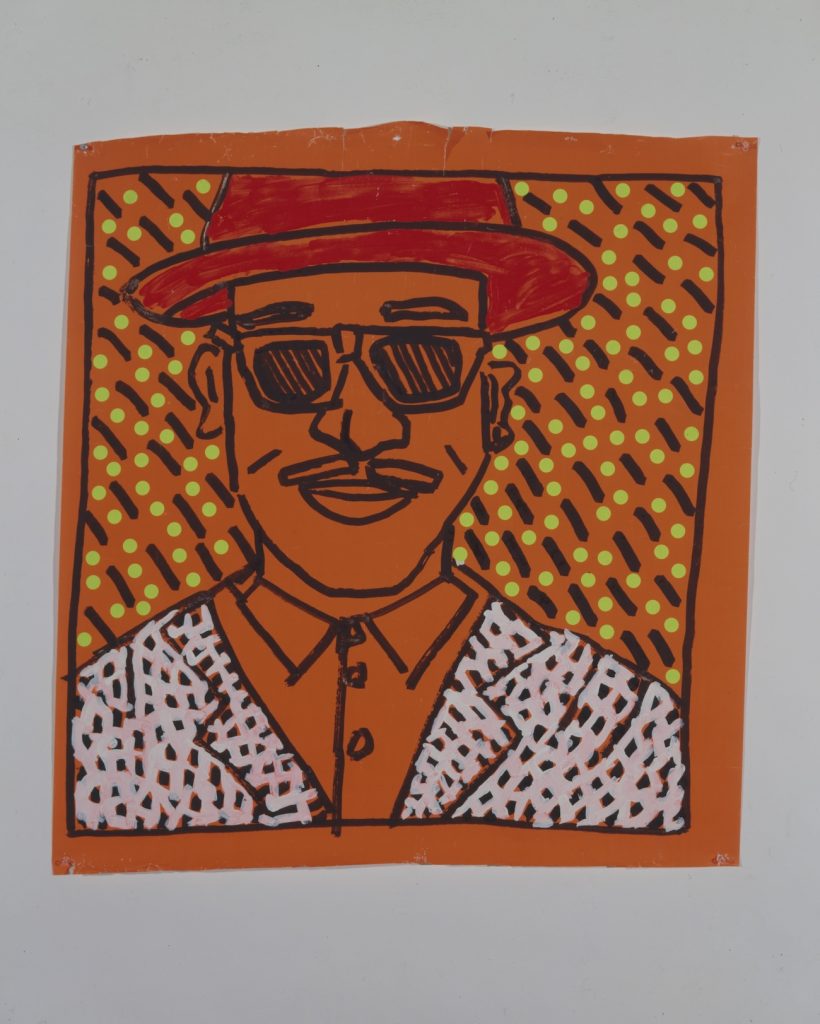
Two years later, up-and-coming New Wave band Blondie released “Rapture,” the first major U.S. single to feature rap vocals. In the song, lead singer Debbie Harry name-checks her good friend and neighbor by announcing that “Fab 5 Freddy told me everybody’s fly.” Still to come for Brathwaite were stints as a music video producer, screenwriter, film scorer, actor and host of MTV’s wildly successful weekly show, Yo! MTV Raps. Also in the offing were group shows with close friend Jean-Michel Basquiat, Keith Haring, Futura and Kenny Scharf; close encounters with David Byrne, The Clash, Madonna and Public Enemy; and the devastating impact of AIDS.
Brathwaite’s alchemical prowess brought together disparate representatives, ideas and attitudes from the realms of rock, jazz and R&B; MC and DJ masters; breakdancing B-Boys and -Girls; urban and gallery art; uptown fashion and street-side couture; to create a magical potion that helped transform America into a hip-hop nation. From that point, the magic quickly spread to Europe and the rest of the planet.
But wait — there’s more — including Fab 5 Freddy partying in Paris with The B-52s, whose music he greatly admired. It’s all covered in captivating detail in the pages of Everybody’s Fly: A Life of Art, Music, and Changing the Culture.
Which brings us back to Atlanta and its current status as America’s hip-hop mecca. Atlanta’s rep is primarily based on the musical component of hip-hop, along with a measure of its fashionista trappings. The bigger — far lesser known — picture situates graffiti in the foreground as the city’s historical hip-hop cornerstone, years before the emergence of Outkast, Goodie Mob and Organized Noize.
As it happened, the style writing techniques developed in the late ’60s through the ’70s by urban artists in Philadelphia and especially New York quickly migrated south, where similarly aspirational youngsters began leaving tags and putting up masterful large-scale works around the city too busy to hate — except when it came to graffiti.
But that’s a story for another day.
Where & when
An Evening With Fab 5 Freddy: Everybody’s Fly book talk and Wild Style screening. 7 p.m. March 12 at the Tara Theatre.
::

An Atlanta native, Doug DeLoach has been covering music, performing and static arts in his hometown and beyond for five decades. Doug is a regular contributor to Songlines, a world music magazine based in London, and his ruminations on arts and culture have appeared in publications such as Creative Loafing, Georgia Music, ArtsGeorgia, The Atlanta-Journal Constitution, High Performance and Art Papers.
STAY UP TO DATE ON ALL THINGS ArtsATL
Subscribe to our free weekly e-newsletter.

PLEASE SUPPORT ARTSATL
Your Gift Sustains the Coverage You Count On!
Related Posts