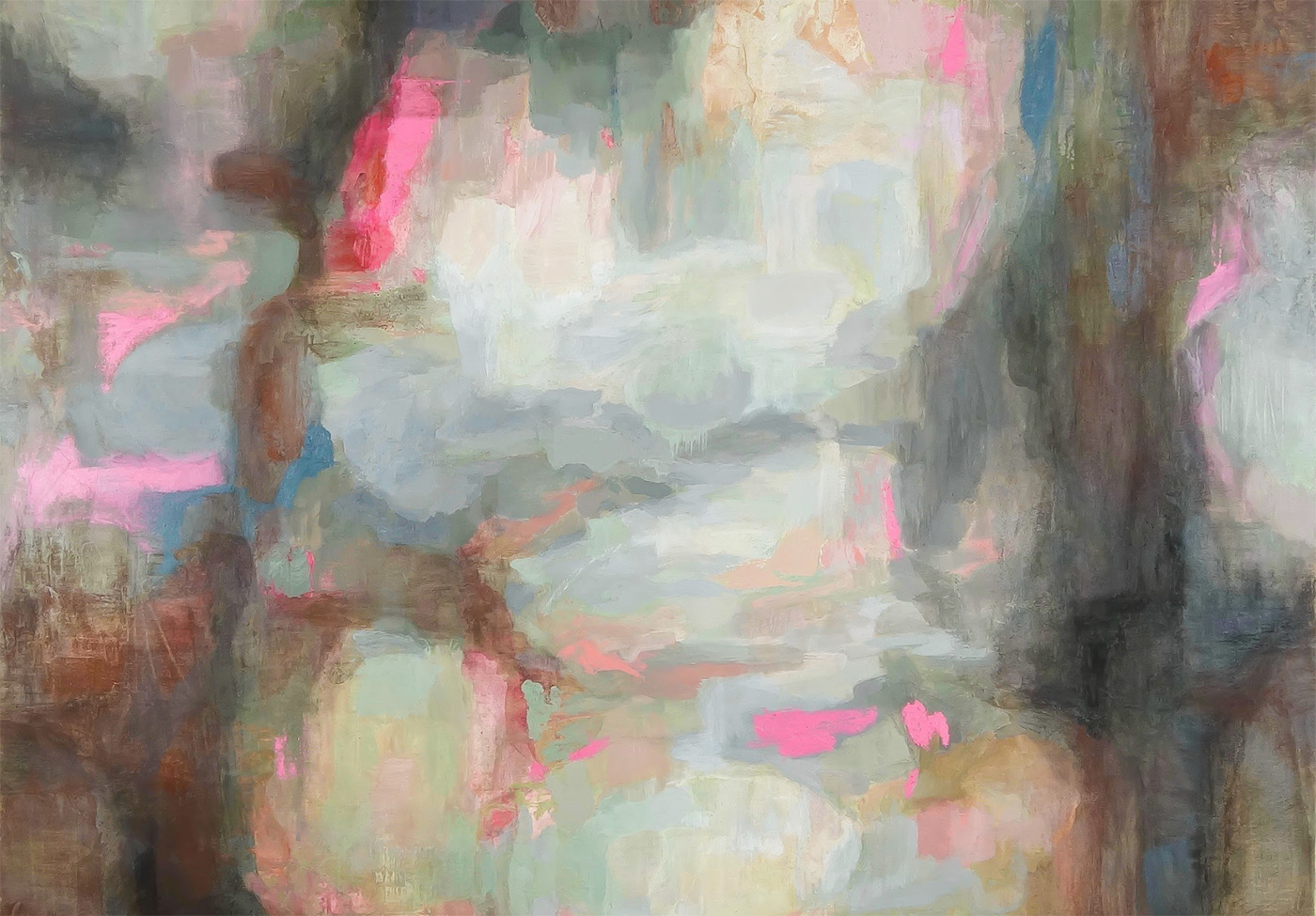
Cullum’s Notebook: legendary women, mythic lands

By sheer chance, two of the multimedia arts centers with studio artist programs that are flourishing on metro Atlanta’s Southside are presenting exhibitions that illustrate the range of spaces and the historical depth of exhibition programs of the many alternative spaces now hosting regular exhibitions.
For the 40th anniversary of the ArtsXchange (AXC), curator and longtime AXC studio artist Lisa Tuttle asked 25 women artists who had had studios there to contribute historic images or new work for the exhibition “A Room of Her Own: Women Studio Artists from AXC’s 40-Year History” (through June 22).
From the days when installation artist Jack Sinclair (for whom the gallery in the AXC’s current East Point building is named) was instrumental in helping to rehabilitate the disused Grant Park school building in which the proposed art center first came into being in 1984, the ArtsXchange has been a multiracial experiment in which primarily but far from exclusively African American practices and what was once known as avant-garde art have commingled seamlessly. Tuttle’s choice of invited artists reflects the history of this not-quite-effortless diversity.

The 23 artists (two of the 25 invited were unable to participate) work or worked (one celebrated artist, Beverly Buchanan, is deceased) in a variety of media that makes a summary impossible. Although the exhibition is restricted to painting, photography and sculpture, it includes a photograph of Donna Pickens’ Prima Mater, an immense rammed-earth public sculpture that was created adjacent to the AXC’s Grant Park building for the 1990 artist-initiated conference “Rethinking the Sacred Image.” In conjunction with an art exhibition in the gallery and panel discussion in the Paul Robeson Theatre, the amphitheater/Mother Earth sculpture hosted a dance performance within the embracing earthen arms that served as audience seating.
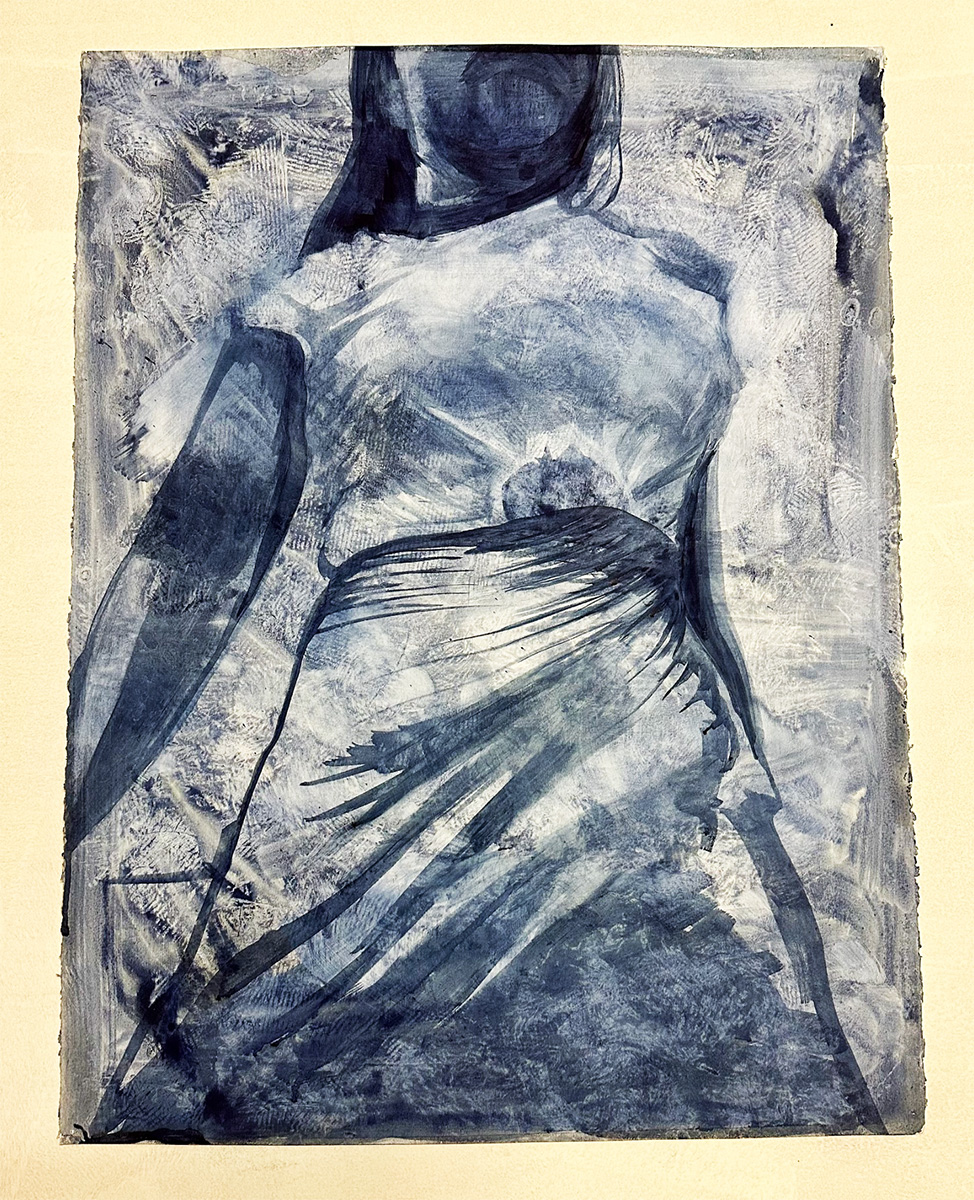
Dana Cibulski, well-known from numerous exhibitions in nonprofits and commercial galleries, summed up the ArtsXchange eloquently in her statement: “ArtsXchange artists do not sit alone in their studios; we are activists who bring the world into our work.”
Beginning with founder and present-day Executive Director Alice Lovelace-Riley’s work in poetry and photography and continuing through successive generations to such genre combinations as N’Dieye Gray Danavall’s (Sista Shaman) photography, beadwork and instructional design, AXC’s multiethnic and multidisciplinary manifestations continue to resist easy description. (The poet Theresa Davis, currently the literary program manager hosting monthly spoken word slams, has been at AXC since its founding and is represented in the exhibition by a work of visual art.)
Because it would be invidious to select further among the distinguished artists in this exhibition beyond the few illustrative examples I have given, here is a list as the names are given in the press release, with my own links to additional information for each: Lisa Alembik, Beverly Buchanan, Dana Cibulski, Jaynie Gillman Crimmins, Connie Cross, N’Dieye Gray Danavall, Theresa Davis, Elyse Defoor, Rebecca DesMarais, Mirtha Ferrer, Anna Hamer, Caroline Lathan-Stiefel, Alice Lovelace-Riley, Lynn Marshall-Linnemeier, Theresa “Wise Mecca” Mingo, Charmaine Minniefield, Barbara Nesin “Batya Tamar,” Donna Pickens, Sankofa Selassie, Karley Sullivan, Chris Tholl, Lisa Tuttle, Laura Vela.

By a curious act of happenstance, curator Lisa Tuttle’s own artwork in the ArtsXchange exhibition is linked visually, though not thematically, with the exhibition at South River Art Studios, multidisciplinary artist Gabi Madrid’s Archetypal Map, which closes on Thursday, May 23.
Tuttle’s irony-tinged 2021 Proposal for the repurposing of a defaced Confederate monument overlaps visually, and to some degree metaphorically, with Madrid’s use of the engraved illustrations in actual pages from Civil War-era issues of Harper’s Weekly (the North’s main news magazine of the day, optimistically subtitled A Journal of Civilization). Madrid uses the illustrations allegorically as two-dimensional depictions of the archetypal motifs presented in three dimensions on their contour-map diorama on the gallery floor; in this wall iteration of The Four Horsemen, a cover image of General John C. Fremont on a rearing horse becomes a stand-in for the “War” segment of the Four Horsemen of the Apocalypse! (“Famine,” “Plague” and “Death” get their own summations in the explanatory wall text.)
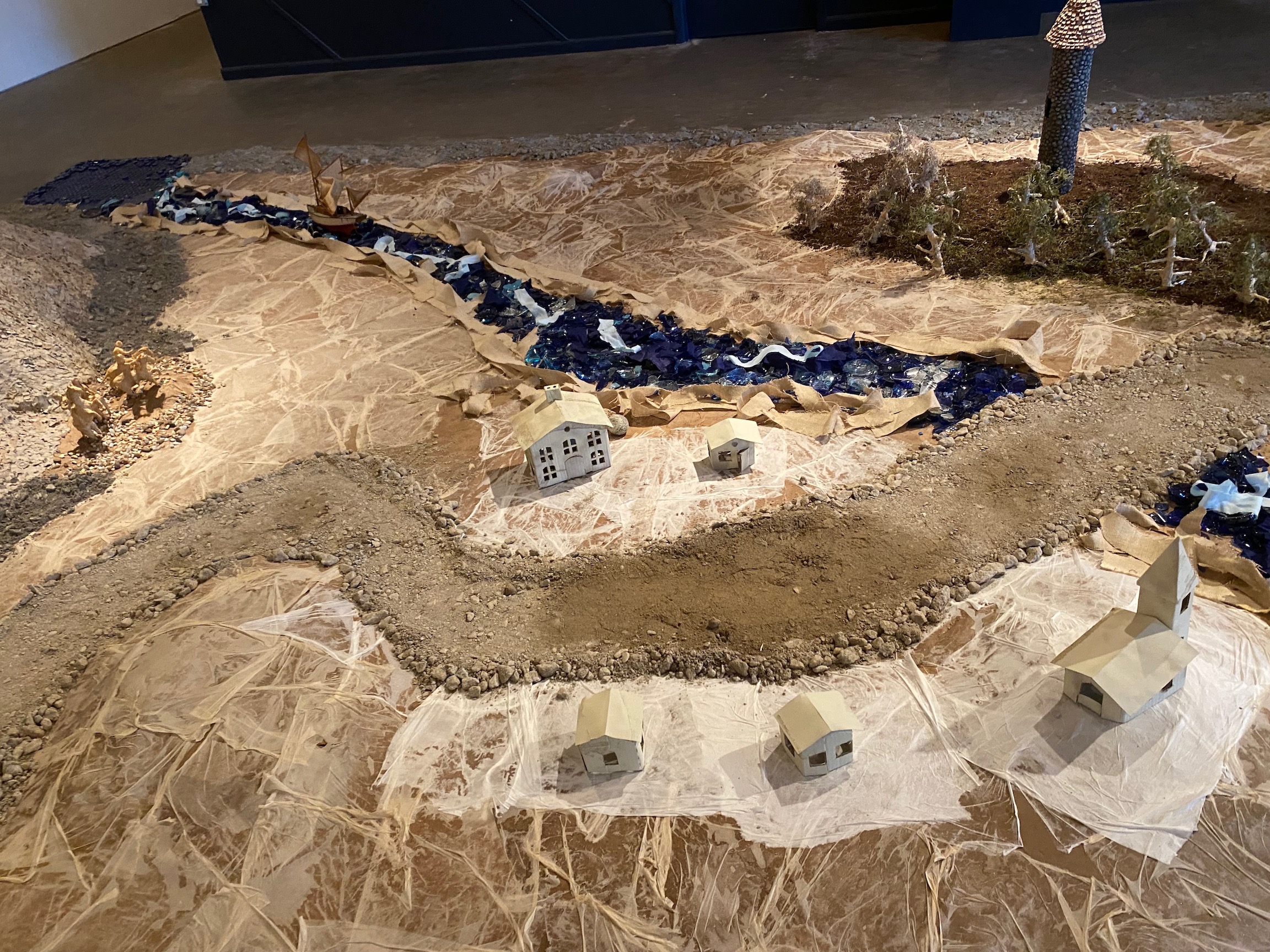
Parts of Madrid’s gallery-filling map, most notably the papier-mâché of The Mountain, were created with some degree of community assistance (and the collective effort involved in creating the overall diorama is amplified in community-created wall drawings in the adjacent hallway). Almost all of the archetypal motifs, however — The River, The Voyage, The Road, The Four H — are entirely individual sculptures by Madrid, ranging from the cardboard buildings of the village to a miniature wooden boat sailing on the river that is created from dark-colored broken glass, meandering through the soil of the archetypal landscape.
The archetypes are based on motifs found in the “monomyth” of the hero’s journey that Joseph Campbell first popularized in The Hero With a Thousand Faces, but Madrid is working from a set of archetype cards by Kim Krans that turn Campbell’s disputed original model into metaphors for encounters and challenges that all human beings must face on their journeys of change and discovery.
Madrid was offering three card readings per day through Thursday through their Instagram page, and readings continue this week.
::
Dr. Jerry Cullum’s reviews and essays have appeared in Art Papers magazine, Raw Vision, Art in America, ARTnews, International Review of African American Art and many other popular and scholarly journals. In 2020, he was awarded the Rabkin Prize for his outstanding contribution to arts journalism.
STAY UP TO DATE ON ALL THINGS ArtsATL
Subscribe to our free weekly e-newsletter.

PLEASE SUPPORT ARTSATL
Your Gift Sustains the Coverage You Count On!
Related Posts