Cullum’s Notebook: Gallery 100 and Third Rail, invisible gems
Some art galleries present exhibitions for years in highly visible locations and yet remain little known and effectively invisible. Gallery 100 has flourished in an iconic downtown building with no signage and only modest publicity. Meanwhile, Third Rail Gallery is the newest iteration of the visual art component of a music and multimedia space similarly operating sans signage since 1997 in Emory Village.
Gallery 100, for example, has operated since 2009 at 100 Peachtree St. NW (known for many years as the Equitable Building) in the offices of an architecture and design firm — originally Stanley Beaman & Sears; now Page Southerland Page, Inc. Despite having its own curatorial management, the gallery has no identifying signage apart from the name of the exhibition and exhibiting artists.

Through August 29, the gallery is presenting Findings, a two-person exhibition curated by the distinguished feminist artist, curator and gallery director Julia A. Fenton, who has emerged from an interim of retirement to focus attention on recent approaches to found-object assemblage by two of the city’s many artists of longstanding reputation who have fallen out of public notice: Rebecca Des Marais and Susie Winton.
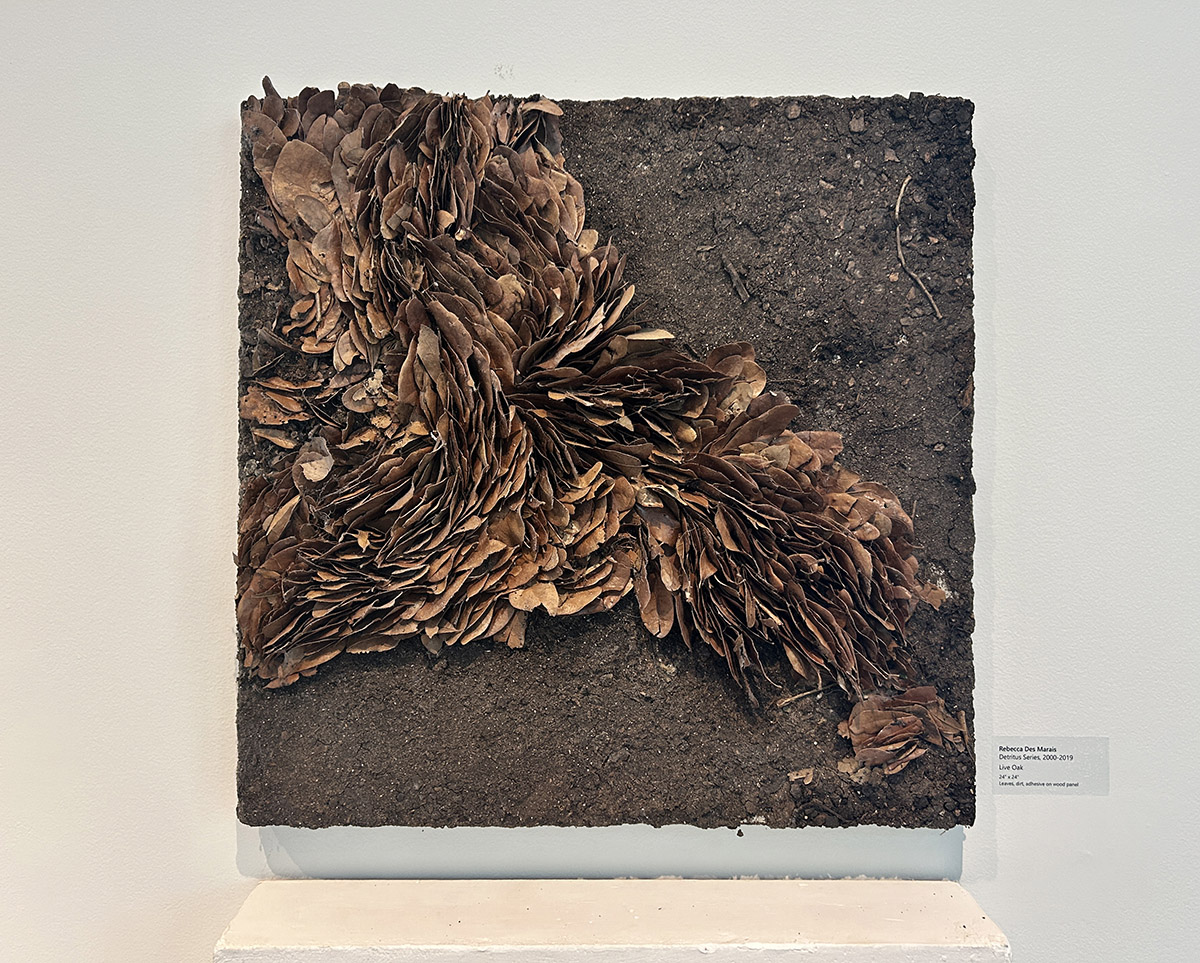
Des Marais, who has combined an artistic and curatorial career for decades, has based her singularly elegant Detritus series on particular types of scraps and fragments, some organic or nature-based, as in works that take their titles from their materials: Live Oak, Cypress, Gingko, Wax (candle wax) and Smoke (a dark work created with candle smoke on wood panel).
The collision of nature and culture becomes more pointed in Lint, where the materials collaged together are hair, wire screen, cellulose and adhesive on wood panel. The composition, though, remains extraordinarily composed, restrained and openly seductive.
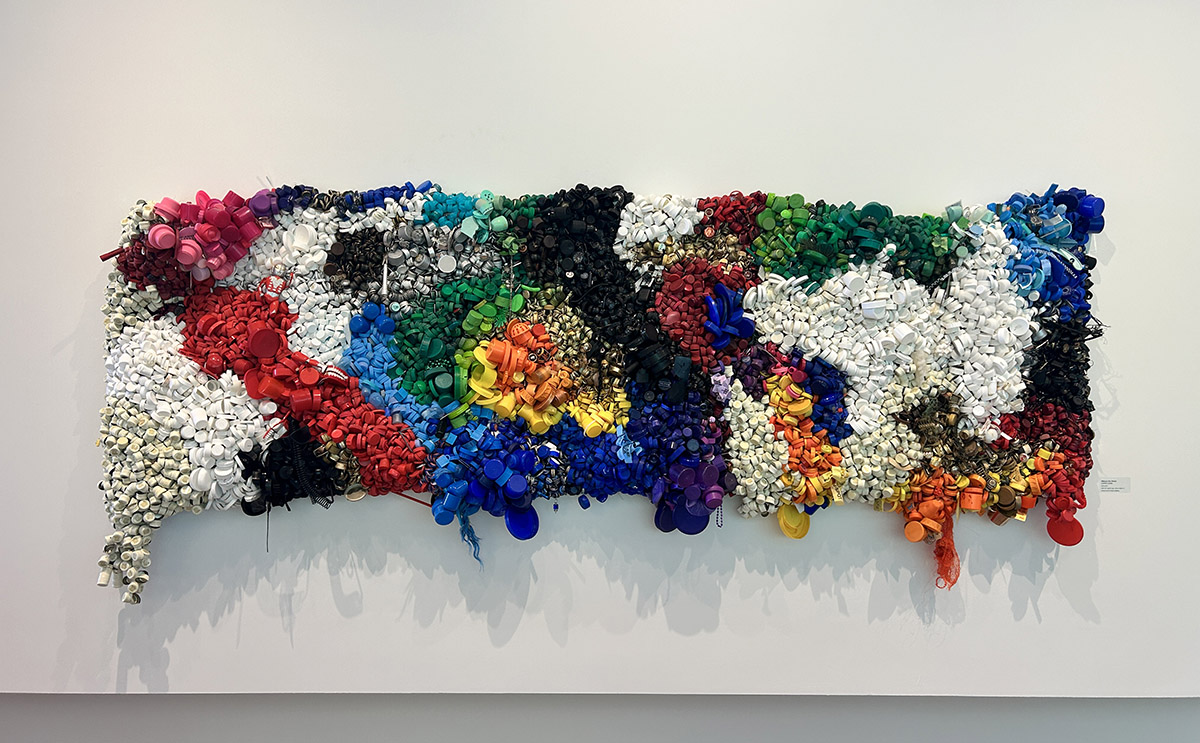
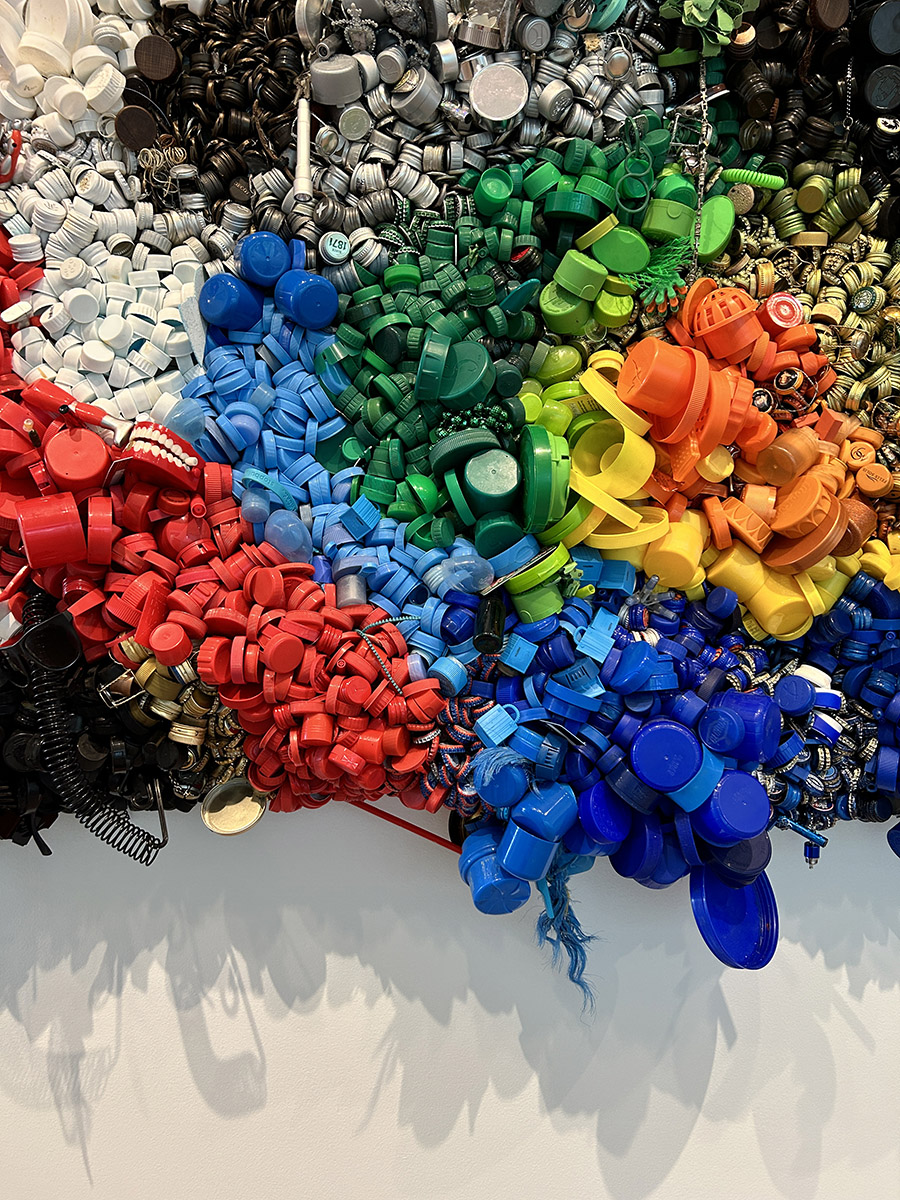
By contrast, the 288-inch wall sculpture Coffin Cover is blatantly garish and a memorial to material waste: plastic bottle caps and other objects tied to plastic webbing. The visual language and message are familiar, but Des Marais brings a distinctly individual sensibility to the symbolic juxtaposition of endangered nature and a throwaway society.
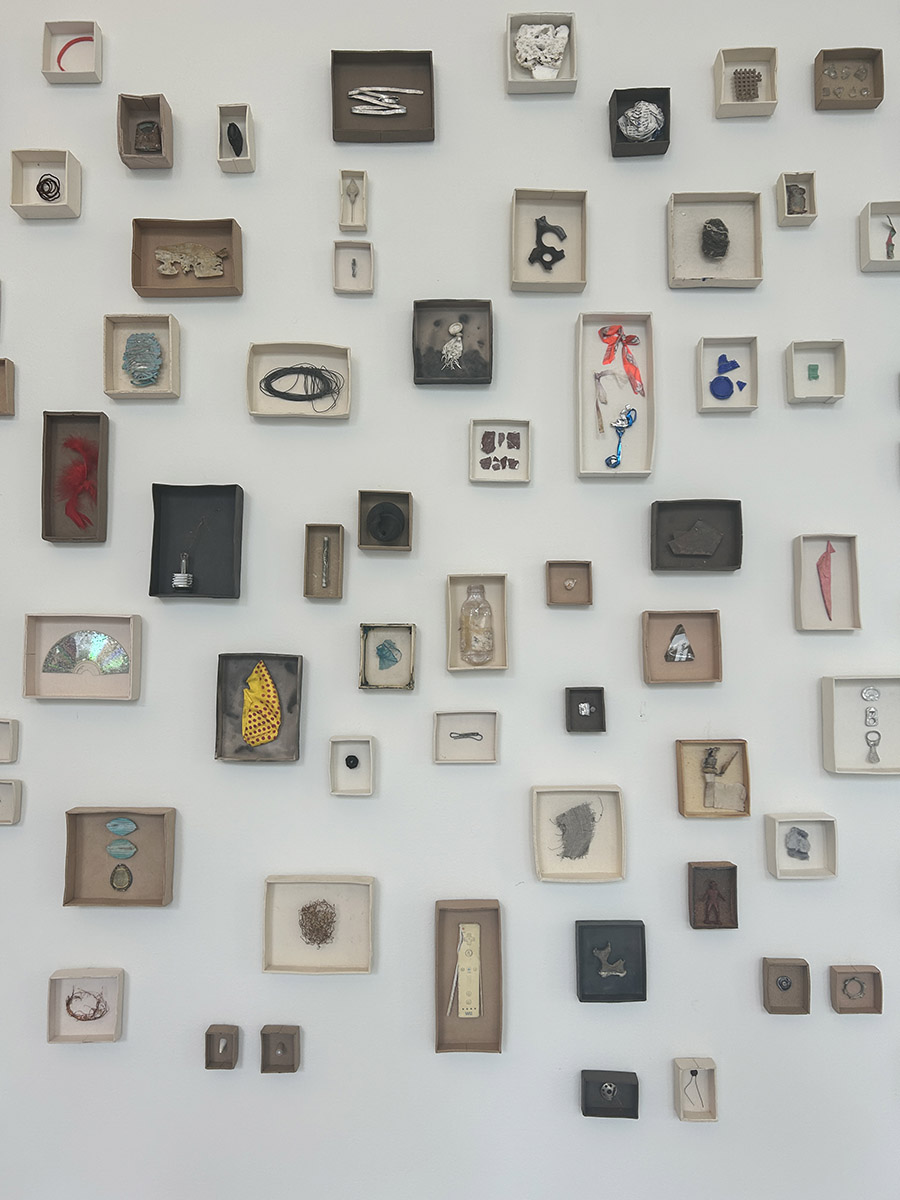
Winton, operating in a different emotional register, redeems the casually discarded through loving attention. Her extraordinary Left Behind series fills an entire wall with small ceramic boxes framing exquisitely arranged dropped trash or remnants generally regarded as waste. Some are presented in the mode of extraordinary archaeological objects; others are combined into tiny compositions that derive from a long, sophisticated tradition of assemblage but embody Winton’s unique angle of vision, in which lyricism often mingles with understated whimsy.
If Gallery 100 has regularly presented exhibitions in harmony with the refined aesthetics of the firm that houses it, the incipient Third Rail Gallery incorporates a raucous inconsistency as eclectic as the music and multigenerational events that have characterized its host, RailRoad Earth, since the venue’s founding in 1997.
The diverse untitled exhibition currently on view is curated by former New Orleans gallerist Bam Bam Glover, who also curates art exhibitions for the art and music space 992, operated by Grammy-award-winning saxophonist Kebbi Williams. The show at Third Rail, which closes August 4 with an open house from noon to 6 p.m., is a prequel of things to come that features a greater array of styles and backgrounds than can be easily summarized.

A dominant presence is Al W. Blue II, whose extraordinary resume begins in New York with proximity to Jean-Michel Basquiat and Keith Haring and continues to Atlanta through a succession of videos and film scripts and approximately 30 distinctively titled books ranging from Race Records and the African American Men Who Made Them Famous to Book of Strange Medical Oddities. The artwork continues to reflect Blue’s diverse set of interests and extraordinarily inventive imaginative range.
The other work brought together at Third Rail by Glover’s uniquely blended curatorial sensibilities includes the Code Blue cyanotypes produced during the pandemic by RailRoad Earth co-founder Neil Fried, who has also produced a substantial body of AI-generated work based on a carefully refined succession of prompts, part of a theoretical project that has been exhibited only in teasingly modest fragments.
Despite being almost adjacent to the entrance to Emory University, RailRoad Earth has functioned almost invisibly in its house with inbuilt studio facilities. The formalization of its art exhibition program will not change the facility’s inclination to avoid identifying signage of any sort. This will presumably continue when Third Rail has its formal gallery launch sometime in the fall.
::
Dr. Jerry Cullum’s reviews and essays have appeared in Art Papers magazine, Raw Vision, Art in America, ARTnews, International Review of African American Art and many other popular and scholarly journals. In 2020, he was awarded the Rabkin Prize for his outstanding contribution to arts journalism.
STAY UP TO DATE ON ALL THINGS ArtsATL
Subscribe to our free weekly e-newsletter.

PLEASE SUPPORT ARTSATL
Your Gift Sustains the Coverage You Count On!
Related Posts