
Atlanta’s Eddie 9-Volt packs the house with modern soul and the blues
With his latest album, Saratoga, to be released November 22, 9-Volt pays homage to the greats in Southern music while charting new territory in country blues, R&B and more.
With its niche sound and limited audience-base, the business of the blues has never been easy. Atlanta’s Eddie 9-Volt, however, somehow manages to pack the house.
He’s only in his 20s, but his mutton-chop sideburns, slicked back hair and a no-holds-barred delivery recall decades long passed when personal expression and a heady sense of freedom fueled a period of musical innovation not seen before or since.
The sound clearly resonates with audiences. 9-Volt enjoys a heavy touring schedule that has taken him all over the world. His last album, Little Black Flies, climbed the Billboard Blues Albums chart, attracting the attention of music critics while giving rise to an exponentially growing and generationally diverse following.
9-Volt lacked interest in academics or sports and dealt with difficult emotions in his early teens — and discovered music that spoke to him, particularly that of people like Howlin’ Wolf, Albert Collins, Freddie King, Mike Bloomfield and Otis Rush. “This was the music that was going to become my soul,” he told ArtsATL.
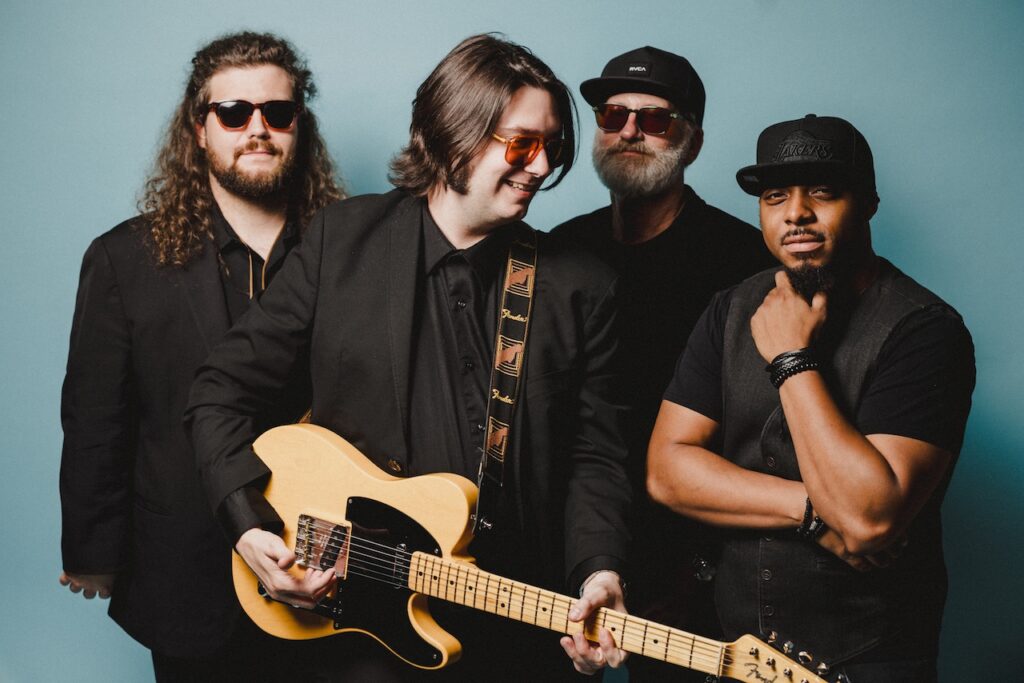
His family was fully supportive as he learned to master the guitar and vocal techniques of those artists. It has always been important to him to respect where his music comes from. “I do understand that I’m taking a Black music form, and I’m trying to spin it off in a way to be as authentic as possible,” he says. His brother, Lane Kelly, helped him record his first album, Left My Soul in Memphis, using salvaged equipment and their mobile trailer as a studio.
Kelly plays bass, Wurlitzer and organ in the band, but 9-Volt calls all the members (including keyboardist Chad Mason and drummer David Green) a “band of brothers” and works hard to strengthen their connection. “There’s just a lot of closeness,” he explains. “I’m sure people notice and pay attention because of the camaraderie.”
His latest album, Saratoga, (to be released on all major sound platforms November 22) is both an acknowledgement of good things past and a promise of exciting things to come. While 9-Volt’s bluesy guitar riffs distinguished much of his past work, this album foregrounds his vocal abilities and growing songwriting skills.
“Halo” will be familiar to those who enjoyed his last album. The funky guitar riff augmented with catchy lyrics and pull-out-all-stops vocal delivery highlight his sense of timing and chemistry with band members.
The rest of the songs on the album explore new songwriting and genre paths, ones full of twists and turns. The title song, for example, has a rock/pop feel and draws on place-based imagery to echo an emotional state. “Trukee” has a similar lyrical perspective but shifts into country blues with vocal harmonies and the notable slide guitar talents of Dustin McCook.
“Love You All the Way Down” is a showcase of vocal, musical and songwriting skills that reveals a depth of romantic earnestness that might come as a surprise to longtime fans.
The sentimentality in “Cry Like a River,” on the other hand, comes close to being parody, which is not to say that it isn’t a good song, too. But considered together, both songs form something of a signpost with arrows pointing in opposing directions. With his composition skills, vocal prowess and instinctual timing, 9-Volt could develop a serious name in the modern soul genre, but he could also continue with the playful verve that makes his live shows so entertaining. Right now, both styles are working for him, but these dual identities may prove difficult to sustain as he continues to grow as an artist.
While some of the songs may feel less developed than others, each track offers something uniquely engaging and worth listening to. “Wasp Weather,” for example, has some nice rock/blues crunch. “Delta” and “Tides” land somewhere between blues and R&B. “Road to Nowhere” sounds like something you’d hear at a prom in the 1950s.
A number of guest musicians appear in various iterations across the songs, which, in addition to the genre hopping, may explain why this album either lacks cohesion or provides delightful variety, however you wish to look at it. The album’s common denominator, however, is its Southern origins. “This is where we were born and raised,” 9- Volt explains, referring to his band. “No matter whatever songs we write, they’re Southern.”
Southern music resonates with us because it celebrates the best of who we are, despite our differences. With its humble origins, makeshift instruments and disparate influences, it has never been limited by rigid formalities. While this music respects its predecessors, convention has always taken a backseat to an emphasis on interpersonal connections, innovation, authenticity and courageous expression.
In a world of image makers and imitators, 9-Volt is the rare artist today who embodies those very same qualities.
Saratoga offers a glimpse of a future as faithful to its roots as it is fresh in its approach. “I’m just trying to pay homage to all these great musicians,” 9-Volt says. “At the end of the day, you know, soul has no color.”
::

Shannon Marie Tovey is a freelance music journalist and educator.
STAY UP TO DATE ON ALL THINGS ArtsATL
Subscribe to our free weekly e-newsletter.

PLEASE SUPPORT ARTSATL
Your Gift Sustains the Coverage You Count On!
Related Posts