
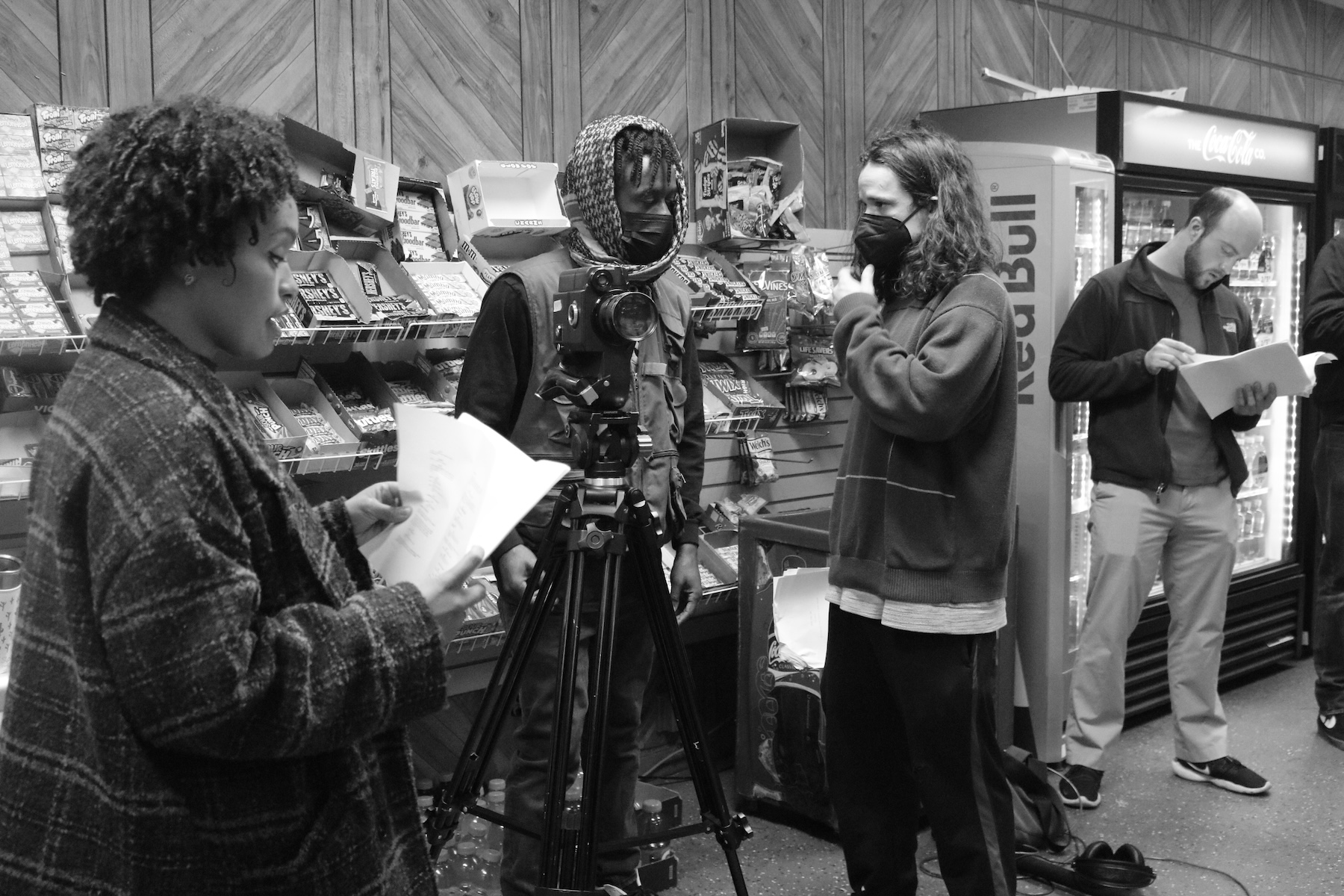
Atlanta plays itself in indie filmmakers’ shot-on-the-streets thriller
The film festival favorite Meta Take One is streaming on Amazon Prime and Apple TV beginning August 4.
::
John Dierre was born at Atlanta’s Piedmont Hospital and raised in the city. Not far into his journey, he found film. And the art form embraced him completely.
Watching Indiana Jones and the Temple of Doom and the Star Wars series, storytelling, he remembers, was something he had to do.
“I was introduced as a young kid through my father. The storytelling in films like Do the Right Thing were all ingrained in me early,” Dierre says. “So I started as a writer, and, in my teenage years, I picked up a camera and tried to capture as much of my community as I could.”
Then he met another local filmmaker, Ryan Dutter, who saw life through the same lens.
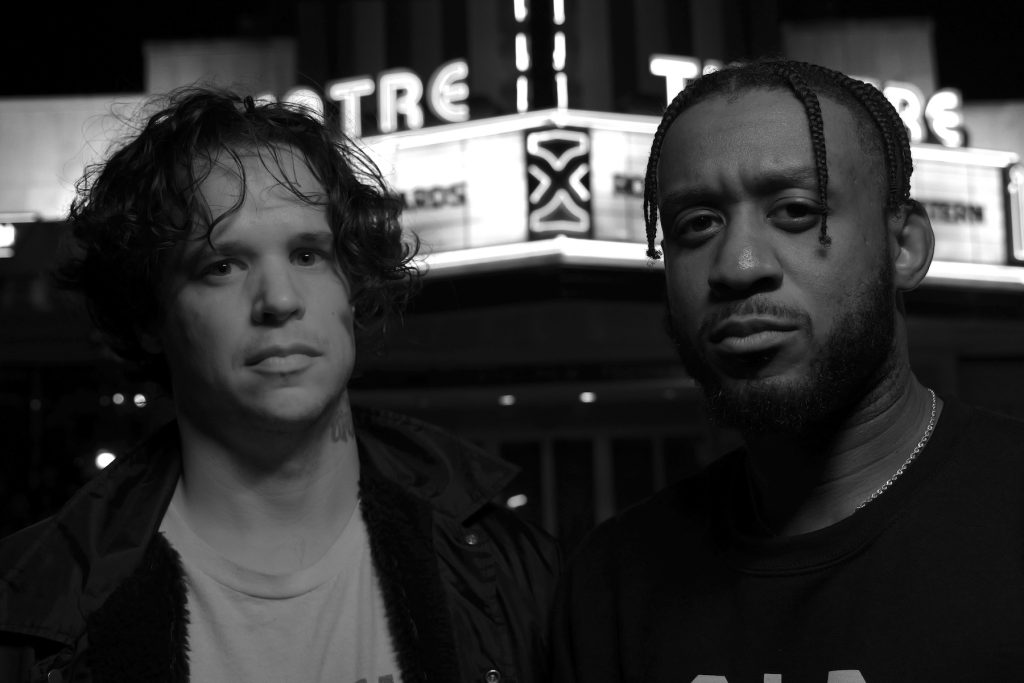
Co-directors John Dierre and Ryan Dutter in a promotional portrait for Meta Take One. (Photo by Kenny Cochran, courtesy of K Porch Pictures)
“I met Ryan in 2017, and we just connected; it was immediate, simpatico,” Dierre recalls. “We spoke the same language in terms of films and in terms of the sensibilities that we liked in the characters and that we like to dig into. Where they’re not perfect.”
Those characters didn’t make the best decisions, and, for Dierre and Dutter, that makes for an especially compelling narrative. So they brought these imperfect nuances and flaws to their characters in a number of film shorts.
Until 2019, when the story got bigger.
“This is when we started writing Meta Take One. It started as a short originally, but we just kept writing, and it turned into a feature film,” Dierre describes.
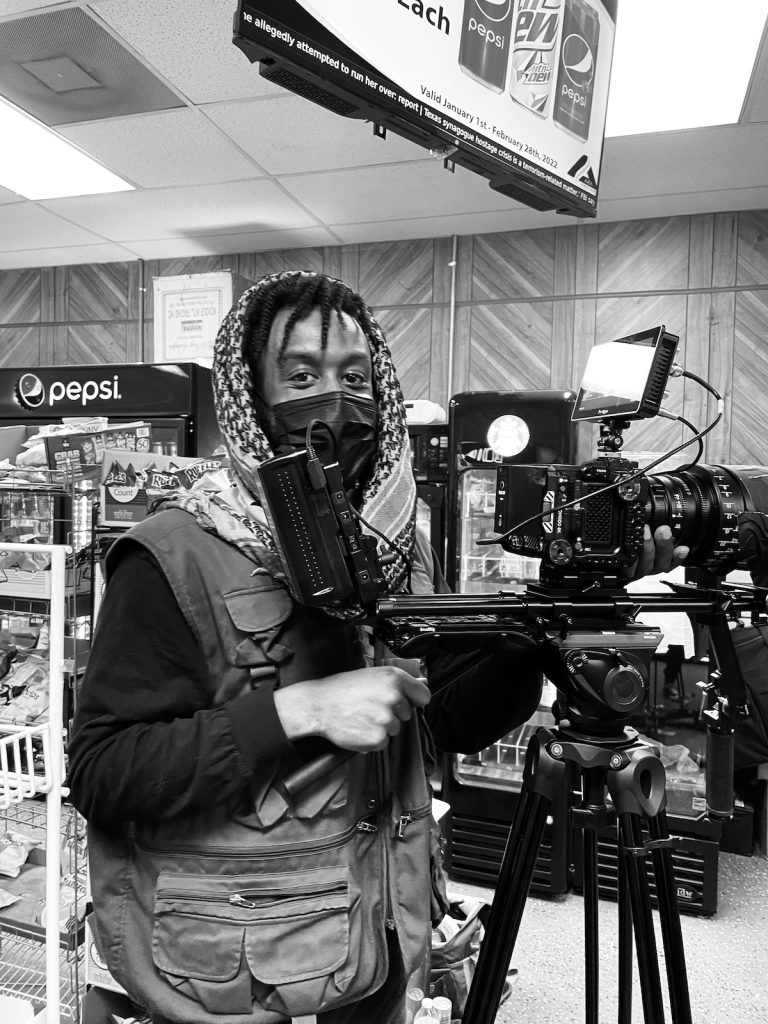
Co-director John Dierre behind the camera on the set of Meta Take One. (Photo by Paige Mitchell, courtesy of K Porch Pictures)
For the 96-minute drama-thriller, produced through local K Porch Pictures (owned by Dutter and Dierre) and shot on 16 millimeter film in color and black and white, the log line reads like this: An obsessive young director and his crew plunge into a frantic night-long odyssey of desperation to finish his film, no matter the cost.
While the feature film’s subject matter and its central character — an obsessive filmmaker — are relatable to Dierre and Dutter, the story adds a bent fervor, a madness and, ultimately, a crime.
The storyline does its job so well that film festivals and audiences around the country have praised it since its release in 2025. The recognition includes Atlanta Film Festival’s 2025 Audience Award; New York City Independent Film Festival’s Best Narrative Feature in 2026; 2026’s Seattle Black Film Festival’s Best Narrative Feature Award; Oxford Film Festival’s Hoka Award for Best at Fest in 2026; Tallgrass Film Festival (Wichita, Kansas) in 2025 for Outstanding Editing; the Independent Spirit Award at the 2025 Detroit Black Film Festival; the John Singleton Award for Best Debut Feature at the 2025 American Black Film Festival in Miami; and several other national festival awards and recognition.
To pull it off, Dierre and Dutter did whatever was necessary to get their independent film, which they also co-directed, into production, post-produced, onto the festival circuit and into distribution.
“As an independent filmmaker, you’re oftentimes having to use your resources around you to the fullest extent, and sometimes that means doing anything to get the shot,” Dierre describes.
“As young men, Ryan and I were always putting ourselves in dire situations for the shot — in the middle of the street or shooting in an abandoned warehouse and just doing a lot to get the shot,” he says.
It was this persistence and dedication to their stories, perhaps, that helped the pair pen the screenplay for Meta Take One and bring it to life.
As Dierre puts it, “We really started to think a lot about what is under that ambition and also the obsession with trying to … it’s like defining your whole existence around this creation or this vision. And we wanted to dig into what that meant.”
He adds, “The question that arose from that was, how does that affect the community around you when you’re blind on your vision and would do anything to complete it?”
Dutter and Dierre pushed their central character to be as obsessed as he could possibly be, having a profound effect on those around him.
In addition to creating a narrative that hit close to home, the pair took Meta Take One into familiar territory — literally.
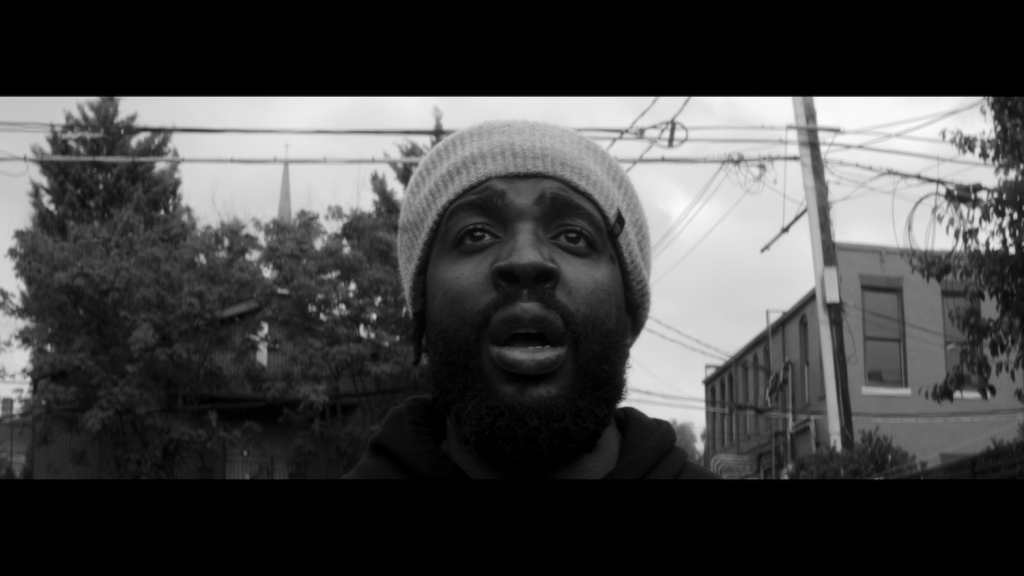
EJ Ezeruo as John, the director, in Meta Take One. (Courtesy of K Porch Pictures)
“I grew up on the East Side and the South Side [of Atlanta],” Dierre says. “So a lot of the film is actually filmed on the East Side and the South Side [at night to accommodate the storyline].”
The film’s first 25 minutes were filmed along Glenwood Road, its convenience stores and many streets Atlanta residents will recognize.
“You can see that Atlanta becomes such a character in the film, in the backgrounds and in the MARTA buses,” Dierre says. “You might see people barbecuing.”
On the South Side, his mother’s house entered the frame.
Dierre notes, “There’s just this energy behind Atlanta, and I think sometimes the locations were calling us to shoot there. Then once we shot there, there were these beautiful discoveries.”
One example Dierre points out is in the second scene of the film — a train scene, ideally — where he and Dutter planned out that they would shoot the scene either way: A train comes or it doesn’t.
“And somehow the train came. That’s Atlanta … if you open yourself up to the city in a way, it will give back to you. It’s just another character in the film,” he notes.
Depending on one’s appetite for risk, how Dierre and Dutter financed their indie film might be as daring as shooting in the middle of the street at night.
“We shot the film over the course of two years with our own money,” Dierre states. “We didn’t plan to shoot over two years, but I would say shooting over those two years was a blessing in disguise. Because every time we had to pause production, we got to rewrite and to feel the energy from our last shoot going into our next shoot. It felt almost like we were making a series of short films.”
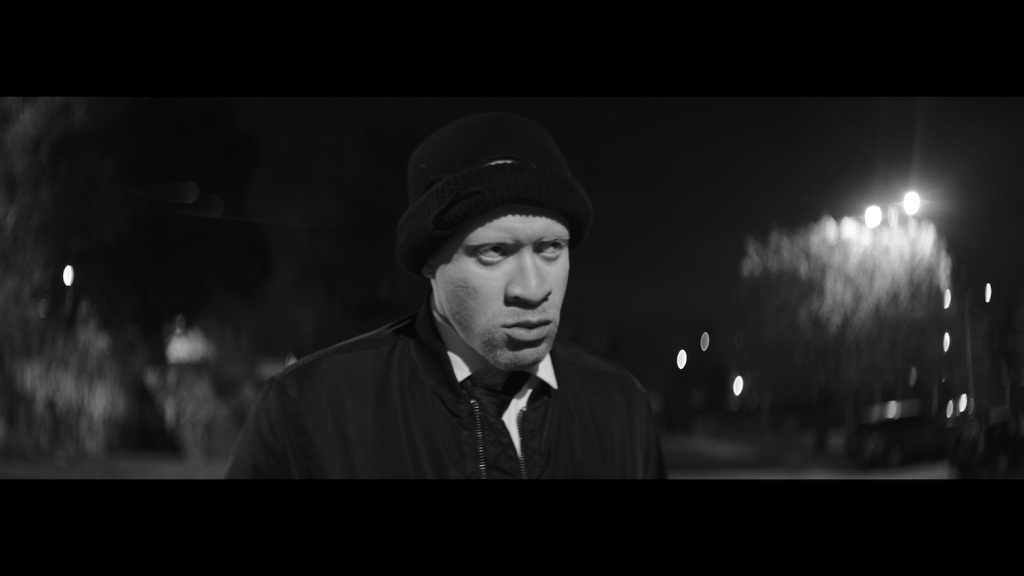
Ernest Emmanuel Peeples as Damon, the actor, in Meta Take One. (Courtesy of K Porch Pictures)
Looking back, even the energy of raising money took on a cadence that felt right to the filmmakers. Dierre says it felt like a boulder on their backs in the early days, and then as a blessing in retrospect because the length of the process gave them time to work their day jobs as freelancers in film production and to pull in enough money to finance the film.
Not everything has been roses, of course — it never is for indie filmmakers. In addition to self-funding, the pair had to handle post-production themselves.
“I’m not gonna lie. We almost got it into South by Southwest (SXSW); we got to the final round,” Dierre says. “And technically the film wasn’t completely done, but it was finished enough.”
He adds, “This has been almost four or five years at this point, so it’s like, we have to let it go, as artists.”
In what could’ve been seen as the gloom of getting so close but not making it into SXSW, sunlight broke through in an indie spirit.
“The Atlanta Film Festival then became this beam of light for us,” Dierre says, “because we made the film here and our cast and crew and family are here. And it just became bigger than the cast and crew. The city really embraced this, and we were able to sell out the Plaza Theatre last year, and that was a dream come true.”
Another dream: the August 4, 2026, streaming start date of Meta Take One on Amazon Prime and Apple TV.
::
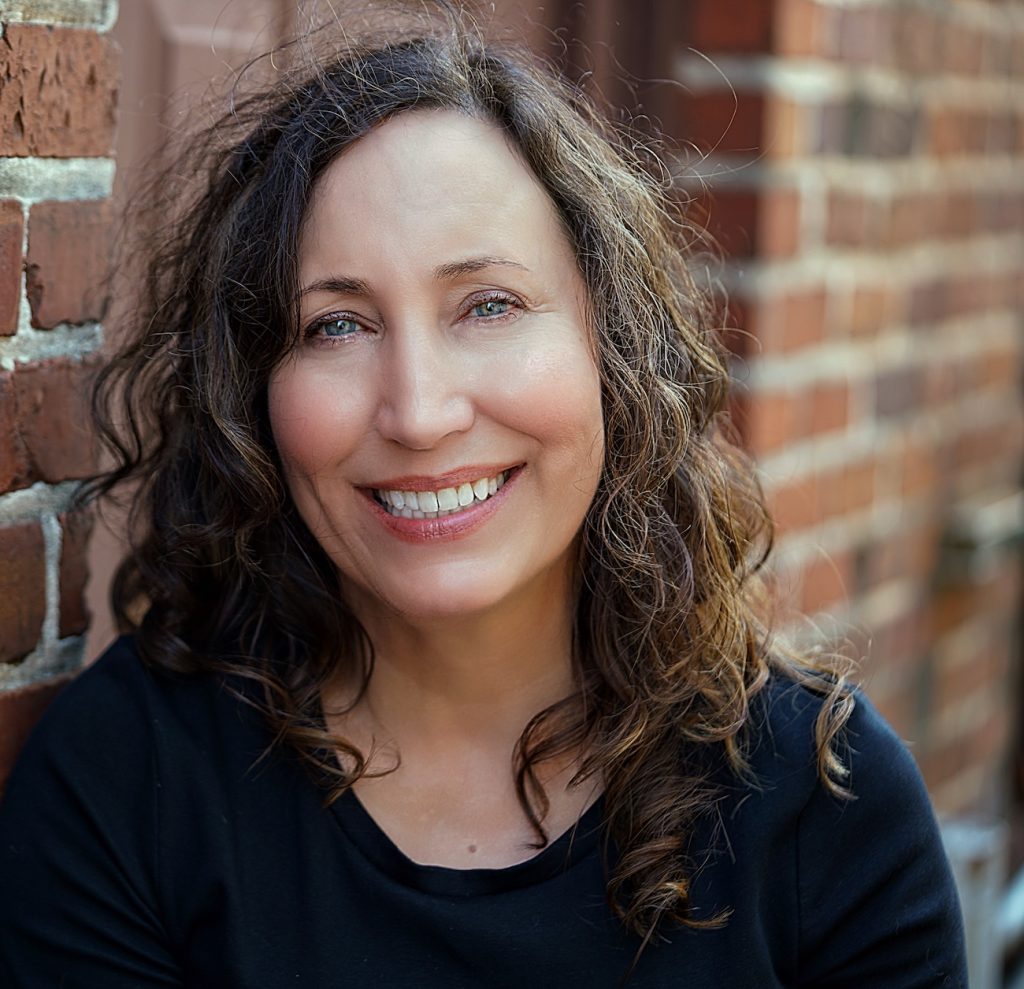
Carol Badaracco Padgett is an Atlanta-based freelance writer who focuses on film and television, the automotive industry, architectural design and collaborative storytelling projects.
STAY UP TO DATE ON ALL THINGS ArtsATL
Subscribe to our free weekly e-newsletter.

