Atlanta Freedom Bands celebrates quiet resilience in new work by local composer Christopher Kyle Green
Another Pride month is in full swing, and, with it, the Atlanta area LGBTQ population proves once again that they throw the best parties. It makes for wild nights out on the town, to be sure. Nevertheless, it’s difficult to avoid how the mainstreaming of all that revelry runs the risk of turning what was intended as a celebration of a hard-won cultural legacy into something with all the gravitas of a queer-coded Dragon Con.
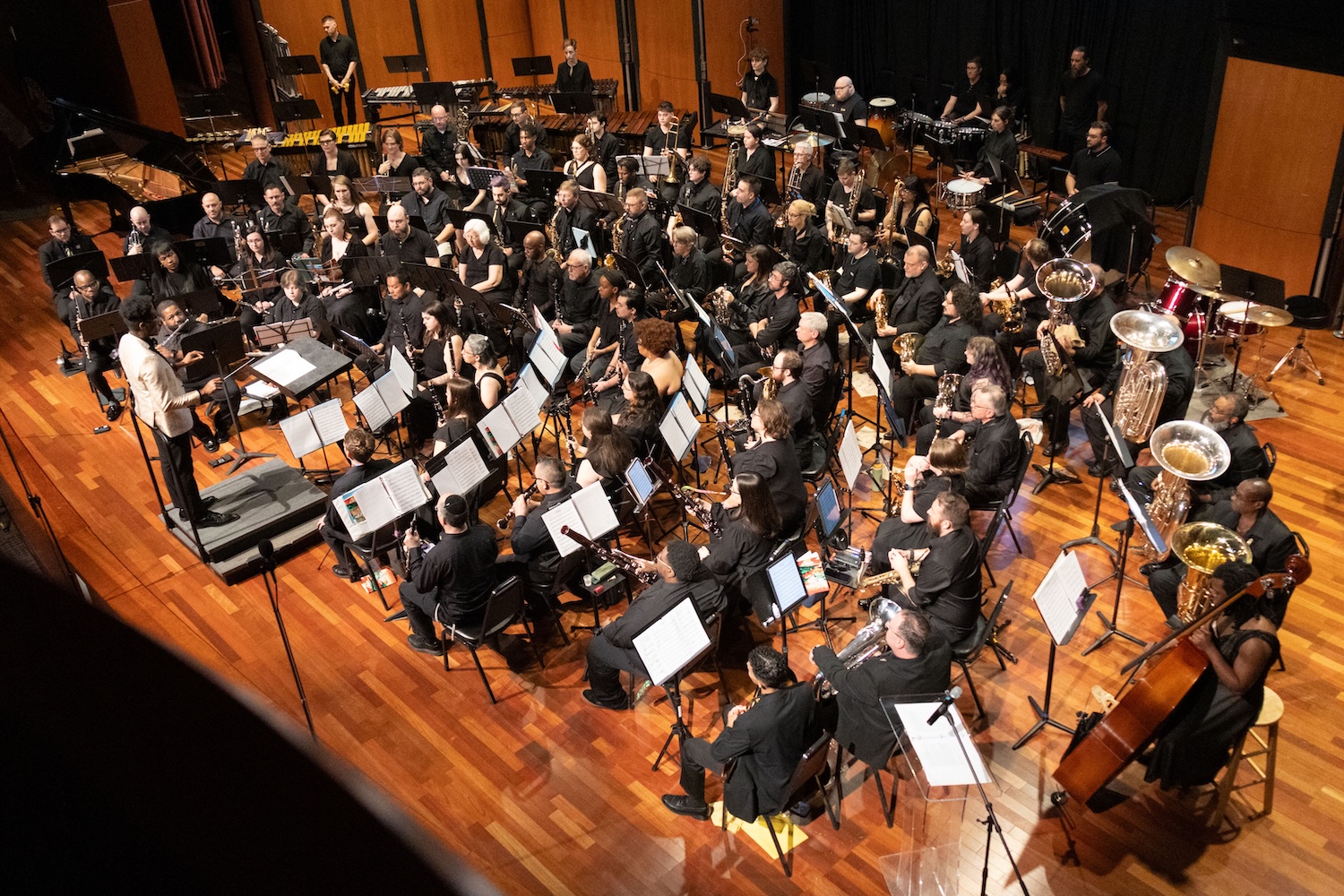
That occurred to me as I sat to discuss the upcoming “Americans We” concert with Atlanta Freedom Bands Director of Development Cliff Norris. To be held June 20 at the Ray Charles Performing Arts Center at Morehouse College, the event is a symphonic celebration of the United States’ impending 250th birthday. From the outset, it was clear that this was intended as a sincere and inspiring evening that could shatter the preconceived notions of a gay culture outsider such as myself.
“We knew that because of the ‘America 250’ and the anniversary, a lot of our friends in music would be doing concerts of patriotic music,” Norris explains. “We wanted to do something different. What we wanted to focus on was the diversity of America.” To that end, the program features classic works by Florence Price and Aaron Copland alongside contemporary composers such as Erika Svanoe and Quincy Hilliard.
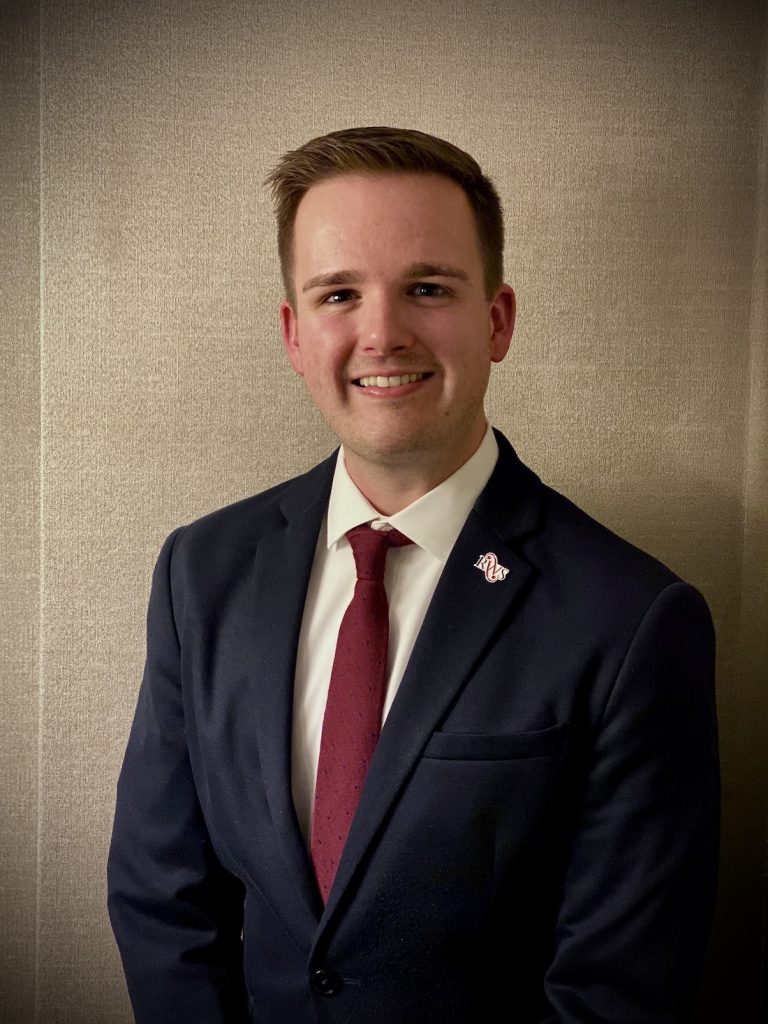
“We wanted something that added a very distinctive queer voice to that musical conversation that’s taking place,” continued Norris. That led the AFB to commission a new work by a local composer, Christopher Kyle Green. The work, titled We the People, takes the current feelings of the queer community in the face of legal crackdowns from anti-gay politicians.
“He speaks to that moment, the hurting that the community is feeling,” says Norris. “But as the piece evolves, it turns into a piece that celebrates the resilience of our community, which has allowed it to survive moments in time like this.”
Listening to a recording of We the People, it becomes clear that the magnitude of that resilience cannot be understated. Anthemic horns and cinematic ambience fill the mind not with images of the modern queer culture depicted in Tom of Finland paintings but of iron-willed Spartan warriors staring down the Persian legions at Thermopylae.
That impression was intentional. “When I say ‘march’ I don’t mean your typical patriotic march,” said Green when I interviewed him later. “I’m thinking of a gladiator marching forward.” That heroic procession begins in stirring percussion before the horns build upon each other one after another.
“As we move forward, it starts to build some momentum and gets into the opening fanfare,” he continues. That flourishing opening, which Green emphasizes, is meant to convey a sense of perseverance, transitions into a more majestic main section that, he admits, taxed his sanity in the writing process.
“I kind of lost my marbles writing this piece of music,” he laughs. It was a period of writer’s block during the piece’s year-and-a-half-long production cycle that stymied Green unexpectedly. The blockade fell away one day while he was vacationing at a lake house owned by his husband’s family. While the pair enjoyed the view of the lake, a single firework shot up out of nowhere and exploded on the horizon.
“It was that firework that kind of sparked the entire piece,” he explains. “After the transition from the dark opening, I really wanted to focus on quiet resilience. I didn’t want to just focus on the LGBT community. I wanted to focus on us as a people and all marginalized populations.” That firework became the melodic motif — a short ascending phrase that’s passed from one section to the next before erupting in dramatic unison.

It’s a harrowing but ultimately uplifting listening experience, one that comes at a significant moment in our nation’s history, where right-wing media voices are portraying the LGBT community not just as a bug in the patriotic system but as an existential threat to Western civilization as a whole.
“The divide is huge right now,” acknowledges Green. He is, nevertheless, quick to point out that a mutually respectful, nuanced discussion is what’s lacking. “There’s no negotiation with the middle. They don’t see it as a continuum.” He’s hopeful, however, that a sense of shared humanity is emerging among the younger generation. As a therapist at Kennesaw State University, he sees that trend emerging strongly among the current student crop.
“Even the college kids that I’m seeing are so different in their belief system,” he explains. “It’s not even about being open-minded anymore. The younger generation sees that we are a collective community rather than ‘you are Southern; you wear a MAGA hat; you go to church on Sunday; you are a nuclear family.’ I think what this piece is trying to do is not create debate but rather spark curiosity. What are we evolving into? Are we aware that we are a full people regardless of what the government is saying we are?”
Like We the People, our chat ended on an optimistic note. Norris, for his part, was similarly hopeful in the face of the recent conservative backlash. “If me going to work and paying my bills and doing the laundry is contributing to the tearing down of Western culture … Oh my goodness!” he replies with a warm chuckle.
::

Jordan Owen began writing about music professionally at the age of 16 in Oxford, Mississippi. A 2006 graduate of the Berklee College of Music, he is a professional guitarist, bandleader and composer. He is currently the lead guitarist for the jazz group Other Strangers, the power metal band Axis of Empires and the melodic death/thrash metal band Century Spawn.
STAY UP TO DATE ON ALL THINGS ArtsATL
Subscribe to our free weekly e-newsletter.

PLEASE SUPPORT ARTSATL
Your Gift Sustains the Coverage You Count On!
Related Posts