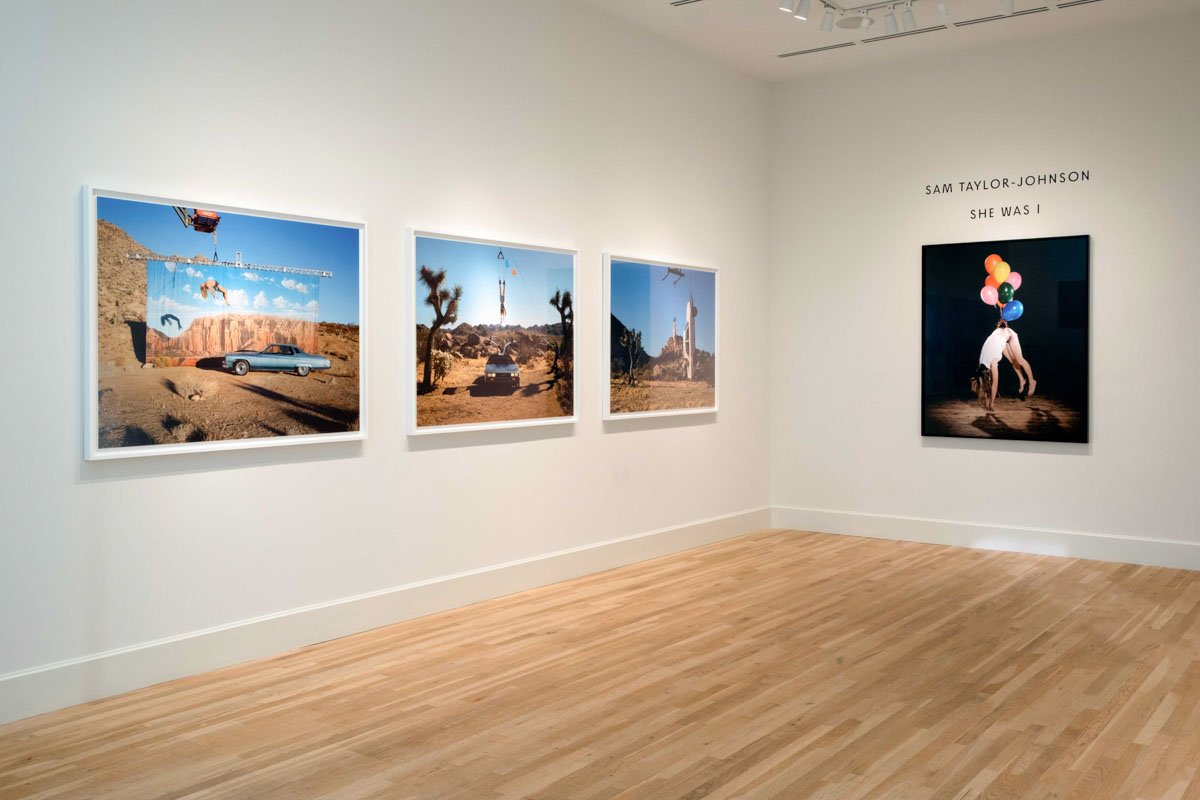
At Jackson Fine Art, Sam Taylor-Johnson looks back at the selves she was
In ‘She Was I,’ the filmmaker and photographer revisits a lifetime of work in self-portraits, crying men and suspended bodies.
Photographer and filmmaker Sam Taylor-Johnson recognizes herself in her early self-portraits, but says she feels a considerable distance from the young woman depicted in them.
“I feel like I’m sort of six people away from who that one was,” she says, pointing to an early self-portrait hanging at Atlanta’s Jackson Fine Art gallery, where her new exhibition She Was I is bringing together work from across her career.
The woman before me seems a world away from the young woman in the enormous black-and-white photograph beside us: a punkish art student in aviator sunglasses, sneering defiantly out at the world as she strikes a classical contrapposto pose, knickers down, T-shirt delivering the message: “FUCK SUCK SPANK WANK.”
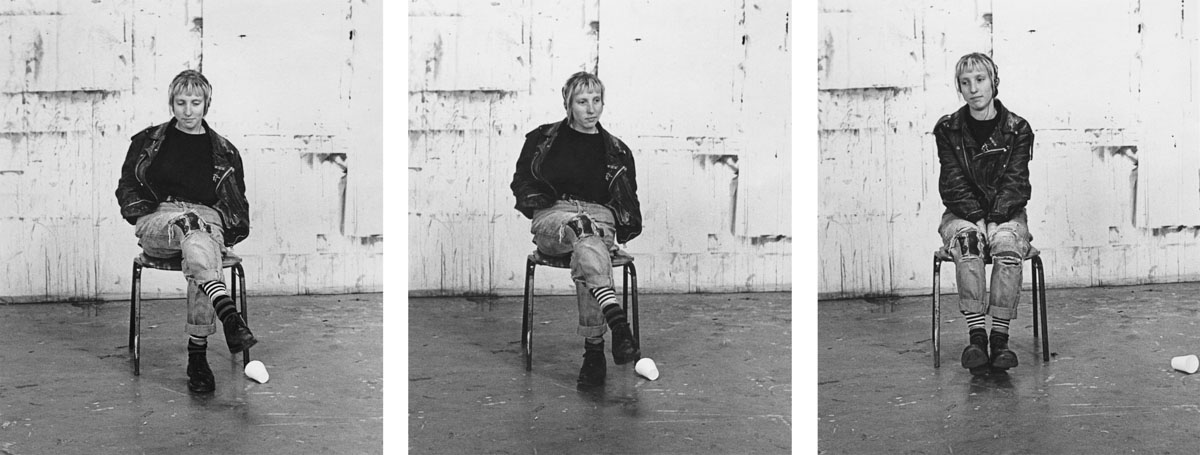
And yet, the longer I look, the more the distance gives way to recognition.
Taylor-Johnson was in her early 20s when she made the picture, fresh out of art school and trying to find her footing in the world. “I came out with a Mickey Mouse degree that qualified me for absolutely nothing in the real world,” she says. She took a job at a nightclub, working for shady, gangster-like characters until 5 a.m., then tried to make it to her studio to keep up with her work as an artist. “I was feeling very out of control of my life,” she recalls. “I was working all hours, everyone was on a lot of drugs, and I was on a lot of Coca-Cola and sugar.”
The photograph grew out of that feeling of disorder and what it meant to inhabit a woman’s body. “I was like, ‘Fuck Venus de Milo, this is what it is to be a woman in this day and age.’” After her artist friend John Maybury turned up at her house wearing the shirt, she told him, “John, give me that T-shirt. That’s the best T-shirt I’ve ever seen … That was the first time I turned the camera on myself,” she says. “I was like, ‘This is how I feel in this world.’”
It also marked a turning point in her practice. Taylor-Johnson had studied sculpture at school, drawn to its physicality, but says she felt “slightly fraudulent” working in the medium. Sculpture, she explains, gave her a way to hide while she watched the people around her. “But when I discovered the camera, I realized I’d found my voice … It was as cynical as that,” she adds, a reminder that finding her medium was more a practical discovery than a grand revelation.
The early self-portraits stayed out of view for decades, but, while assembling Sam Taylor-Johnson: The Self and the Portrait, her new monograph, she rediscovered the prints. “I kept putting them in the book and taking them out, putting them in the book and taking them out,” she says. Eventually, she decided they were as much a part of her as anything else. The title She Was I captures that mix of recognition and estrangement.
Taylor-Johnson first made her name as a photographer in the early 1990s, emerging alongside artists Tracey Emin and Damien Hirst as part of the provocative, savvy generation known as the young British artists — or YBAs. (“I guess we’re the MBAs, middle-aged British artists, now,” she jokes, referencing the moniker she and her peers loathed at the time.) Her early photographs and videos explored the body, vulnerability and the instability of appearances, often with a surreal, theatrical edge. She won the Illy Café Prize for Most Promising Young Artist at the 1997 Venice Biennale and was nominated for the Turner Prize the following year.
After surviving colon cancer in 1997 and then breast cancer three years later, she continued to explore the body and its fragilities, eventually expanding into the realm of moving images. She made her feature-film debut with Nowhere Boy (2009), an exploration of John Lennon’s adolescence, followed by major feature projects like Fifty Shades of Grey (2015) and the Amy Winehouse biopic Back to Black (2024). With She Was I, she returns to the photographs that first established her artistic voice.
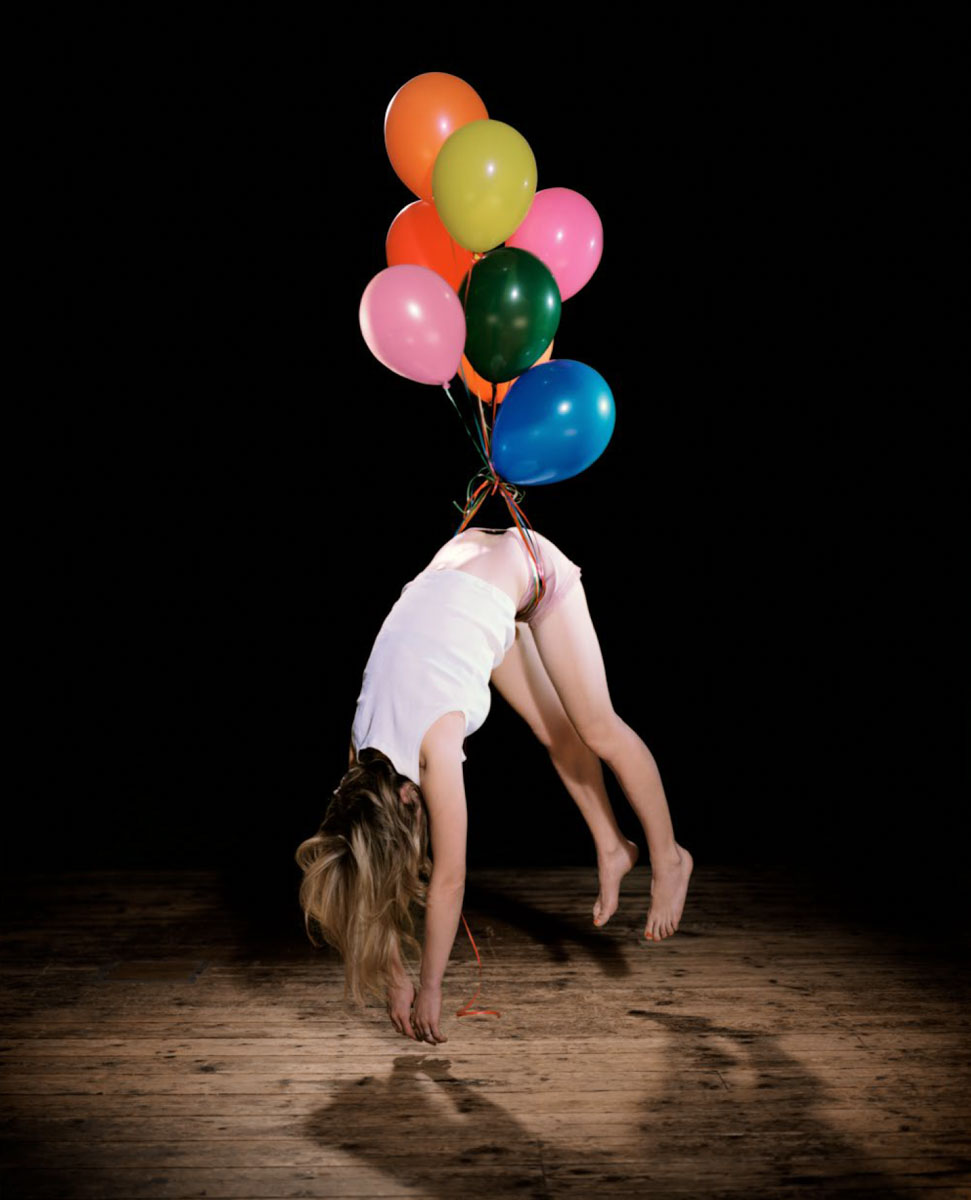
Among the images are her famous suspended self-portraits, in which she made her body appear to float. The images suggest effortless release, even weightlessness, but the physical process behind them was anything but easy. “What I wanted to convey was this sort of freedom from the constraints of being ill, the constraints of so many things,” she says. “But what it took to create the photographs was incredibly painful. So it was a real mix of feeling that pain and yet presenting something that feels very free.”
The tension between what a photograph shows and what it conceals became especially vivid in Wired, made in Joshua Tree in 2020. Here, the cranes, wires and other equipment supporting her body remain visible, exposing the precarious scaffolding behind the illusion. Against the vast desert landscape, the rigging becomes part of the composition, giving the images an expansive, cinematic scale and feel. “I’m held up by a single G clamp,” she says. “I could have died.” Looking at the photograph now, she seems struck by how daring, and how dangerous, the situation was, even if she hadn’t fully considered the risk at the time. “The cranes and all the mechanics I decided to leave in and show my support system and show that it’s all part and parcel of my life, I guess.”
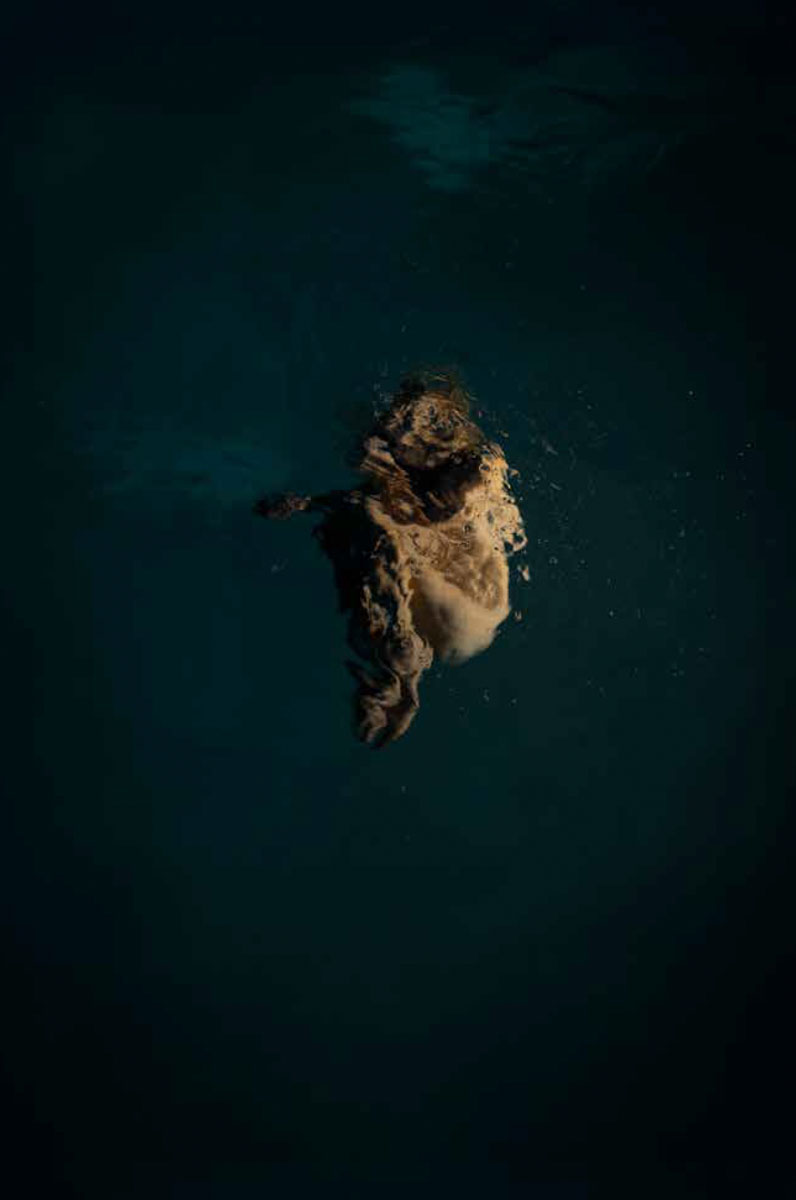
Her new series Self Portrait in Dark Water, being shown to U.S. audiences for the first time, shifts that tension into a different element. The dark water of a pool at night supports her body, creating an image that is at once serene and haunting. “With these, it felt like a sort of unseen nature of what supports, but at the same time feeling very fractured, just below the surface of things,” she says. “It was a very pertinent stage of my life, I think, physically, being a woman and getting older.”
With Crying Men, she turned her interest outward, asking renowned actors to enter a similarly vulnerable space to the one she inhabited in her own portraits. The series, made between 2002 and 2004, began with a commission to photograph actors for GQ magazine. Taylor-Johnson was given permission to do what she wanted, and what she wanted was for men to cry.
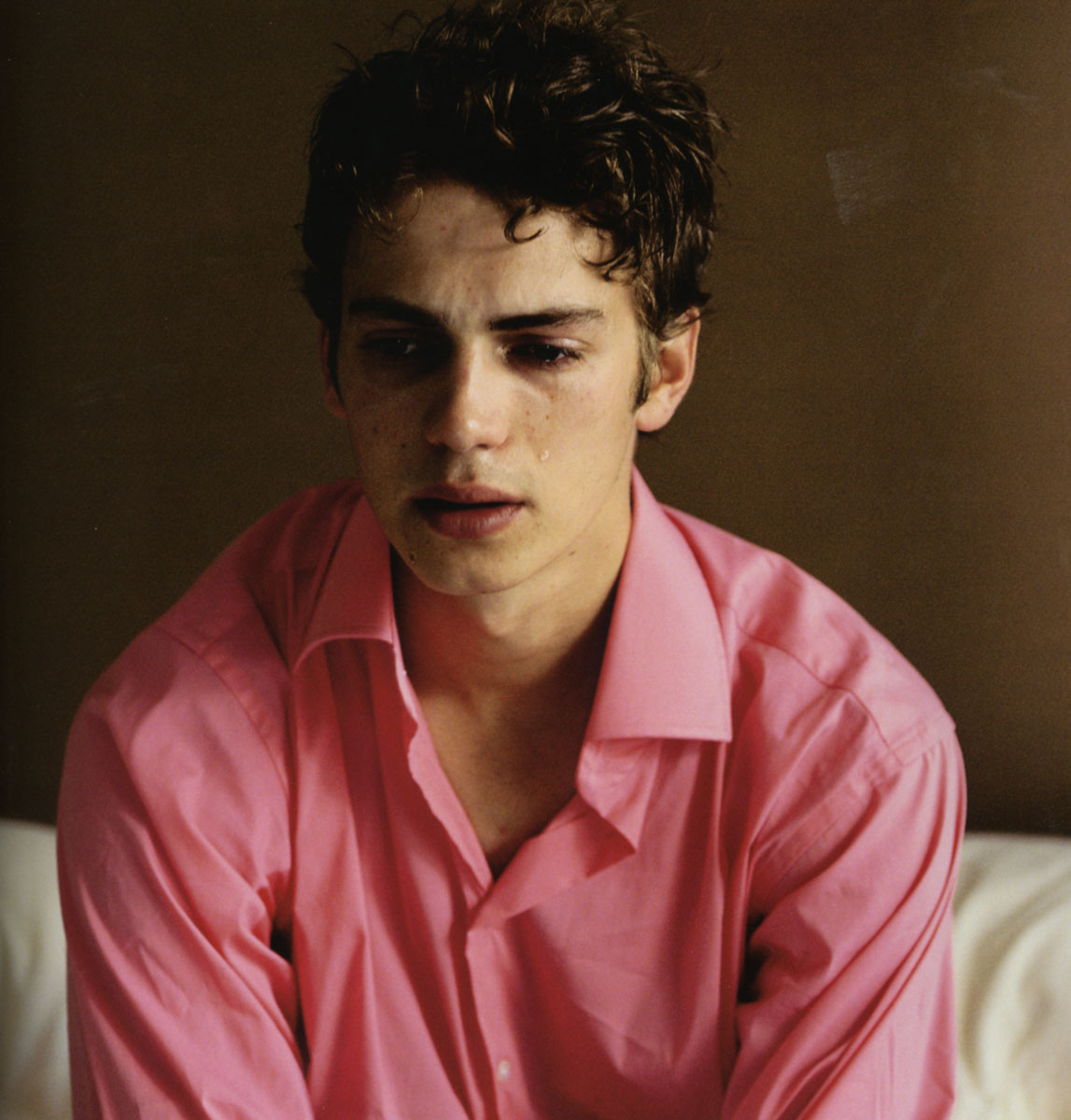
“No one wants to arrive knowing they’re going to have to cry,” she says. “They’re already quite vulnerable about having their photograph taken.” So rather than announce her intentions in advance, she waited until each actor was in the room before telling them her idea. “They all said no,” she recalls.
To get the first subject, Benicio del Toro, on board, she resorted to a little bluff: She told him that the legendary Paul Newman had already sat for her and cried for the camera. Newman was actually scheduled for the following day and knew nothing of what Taylor-Johnson planned to ask of him. But the ruse worked.
The series eventually grew to include 28 actors, among them del Toro, Newman, Laurence Fishburne, Philip Seymour Hoffman, Willem Dafoe and Kris Kristofferson. The portraits capture familiar faces in unfamiliar states: eyes squeezed shut or fixed on something beyond the frame; mouths tightened or slack; tears tracking down their cheeks.
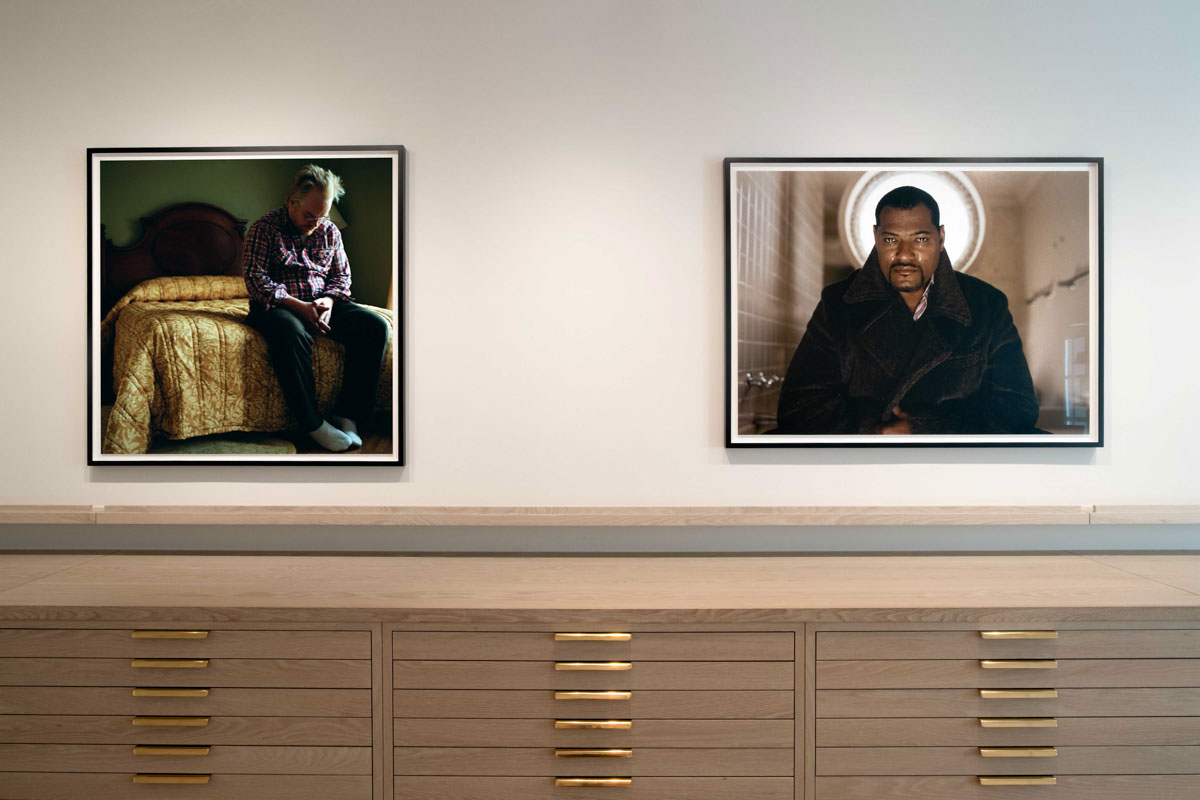
The project presented an unusual challenge. Unlike a film scene, there was no fictional situation to give the actors a reason to cry. “It wasn’t within any sort of narrative structure,” she says. “There was no script saying, OK, you’re this guy and this is happening. It was: You’re Steve Buscemi. And on this beautiful summer day in New York, I must ask you to cry.”
Taylor-Johnson says some of the actors didn’t produce tears on demand, but she won’t say which. Some portraits involved a blast of air rather than tears summoned through emotion; either way, the images are moving and striking, leaving viewers to wonder what, exactly, they’re seeing.
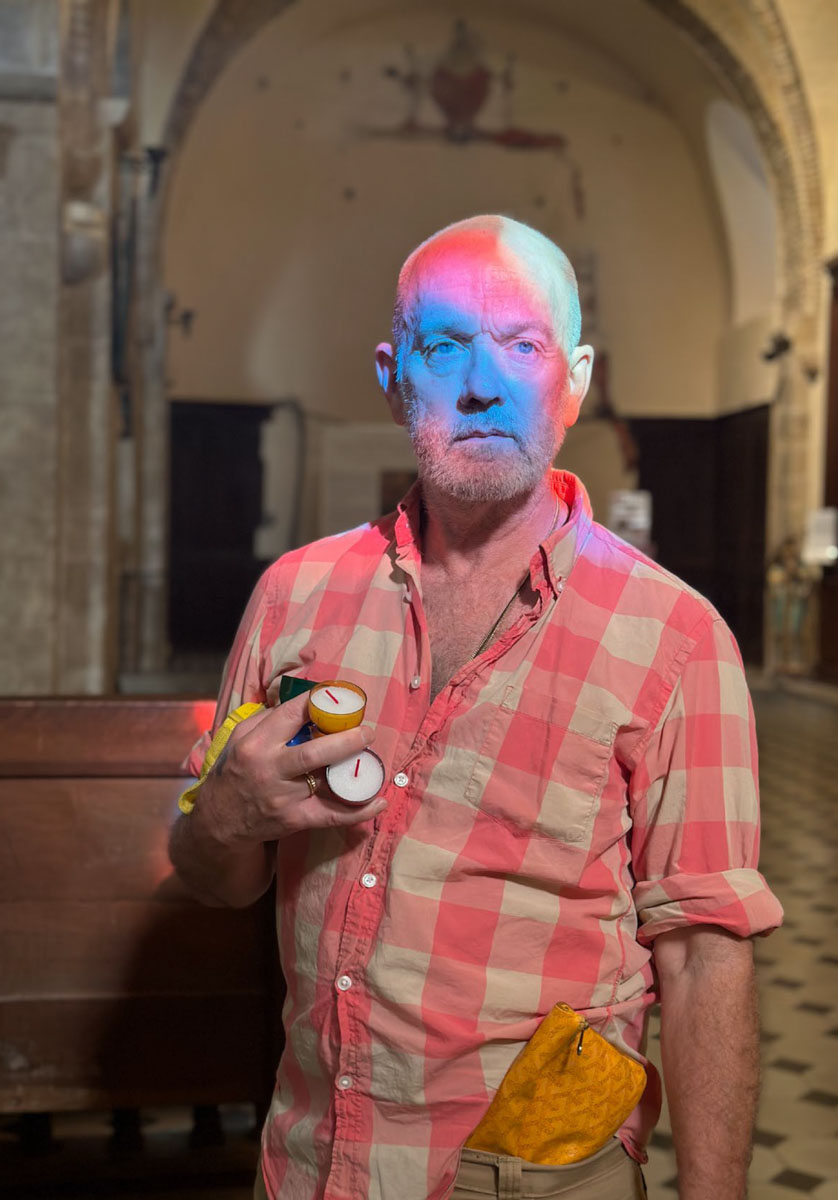
Her approach to portraiture remains rooted in a personal, intuitive curiosity. In addition to her self-portraits, the new show and book include her renowned portraits of actors, artists and performers, including Isabelle Huppert, Ralph Fiennes, David Hockney and Courtney Love. A portrait of her close friend R.E.M.’s Michael Stipe, photographed in a Berlin church, catches him holding votive candles as fractured, colorful light from a stained-glass window falls across his face. The image offers a glimpse of the intuitive process. “With each and every one, it sort of comes from my own internal fascination with whomever I’m photographing,” she says. “I don’t actually know where we’re going to end up, but I just say, let’s, you know, bring a couple of lights just in case.”
For Elton John’s 2004 album Peachtree Road, Taylor-Johnson made photographs during a 10-day road trip through Georgia, looking at the region through what she describes as an Englishwoman’s eye. The landscape offered contrasts with the rural places and small towns she knew from England: railroad tracks, crossroads, towns shaped by their roads and shopping malls that could drain life from their centers. In 2007, Jackson Fine Art exhibited the photographs alongside Crying Men in a show titled Crying Men & Peachtree Road.
For a period after that, Taylor-Johnson stepped away from gallery exhibitions. The pressure of producing work had begun to make her feel as if she were making pictures to order rather than following her own instincts. She wanted to recover the freedom to work with a camera without knowing in advance where a project would lead. Film became a major part of her life, but she continued to photograph, pursuing personal projects and commissions while waiting to return to gallery work on her own terms.
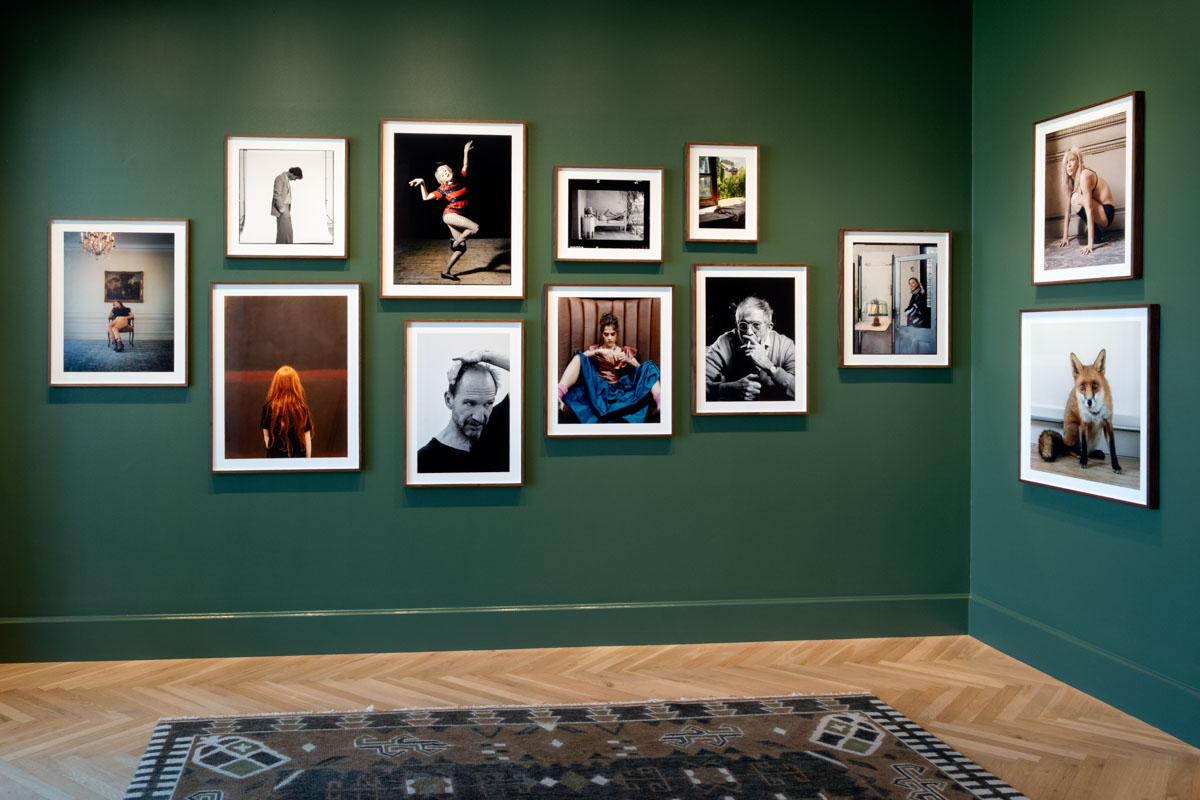
Coming back to Jackson Fine Art feels less like tracing a tidy development than an opportunity to place the different strands of her practice beside one another and observe the results. Taylor-Johnson says she sometimes looks at her own work and thinks, “Oh my God. I should have thought differently about making this.” But seeing the photographs together in the gallery for the first time, she says, felt unexpectedly peaceful. The exhibition offered “a bit more of a portrait of my creative thought process,” she adds.
Rather than resolve the differences between the works, She Was I lets them coexist: the audacious student; the suspended body; the artist asking others to reveal their tears; and the filmmaker who knows how much machinery can sit behind an illusion.
She Was I is on view through January 23 at Jackson Fine Art, 3122 East Shadowlawn Ave. NE, Atlanta. The exhibition coincides with the publication of Sam Taylor-Johnson: The Self and the Portrait (Rizzoli), which came out October 6.
::
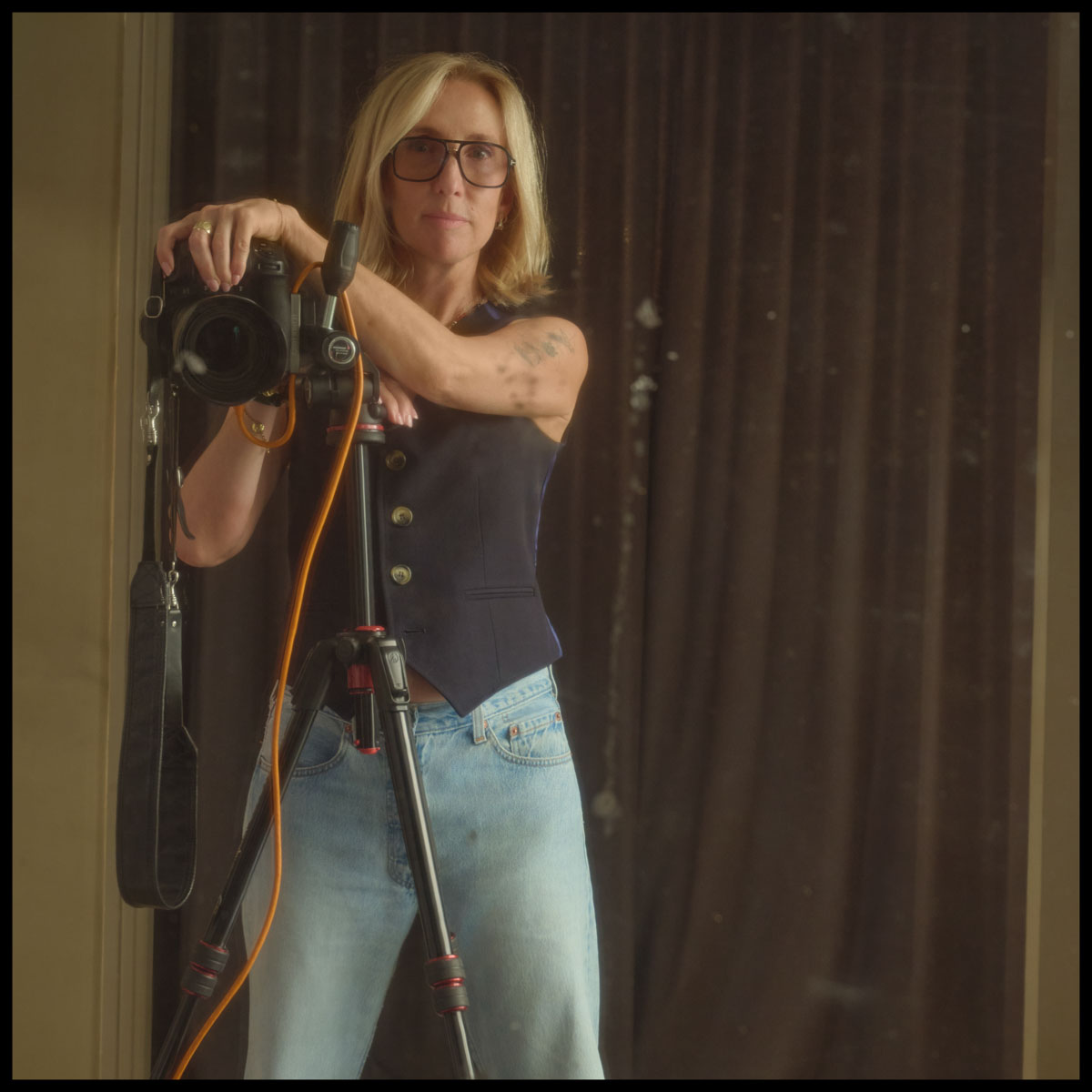
Andrew Alexander is an Atlanta-based writer, editor and arts journalist. A longtime contributor and former senior editor at ArtsATL, his work appears regularly in local, regional and national publications, covering theater, visual art, music, film, dance, literature and the artists and institutions shaping Atlanta’s cultural landscape.
STAY UP TO DATE ON ALL THINGS ArtsATL
Subscribe to our free weekly e-newsletter.

PLEASE SUPPORT ARTSATL
Your Gift Sustains the Coverage You Count On!
Related Posts