Brady Lum sentenced to 12 months in prison, making him ineligible for good-conduct credit
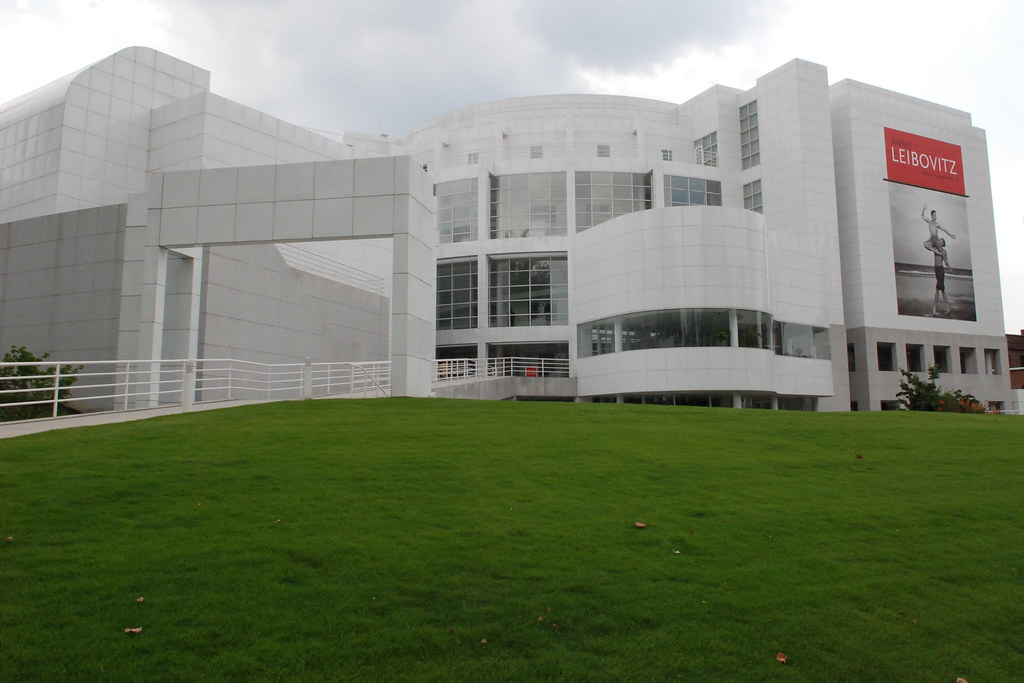
Former High Museum of Art executive Brady Lum was sentenced to 12 months in federal prison, one day shy of eligibility for good-conduct credit. If the Federal Bureau of Prisons follows the judge’s recommendation, Lum will serve his time at a minimum-security prison camp on Maxwell Air Force Base in Montgomery, Alabama.
Former High Museum of Art executive Brady Lum was sentenced Monday to 12 months in federal prison, followed by one year of supervised release, in connection with the embezzlement of funds from the Atlanta arts institution. Before the hearing, Lum repaid the $607,688.18 he stole and roughly $500,000 in investigative and legal costs. He did not, however, receive a criminal fine, which would have been paid to the federal government had U.S. District Judge Michael L. Brown, who presided over the sentencing, ordered it.
The hearing lasted approximately 45 minutes, with Judge Brown emphasizing the importance of deterring future white-collar crimes, even while acknowledging that Lum was unlikely to reoffend.
Leadership from Woodruff Arts Center and the High Museum were notably absent from the hearing. Neither Woodruff Arts Center’s current president and CEO Hala Moddelmog nor High Museum Director Rand Suffolk were in attendance. No representative addressed the court on behalf of either organization.
The courtroom gallery appeared to consist overwhelmingly of Lum’s family and friends, who also provided letters of support to the court. Among those letters, which were made available in the defense’s sentencing memorandum, were poems written by his children, literary references to Anna Karenina and personal testimonials emphasizing his character.
By contrast, no victim impact statements were presented during the hearing on behalf of Woodruff Arts Center, the High Museum or its patrons. The absence of an impact statement was notable considering that during the sentencing of a similar embezzlement case in 2014 involving former Woodruff employee Ralph Clark, an impact statement was presented, written by then-Woodruff Arts Center CEO Virginia Hepner. The Clark case was not mentioned during Monday’s proceedings.
Judge Brown expressed considerable deliberation over the appropriate sentence. He indicated that he did not believe Lum was likely to commit another crime. Nevertheless, he repeatedly emphasized that sentencing must consider not only the individual defendant but also the broader need to discourage others from committing similar offenses. A central theme of the hearing was the treatment of white-collar offenders under federal sentencing guidelines.
Brown discussed how individuals who commit financial crimes repeatedly over several years can sometimes face less severe sentencing recommendations than individuals involved in a single drug-trafficking offense. He also acknowledged the socioeconomic dynamics underlying the criminal justice system, observing that people with backgrounds similar to Lum’s — educated, professionally successful and financially privileged — have historically played a role in shaping the laws and sentencing structures that govern such cases. He drew a comparison between his own background and Lum’s, recognizing the potential advantages afforded to defendants from similar circumstances.
Throughout the hearing, Judge Brown appeared to be balancing his obligation to impose the least severe sentence sufficient to achieve the purposes of sentencing against the need to send a meaningful message about financial misconduct.
During the sentencing, the court also examined Lum’s actions after his misconduct was discovered. According to statements made during the hearing, Lum retained prominent Atlanta defense attorney Don Samuel immediately after his resignation (which followed an administrative leave) and arranged to repay the misappropriated funds through King & Spalding, the law firm representing the Woodruff Arts Center. Judge Brown was not particularly persuaded by the speed of Lum’s response once his conduct had been discovered. He distinguished between voluntarily returning money before wrongdoing is detected and making restitution after being caught. The latter, he suggested, carried less weight as evidence of genuine accountability.
Federal prosecutor Nicholas N. Joy and Samuel presented differing interpretations of when Lum’s misconduct began. Joy argued that the improper transactions dated to 2019 and increased substantially beginning in 2022. Samuel challenged the characterization of the earliest transaction, suggesting that the 2019 incident might have involved an improperly billed meal rather than a clearly established act of intentional theft. The defense acknowledged, however, that the bulk of the disputed transactions and financial misconduct occurred beginning in 2022.
Lum addressed the court and apologized for his actions, expressing regret for disappointing his family and community. His family circumstances were also discussed during the hearing, and Judge Brown acknowledged the personal consequences of incarceration. Nevertheless, he ultimately concluded that a prison sentence was necessary.
The sentence of exactly 12 months carries a practical consequence: Under federal law, it makes Lum ineligible for good-conduct credit and First Step Act time credits, which prisoners earn by participating in rehabilitation programs. Both apply only to sentences of more than one year. Judges often sentence defendants to 12 months and one day so they qualify. Judge Brown did not.
The Federal Bureau of Prisons has not yet decided where Lum will serve out his sentence. Judge Brown, however, did include his recommendation in the sentencing order, suggesting Lum be sent to Maxwell Air Force Base in Montgomery, Alabama, a minimum-security federal prison camp. The BOP is not obligated to agree with Judge Brown and often does not follow the court’s recommendations.
Monday’s sentencing marks the second embezzlement case involving a Woodruff Arts Center employee in just over a decade. The broader institutional implications of a second embezzlement case involving the Woodruff Arts Center were not substantively addressed during the hearing.
[Editor’s note: ArtsATL reporter Matthew Terrell was in attendance at the sentencing hearing, where digital recording was not permitted. This article was compiled using handwritten notes and follow-up reporting]
::

Matthew Terrell works as a writer, artist, filmmaker and educator in Atlanta.
STAY UP TO DATE ON ALL THINGS ArtsATL
Subscribe to our free weekly e-newsletter.

PLEASE SUPPORT ARTSATL
Your Gift Sustains the Coverage You Count On!
Related Posts