Alfred Uhry reveals the ‘Parade’ of events that led to his Tony-winning production
History repeats itself, muses playwright Alfred Uhry. But what will we learn this time from the story of Parade?
::
When a hit Broadway musical comes to town, Atlanta audiences buzz with excitement and scramble for tickets. But when the new touring production of Parade arrives at the Fox Theatre from April 1 through April 6, it will be more than just another big show. It’s a homecoming, the return of a painful story back to the city where it unfolded, challenging Atlantans to confront a dark and often-overlooked chapter of history. The show lays bare unsettling events, confronting injustice and prejudice in a way that’s rare for Broadway musicals. As playwright Alfred Uhry puts it, “It’s not Hello, Dolly.”
For Uhry, the story of Parade isn’t just history — it’s personal. Growing up in Atlanta’s Jewish community in the Druid Hills neighborhood of the 1940s, he lived in the shadow of the Leo Frank case, a story rarely spoken about but impossible to ignore.

“Talking about Leo Frank when I was growing up was kind of like talking about somebody’s cancer,” he recalls. “I remember my parents had some contemporaries over for dinner once, and they got to talking about the Frank case. One of their friends got up and walked out of the room. I asked my mother about it later, and she said, ‘Well, it’s a complicated story. You can read about it if you want to.’ So I went on the old streetcar downtown to the library to look it up.”
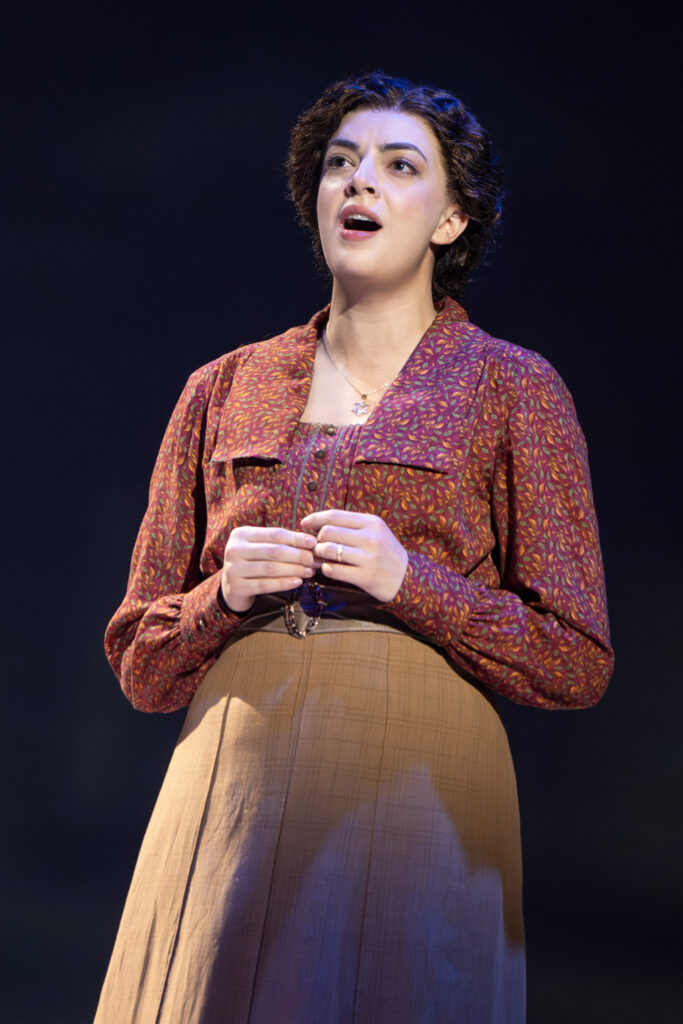
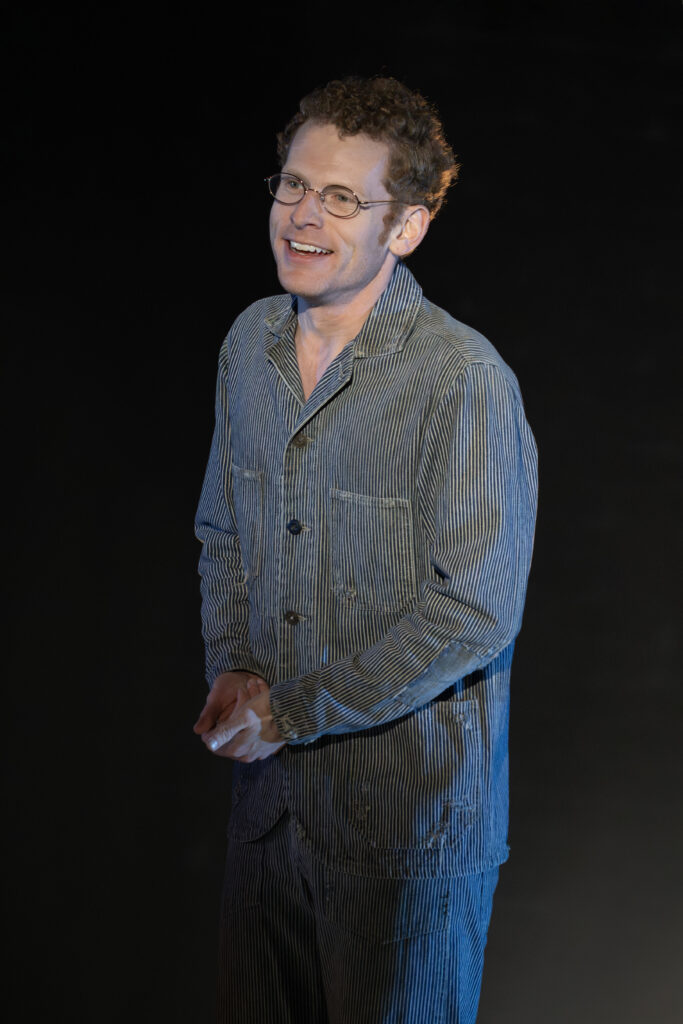
Years later, the case that had so intrigued him as a child became the foundation for one of his most acclaimed works. Uhry’s 1998 Parade, with music and lyrics by Jason Robert Brown, puts on stage what he found in the library files all those years ago: the true story of Leo Frank and his wife, Lucille, navigating the tumultuous events following the murder of 13-year-old Mary Phagan in 1913.
Frank, a Brooklyn-born Jew who worked as a factory superintendent in Atlanta, was accused of Phagan’s murder amidst a climate of rampant anti-Semitism, social change and sensationalist media disinformation. In 1915, John Slaton, Georgia’s governor at the time, commuted Frank’s sentence from death to life in prison, citing doubts about his guilt. This enraged the public, and a mob of vigilantes comprised of prominent citizens and political figures, calling themselves the Knights of Mary Phagan, kidnapped Frank from prison and lynched him in Marietta.
Uhry was fascinated by the story and by his family’s own connections to it. His great-uncle, Sigmund Montag, was a prominent Jewish businessman in Atlanta and the owner of the National Pencil Company, where Leo Frank was the superintendent. Another great-uncle, Moses Frank, was one of Leo Frank’s strongest supporters and part of the legal and financial efforts to defend him. The case deeply impacted the Montag and Uhry families, shaping Uhry’s perspective on Southern Jewish identity and ultimately inspiring his work.
His family’s ties extended beyond the courtroom. “Ms. Lucille [Frank] was my grandmother’s friend,” he recalls. “I remember she would come over and play canasta with my grandmother and her friends. But, you know, when you’re a child, your grandmother’s friends are just spooky old ladies. You don’t relate much. But that was the case: Lucille Frank remained in Atlanta after all that happened. She worked in a ladies’ dress store, always addressed as Mrs. Leo Frank. She was a proud lady.”
Uhry’s paternal grandmother was Lena Fox, who became the basis for Uhry’s most famous character, Miss Daisy, in his 1988 Pulitzer Prize-winning play and in his script for the 1989 Oscar-winning film Driving Miss Daisy. His body of work, often referred to as the “Atlanta Trilogy,” reflects his commitment to exploring the complexities of Southern Jewish identity. It includes Driving Miss Daisy and The Last Night of Ballyhoo and culminates with Parade. Each piece offers a nuanced portrayal of cultural and societal dynamics in the South, drawing from Uhry’s personal experiences and heritage.
The Atlanta of Uhry’s childhood was a much smaller city than it is now. It was a place where social divisions were most often seen in black and white, literally. Within that landscape, Jews occupied a complex position.
“My family was very proud of being Southern,” he says. “I think if somebody had asked them, they would have said: Southern first, American second and Jewish third … There’s this speech that Lucille has toward the end of the show, when she says, ‘I’m a Georgia girl, no matter what.’ I was a Georgia boy. That was me. And I still feel that about the South I grew up in, even though I realized it was pretty flawed.”
Uhry recalls that in his childhood, schools and businesses still closed for Confederate Memorial Day — a day that, by grim coincidence, was also the day of Mary Phagan’s murder, further fueling the hysteria surrounding the case back in 1913. The annual procession became the inspiration for the musical’s title.
“I was a little alienated by it all because I was a Jew,” Uhry says, recalling those days and their pervasive imagery of cotton bales, magnolia blossoms and ‘happy’ plantation times. “And I was also a little buying into the whole story because it was such a good story. This was when the South — and the whole country — was swept up by Gone with the Wind. We were swept up in patriotism, too, because there was a war going on. Somehow or other, all that nostalgia and mythology was simply part of being American when I was a child. By the time I began to have a head on my shoulders, to think, and realized what this was, it was years later.”
It’s a reckoning that in many senses continues to this day. Since its New York debut, the latest revival of Parade has provoked controversy, with protestors — some carrying openly anti-Semitic signs — gathering outside the theater on opening night. For Uhry, the scene seemed chillingly familiar: “The weird thing was they had these raw sort of signs that they’d painted on sheets. And they looked just like the props that we have for the show.”
The eerie parallel underscores the show’s contemporary relevance. Alarmingly, the themes presented in Parade echo challenges we’re facing again today. The resurgence of anti-Semitism, the proliferation of disinformation through new media channels and the manipulation of public sentiment by political figures all highlight unsettling parallels between the early 20th century and the early 21st.
In 1998, at the height of the Clinton years, when the original production of Parade first premiered, the show could easily seem like a reflection on distant history. Although it won several Tony awards, the original show was not a hit, closing after just nine months. A 2018 London revival at the Donmar Warehouse in a more intimate, stripped-down version proved to be a turning point in the musical’s reception. The show’s success there led to the acclaimed 2023 Broadway revival and the current tour.
As Parade prepares to return to Atlanta, Uhry hopes the city will reckon with its past — not just as history but as a story still unfolding. “I think what happened is that unfortunately the times caught up with it,” he says. “If people can understand that, then maybe the story won’t go away. The world of 1915 was different, but, in many ways, it was the same. I’m glad Parade is playing in Atlanta. And I’m proud of what we did.”
Where & When
Parade is at the Fox Theatre April 1through April 6. Tickets start at $34.50. 660 Peachtree St. NE.
::

Andrew Alexander is an Atlanta-based writer.
STAY UP TO DATE ON ALL THINGS ArtsATL
Subscribe to our free weekly e-newsletter.

PLEASE SUPPORT ARTSATL
Your Gift Sustains the Coverage You Count On!
Related Posts