A pandemic chamber music project offers a classical take on rock and pop
Atlanta Symphony bassist Michael Kurth and his neighbors got started the way so many rock groups do, as friends looking for something fun to do.
::
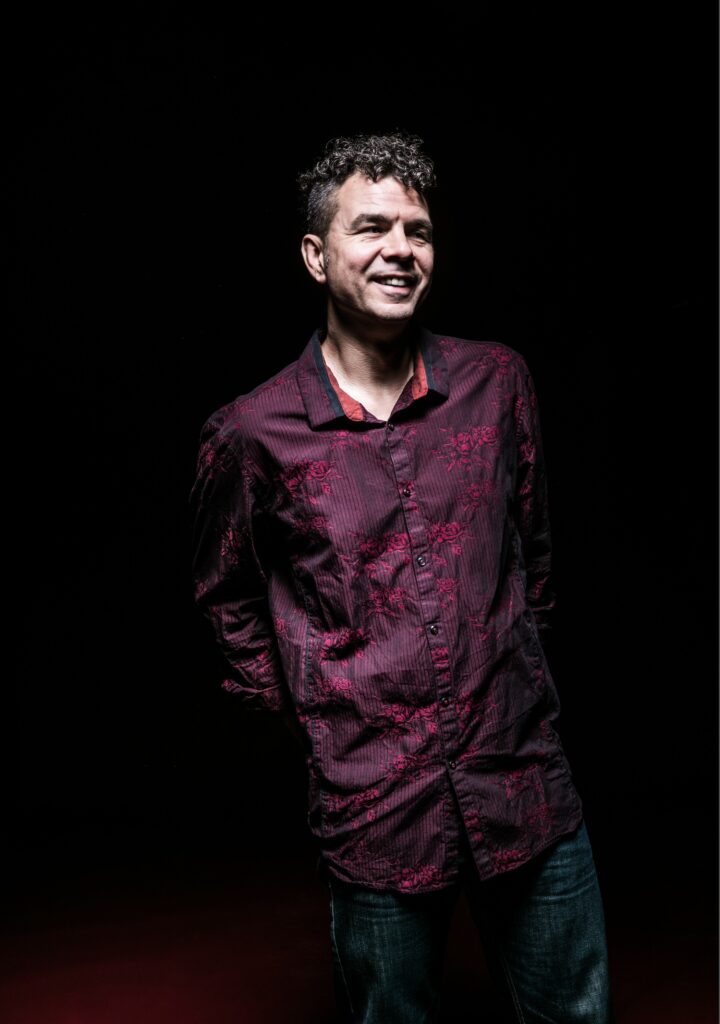
Acclaimed composer and Atlanta Symphony Orchestra bassist Michael Kurth is kicking my ass at a game of pool. We’re at Laseter’s Tavern to discuss his upcoming May 21 concert at Eddie’s Attic with the Ridibund Chamber Music Society, his classical/contemporary fusion group, but he’s included a free pool lesson.
“Shoot right there,” he says, indicating a seemingly irrelevant spot on the table. I take the shot and, much to my surprise, end up sinking a ball that seemed out of reach.
It’s an apt metaphor for Kurth’s perspective on music: We occupy a cultural landscape where classical and pop are not just disparate genres but wholly separate islands only occasionally traversed by novelty acts like the Vitamin String Quartet. But Kurth sees the angles that elude the rest of us.
The Ridibund Chamber Music Society will open its set with Richard Strauss’ “Also Sprach Zarathustra,” but rather than unleash the Ubermensch ferocity for which it is known, Kurth has the theme breaking into a Bernard Purdie-inspired shuffle. Listening to a demo mix of the arrangement, I’m struck by just how seamlessly it works.
The ensemble’s repertoire as a whole follows that blended schematic: Queen, Thomas Dolby, Radiohead and a host of other contemporary artists are blended with classical masters like Beethoven and Bach in a manner that reaches new ground on both sides.
One of the group’s particular favorites is Kurth’s arrangement of “Solsbury Hill” by Peter Gabriel.
“I’ve loved that song since I first heard it in junior high,” explains Kurth, his energetic demeanor oscillating between hipster beat poet and zealous music nerd. “I had no idea what it was, and back then you couldn’t Google it. You had to go to the record store and ask the guy behind the counter ‘Hey man, there’s this song and it’s kind of acoustic and it’s something about a hill …”
The song, once properly identified, mesmerized the young Kurth. “That song is magic,” he continues, pointing out that the piece’s rhythmic depth opened up tremendous arrangement possibilities. “In our interpretation, it’s a 9/8 bar and two 6/8 bars, then in the chorus it’s two 6/8 bars and a 9/8 bar.”
Kurth’s enthusiasm for intricate song craft is infectious. I mention that Peter Gabriel is one of those few artists who’s able to incorporate progressive elements like odd time signatures into pop music. “He does it in such a way that you never know it’s not rock,” concurs Kurth. “It’s totally prog the whole time, but it’s palatable prog.”
“Palatable prog” might be an apt descriptor for the Ridibund Chamber Music Society as a whole. Progressive rock began in the 1960s and 70s as an effort by rock bands to expand their genre with the song structures, rhythmic complexity and harmonic depth of jazz and classical. As the new style caught on in the 70s, there was an equal and opposite reaction: non-rock ensembles like the Penguin Cafe Orchestra and 3 Mustaphas 3, who saw rock and pop as a vehicle they could power with their avant-garde influences. Ridibund seems to fit comfortably into that niche.
Kurth sinks a rapid succession of striped balls, and, as I watch my hopes for a win dwindle, I ask him how he decides songs make for good reworkings. He points out that much of it is down to what his eclectic ensemble can do. For example, a harpist emulating a guitarist can pull off the heavily arpeggiated stylings of REM’s Peter Buck, but the staccato, heavy percussive riffs of thrash metal remain elusive.
“Drums are essential to my sound,” Kurth adds, pointing out the prominent role that a full drum kit plays in transitioning rock stylings into a classical chamber environment.
The Ridibund Chamber Music Society, which consists of Kurth on bass alongside violinist Kirsten Browning, cellist Mary Horst, harpist Molly O’Roark and drummer Ronnie MacDuff, came about during the Covid-19 lockdown. “I was really bored,” recalls Kurth. “I had heard some people in my neighborhood played, and so I found a cellist and violinist — cellist lives around one corner, violinist lives around the other corner.”
That initial trio began doing lawn concerts for the benefit of pandemic-stultified neighbors. “We played cute little doo-wop songs and a little Mozart here and there,” he adds. When a husband and wife who played drums and harp, respectively, moved into the neighborhood, the quintet was complete.
That ragtag assemblage of players speaks to the rock ’n’ roll ethos that underlies Kurth’s vision for the project. Most classical chamber ensembles are born out of professional connections among established colleagues (the Georgian Chamber Players was founded to give members of the Atlanta Symphony Orchestra an outlet for small chamber performances, for example). But Kurth founded Ridibund the way so many rock groups are started: as friends looking for something fun to do.
That hair-down, affable aura makes Ridibund a natural fit for the intimate stage they’ll be inhabiting on May 21. “Eddie’s Attic is amazing,” enthuses Kurth. “There’s a hush rule so everybody listens to what you play. You can do instrumental music there without feeling like you’re background. It’s such a welcoming place.”
Kurth scratches his shot while trying to sink the 8 ball, giving me the win by technicality. In sport, as in music, he knows how to throw in a pleasant surprise.
Where & When
Ridibund Chamber Music Society plays Eddie’s Attic at 9 p.m. May 21. 515-B North McDonough St., Decatur. eddiesattic.com
::

Jordan Owen began writing about music professionally at the age of 16 in Oxford, Mississippi. A 2006 graduate of the Berklee College of Music, he is a professional guitarist, bandleader and composer. He is currently the lead guitarist for the jazz group Other Strangers, the power metal band Axis of Empires and the melodic death/thrash metal band Century Spawn.
STAY UP TO DATE ON ALL THINGS ArtsATL
Subscribe to our free weekly e-newsletter.

PLEASE SUPPORT ARTSATL
Your Gift Sustains the Coverage You Count On!
Related Posts