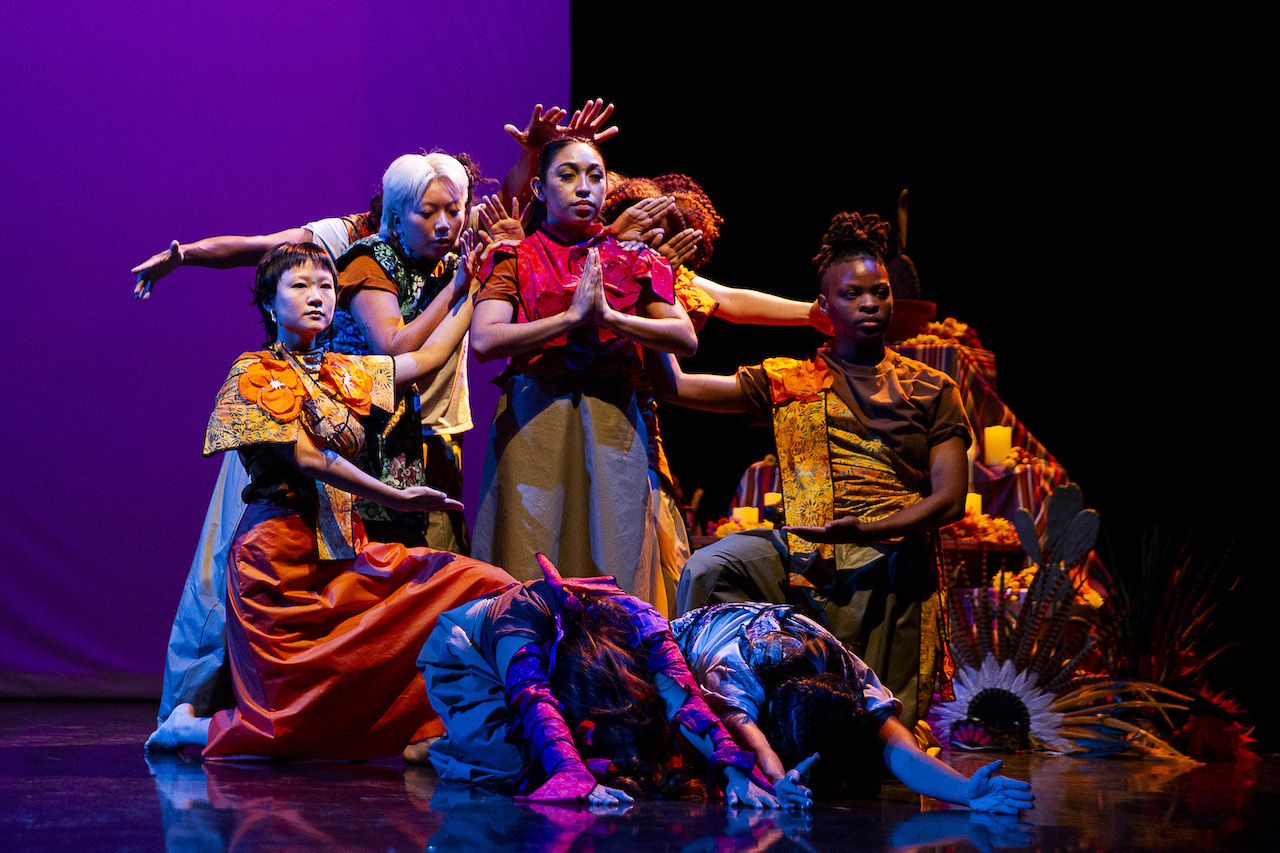
Choreographer Julio Medina explores his indigenous roots in a new contemporary work, ‘Return Eternal: Echoes from the Cosmogram’
Family is important to dancer and choreographer Julio Medina: from his Chicano parents and grandparents to his wife, who is part Indonesian, their two young, mixed-race children and his indigenous ancestors who lived in the Mexica (Aztec) empire in Mexico. Add to that his dance family, both from his regular participation in hip-hop cyphers across Atlanta and the members in his Medina Movement Collective, and you get a sense of the rich tapestry that is his identity.
Medina’s new work, Return Eternal: Echoes from the Cosmogram — which will be staged at the Schwartz Center for Performing Arts September 24 through September 26 — reflects on family, including the grief he experienced after losing one of his favorite uncles in early 2025, the myriad of emotions he’s experienced as a parent, his hopes for a more harmonious world and the thirst he has to more deeply understand his own heritage.
Medina and his dancers embody these themes through contemporary movement enriched by images of the Mesoamerican cosmology and mythology that Medina absorbed throughout several years of research.
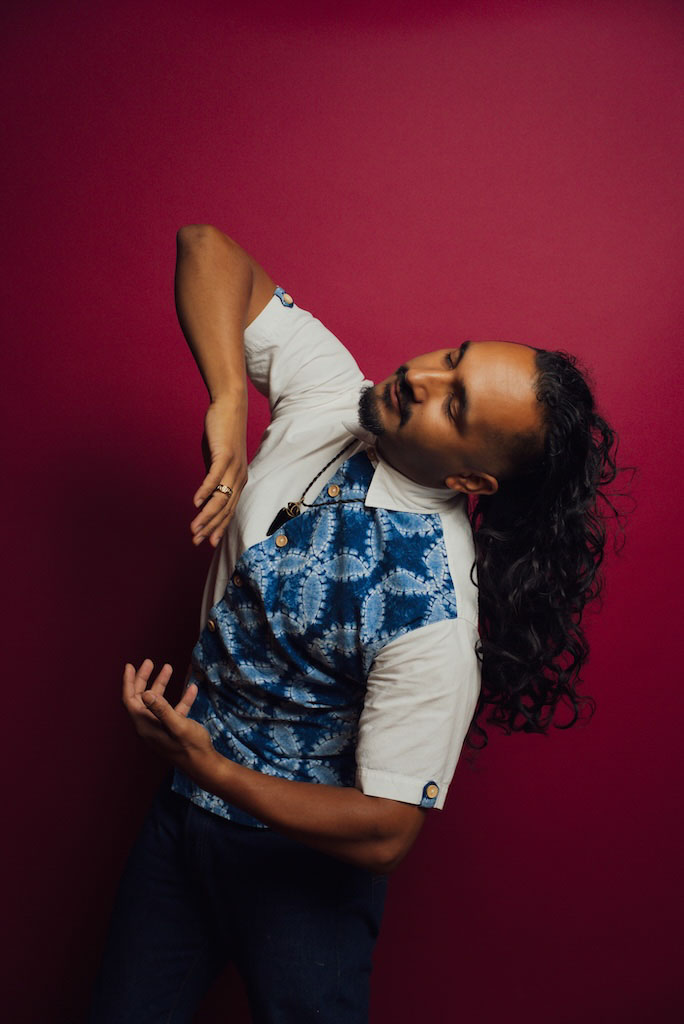
As a first-generation Chicano born in Los Angeles, Medina was steeped in Latino culture as a child but knew almost nothing about his indigenous ancestry. Though traces of it were embedded in the Latino experience broadly, it wasn’t until the pandemic that Medina had time to contemplate his older origins.
He knew his parents and grandparents came from the states of Colima and Jalisco in Western Mexico. That region, he learned, was part of the Mexica empire, which flourished in the 14th, 15th and 16th centuries before the arrival of the Spanish and the civilization’s erasure.
In pursuit of his own roots, he dug deep into indigenous customs, herbal medicine and language by taking classes online with Calli Mexica, an educational group in Mexico City. What spoke to him most vividly was his ancestors’ relationship to space, the sun, the moon and the Earth. That became the conceptual framework for return//de vuelta a los ancestros, a powerful work he presented in 2024.
In that piece, the sun was the central feature, coloring not only the space itself but the quality of the contemporary movement. The evening-length concert also included traditional dances by an Aztec ensemble and a Mexican folklorico group.
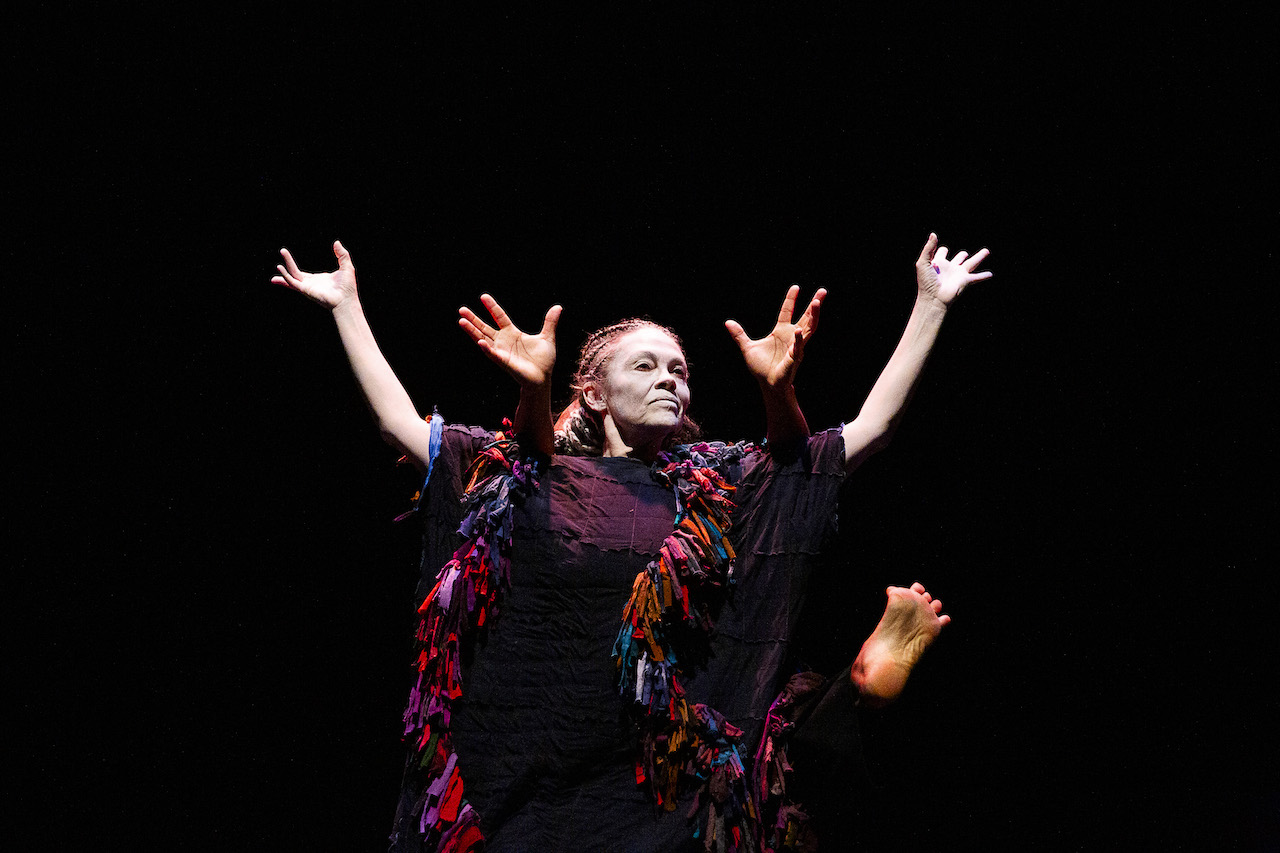
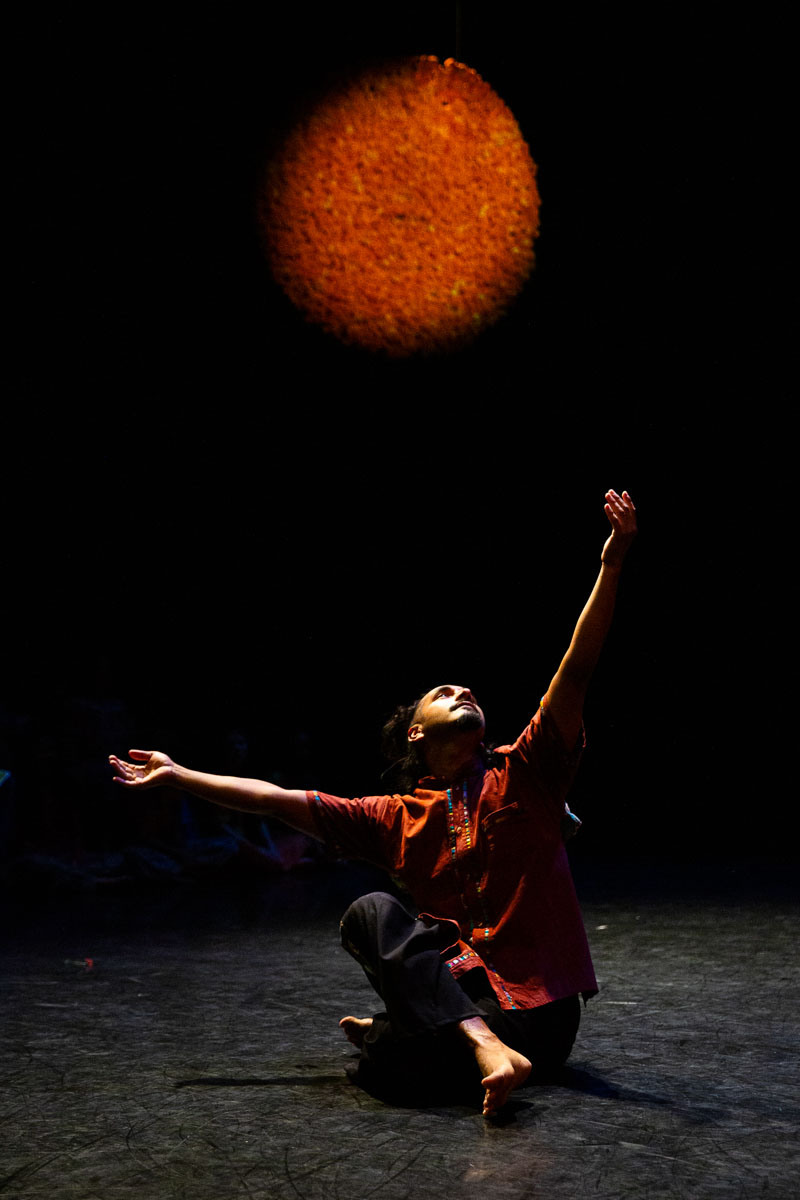
Return Eternal: Echoes from the Cosmogram is a simpler work, created and performed only by Medina and the 10 dancers in his Collective. Yet, it is still steeped in indigenous symbology.
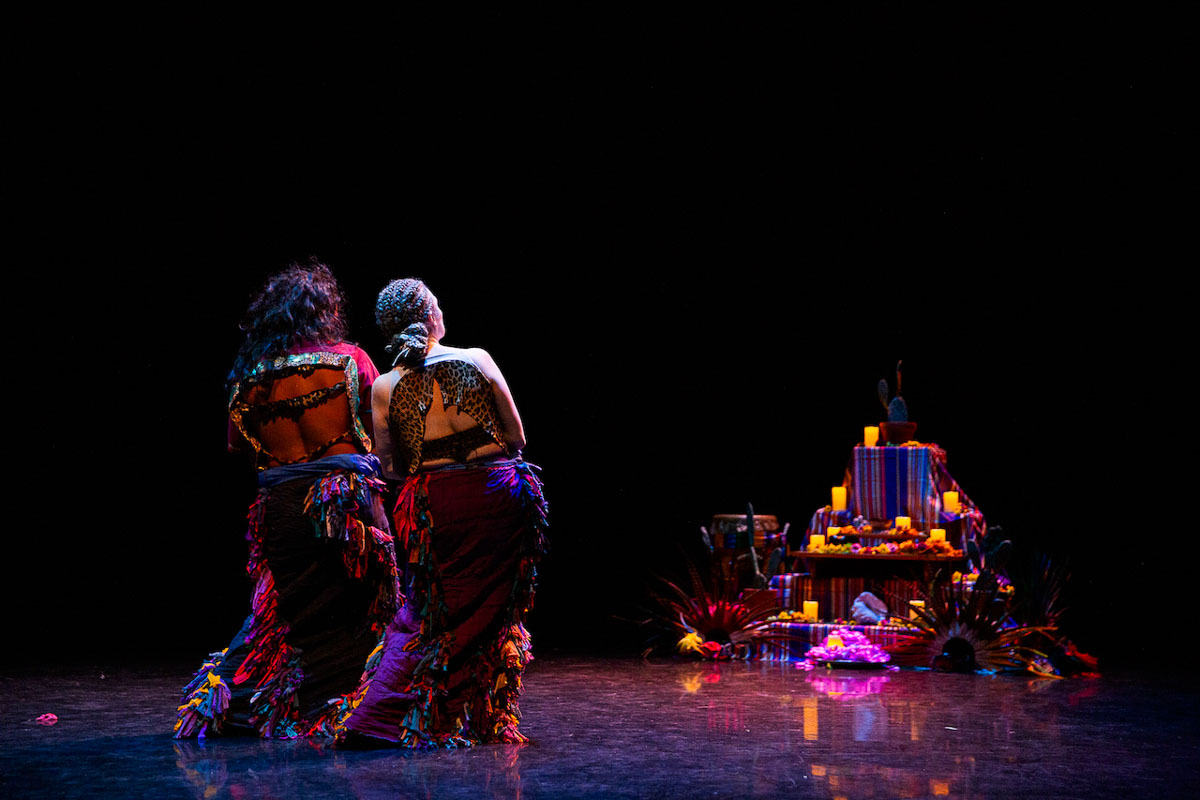
Instead of the sun, there’s moon imagery: a large orb covered in white flowers hovers over the space. The Marley flooring is white instead of the usual black. As in the first work, an altar has a coveted place onstage, representing spirituality and community. The score includes pre-Hispanic music layered with flute, guitar and nature sounds, along with contemporary cumbia tracks.
I talked to Medina about Return Eternal one Friday over Zoom while he was at home looking after his children. His 9-month-old daughter Metzli, whose name means moon in Nahuatl, an indigenous language still spoken in parts of Mexico, was sitting on his lap. Medina turned and pointed to a conch shell on the bookshelf behind them. Medina said he blows the conch shell every morning and evening to salute the six directions — an indigenous spiritual ritual his ancestors likely practiced. Medina incorporates the ritual in Return Eternal.
“Ever since the first concert I have become more comfortable with how I practice these rituals,” he said. “My spiritual and physical connection to them is stronger now, and I feel more artistically prepared to create and to lead the dancers.”
He also includes the occasional, unexpected phrase of break dancing, one of the four foundational elements of hip-hop culture, and the first dance form Medina learned as a teenager.
“I think it will always live in my body,” he said of hip-hop. He teaches it too. He is a hip-hop and contemporary dance educator at Emory University’s Dance and Movement Studies Program.
His Collective is grounded, he said, in themes of resilience, connection and restoration. He believes that even during this time of extreme divisiveness, people share more commonalities than differences.
To underscore this idea, the four women in the closing quartet of Return Eternal are each of a different race.
“I hope it’s not too ‘We Are the World,’” he said. “… In Mexica cosmology, there are regents representing each major direction. I thought of each dancer as a different regent. They each have a strong spirituality whether they know it or not. I can see it when they dance.”
The evening will open with a short film, Nosihtsin: A Farewell Dance, which Medina created with Atlanta Opera Film Studio Director and videographer Felipe Barral for the 2025 Michael C. Carlos Museum exhibit Call and Response. Film was another artistic medium through which Medina could explore his roots.
He hopes the indigenous symbology in Return Eternal will touch audiences and give them a deeper appreciation of Mexico’s history and the complexity of Latino and Mexican identity.
“I think this work will be really impactful,” he said, “[Especially] for audiences who know the culture only from mainstream media.”
Return Eternal: Echoes from the Cosmogram. September 24 through September 26. Schwartz Center for Performing Arts. 1700 N Decatur Road, Atlanta. Tickets are $18 for general admission, $10 for students and can be purchased online here.
::

Gillian Anne Renault is ArtsATL’s former senior editor for music and dance and has been an ArtsATL contributor since 2012. She has covered dance for the Los Angeles Daily News, Herald Examiner and Ballet News and on radio stations such as KCRW, the NPR affiliate in Santa Monica, California. Many years ago, she was awarded an NEA fellowship to attend American Dance Festival’s Dance Criticism program.
STAY UP TO DATE ON ALL THINGS ArtsATL
Subscribe to our free weekly e-newsletter.

PLEASE SUPPORT ARTSATL
Your Gift Sustains the Coverage You Count On!
Related Posts