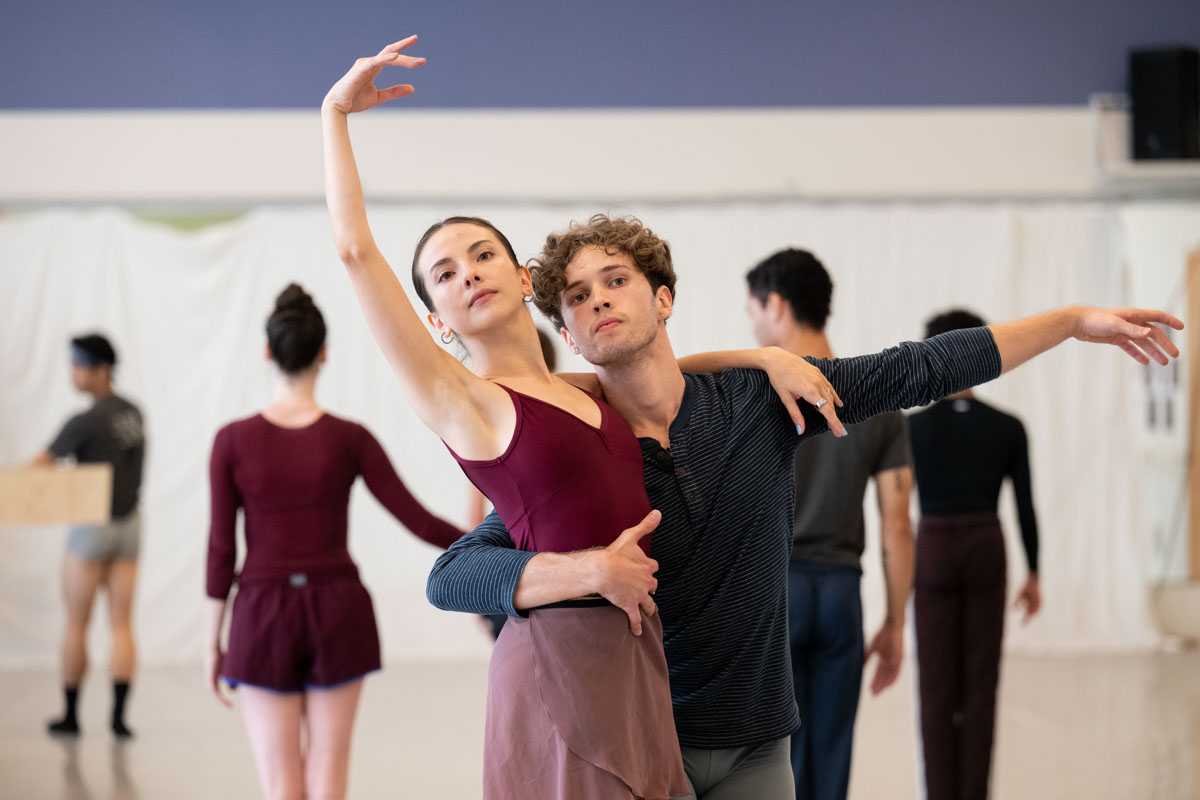
Atlanta Ballet launches 98th season with trio of works exploring ‘Passion and Pride’
The season-opening program includes the world premiere of Melissa Hough’s Plagued Houses, a contemporary-meets-classical reimagining of Romeo and Juliet.
The U.S. semiquincentennial festivities, or, less tongue-twisty, the nation’s 250th anniversary, have been somewhat overshadowed by social and political division. Yet arts presenters and artistic directors seem to be seizing this distinct moment to reflect on one of the nation’s noblest ideals: the beauty of pluralism.
Atlanta Ballet, nearing its own centennial, joins the conversation by opening its 98th season with Passion and Pride: a mixed-repertory program featuring dances made in America by choreographers from Australia, Russia and the good ol’ US of A.
The evening brings the return of Remi Wörtmeyer’s colorful Significant Others and George Balanchine’s energetically campy Stars and Stripes, alongside the world premiere of Melissa Hough’s Plagued Houses, a balletic reimagining of Shakespeare’s Romeo and Juliet.
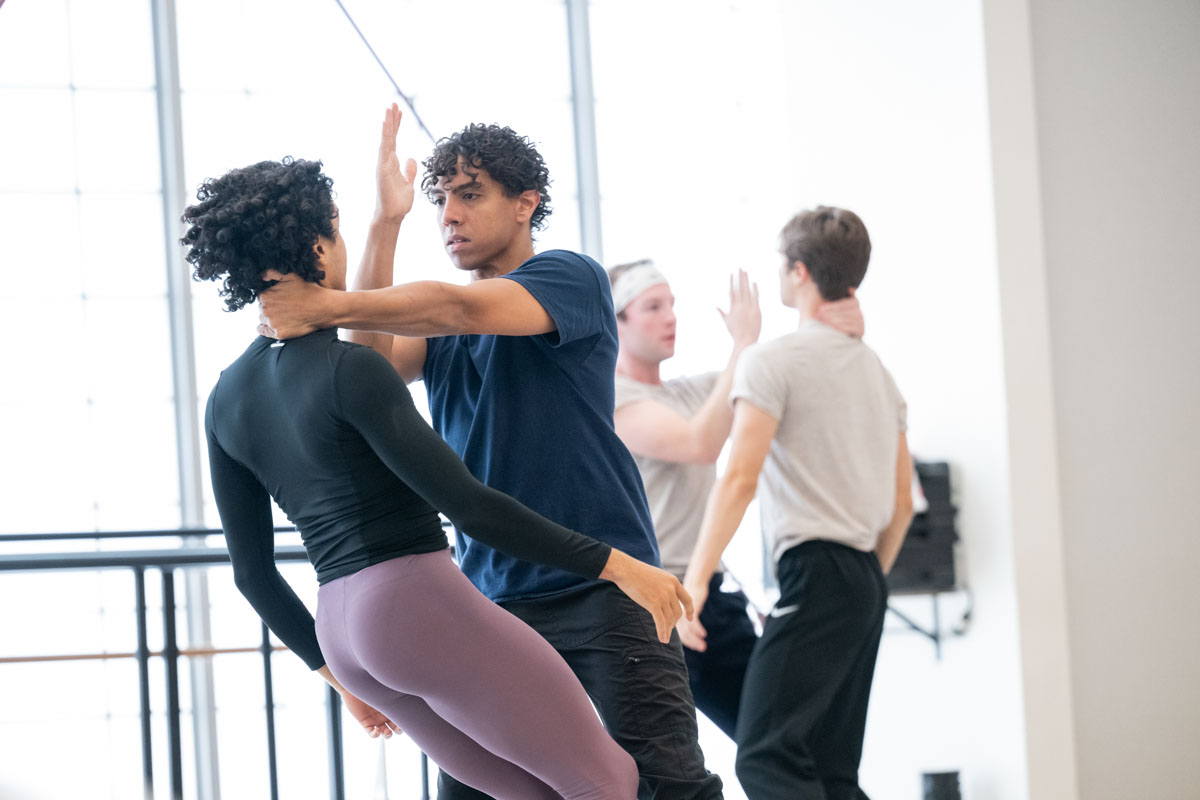
“Our goal is to serve Atlanta by delivering works that are current in the U.S. and the world,” said Atlanta Ballet Artistic Director Gennadi Nedvigin, who is now launching his 11th season with the company. “We want Atlanta to be proud of their ballet company.”
Perhaps most anticipated of the three works is Hough’s world premiere. Hough is an accomplished dancer whose credits include principal and soloist positions at the Boston Ballet, Houston Ballet and the Norwegian National Ballet. Enlisting her was a process that began before the woeful days of 2020, a reminder that timing and patience shape much of a ballet company’s programming.
Though her initial idea was reconsidered, Hough and Nedvigin ultimately agreed that an adaptation of the Shakespeare staple, Romeo and Juliet, would be an apt choice for Atlanta Ballet. Hough had been keeping the idea warm for several years through the pandemic, waiting to materialize the vision.
Her capacity to dance both contemporary and classical roles drew her to fuse the styles. Plagued Houses is her latest journey into this blended aesthetic, which is supported by Tchaikovsky’s Romeo and Juliet (Fantasy Overture), a 29-minute orchestral work that distills the traditional two-and-a-half-hour play into a single, 20-minute musical movement. Hence, the challenges are substantial.
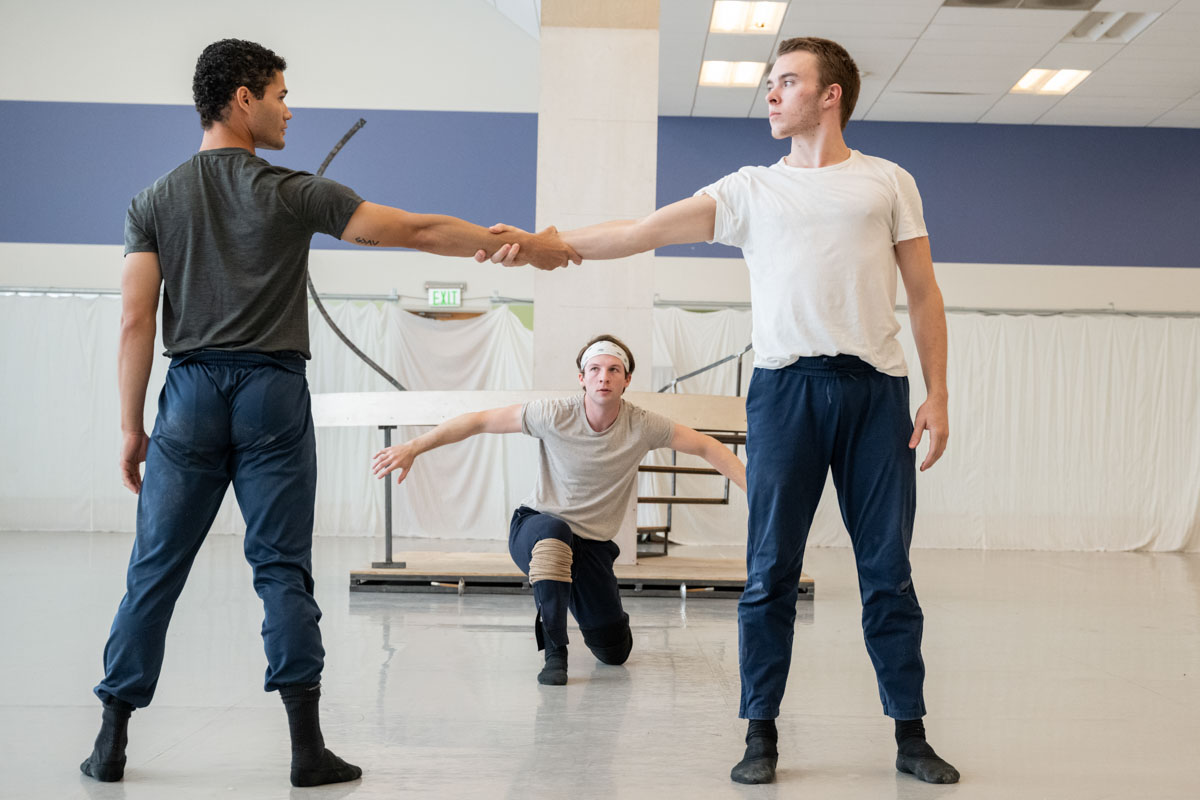
Foremost on Hough’s mind is bringing honesty into classical dance. This means several things: using a dancer’s innate capabilities, providing audiences with accessible work (in deference to building support for dance) and, where Plagued Houses is concerned, entertaining the notion of fate and inevitability — the pull of the universe.
“I want to blast the audience with as many details as possible, doing only what is necessary and making sure everyone says what they need to say,” Hough said.
Hough’s layered theatrical moments were witnessed at a rehearsal of Plagued Houses. Juliet, danced by Larissa Capitanio Dal’Santo, dashed to center stage and vaulted herself atop Emma Kingsbury’s dramatic, abstract balcony, caught in the grasp of a menacing tree branch. Here, she convincingly struggled to break away from her nurse, then collapsed to the floor, only to be snatched from the balcony by Lord Capulet and, in a blur, whirled to the ground. Hough chose to form details as swift interventions, while her movement vocabulary nods to larger, sweeping orchestral ideas. The material in this instance felt like a blending of writhing uncertainty and elegant hopefulness.
“I feel that I’m not just executing movements but actually contributing to how the character is being shaped and told through dance,” said Dal’Santo.
For this creation process, the task of managing a fresh crop of dancers, building trust, navigating music that is difficult to count, relying on individuals to contribute their own ideas and synthesizing a cohesive vision to a large creative team is no small feat. Much like the familiar undercurrent of Romeo and Juliet, there can and will be disruptions to any process which, for Hough, while perhaps momentarily stressful, provides new avenues of investigation. The pull of the universe.
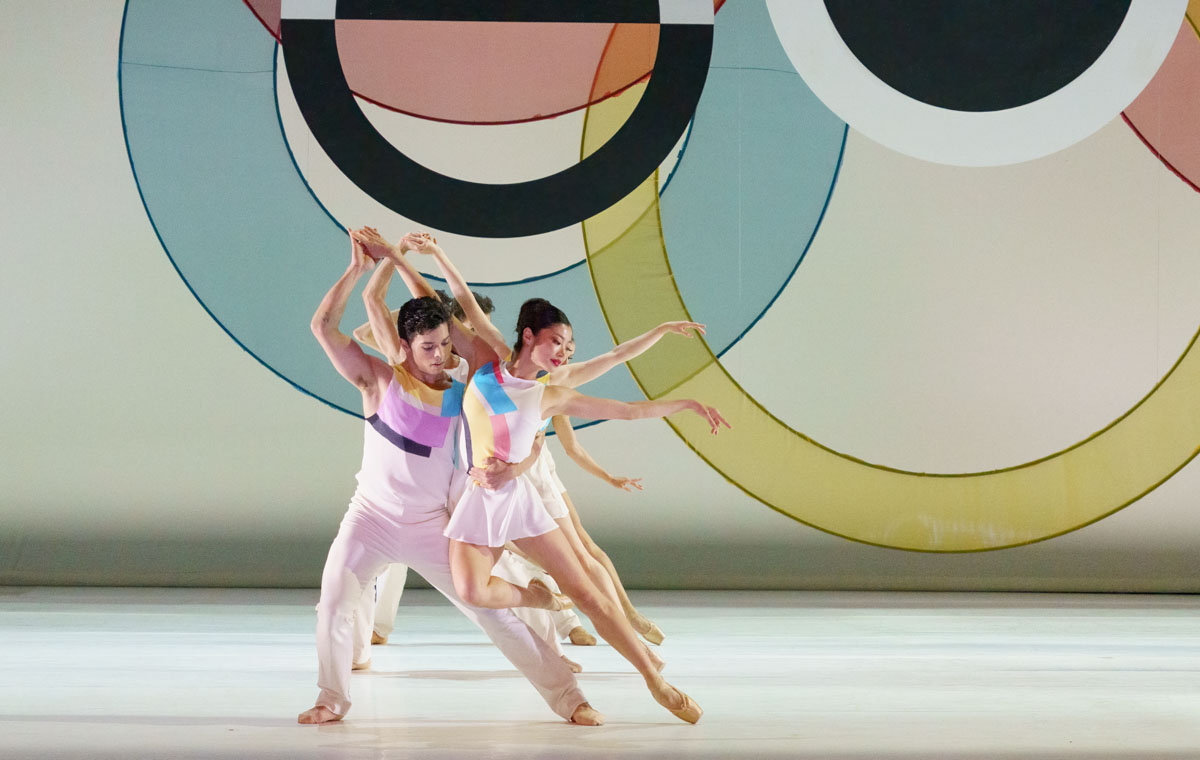
Passion and Pride opens with Wörtmeyer’s Significant Others, a dance that yearns to shed light on female creatives too often eclipsed by the famous men in their families. Appropriately, the work is set to music by Fanny Mendelssohn-Hensel (German composer Felix Mendelssohn’s sister) and framed by floating panels inspired by the paintings of Sonia Delaunay (the wife of French painter Robert Delaunay). Significant Others becomes a not-so-still life but a chimera, and perhaps therein lies the work’s wistful point. Whether the weight of its message ultimately finds its way into the dance or not is debatable, but audiences can be assured of the visual complexity of the scenic design and equally vibrant costuming.
For those who love marching bands, hum along to John Philip Sousa refrains or often quote Jennifer Coolidge — “You look like the Fourth of July” — Passion and Pride’s closing piece, Stars and Stripes, which premiered in 1958, will no doubt be a hit.
The piece is comprised of five distinct, in Balanchine’s words, “campaigns,” delivered by four groupings of dancers he called “regiments.” This language is a doorway into the moderately satirical, yet wholly admiration-filled view Balanchine took toward his adopted country, which granted him citizenship in 1940. The work was, in some ways, a love letter or perhaps a chummy shoulder jab to the United States. Cut through the camp, however, and you will find Balanchine’s signature neoclassical approach and unwavering dedication to technical prowess.

Through a different lens, Stars and Stripes now looks back at a time in our history when expressing national pride to a stranger was more likely a unifying gesture than fightin’ words. Nearly 70 years later, maybe the work’s greatest surprise is not how much America it contains but how much America has changed around it.
Passion and Pride runs from September 18 through September 20 at the Cobb Energy Performing Arts Centre. The show duration is two hours and 11 minutes, inclusive of two intermissions. Tickets start at $52 and may be purchased HERE.
::

Born in Tehran, Iran, George Staib is of Armenian descent. He has lived in the United States since the age of 10, when his family was forced to flee the Iranian Revolution. He is the artistic director of staibdance and a professor of practice in the dance program at Emory University.
STAY UP TO DATE ON ALL THINGS ArtsATL
Subscribe to our free weekly e-newsletter.

PLEASE SUPPORT ARTSATL
Your Gift Sustains the Coverage You Count On!
Related Posts