Smooth jazz documentary examines the future of a genre in flux
Mickey Duzyj’s Smooth World, screening in Atlanta next weekend, finds a thriving, socially driven underground music scene and performers navigating the music industry’s shifting tides.
::
The Zoom meeting goes live and right away Smooth World Director Mickey Duzyj and Emory University Associate Professor of Film and Media Gregory Zinman are quick to assume that my long hair, heavy metal T-shirt and bookshelf festooned with skulls and horror novels indicate that I’m not much of a smooth jazz fan. Much to their surprise, I’ve got a Rippingtons T-shirt mounted on my wall, just out of camera shot, signed by all the band members. It’s a convenient misconception that actually underscores the point of the documentary: that enduring and widespread popularity of smooth jazz defies assumptions about its fan base being made up entirely of white suburbanite squares.
The film, which officially premieres in October at the Newport Beach Film Festival, is getting a sneak preview showing here in Atlanta on September 10 at Emory University’s White Hall, along with a conversation between Zinman and Duzyj. Then, the doc will screen at Off The Wall @ 725 Ponce, where Zinman serves as curator, on September 11 and September 19.
“I love Mickey’s work,” says Zinman. “I’m lucky enough to have this really amazing platform in Atlanta to showcase work that you’re not necessarily going to see in other places.”
The road to Smooth World was long and circuitous, as Duzyj wasn’t originally a fan of the genre. The filmmaker grew up in the suburbs of Detroit with smooth jazz as a common background staple on his parents’ radio dial. He didn’t develop an interest in the genre himself until much later, long after he’d thought the genre itself had waned out of existence altogether. A chance encounter brought its ongoing popularity to his attention.
“In 2014, I was in a wedding in Reading, Pennsylvania, which, unbeknownst to us guests, had ended up being a dry reception,” he recalls. Yearning for a good stiff drink, he and his fellow attendees migrated to the nearby Crowne Plaza hotel. “It just so happened to be hosting something called the Berks Jazz Fest, which is one of the big smooth jazz festivals going in the country.”
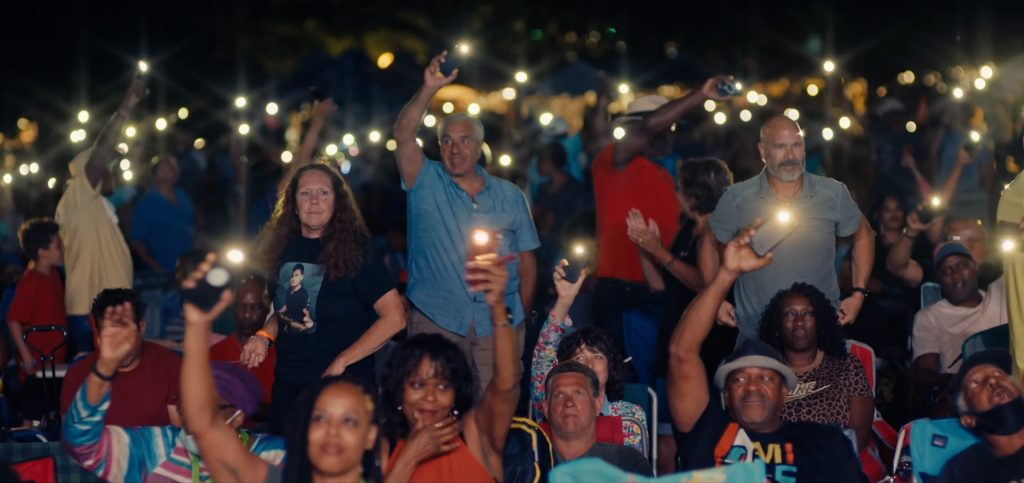
As such, Duzyj and company found themselves surrounded by hundreds of dapper older adults lost in a sea of smooth sounds from the various ballrooms. “We had no idea that smooth jazz was still a thing,” continues Duzyj. As he chatted with the attendees, he was surprised to learn that following the demise of smooth jazz radio, the format endured as an underground music scene for senior citizens.

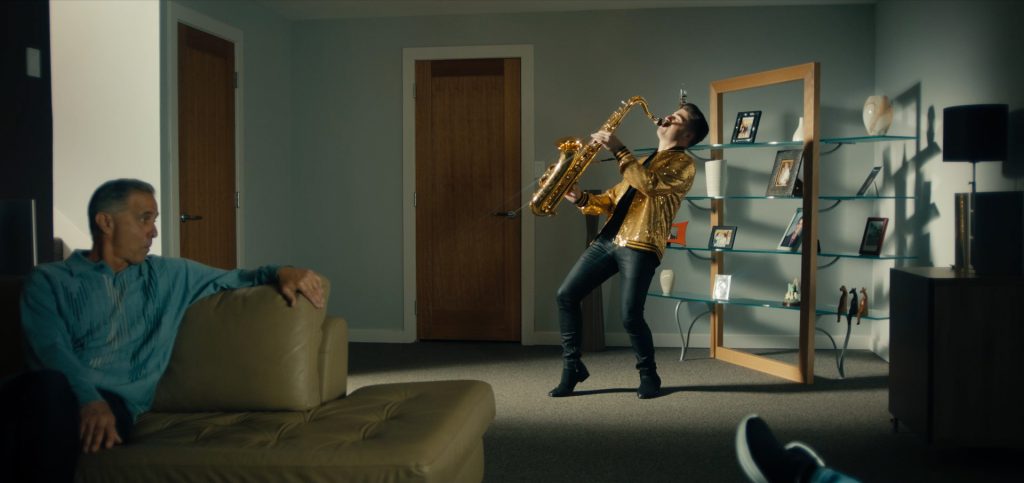
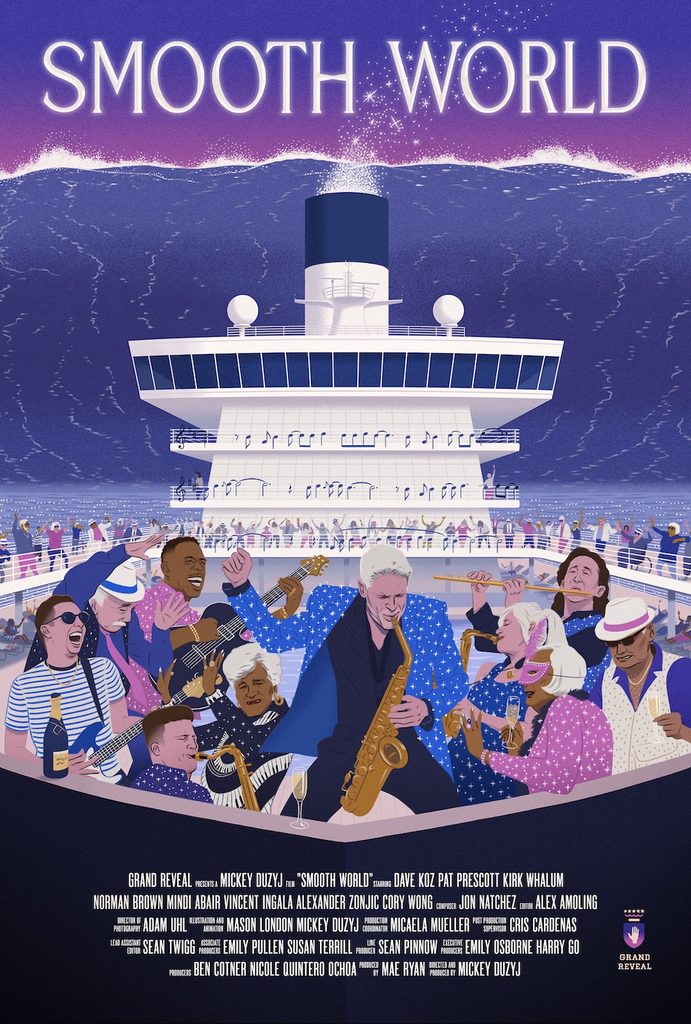
Leading luminaries of the genre abound in Smooth World, including Kirk Whalum, Norman Brown and Cory Wong, but it’s saxophonist Dave Koz who serves as the film’s narrative focal point. “His career blossomed in the wake of Kenny G’s success,” explains Duzyj. “He was the successor to Kenny G, but he’s become a massive promoter; he has multiple tours and, critically, he hosts a yearly international cruise where thousands of devoted smooth jazz fans congregate to enjoy this music that for them is their fountain of youth.”
With that emphasis on the senior audience, the film examines whether the genre has the potential to survive among future generations. To that end, the film tracks Koz’s collaboration with guitarist Wong and the burgeoning interest in the genre among younger listeners.
As we chatted, I was reminded of Director Penny Lane’s recent documentary Listening to Kenny G, which documents the life and career of the titular smooth jazz progenitor. That film deals heavily with G’s contentious relationship with the so-called “jazz police,” the aficionados who disdain music within the genre made for people who aren’t its learned devotees. With this emphasis on the future of smooth jazz, I had to wonder how Smooth World addressed the divide between mainstream fandom and the inner circle of “serious” jazz listeners.
For Duzyj, the answer was to de-center that endless debate about artistic merit and focus on the social aspect of the scene. “There remains this devoted following of fans who, for them, this is joy; this is community; this is identity. I felt like if I created that as the focal point for this film and whether that community could find a way to endure in what is a challenging world, that would be an interesting way to make a music doc.”
Duzyj is quick to clarify, however, that the film’s close following of Dave Koz does delve into his “career-long identity crisis.” In addition to navigating the shifting tides of the music industry, Koz was wrestling with being a closeted gay man despite being widely regarded as a sex symbol.
As Duzyj goes on to explain, that internal turmoil was compounded by low regard from the same jazz police that had long antagonized Kenny G. “So not only was he dismissed, but anyone who liked his music was dismissed,” says Duzyj. “So he had a real issue with the word ‘smooth.’”
That personal journey culminates in Koz’s collaboration with Wong, who, by contrast, fully embraces being called “smooth,” a hopeful beacon that future genre practitioners won’t carry the same implicit shame for the association.
Zinman points out that the film is noteworthy for its sincere treatment of the source material and its fandom. “I think it would be really easy to have an ironic distance or a kind of winking approach,” he observes. “But one thing that comes through when you see the film and you listen to the music is that there’s an undeniable impact on both the artists and the people who hear the music. You see how important this music is to people’s healing emotionally — to their spirituality; to their sense of self and their identity.”
That identity, as Duzyj found, was not limited to the genre’s stereotype of white-bread suburbanites. “Something I was surprised by was that not only were most of the fans Black, but that this is largely a city phenomenon.”
In the end, the remarkable universality of smooth jazz becomes the thesis argument of Smooth World. As Duzyj astutely notes, it’s music that has the ability to work in an atmosphere of sensual lovemaking and also in the background of a dentist’s office. The film concludes by interviewing young listeners who have been “radicalized” into the fandom, suggesting that whether this controversial art form continues in bedrooms or waiting rooms, it will be on a hopeful note.
Where and when
See Smooth World at Emory University’s White Hall at 4 p.m. on September 10, along with a discussion of the film by Gergory Zinman and filmmaker Mickey Duzyj. The film will also screen at 8 p.m. on September 11 and September 19 at Off the Wall @ 725 Ponce.

Jordan Owen began writing about music professionally at the age of 16 in Oxford, Mississippi. A 2006 graduate of the Berklee College of Music, he is a professional guitarist, bandleader and composer. He is currently the lead guitarist for the jazz group Other Strangers, the power metal band Axis of Empires and the melodic death/thrash metal band Century Spawn.
STAY UP TO DATE ON ALL THINGS ArtsATL
Subscribe to our free weekly e-newsletter.

PLEASE SUPPORT ARTSATL
Your Gift Sustains the Coverage You Count On!
Related Posts