
Why Ives? A look at the Atlanta Youth Wind Symphony’s Charles Ives Festival
Director Scott A. Stewart explains why the groundbreaking American composer is particularly relevant to young musicians today.
::
Two weeks ago, I was commencing work with a student ensemble, and I needed the drummer to loosen up. Kids tend to play their instruments with the overly rigid formality of early 20th-century stenographers, even when the piece (in this case, hard-driving rock) calls for passion over precision.
“Come on,” I bellowed over the din. “Hit that snare like it owes you money!” Such is the battle of the youth music director who guides their pupils out of the dull morass of recital prep and into the regal pantheons of professional concert halls.
For Scott A. Stewart, director of the Atlanta Youth Wind Symphony, a critical stepping stone in that process is the music of Charles Ives. Now in its third year, the AYWS’ Charles Ives Festival (May 9, May 10 and May 13) explores the music of a composer who was as integral to the development of American classical music as he was to the innovations and experimentation of the avant-garde music world. While all youth orchestras learn the classics, Ives is a forum for teaching the deeper essence of artistry.
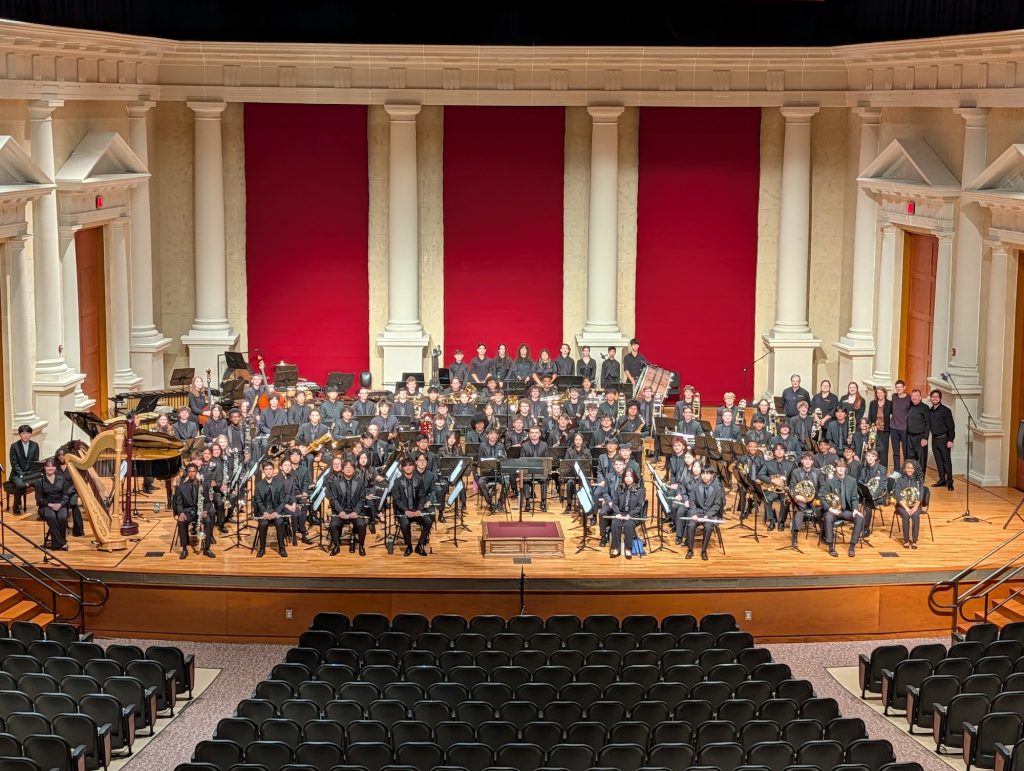
“When I introduce the music [of Ives] to them, I often don’t start with a read through,” Stewart explains. Instead, he leans into the pre-existing melodic works that together make up an Ives composition. In a given instance, the saxophone might take “Battle Hymn of the Republic” while the trumpets tackle “Taps” and the flutes play “My Old Kentucky Home.”
It’s all part of the unique world of the Charles Ives composition — one that relies as much on the mind’s ability to perceive order out of chaos as it does traditional principles of composition. “Charles Ives would be the king of sampling today,” says Stewart, comparing the composer’s compositional concept to the work of modern DJs.
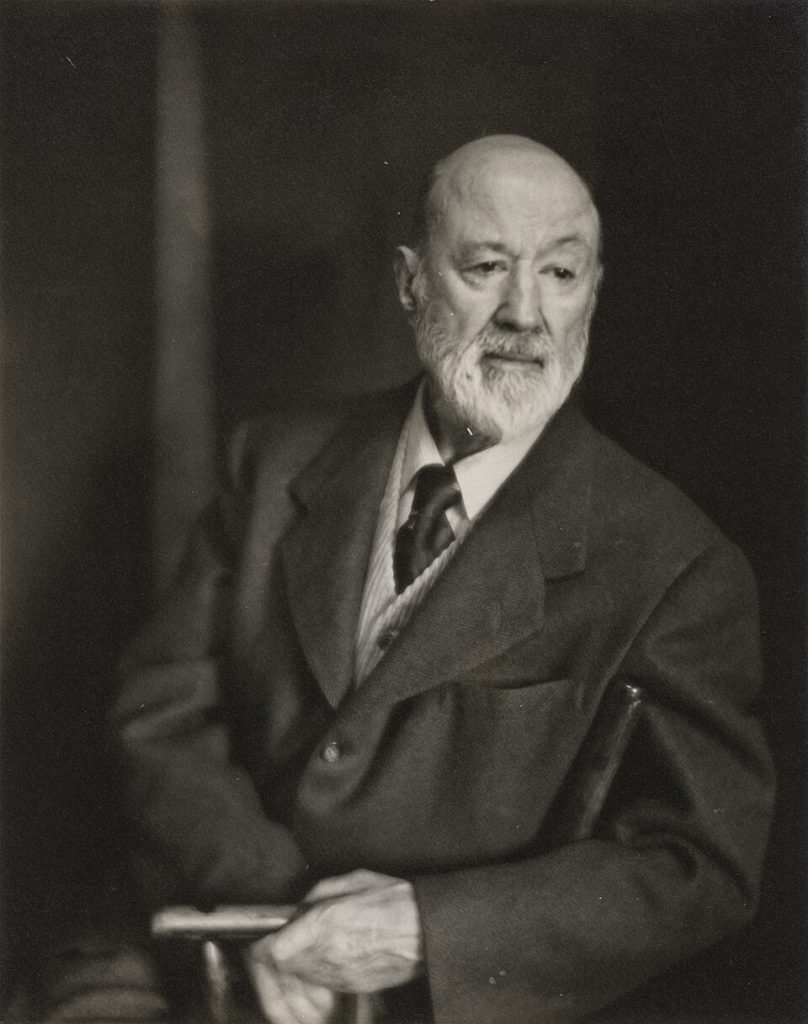
Although born in 1874 and most active as a composer around the beginning of the 20th century, Ives’ unique approach could be read as a forerunner of musique concrète or modern experimental styles such as vaporwave and the reductionist pop song interpretations from early Residents albums. The compositions often exist as much as sonic collages as traditional music.
“Some of his stuff is as simple and as tuneful as can be,” says Stewart. “The word you said — collage — that’s a specific technique that he used to kind of mush together parts. If he wasn’t the king of sampling, he might be a neuroscientist.”
Stewart expands on the point by citing two Ives pieces from the upcoming Festival, “Decoration Day” and “Country Band March.” Both reflect a popular theme in Ives’ writing: his love of music about musicians making music. As such, both works reflect the composer’s memories of live music from his youth and the performance suffering in the hands of less capable local musicians. For Ives, the resulting warbles and imperfections were as much a part of the composition as the written music.
“It’s not supposed to be disparaging,” says Stewart. “It’s a very fond memory of a country band concert.” Nevertheless, Ives’ fascination with those disarming elements became central to his interpretation of music. An early form of music instruction from Ives’ father, a working musician, was to have young Charles sing a melody while its chord progression was played in an entirely different key.
Ives would expand on the unusual experience with such experiments as singing across a pond to test how distance and space affected performance conditions and having two marching bands play competing pieces of music while walking into one another to examine the resulting chaos. “He was probably 50 to 60 years ahead of his time,” adds Stewart.
For all his innovative notions — which, as Stewart notes, rank alongside Aaron Copland and Leonard Bernstein in moving American classical away from the European tradition — Ives never pursued music full time, opting instead to open his own insurance company in New York City. He pioneered what is now thought of as estate insurance. His works were written mostly for fun and largely went unplayed during his lifetime. He gained some recognition toward the end of his life when contemporary composers began to sing his praises, and he was awarded the 1947 Pulitzer Prize for his third symphony.

Stewart sees Ives’ disinterest in pursuing music as a profession as something that makes him doubly relevant to players in a youth orchestra. “We have about a third or so of our students that go into college music majors,” says Stewart. “But the rest go into everything else. I think that’s a great model, too. You can be a high-level performing musician but also get your paycheck some other way.”
Where & when
The Festival begins with an Atlanta Youth Wind Symphony performance May 9 at 7 p.m. at Oak Grove Methodist Church and continues May 10 at the Woodruff Arts Center/Symphony Hall with a presentation by leading Charles Ives scholar Peter Burkholder at 2:30 p.m. in the Carr Room on the third floor of the Woodruff Arts Center. A performance by the Atlanta Symphony Youth Orchestra in the adjoining Symphony Hall is scheduled for 4 p.m., and both orchestras will perform May 13 at 7:30 p.m. at Symphony Hall.
::

Jordan Owen began writing about music professionally at the age of 16 in Oxford, Mississippi. A 2006 graduate of the Berklee College of Music, he is a professional guitarist, bandleader and composer. He is currently the lead guitarist for the jazz group Other Strangers, the power metal band Axis of Empires and the melodic death/thrash metal band Century Spawn.
STAY UP TO DATE ON ALL THINGS ArtsATL
Subscribe to our free weekly e-newsletter.


.jpg)