
UNIMA-USA, based at Center for Puppetry, continues to inspire puppeteers after 60 years
Celebrating its 60th anniversary in 2026, the U.S. chapter of Union Internationale de la Marionette, housed at the Center for Puppetry Arts, is an organization devoted to linking puppeteers nationally and internationally. The international organization of UNIMA has been around since 1929, formed in Prague, Czechoslovakia, to promote community among artists who find their way to that very special and specialized art form.
UNIMA-USA General Secretary Vincent Anthony, founder of the Center for Puppetry Arts and its former executive director, said in an email that his role in the organization led to its base locally. He has been in the leadership role with UNIMA-USA since 1991.
“It is based where the general secretary is based and where there is financial and professional support,” he wrote. “The biggest impact is the association with the Center for Puppetry Arts, and UNIMA-USA is known globally.”
He is proudest of the reach the organization has had among American puppeteers.

“I appreciate the number of people we have reached with our programming and publications,” he wrote.
More than 90 countries are represented in the international association, and UNIMA-USA’s membership hails from 291 towns and cities across 45 states. It publishes Puppetry International magazine every two years; an online academic journal called Puppetry International Research; a web-based database of members called The Puppetry Yellow Pages; and educational programs. It also hosts an annual scholarship to study puppetry abroad.
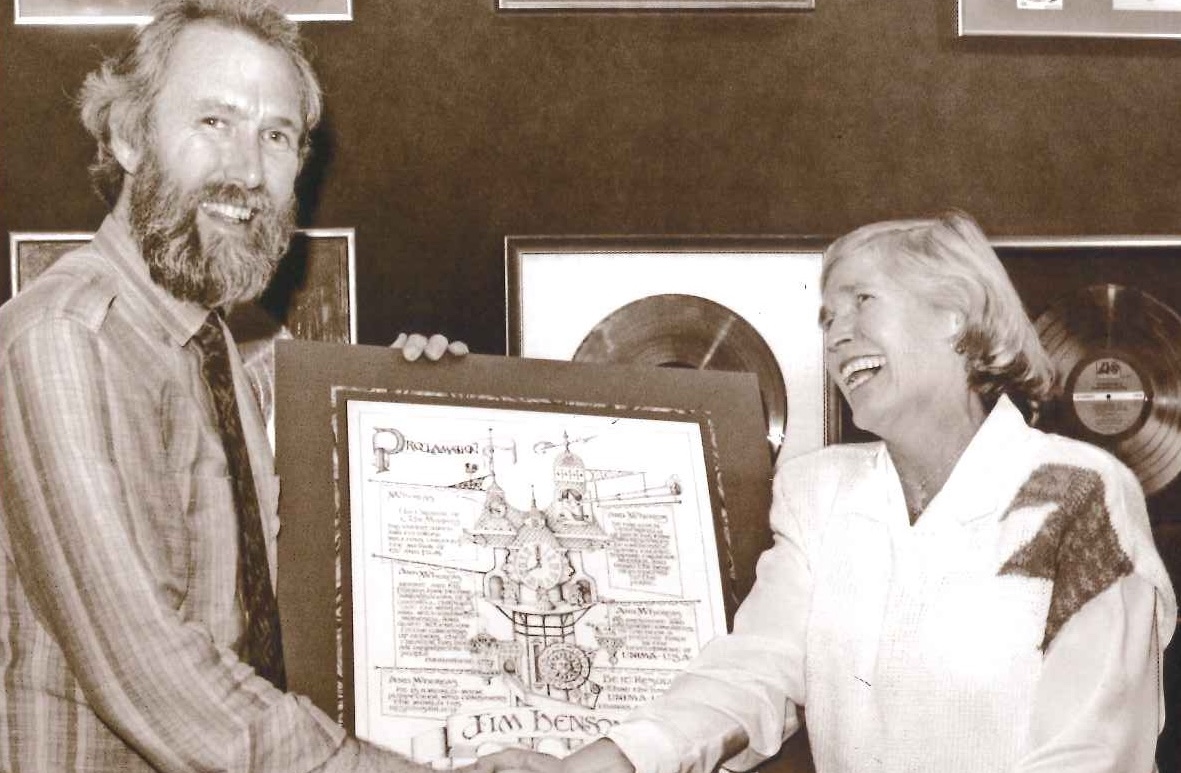
One of the people who encouraged the United States to join UNIMA in 1966 was Muppets creator Jim Henson, who also cut the ribbon during the opening of the Center in 1978. Henson discovered UNIMA while attending an international puppetry conference.
Kristin Haverty, director of membership services for UNIMA-USA, said the international community of puppeteers blew Henson’s mind. In 1980, UNIMA held an international puppetry conference in Washington, D.C., and young American puppeteers who attended — including veteran Center puppeteer Jon Ludwig — credit the event with inspiring their lifelong love of the art form.

“UNIMA was a major influence on the development of U.S. puppetry, for sure,” Haverty said in an interview. “That festival and the Henson festivals after it showed that international presence, which was so important to aspiring puppeteers. It gave them new ideas of how to create work.”
Puppetry is one of the few art forms that emerged in most every human culture. It transcends language and creates a storytelling tool that can be embraced by audiences of all ages.
“It makes me really sad to see now how the U.S. has cut back and made it difficult for international artists to come in with all of the visa restrictions,” Haverty said. “Contrary to the idea that it’s detrimental to bring in artists because they take away work, I personally feel like the international community enriches the work that is here. It brings in new perspectives and still sparks new ideas.”
Haverty said no big events are planned to celebrate UNIMA-USA’s anniversary, but the group’s regular schedule of events will highlight the milestone.
UNIMA membership is available to puppeteers at all levels of experience, and Haverty said the biggest benefit for members is access to the larger community of fellow puppeteers and mentors.
“Our official mission is to promote peace and mutual understanding through puppetry,” she said. “Connecting people through a mutual love of a very niche art form helps do that.”
Haverty’s own puppetry has been enriched by her connection to UNIMA, which has allowed her to travel the world and study with other artists. And she understands how puppeteers working together throughout the world can promote understanding among cultures.

“There’s such a worldwide tradition of puppetry, and it’s so visual, physical and tactile,” she said. “It inherently expresses the culture and stories of each place where it’s been born. Theater can do that overall, but there’s something unique about puppetry. You can do a lot of things nonverbally with puppetry. Some of the strongest moments happen when there’s no talking. It’s visual, and there’s movement, expression, breath and soul. Like music, it speaks beyond the language barrier.”
Louise Lapointe, the president of UNIMA Internationale, is based in Canada. In a Zoom interview, she said she was pleased to learn about UNIMA-USA’s anniversary and is also encouraged about the 2029 celebration planned in Prague for the 100th anniversary of the worldwide group.
Lapointe visited the Center for Puppetry Arts before the pandemic and found it to be wonderful. She has tremendous enthusiasm for puppetry and a theory for why it endures.
“Our art form is kind,” she said. “It travels very easily. It’s the oldest theatrical form in the world. Shadow theater was in the cavern walls before everything else. Because of the longevity of this art form — and because it feels contemporary, too — it never ceases to amaze us how people keep re-inventing it with materials, images, projections and now with new technologies. This universal and international medium is a very good way to promote comprehension between people and civilizations.”
::

Benjamin Carr is an ArtsATL editor-at-large who has contributed to the publication since 2019 and is a member of the American Theatre Critics Association, the Dramatists Guild, the Atlanta Press Club and the Horror Writers Association. His writing has been featured in podcasts for iHeartMedia, onstage as part of the Samuel French Off-Off Broadway Short Play Festival and online in The Guardian. His debut novel, Impacted, was published by The Story Plant.
STAY UP TO DATE ON ALL THINGS ArtsATL
Subscribe to our free weekly e-newsletter.

