Today in Street Art: Murals in liminal spaces
Liminal spaces are places that you might pass through, not places where you intend to remain. Taken from the Latin word limen — meaning threshold — liminal spaces can indicate periods of time; for example, the days between graduation and a first job. In the physical world, liminal spaces fall into two major categories:
- Transitional through-points on a journey to a final destination, such as an elevator, parking lot, highway interchange, waiting room or sky bridge between two downtown buildings.
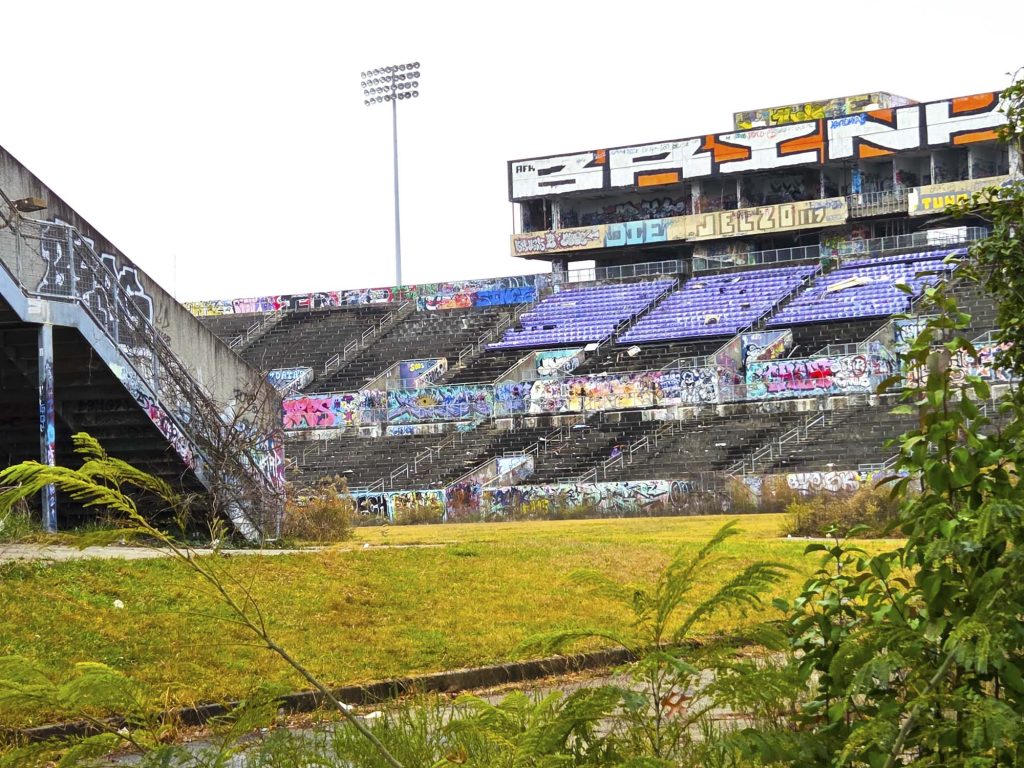
- Creepy or surreal locations that just don’t feel right, like a once familiar interior removed from its normal context, such as a dimly-lit deserted shopping mall after business hours where you can hear the echoes of your footsteps. Or perhaps an abandoned place like the eerily silent, graffiti-tagged college football stadium that now hosts roosting birds instead of fans.
Let’s take a look at how artwork can transform these liminal spaces into destinations in their own right — or, at a minimum, make our passage through a value-added experience:
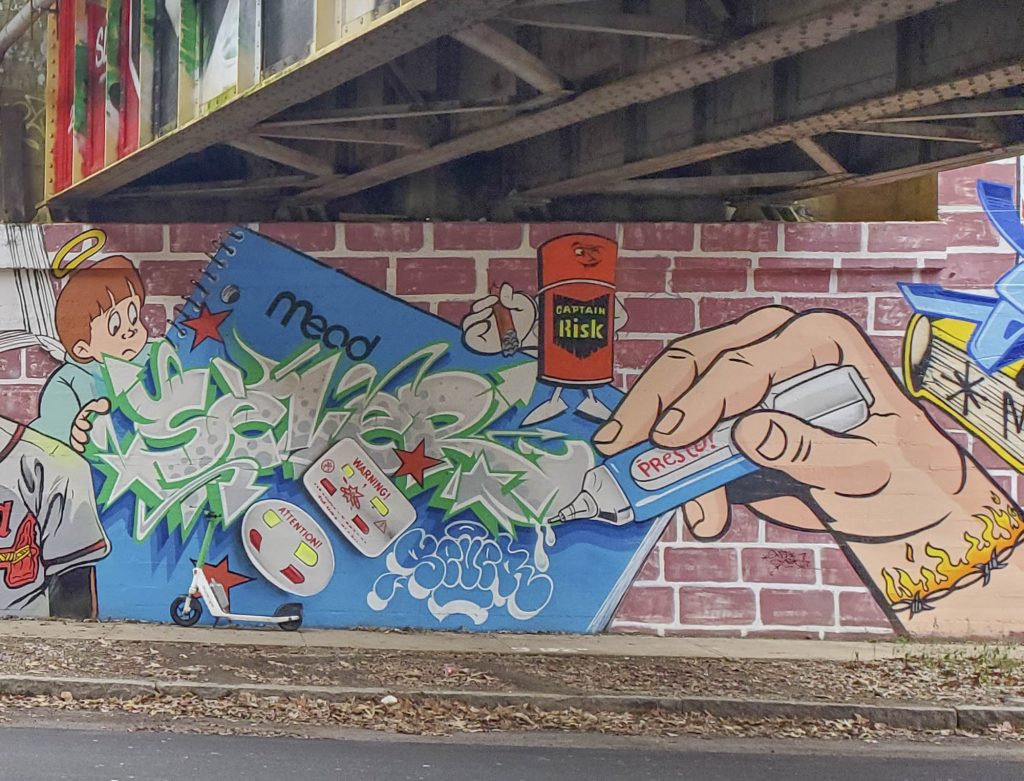
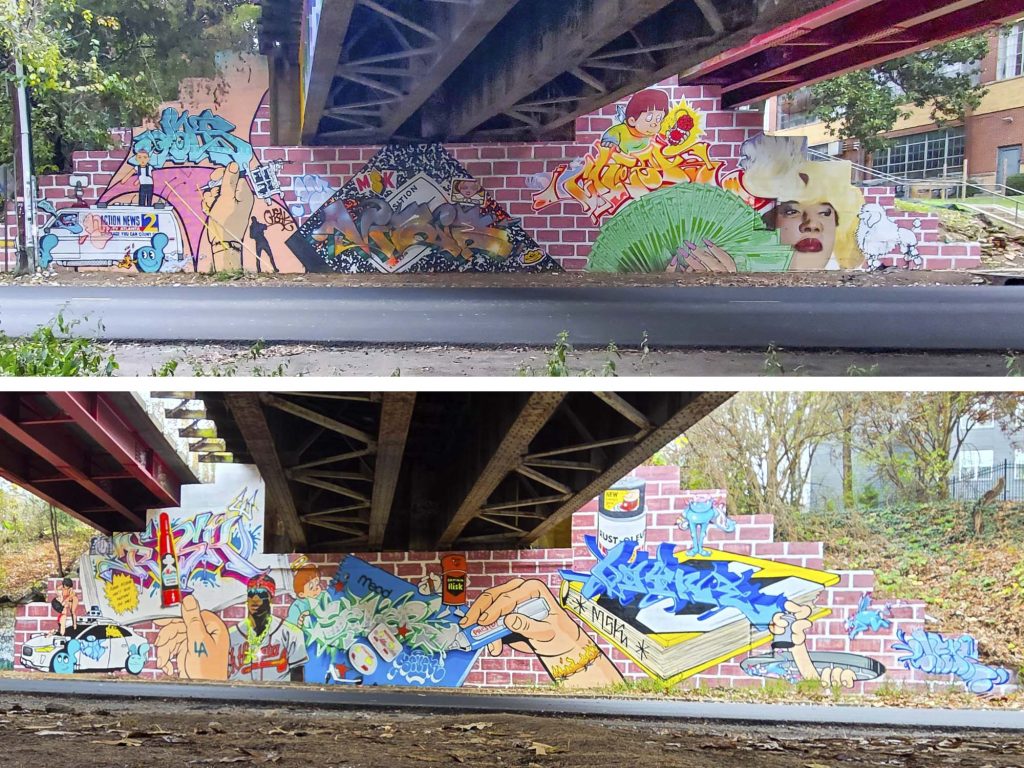
In November of 2025, the Atlanta Style Writers Association experimented with graffiti themed murals for the Atlanta Style Writers Jam. They brought in a group of top-notch graffiti writers from the Mad Society Kings Crew — RISK, SEVER, VAYNE, DAKS, VIZIE and CHEAK — to transform the retaining walls of the Beltline bridge over Ralph McGill Boulevard into an Atlanta-centric, low-brow, still-life, pop-art mural. It’s a giant gallery of graffiti pieces, memes, visual jokes and Easter eggs located right on a Beltline access point.
We typically travel straight through the liminal space of a roadway underpass without giving it a second thought. Here, you could easily find yourself delaying your Beltline stroll for a quarter hour spent uncovering hidden artistic gems. A couple of examples include the use of a street art sub-sub genre called brandalism in which “RISK” — the writer’s handle –replaces “RAID” on a 1970’s vintage can of insect spray. Because the colors and font are similar, the casual observer might not even notice. The Channel 2 Action News van is featured with the tagline “Coverage you can count on.” In this instance, the word “coverage” has the double meaning of news and paint coverage.
A mural can change a liminal roadway underpass into a destination. But, ironically, if the artwork falls into severe disrepair, it can revert the archway back into a liminal space of the creepy variety. That was the case in the Arizona Avenue MARTA underpass where Living Walls executed the I Am Mine / We Are Ours project, replacing a badly deteriorated mural.
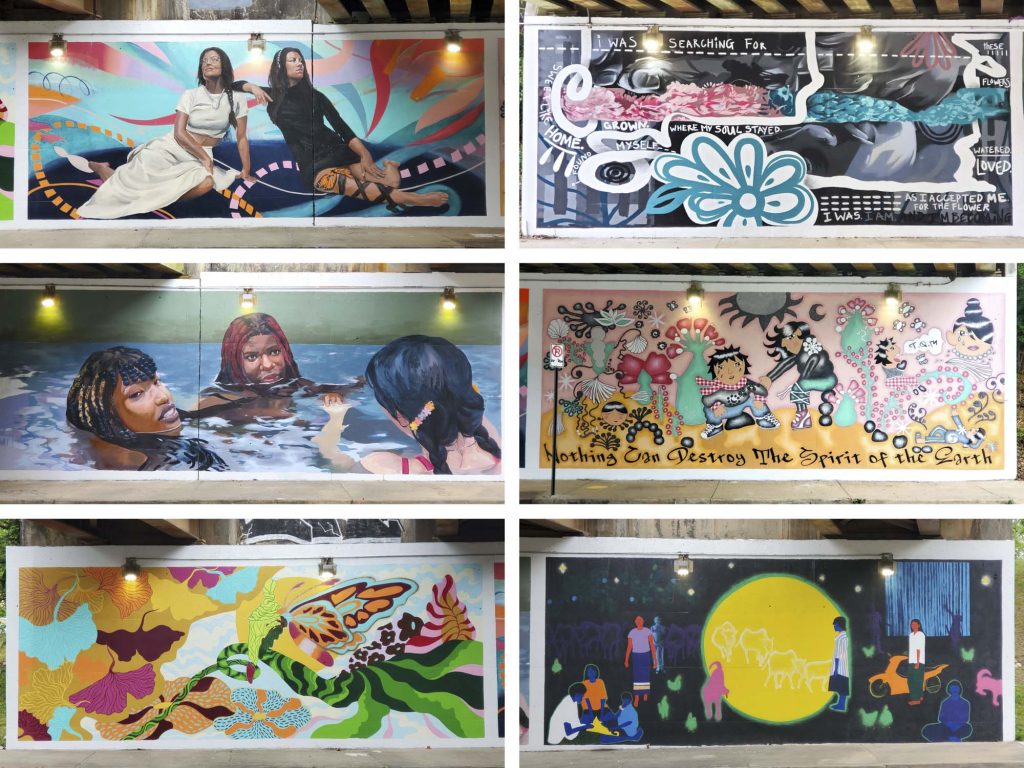
Curated by Drew Borders, the project features large-scale works by six women and nonbinary artists of diverse cultural backgrounds and experience levels: Danae Antoine, Vanna Black, Angela Bortone, Charity Hamidullah, Karaoke Rodriguez and Visakha Jane Phillips. “Since the project’s completion, we’ve already seen tangible shifts,” said Tatiana Bell, Living Walls’ creative director. “More pedestrian traffic, increased recognition of the area and meaningful exposure for the artists involved. Ideally, the underpass becomes not just a place you pass through but a space that offers pause, connection and affirmation.” Living Walls is upgrading the infrastructure of the underpass to include gutters diverting rain runoff from the mural to keep it vibrant for a long time to come.
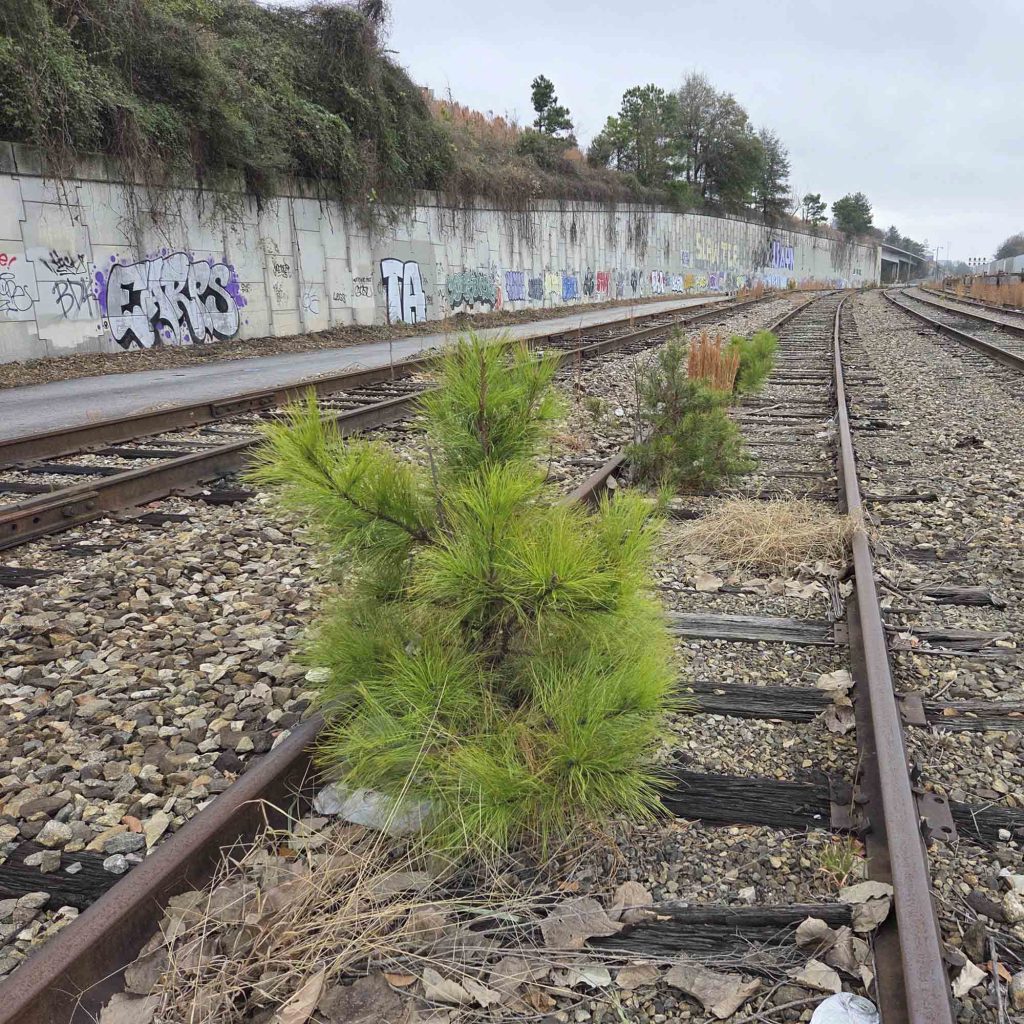
Have you ever walked along an abandoned railroad line? Rusted steel ribbons vanishing at the horizons in both directions set a mysterious tone. Sapling trees growing between the ties are an unsettling reminder that you are in a no-man’s land. At the end of Mayson Street, a stretch of the Beltline runs through a formerly forsaken railroad tunnel. Traces of the tracks leading to the entrance still remain. You might think that the posh Atlanta Beltline is nothing like the 22 miles of derelict railroad it replaced, but there is one constant: graffiti.

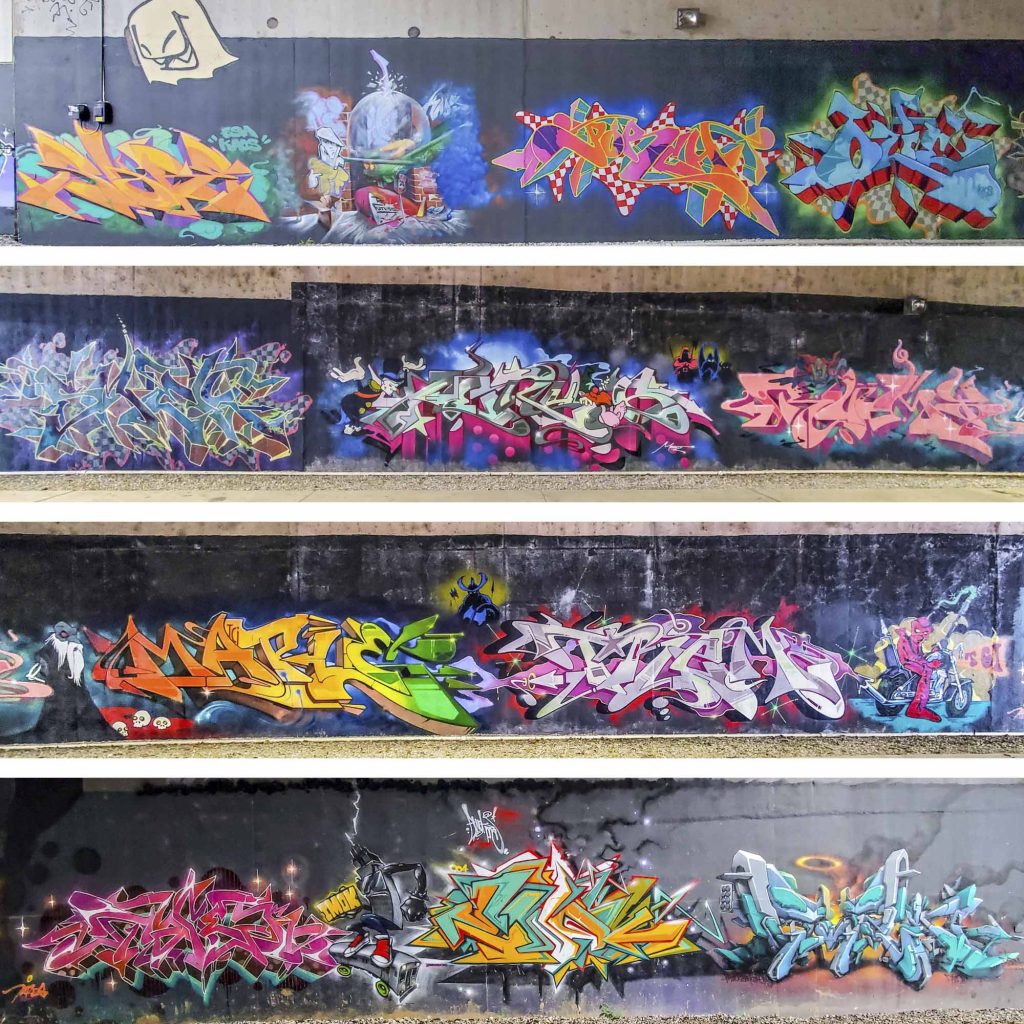
Crude and furtively applied unauthorized graffiti tags contributed to the tunnel’s liminal nature in the pre-Beltline days. Now, more graffiti themed murals from the 2025 Atlanta Style Writers Jam have made this passageway the artistic crown jewel of the Northeast Beltline Trail. Look for Mr. Totem’s Burn Unit crew at the north end. Special guests such as JEKS, SPARKY Z, VAYNE, CES, CUBA, JURNE, STAE2 and WANE grace the center. The KAOS INC crew rounds out the south end.
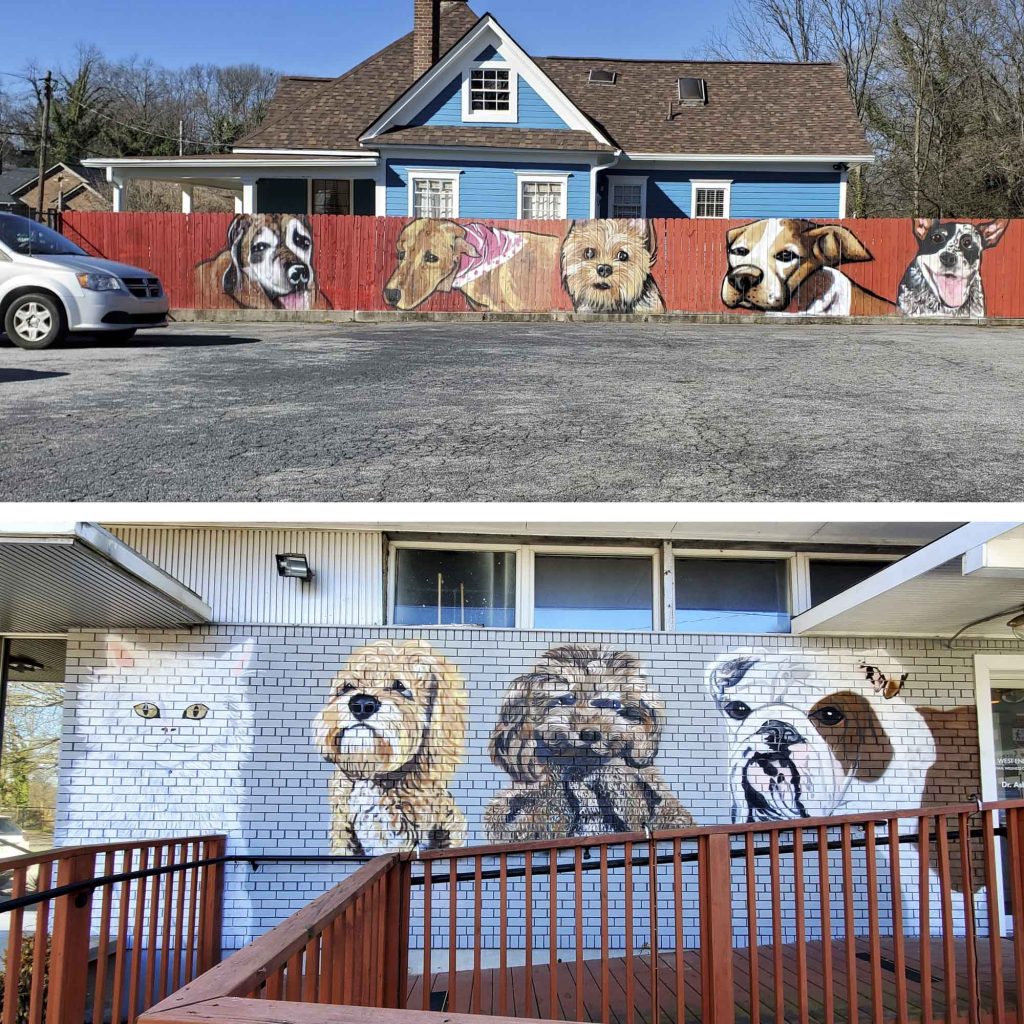
As you try to wrangle a yelping, squirming animal who just wants to go home, a hurried walk through the back parking lot of an animal hospital would not typically be very meaningful. At the West End Animal Wellness Center, artist Ashley Dopson changed this normally transitory stretch of blacktop into a space evoking both joy and contemplation. Working with pictures supplied by the veterinarian, Dopson painted lively images of current canine and feline patients on the gray back wall of the building. Next, she turned the red fence on the opposite side of the lot into a pet portrait memorial wall that will put a lump into the throat of anyone who has ever seen their furry best friend close their eyes for the final time. When was the last time you felt that way in a parking lot? Dopson keeps a photo of a husky owner posing with his dog in front of her mural as a cherished reminder of the project.
In the past, the entire MARTA transit system could have been viewed as one giant sprawling liminal space. Katherine Dirga, MARTA’S director of art in Transit, is changing that. “Art and culture humanize a busy or overwhelming environment, bring[ing] a sense of safety with it,” said Dirga. “For MARTA, art also becomes a way for us to honor the communities we serve. When stations reflect local stories, values and creative voices, they signal that riders are not just passing through anonymous space. They belong there.”
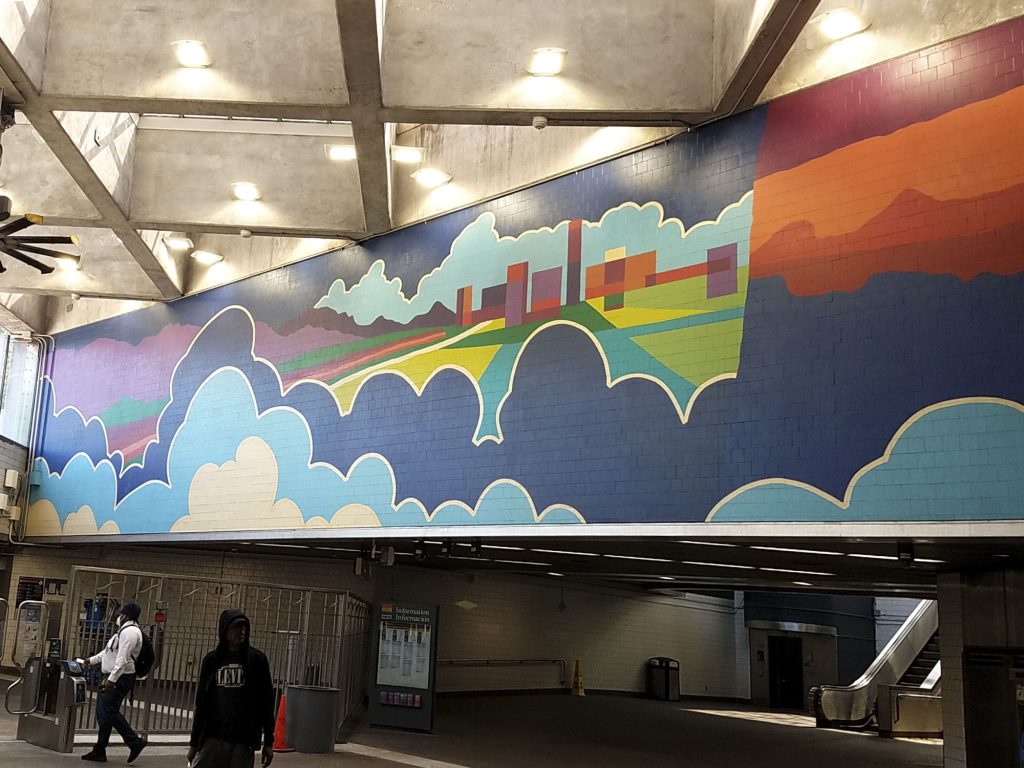
At the North Avenue MARTA Station, a large experiential mural by Gordon Anderson turns the normally mind-numbing task of descending into the liminal space of a train station on its head. “I wanted the commuters to experience the distorted sensations of a pilot flying into the North Avenue Station,” explained Anderson. Gliding down the escalator while concentrating on the mural depicting an aerial landscape actually does create the illusion of flying — it’s enough to make you look up from your phone. In a twist of irony, the feeling of soaring continues as you descend even farther underground with more aerial landscape murals on the train platforms.

At the Edgewood-Candler Park MARTA station, a concrete elevator tower sits at the south end of the bridge connecting the trains to the parking garage. Milagros Collective, founded by Felici Asteinza and Joey Fillastre, applied a full building façade mural to the structure. The artwork, titled Conduit, transformed this previously nondescript liminal space within a liminal space into a jaw-dropping three-dimensional immersive experience with the qualities of an optical illusion.
Sugarloaf Parkway in Gwinnett County is a 10-lane behemoth passing under the 16-lane colossus of I-85. It’s an intersection traveled by you and 399,999 of your “closest friends” per day. It’s a place of connection. It’s a place of congestion. It’s a liminal space of massive proportions. The Sugarloaf Community Improvement District (CID) called upon Krista Jones a.k.a. JONESY to come up with a mural of equally massive proportions to transform this underpass into an immersive art experience. Together with assistants Joe Dreher, Muhammad Suber, Angela Bortone, Miles Davis, Aida Alarcón, and Alex Ferror, JONESY rose to the occasion with a 21,000-square-foot mural titled Synchronicity, the largest underpass mural in Georgia.

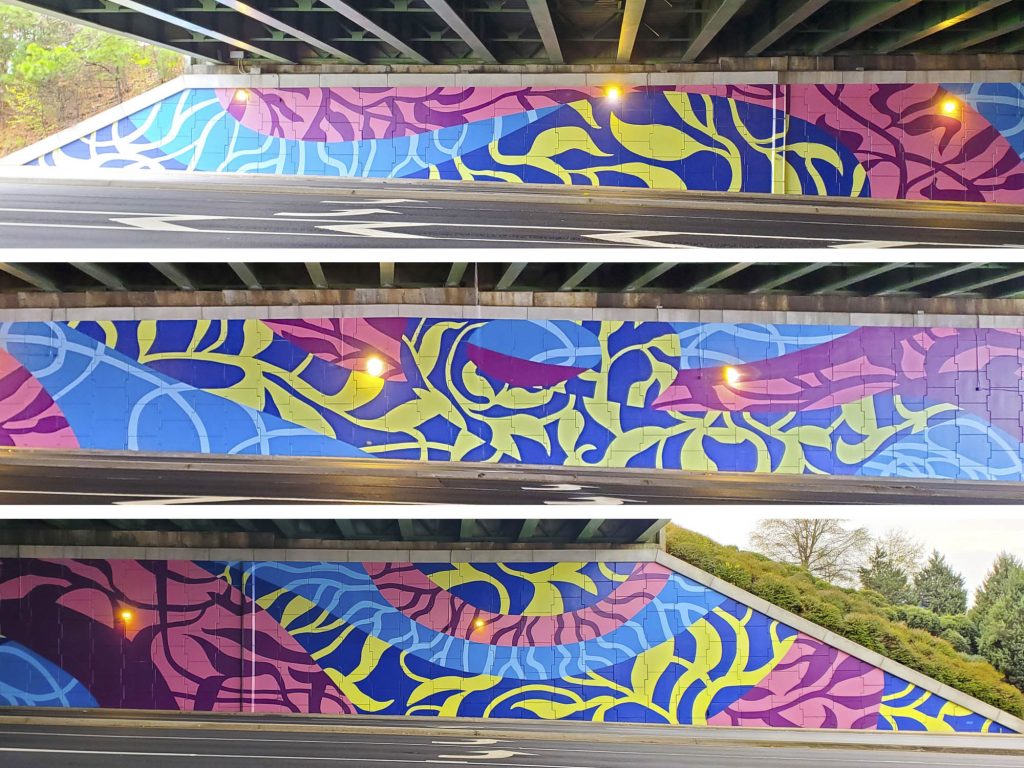
Using Gwinnett County’s tagline “Vibrantly Connected” as a starting point, JONESY drew upon images from her Formations series of murals using large scale repeating motifs, bright colors, and artifacts of the natural world to convert an impersonal concrete mega-box into a rolling art gallery. In a recent interview with the Gwinnett Forum, JONESY said: “Synchronicity speaks to the unseen connections that guide us. I wanted these walls to come alive with energy—transforming concrete into an experience that reminds people they’re part of something larger. I hope it offers moments of joy and belonging along the way.”
We often hear adages such as “life is a journey” and that one should “stop and smell the roses.” Our everyday lives are broken up into a series of little sub-journeys, and, if every liminal space truly became a destination, we would never get very far. However, when one finds art in liminal spaces, it offers an opportunity to pause to smell the proverbial roses as our journey continues.
::

Arthur Rudick created the Atlanta Street Art Map in 2017 after retiring from a successful career as an engineer with Eastman Kodak and the Coca-Cola Company. His first experience of art was seeing an Alexander Calder mobile as a child in the Pittsburgh airport. Rudick is ArtsATL’s street art expert and a regular contributor.
STAY UP TO DATE ON ALL THINGS ArtsATL
Subscribe to our free weekly e-newsletter.

PLEASE SUPPORT ARTSATL
Your Gift Sustains the Coverage You Count On!
Related Posts