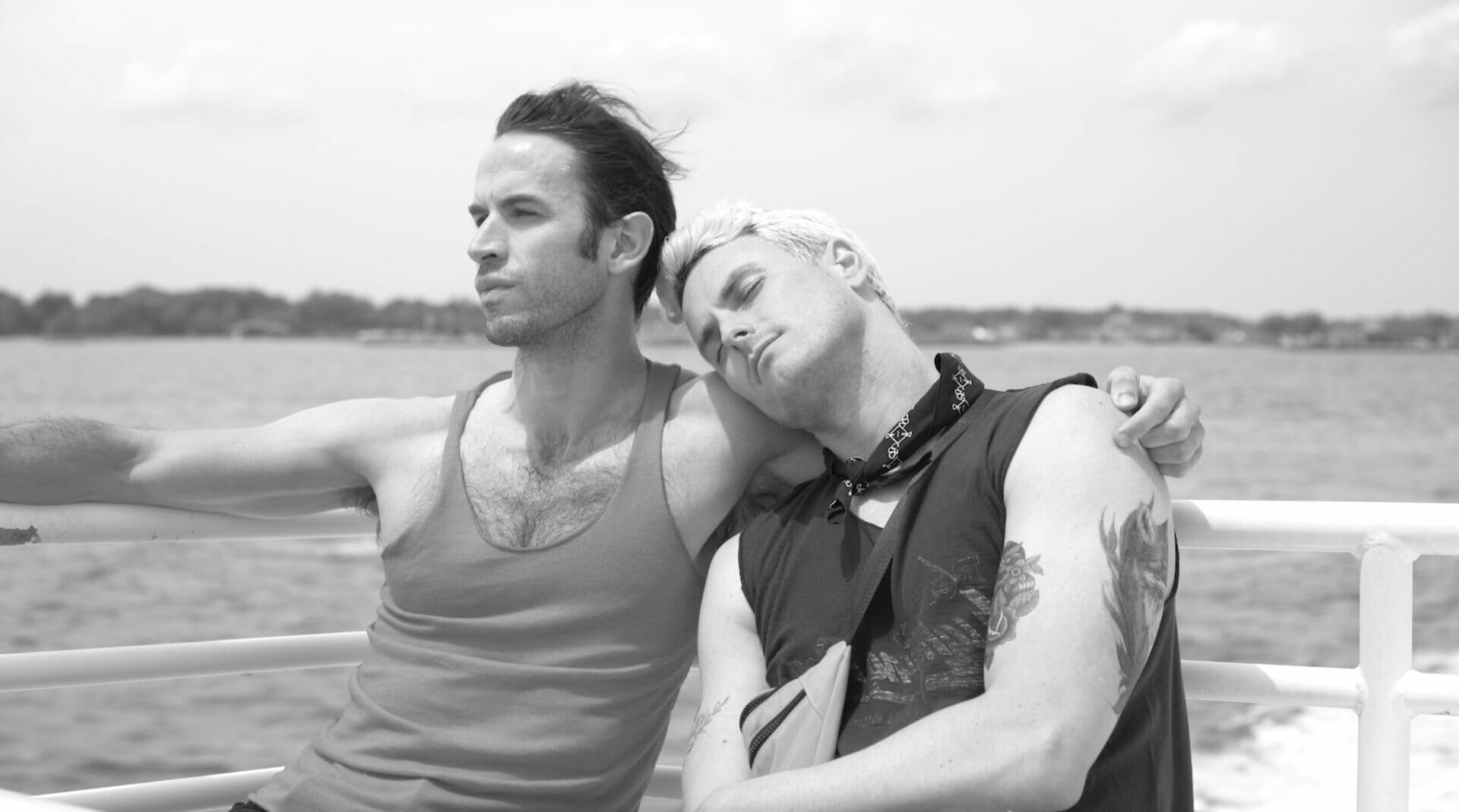
Out On Film Festival features horror, documentaries, romance and drama
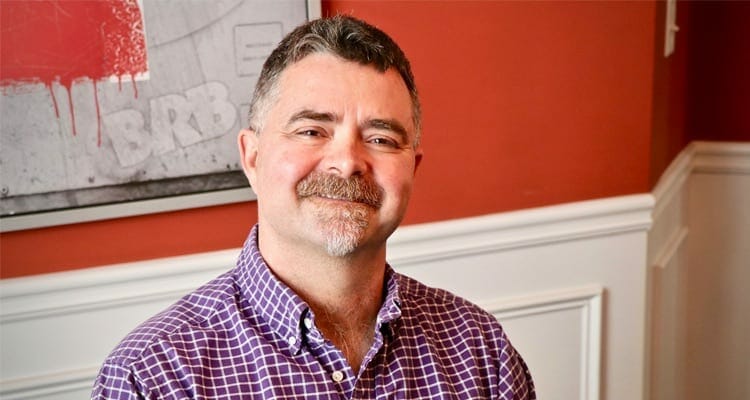
Last week, on the cusp of launching the 35th anniversary Out On Film, its executive director, Jim Farmer, was recovering from that now-familiar rite of passage: He was getting over Covid. (Don’t worry; he’s tested negative since then.)
When it opens on Thursday, Out On Film itself will have shrugged off most of the pandemic blues that challenged it and other film festivals since 2020. (Well, except for the basic, common sense precautions expected everywhere now.)
“A few years ago, we had to navigate a challenge none of us in the industry saw coming — Covid-19,” Farmer said. “Out On Film has been able to overcome those uncertain times, and this year, for our 35th anniversary, we offer a full in-theater slate as well as the majority of those films available virtually across the country. We’re very excited about the depth of our programming and events this year, including readings from our first screenplay competition and the presentation of our Icon Award to Emmy winner Colman Domingo.”
The 11-day event kicks off with the Atlanta premier of Bros, starring co-writer and professional comic nuisance Billy Eichner. After that, with screenings mainly at Landmark Midtown Art Cinema and Out Front, the LGBTQ+ event offers international, U.S.-made and homegrown works, including narrative features, documentaries and shorts.
The Icon Award was first presented in 2016 to Grease director Randal Kleiser. The coronavirus halted the practice of in-person presentations for a couple of years, but the event is back. This year’s honoree, Colman Domingo, is a star of Euphoria and the Georgia-shot, upcoming musical version of The Color Purple and the biopic Rustin. In that 2023 film, Domingo plays gay civil-rights icon Bayard Rustin, directed by George C. Wolfe (Ma Rainey’s Black Bottom) with a screenplay by Milk Oscar-winning writer Dustin Lance Black. Domingo will be feted at Out on Film on October 1.
Oh, and speaking of Grease, sort of, the festival will be presenting the much-maligned sequel, Grease 2 (not directed by Kleiser) on September 28. While the 1982 film was meant to launch Brit star Maxwell Caulfield as a hunk to fill John Travolta’s shiny loafers, it’s best known for a very young Michelle Pfeiffer dancing solo, straddling a tall ladder and wailing about her need for a guy with a big, hot chopper.
“That will be a fun, campy screening, and everybody will be singing ‘Cool Rider,’” Farmer said. “That has such a bad reputation, but I think it’s a fun movie — it’s not supposed to be taken seriously.”
As for the new films featured in Out On Film, “One of my favorites is Unidentified Objects, which is quirky in every way,” Farmer said. “I also really loved Sissy — I’m a huge horror fan. And I really liked Chrissy Judy, something I hadn’t seen before, and Lonesome. I thought there was a lot more to that one than skin.” (But reader, heads up: There is a lot of skin.)

A couple of other favorites? “I loved Two Eyes. That one is really ambitious, and they pulled it off,” Farmer said. “I can’t wait to see it on the big screen. And Black As U R (a documentary about gay and transgender Black people) is a film that really needed to be made right now.”
The festival will have three horror films this year, and three horror shorts. What Farmer’s not seeing so much of this year is the bounty of comedies — “those traditional, Friday-night romantic comedies” — familiar from previous film festivals. Maybe it’s due to the trying last couple of years of Covid and world politics. “I don’t know if filmmakers are evolving into other works,” he says, “but we have more dramas and documentaries this year.”
Films with Atlanta-based directors include the documentaries Mama Bears (Daresha Kyi), Art and Pep (Mercedes Kane), Intentionally Erased (Kimya Motley) and For the Love of Friends (Cara Consilvio), as well as the makers of the films in “Homegrown Shorts.”
Here are capsule reviews of some of the films ArtsATL saw in advance. For complete Out On Film information, visit the website.
::
All Man: The International Male Story. If straight teen boys of the late 20th century enjoyed passing around thumbed issues of Playboy after PE, their gay counterparts had a putative clothes catalogue to peruse . . . but not in the locker room. An accidental (well, not accidental at all) dream book for many a gay lad, International Male was a gleefully over-the-top collection of couture modeled by adonises whose hetero-studly glowers defied the fruitiness of what they wore. (With its “masculine guys in pretty not-masculine outfits,” International Male inspired the puffy shirt of Seinfeld.) Did this story, which looks at first glance like merely a campy fashion footnote, really deserve directors’ Bryan Darling and Jesse Finley Reed’s documentary-feature treatment? By the end, when we see how International Male prefigured the ad-world’s male sexualization taken up by Calvin Klein and Abercrombie & Fitch, the answer is yes.
::
Black As U R. Micheal Rice’s documentary takes us into New York streets, a raucous, loud barbershop and the rehearsal hall of a theater piece, where issues of gay and transgender identity are discussed — sometimes shouted about — in ways that are tender, fierce, political and everything between. The subjects it discusses are as vital as the filmmaking is sometimes raw. I can appreciate the movie without feeling I have a right or standing as a white gay cis male to discuss it with any authority, so I’ll leave it there. For others, the movie’s casual structure/shapelessness can feel either real or sloppy, depending on how it hits you.
::
Chrissy Judy. Judy (writer-director Todd Flaherty) and Chrissy (Wyatt Fenner) are their noms de drag, and they perform a heartfelt, sad revue together to dwindling audiences in New York clubs. Best friends, they’ve made that globally familiar vow: If they’re still single when they hit 40, they’ll marry each other. There’s a hitch, though. Chrissy is increasingly serious about a boyfriend in Philadelphia. When he follows his heart, the friendship hiccups, and Judy, left alone, pursues some of his own worst instincts until he starts to see the emptiness of his NSA tricking behaviors. As the star, Flaherty doesn’t shy away from letting his character ping-pong between excruciating and admirable. Filmed in striking black-and-white, the movie sneaks up on you, showing how “forever” friendships change over time as life gets in the way and the challenge and necessity of growing up and moving on.
::
El Houb. The only time we really see Karim (Fahd Larhzaoui) smile is when he wakes up and greets his saucy boyfriend Kofi (Emmanuel Ohene Boafo). That smile represents “the hope” that is a rough translation of the film’s Arabic title. (I’ve also seen it translated as “the love.”) Then, Karim’s doorbell rings, and everything changes. His smile doesn’t return, and Larhzaoui’s committed but grave performance can be a drag on Shariff Nasr’s heartfelt, inventive drama. Moroccan transplants now living in the liberal Netherlands, Karim’s family members have carried into their new country their Muslim traditions, and prejudices. His parents are adamant that he must marry and bear children, leading Karim to stage a one-man siege. He barricades himself in the utility closet of his parents’ apartment, controlling the water and electricity in an attempt to get them (and his homophobic kid brother) to face, if not accept, his sexuality.
A strong Slimane Dazi and Lubna Azabal (aged up for the role) play Karim’s parents. The film is peppered with creative flashbacks — to his childhood, his boozy first meeting with Kofi at a club, his attempts to date a female colleague and his relationship with a cousin whose own sexuality led him down a tragic path. El Houb understands that not every family story has an easy, happy ending … or even a clear ending at all.
::
Lonesome. Like an updated, outback Midnight Cowboy, this sexed-up flick gives us Josh Lavery as Casey, a muscled, Stetson-wearing, corn-fed guy who comes to big-city Sydney with the goal of seeing the ocean. A few jobs and some sex might come in handy, too — maybe both at the same time. Following a hookup app, he helps a couple in a loft become a three-way, then starts to hang out with one named Tib (Daniel Gabriel). Lots of shower sex and full frontal follow as the young men shoulder gig work by day and try to figure out if they’re just “bruhs” with benefits or something more.
While it’s easy to enjoy the copious nudity and hot-and-heavy scenes, the movie sometimes felt close to bordering on pure sex film strapped to a narrative skeleton. It doesn’t help that the raunchy, hot mood is consistently undercut by Lavery’s blank, denatured line readings; he seems less a randy farm kid than a spokesmodel who learned his lines phonetically — or maybe the star of a vintage gay porno. Still, the movie’s message about connection — whether it’s between Casey and Tib or Casey and a wealthy dom (Ian Roberts) who pays him for rough group sex and offers psychological analysis on the side — gives Lonesome a sweetness on top of multiple money scenes.
https://www.youtube.com/watch?v=J1yirOLleSw
::
Mama Bears. This one is both uplifting, like the trademark hugs of the loving moms at the film’s heart, and infurating, in the hateful rhetoric spewed from pulpits and making those hugs necessary. Atlanta-based Daresha Kyi’s documentary gives us the rousing stories of devoutly Christian mothers of LGBTQ children, ranging from grade-school age to adults. They’re forced to make a choice between the “God Hates Fags” fundamentalist nonsense they listen to on Sundays and what their hearts tell them about their offspring. What’s extra nice about Mama Bears is that while it excoriates the hate speech performed in the name of religion for political and financial purposes, the film never questions or minimizes the faith of its central subjects. If anything, it bolsters and dignifies their beliefs.
::
Nelly & Nadine. In the 1950s, Belgian-born soprano Nelly Mousset-Vos and Belgian-Chinese diplomat’s daughter Nadine Hwang lived quietly together in a Caracas apartment, as documented on Super 8 movies shot at the time. It was during World War II that the women met and fell in love in an improbable place: a German concentration camp. More home movies and photos tell their story, and it’s a tender one. The only problem? Magnus Gertten’s documentary, though beautifully shot, can move a little slowly. A lot of time is spent at the French farmhouse of Nelly’s granddaughter, Sylvie, who lives with her taciturn husband and has an abundance of films and diaries, but it still takes a very long time to figure out that Nelly and Nadine were lovers. The heterosexual filter of the film may feel weirdly old-fashioned for this day and age, but the story is worth telling.
https://www.youtube.com/watch?v=QD3p4E1B55w
::
Sissy. Spanish director Pedro Almodóvar did this thing in his early films — and his later ones, too. He would mix up melodrama and comedy in ways that could wrong-foot audiences who didn’t really know what they were watching, but the odd blending of genres works. Hannah Barlow and Kane Senes’ tongue-in-cheek horror flick feels like an attempt to create the same sort of mix, but it took me a while to get on its wavelength.
Cecilia (Aisha Dee) is a would-be internet influencer, producing self-help clips and trying to forget her bullied high-school days when people called her Sissy. Those same bullies, now adults, re-enter her life when long-lost BFF Emma (Barlow) invites Cecilia to a weekend getaway to celebrate her upcoming marriage to her girlfriend. Also there? The mean girl who was Cecilia’s biggest nemesis and who triggers her murderous rage. Gore ensues. It’s fun enough, but the movie’s satirical swipes about addiction to social media feel like a belated take on the 2016 Bryce Dallas Howard episode of Netflix’s Black Mirror.
::
So Damn Easy Going. Yes, it’s a movie about young love between two girls. But this Swedish comedy-drama is really about addiction and a junkie. She’s Joanna (Nikki Hanseblad), a high-schooler who has a with-benefits relationship with friend Matheus (Emil Algpeus), though he’s clearly more into their occasional afternoon couplings than she is. That becomes more understandable when Joanna encounters sparky new student Audrey (Melina Benett Paukkonen). After their first kiss, Audrey asks, “So, what kind of person are you?” It’s unwittingly loaded. For much of the film’s run time, Joanna’s not a nice person, driven by her chemical addiction to go to creative lengths and betray friends to get what she (thinks she) needs. Don’t worry; the happy ending is on its way. But director/co-writer Christoffer Sandler’s film gives us more to chew on than we usually get in queer-girl romances.
::
Two Eyes. Ambitious and largely successful, writer-director Travis Fine’s drama interweaves three stories and timelines. Two of them are set in Montana. One, in 1868, tells the story of a British banker-turned-artist named Dihlon (Benjamin Rigby), who leaves his family to seek his muse in the beauty of the wilds, led by Native American guide Jacy (Kiowa Gordon). The second is set in present-day Laramie, where a transgender boy named Jalin (Ryan Cassata) finds understanding in a house for LGBTQ youth run by Andrea (Kate Bornstein). What connects these two storylines takes place in 1979 California, where teenager Gabryal (Uly Schlesinger) becomes fascinated by transfer student Alasen (Jessica Allain). But is Gabryal into her, or into her her-ness? Fine connects these stories in a generous, open-hearted fashion. Parts of Two Eyes reminded me, in good ways, of the films Embrace of the Serpent and Brokeback Mountain, as well as the book The Man Who Fell in Love with the Moon.
::
Unidentified Objects. In an era of extremist wokeness/correctness, this charmingly strange whatsit has elements that seem to beg for canceling: a sex worker with a golden heart named Winona (Sarah Hay). A little person named Peter (Matthew Jeffers) with anger issues who suffers comic indignities. They have a not-so-meet-cute when Winona demands to be driven to Canada in the car left to Peter by his friend Shay, who died under mysterious circumstances (cue the dramatic backstory to be revealed later). Winona’s destination? A field where she expects to be willingly abducted by aliens. Director/co-writer Juan Felipe Zuleta’s comedy has some of the silly deadweight and time-wasting scenes of older indie road movies from the 1990s. And Winona too often verges on manic-pixie-dream-hooker cliches. But the film has a moving, brave and accomplished performance from Jeffers. The actor doles out both Peter’s self-protective rancor and buried woundedness in all the right amounts. Unidentified Objects is something of a mess and almost impossible to sum up. It’s also weirdly sweet, which can go a long way these days. And its ambiguous ending feels just right.
::
Steve Murray is an award-winning journalist and playwright who has covered the arts as a reporter and critic for many years.
STAY UP TO DATE ON ALL THINGS ArtsATL
Subscribe to our free weekly e-newsletter.

PLEASE SUPPORT ARTSATL
Your Gift Sustains the Coverage You Count On!
Related Posts