The Atlanta Film Festival prioritizes Georgia films
More than 150 films will be screened at the festival between April 24 and May 5.
::
Now in its 49th year, the Atlanta Film Festival has had a large turnover of executive directors. At 15 years, Chris Escobar is the longest in the position by a long shot. And he’s picked up a few helpful things on the job.
“I’ve also learned, for some reason, it hasn’t gotten a ton easier,” he says. “Part of that is because some things haven’t changed in that time — like arts funding has only gotten harder and worse.” (More on that later.) But new films keep coming and vying for a chance to be seen here.
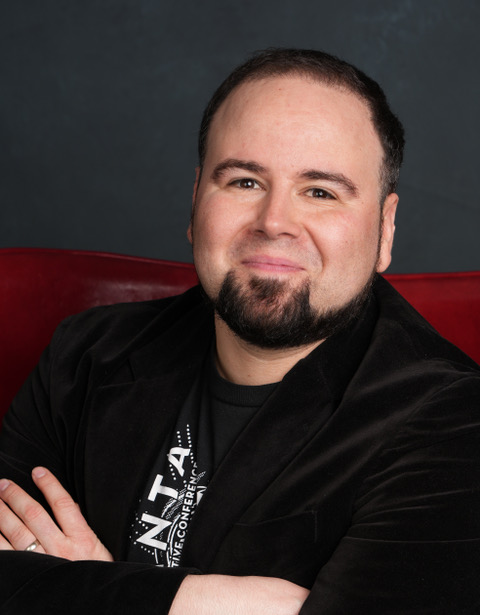
When he started, the number of submissions was around 1,500. Now that number can go as high as 10,000, with films submitted from 100 countries. Escobar has watched his Festival and others around the world struggle through and survive Covid-19. And he’s seen the content of films reflect changing times. Grief was a theme that emerged after the pandemic. Last year, a common idea seemed to be, “let’s look for a new start, a new purpose, a new beginning.”
“If I had to pick a theme [for this year], it would be ‘Atlanta.’” he says. “I don’t mean we are trying to strictly program films by or about Atlanta, but we do have a special priority to do that. About a quarter of what we play is connected to Georgia. That number has always been true.”
This year’s Festival includes more than 150 films, both shorts and feature-length, including narrative, documentary, animation, experimental, episodic and music videos. “Every film plays only once,” Escobar says. “You’re there or you miss it.” It’s a programming choice that lends a sense of urgency and shared experience to the event, he believes.
Concurrent with the festival, the annual Creative Conference offers in-person and virtual panels and workshops with film industry experts. It’s aimed at people personally involved with filmmaking or interested in picking up new skills. Also, a traditional part of ATLFF is special appearances and Q&As from stars, directors and producers.
On that front, one thing Escobar has learned is that there’s no predicting who or what fans might lose their [bleep] over.
Take the year George R.R. Martin came to the Festival. While everyone wanted to get a picture with the author of the series that launched Game of Thrones (and maybe ask him when that final tome is coming), one Festival sponsor was fangirling over another guest: ATLFF board member and Grace and Frankie co-star Baron Vaughn. “When he walked in, she was super-excited about him,” Escobar says.

Oh, and guess who Martin wanted his picture taken with: Jason Carter, there to support Carterland, the documentary about his grandfather Jimmy.
If many local film artists have learned their craft from working on big, Atlanta-based Hollywood projects like a Marvel film or a Netflix series, Escobar says the Festival’s content represents a relief from the familiar flood of recycled IP.
“When everything seems to be a reboot or a sequel, the Atlanta Film Festival is a place where the most original stories are being shared and shown,” he says. “If you’re interested in that, this is the farmers market equivalent in the freshest material.” On the other hand: “If you want the processed foods that are microwaved, there are other places you can get that.” During the rest of the year, the Festival’s main screening venues, the Plaza and Tara theatres, which Escobar owns, tend to program smarter, artier and more esoteric fare than you find in the multiplexes.

While big crowds at screenings create great buzz, Escobar has come to appreciate the value of smaller events during the Festival’s 11 days. “Some films are interesting for hundreds or thousands of people, but, sometimes, it’s about showing just a few people a good time,” he says. There’s a time and place to be intimate and personal, and a time and place to have hundreds. It has to be a mix of those things.
“It only took me a decade for that to crystallize,” he adds with a laugh.
Oh, and about the yearly difficulty of funding, he thinks he and others in the nonprofit arts community are getting better at advocating for their work. Telling people the arts are “good for you,” like vitamins, no longer cuts it. “There are other reasons why people should care,” he says. “We didn’t get into the arts nonprofit because there’s so much money in it, but we do leave a huge economic footprint … I’ve not heard of any industry that comes remotely close to the nonprofit arts community, in state and tax dollars. Any profit that we might generate, we’re putting back into the community.”
Meanwhile, if the future of arts funding currently looks bleak, things have been pretty dismal for a very long time. “Could it get worse?” Escobar asks rhetorically. “You can only go up from here.”
Below are a few short thoughts on some of the ATLFF films I was able to watch in advance.
For a complete list and more information, go to the Festival’s website, atlantafilmfestival.com.
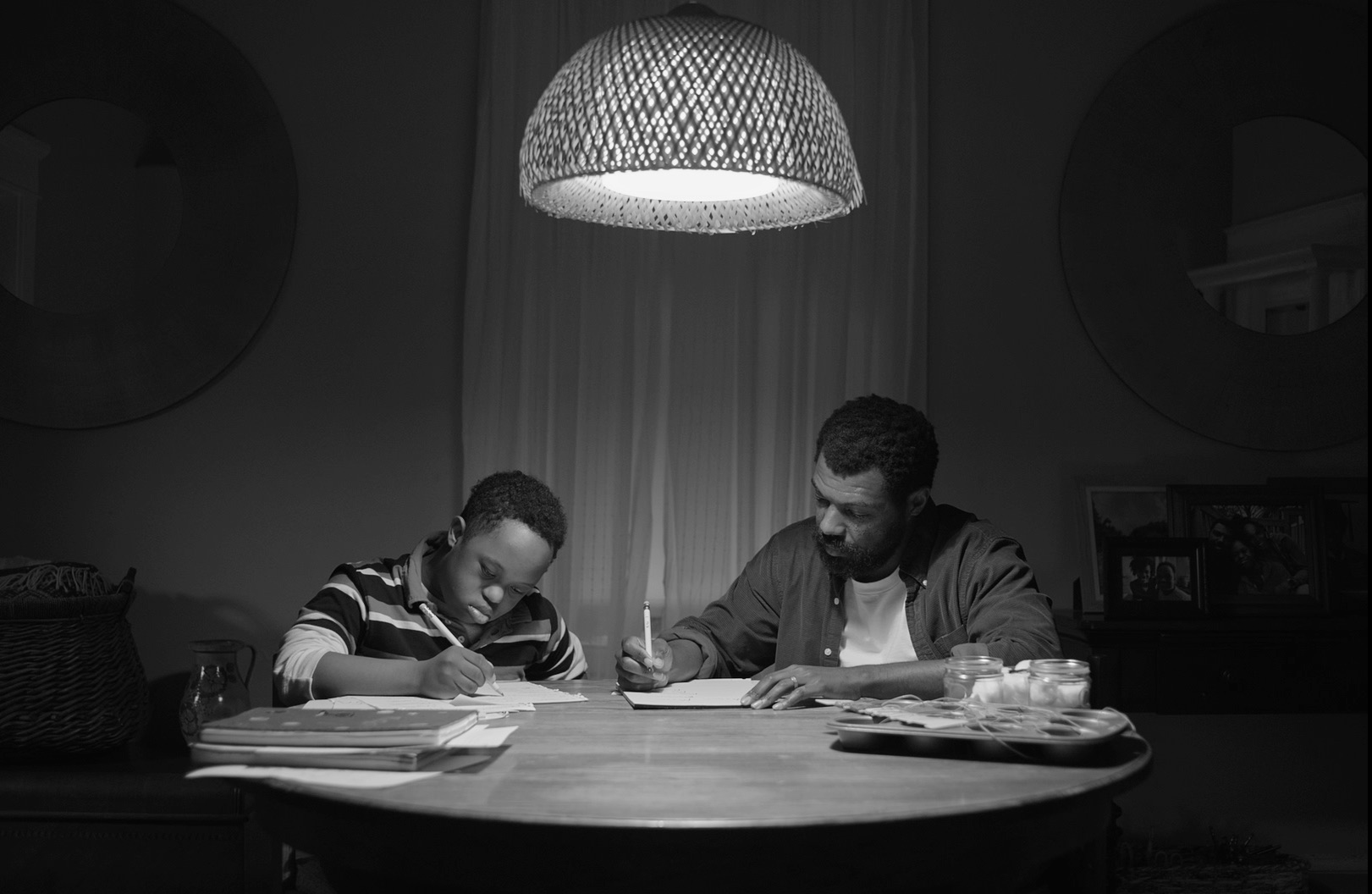
Color Book. The opening night presentation on Thursday, April 24, is an example of old-school humanist filmmaking that shows off Atlanta with a gritty, fond familiarity. Writer-director and Morehouse graduate David Fortune’s first feature stars an impressive Will Catlett as end-of-his-rope dad Lucky. Dealing with the loss of his wife, he now has to take on the daily care of their 11-year-old, Mason (Jeremiah Alexander Daniels). Father and son adore each other (the actors’ rapport is wonderful), but Mason has Down syndrome. Even the best days require extra parental push-and-pull. In the small-scale heroic quest that forms the movie’s core, Lucky determines to take his son — by foot, MARTA rail and bus — to the Braves’ opening game. Fortune and his actors invest a lot of deep feeling in the deceptively simple story, and Nikolaus Summerer’s black-and-white cinematography captures the bleak beauty of our city in its drizzly, early-spring days.
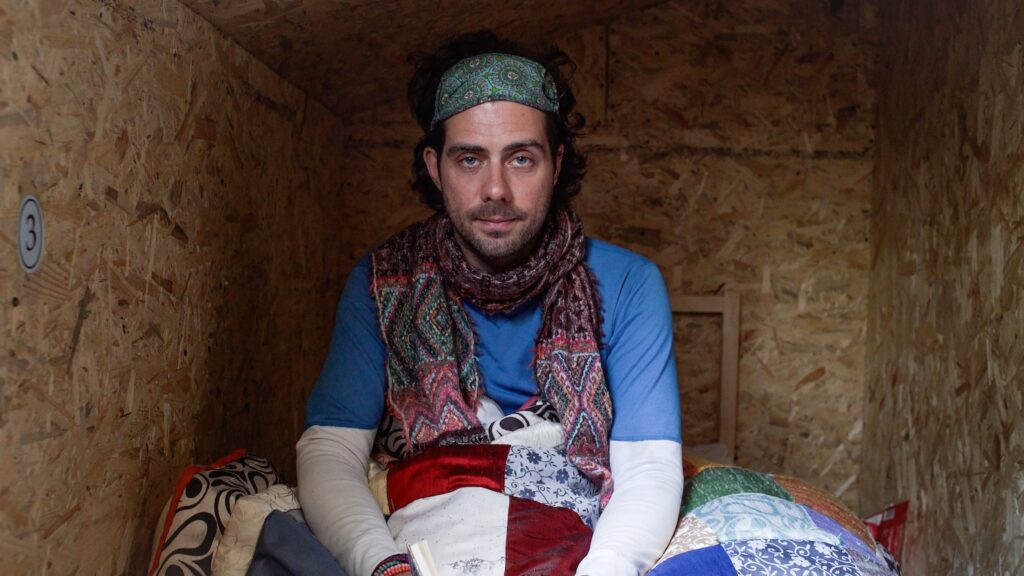
Dandelions. Learning that the man he grew up calling father actually adopted him and that his biological father still lives in Russia with two other children, filmmaker Basil Mironer heads with his American half-brother, Ben, to Moscow to make a doc about this unexpected family reunion. The catch is, they don’t tell their mother what they’re up to. In Russia, Mironer constantly shoves his camera in his newfound kin’s faces. “Basil, we should be hugging,” his grandma admonishes him. Another relative complains, “Oh lord, you are all paparazzi.” The brothers seem more interested in documenting life rather than living it. At the end, Basil paints himself as a victim of his American parents’ decision to withhold facts about his birth. The film itself might make you side with the parents. You want to urge Basil to put the camera down and treat those around him as people rather than subjects and really listen to them. On that unintended, meta level, it’s one of the more fascinating docs I’ve seen in a while.
Eponymous. An eccentric, occasionally confusing look at the intertwined lives of machine gun inventor Hiram Maxim and his brother and son — inventors all. Atlanta-based writer-director Caroline Rumley tells their story of masculine one-upmanship through multiple generations via their writings and, most especially, the many home videos the men made in the early 20th century. Worth a watch if just for those visuals alone.

Giant’s Kettle. Virtually without dialogue, this short Finnish feature offers black-and-white tableaux of a couple lurking awkwardly through expressionistically bleak urban landscapes, enacting rites of passage (courtship, parenthood) that are depicted as seriocomically hopeless. A visually stunning conversation piece that may be a little too much in love with its own hipster attitude, owing its look and sound to other filmmakers — Aki Kaurismäki and David Lynch among them.
Interaction. With echoes of the suspense films of Claude Chabrol, Alfred Hitchcock and Atom Egoyan, director and co-writer Dallas Richard Hallam’s chilly, protracted character study follows Rebecca (Suziey Block) in her daily work as a house cleaner. In her spare time, and even as she cleans, she listens on her earbuds to the private noises (marital arguments, sex bouts) of her clients, secretly taped in their homes. Her stalkery obsession with one employer, a betrayed wife, becomes dangerously complicated when Rebecca meets a literal basement dweller as socially alienated as she is. Committed to its grim conclusion, Interaction is weakened by how long it takes to get there.
Meta Take One. Another black-and-white film that owes a debt to Lynch, especially in its bursts of Eraserhead-style goo and gore, writer-director John Dierre and Ryan A. Dutter’s Atlanta-shot feature is a tale of a passion for indie filmmaking gone terribly wrong. Uneven in execution but committed to its tale of a director (EJ Ezeruo) who will do anything to finish his project, it shares an intentional theme that emerges accidentally from the documentary Dandelions (above): that an obsession with filmmaking can get in the way of real life.
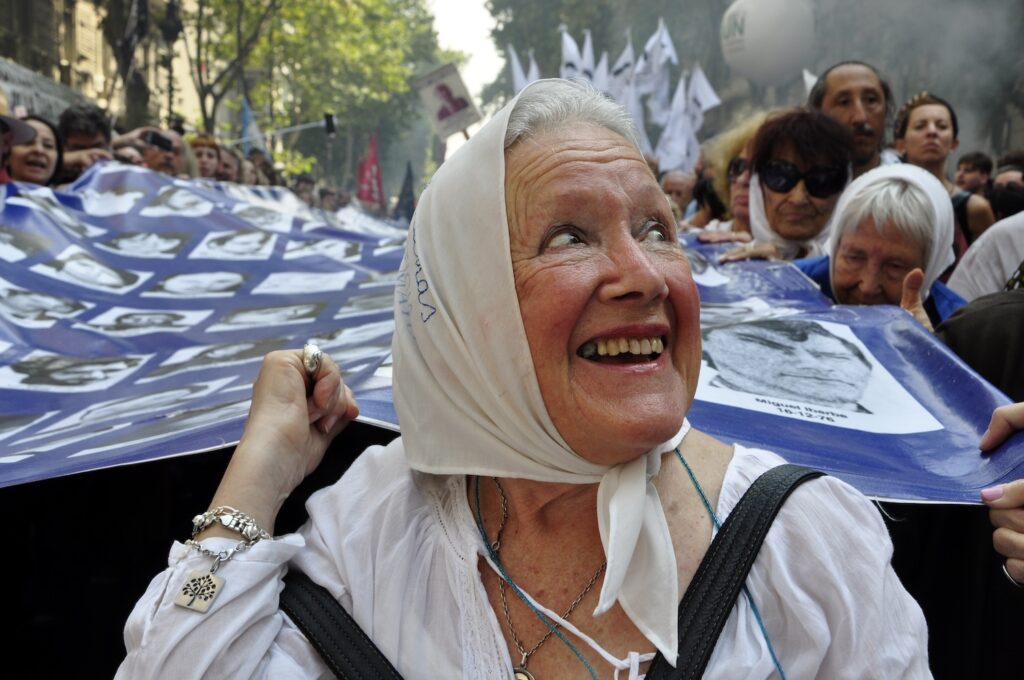
Norita. For anyone who has rallied against government overreach, this documentary offers hope that taking to the streets can lead to change. Jayson McNamara and Andrea Carbonatto Tortonese’s film focuses on Nora Cortiñas, an Argentinian housewife whose life changes with the disappearance of one of her two sons during the Videla dictatorship. Donning a white head scarf with other mothers desperate for answers, Nora becomes a figurehead for a movement that survives as a feminist political force long after Videla is gone. The film, which may remind you of Brazil’s Oscar-winning I’m Still Here, uses occasional animation to show the forces of repression as black birds swooping down on citizens. Cortiñas’ story is gripping enough to need no such embellishments.
The Pastor’s Daughter. Writer-director Timothy Hall follows a renegade named Agnes (Moira Glennon) back to her hometown after the death of the minister dad whose ways she rejected. But her brother Joe (Jeffrey Charles Morgan) has taken up the preaching mantle, as well as some of his dad’s self-righteousness when it comes to dealing with his sister. A loving showcase for Macon, where it’s shot, the film loses its way a little, narratively, when it detours into a sex scandal subplot and loses track of Agnes. At its best, Daughter has the allusive feel of a couple of short stories told in overlapping, inconclusive style.
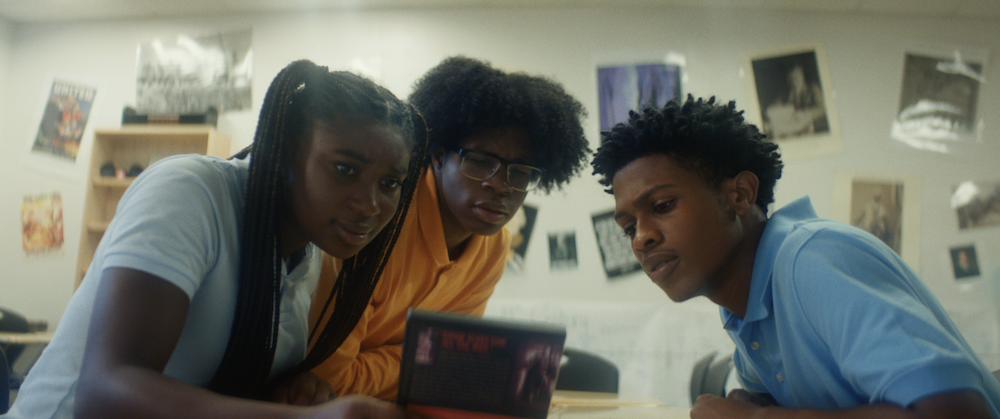
Speak. A crowd-pleaser at the Sundance Film Festival, Jennifer Tiexiera and Guy Mossman’s charming documentary feature follows five high schoolers from around the nation during the 2023-24 school year as they hone 10 minutes of rhetoric to compete in the National Speech and Debate Championships. These kids reflect the country in all its beautiful diversity: Black, Muslim, nonbinary; one guy is on the autism spectrum; and one girl cares for her special-needs brother. All of them are brainiacs but also typical teens, so whether or not you’re any good at talking in front of crowds, you’ll identify at some point. (The film has a specific Atlanta connection, but that would be a spoiler.)
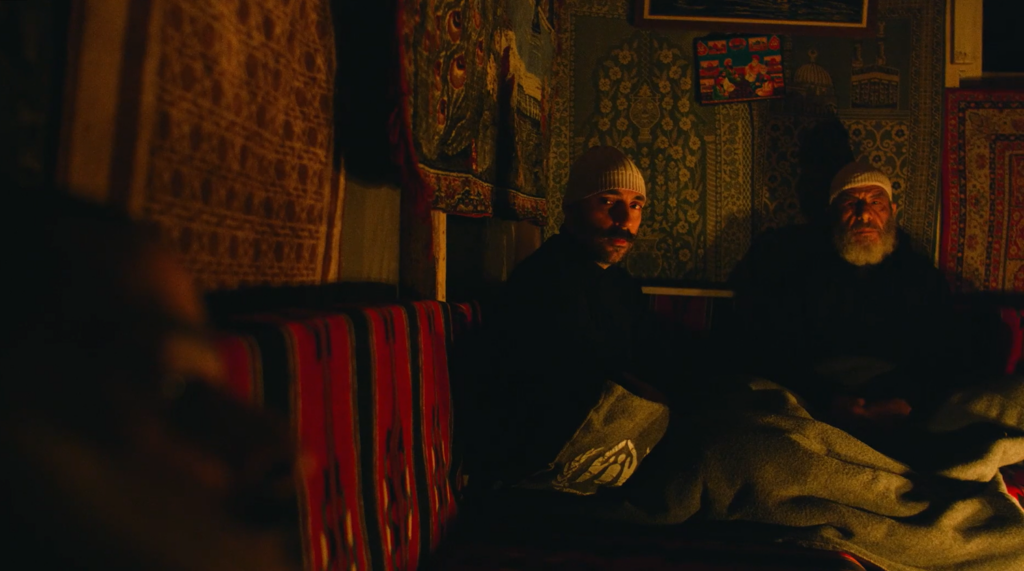
Tadur. Feeling as much like a documentary as a fictional feature, writer-director Jad Andari’s film drops us into the lives of workers and ruffians living in the beautiful pine forests of Mount Lebanon. Traditional narrative seems to have been intentionally removed. We get a sequence of striking images and scenes (a severed head, drunken bonfire revels) that give the film a sense of a brutal fairytale playing out eternal themes of violence and grief.
Your Tomorrow. If Norita suggests that public protests sometimes work, this Canadian documentary has an opposite message. It’s a quietly dispiriting look at the ways politeness can get you nowhere in the face of political, economic “progress.” Focused on Ontario Place, a 1970s-built park, expo and concert venue on the Toronto harbor, Ali Weinstein’s doc quietly follows longtime users of the space (runners, swimmers, bird watchers). They go about their routines even as their refuge is quietly dismantled around them, occasionally staging protests that are simply ignored.
Narrative shorts
Among the festival’s many shorts, I focused only on those designated as Georgia films. With both narrative and documentaries, what most impressed me is the level of technical skill filmmakers (many of them young) are now able to achieve in our city. (Thanks, Marvel?) Here are some very brief appreciations, with apologies to the many filmmakers whose work I didn’t get to.
Daniel Rocha’s El Secreto and Blanche Enaka’s Free the Buns share a similar comic plot about high school students plotting revenge on a despised teacher, with different, amusing results. I Could Dom features writer-director-star Madison Hatfield as an irrepressible but self-effacing young woman who learns she has to go to great, kinky-adjacent links to enter the modern dating pool; it’s laugh-out-loud but with a great big heart.
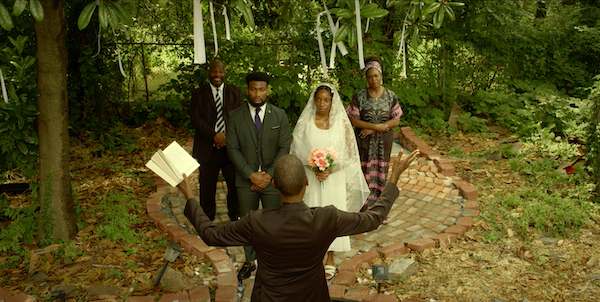
Raggamuffin feels like the promising first chapter of a gritty feature about the awakening of a teen girl, growing up with her dad as they travel the South in their RV on the motocross circuit; writer-director Kaitlyn Mikayla makes you want to see more of this story.
Another coming-of-age tale, director Christian Nolan Jones’ Red Clay, co-written by Omar Epps, shows us two young Black men (Christopher Ammanuel and Jaylan Ragin) having each other’s backs while dealing with the ravages of drugs on their Atlanta families in the early 2000s. And Nadera Herbert-Bey’s Maya tells of a 9-year-old girl still facing prejudices in her own community about dark Black skin. Adesola Thomas’ Sister Salad Days and Kasey L. Martin’s Swimming Holes explore Black sisterhood, one with a supernatural twist, the other with a scenic trip to Hawaii.
Becca Suh-Hee Han’s sensitive Pastor’s Kid and Millie Witherow’s deadpan, absurdist VBS shine different, comic light on the legacy of religious upbringing. Two young sisters work out the grief of losing family members through ritualistic role-play in Victoria Gunawan’s The Next Thing I Know, I’m Dead. And Miriam and Sonia Albert-Sobrino’s tale of a fascist police state obsessed with female bodily autonomy, The Unbearing, has echoes of Roman Polanski’s Compulsion and The Handmaid’s Tale, with an extra lashing of David Cronenberg body horror.
Documentary shorts
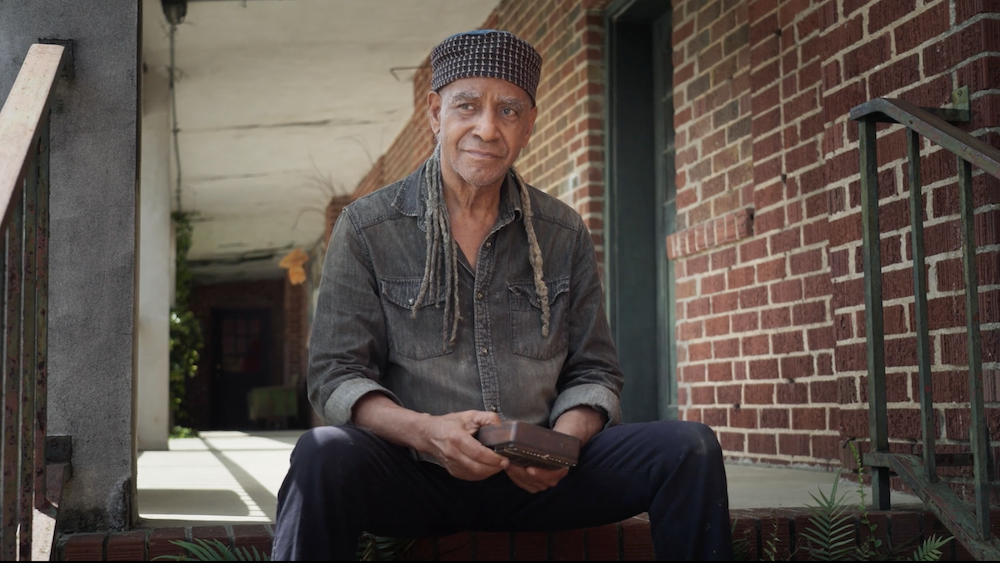
Among the handful I saw, Caroline Josey Karoki’s Art with Every Breath is a pleasant, low-key portrait of Savannah-based artist/sculptor Jerome B. Meadows, who sees his work as an extension of social justice and truth-telling.
The knockout for me was Geeta Gandbhir and Christalyn Hampton’s The Devil Is Busy. It follows a day in the life of a security guard, receptionist, sonogram technician and doctor who work at an Atlanta woman’s health care clinic. They provide multiple services, but women come there from far away seeking to end unwanted pregnancies and facing the same handful of angry white men, showing up daily to hurl damnation and Bible verses at them. The security guard, who starts her early day with prayer, says of the protestors, “When I look out, I see pain; I see sadness; I see hypocrisy.” Later in the film, she clarifies: “The God I serve is a forgiving God.”
Where & When
An opening reception takes place at 7:30 p.m. Wednesday, April 23, at One Oh Four, 104 Church St., Decatur. Opening night is Thursday, April 24, and screenings continue through May 5. Screenings at the Plaza (1049 Ponce de Leon Ave. NE) and Tara (2345 Cheshire Bridge Road NE) theaters, with select events at other venues.
::

Steve Murray is an award-winning journalist and playwright who has covered the arts as a reporter and critic for many years. Read more of Steve’s work, including his Steve on TV column, here.
STAY UP TO DATE ON ALL THINGS ArtsATL
Subscribe to our free weekly e-newsletter.

PLEASE SUPPORT ARTSATL
Your Gift Sustains the Coverage You Count On!
Related Posts