

Striking out: Both pens and payments are down for Georgia film and TV writers
It was a moment Atlanta-based Topher Payne will never forget: In 2016, he was able to list himself as a full-time writer on his income tax return — one of the greatest achievements of his life, especially after working at his craft for so long. In the last year, however, it has become increasingly difficult for Payne and others to sustain the same careers as their residuals have largely evaporated.
While some in the entertainment industry held out hope a writers strike would not happen this year, most others knew it was a near certainty. The 2023 Writers Guild of America strike officially began May 2. This is the first writers strike since 2007, one that lasted 100 days. The general consensus is to buckle up, because the current situation seems destined to stretch for several months. “I have not had a conversation with anyone who expects to be working before the fall,” says Payne.
Many TV series and films are now on hold. Among the stalled productions are the Atlanta-filmed Stranger Things and Cobra Kai, both of which are in their final seasons.
P-Valley, also made in the area, shut down production of its third season recently, with showrunner Katori Hall sending out a message on social media: “Despite rumors, due to the #WGA #WritersStrike, filming on #PValley has been postponed. Like many of my fellow showrunners, I feel as though my writing & producing duties are inextricably linked. We will not be filming until a fair deal is reached. #WGAStrong.”
Another storm in the film and TV industry is brewing as well. This week, the national board of the Screen Actors Guild-Alliance of Motion Picture and Television Producers unanimously agreed to recommend that its members vote to authorize a strike as their negotiations begin. Its contract with studios expires June 30.
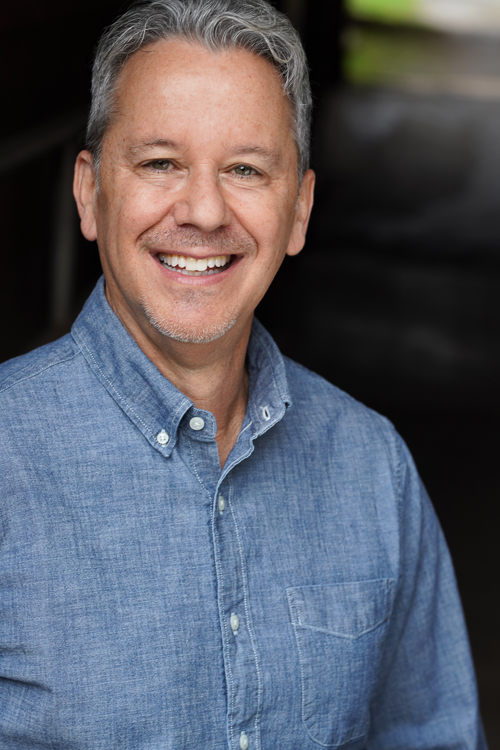
Neil Landau, an associate professor and executive director of the Master’s in Film, Television and Digital Media, Entertainment and Media Studies at the University of Georgia, joined the Writers Guild in 1987 and remembers a strike the next year that lasted almost six months. Not only does a strike affect writers but also various crew members on shows that are being delayed or canceled. The broadcast networks are the ones feeling the pain already, Landau says, with late night talk shows and daytime fare not being produced. He’s worried about production assistants, writer’s assistants, grips and craft services workers being suddenly unable to work. “If you are lower down the food chain, it could be [only] days or weeks [before you feel the financial pitch.]”
Along with his writing partner, Landau had an office on the Twentieth Century Fox lot after he joined the guild and couldn’t even go there while on strike. He was around for the 2007 strike, but says the current situation is more complicated, especially with the threat of ChatGPT supplanting writers. “This one feels so much more ominous and existential because we are getting into all of these areas that are unprecedented,” he says. “Everybody has different needs than in the past, and it will be tougher to get relief.”
Landau worked on 24 episodes of 1992’s Melrose Place. It was a year-round job, and writers could make a good living because of residuals. Those writers and producers working for a broadcast network would receive a weekly salary and get paid for every script they wrote, plus residuals from reruns. “Yet with the streamers there are no residuals,” he says. “It’s all up front; there is no back end. So you can’t count on that.”
Atlantan Chad Darnell has been in the film and TV industry as a writer, actor, director and casting agent for more than 25 years, working on series such as Alias and Crossing Jordan. Writers who are guild members “doing this for their livelihood” are making less money now than they were in 2007, he says. “There are [fewer] contracts and the negotiated rates for a writer on a Netflix series is much less than a writer for NCIS or a show that has 24-25 episodes a season. It’s in pre-production when the writers sit around a table in front of a board and plan out the characters and plots for the season.”
Payne has been a member of the Writers Guild since 2018 through his first two Hallmark Channel films, My Summer Prince and Broadcasting Christmas. Specific concerns for guild members have remained unchanged.
“Early February, communications to the membership and amongst the membership were leading us to anticipate things were not going well and that we’d all be well advised to know what our back up plans would be come May,” he says.
He has suffered the consequences of the current contract in the last year. It’s been extraordinarily hard to navigate.
For his writing, Payne receives a series of decreasing amounts of money for each subsequent airing of a film. “That is usually not a substantial amount of money but is consistent,” he says. “If you were a writer on Seinfeld, you may not be receiving a substantial amount of money for a single episode of it on TBS, but the fact that it is airing all over the world and in various syndicated packages — those little amounts add up.”
As an actor in the 2013 movie Identity Thief, Payne recently received a royalty check because its distributor made a deal with Peacock TV. Even though that was more than a decade ago and he had a very small role, he was still getting a portion of any new deals cut for that film. “When it was sold to Delta in-flight entertainment and HBO Max, I got a check,” he says.
Writers do not have deals like that, however. Ironically, Payne found his movies were on Peacock not by some studio notification but when his mother told him. “If they made the same deal to show Hallmark movies on the USA Network and they sold the rights to be able to broadcast Broadcasting Christmas [there], I’d get a check for more than $10,000,” he says. “For Broadcasting Christmas appearing on Peacock, I eventually got a check six months later for around $400.”
In addition to not making the money he anticipated last year, he also lost his health coverage. Payne did not make the required minimum to keep the guild’s health insurance for himself and his husband, Charlie.
According to Payne, fewer than 50 full-time Georgia residents are Writers Guild members. Unlike protests that have taken place in California and New York, none have been officially scheduled for Atlanta. “Because of the limited number of Writers Guild members in Georgia, we recognize that our strength is not in numbers or being able to represent in public,” he says. “That said, we are having very active conversations about what we can do as a show of solidarity and support.”
A prolific playwright, Payne is now writing another play and helping out at some local theaters. He and Charlie have also started a furniture business, rehabbing old pieces and selling them online.
Going out on strike may be tough, but the idea of sitting still never crossed Payne’s mind. “The conversation in our house about the hardship we could anticipate resulting from a strike was nothing compared to the hardship we could anticipate if we did not.”
::
Jim Farmer covers theater and film for ArtsATL. A graduate of the University of Georgia, he has written about the arts for 30-plus years. Jim is the festival director of Out on Film, Atlanta’s LGBTQ film festival. He lives in Avondale Estates with his husband, Craig, and dog, Douglas.
STAY UP TO DATE ON ALL THINGS ArtsATL
Subscribe to our free weekly e-newsletter.

