Scoring world-class talent a triumph for Atlanta Opera’s ‘Siegfried’
Stefan Vinke is widely regarded as the world’s pre-eminent heldentenor, and he’ll mark his 130th performance in the title role at this weekend’s opening night.
::
When one considers heldentenors, those burly gentlemen who essay the monumental operatic roles penned by composer Richard Wagner, certain impressions come to mind. We think of power. We think of stamina and majesty. Encountering one of these rarified beings may be a bit intimidating.
Tenor Stefan Vinke, who sings the title role in Wagner’s Siegfried at Atlanta Opera this season, defies stereotype, however. Although Vinke does some serious heavy lifting on stage, a chat with the celebrated German tenor reveals him to be a strikingly ebullient fellow with a warm, easy laugh that interjects splashes of sunshine into his conversation at every turn. And though he has forged a career with several among the most excruciatingly difficult roles in the operatic canon, his discourse is peppered with references to the sheer delight of making music.
Vinke is widely regarded as the pre-eminent exponent of Siegfried in the industry today. His account of this, and other roles have been building blocks in a career that has taken him to virtually every major opera house in the world, including the Metropolitan Opera, Vienna Staatsoper, Deutsche Oper Berlin, Salzburg and the houses of Munich, Cologne, Venice, Barcelona and the holiest of Wagnerian holies, the Bayreuth Festival. Vinke honed his craft at the Cologne College of Music and subsequently trained with soprano Edda Moser and bass Joshua Hecht.
The tenor was born in a small village in northern Germany “where there are more pigs and cattle than people,” he jokes. Vinke was interested in music from an early age. He played accordion, then moved on to piano and organ. He entered the conservatory at Cologne with a specialization in sacred music. There was no interest in opera. “I had no clue what opera was,” Vinke chuckles. “You can quote me on that, and people can laugh, but that is what it was.”
The musical muses had other ideas. Vinke was initially devastated to be turned down for a spot in a professional choir because his voice was a solo voice. His teacher began to gently field the idea that his future lay in singing, not in the liturgical organ repertoire. Finally, he was strong-armed to participate in a performance of operatic scenes with the admonition that he could be expelled if he refused. The morning after the performance, he was contacted by an agent who predicted an important career and told him she was arranging auditions for him. When he protested that he wasn’t interested in opera, the agent countered, “Oh, my dear young man. Of course you are.”
“There was no option for escape,” Vinke drolly recalls, so he did the auditions — and received offers from every one of them. “I thought it must be a sign from Heaven,” he admits.
Wagner’s Siegfried has happily become Vinke’s signature role. Atlanta’s opening night will mark his 130th performance of the opera, an astonishing achievement for any singer.
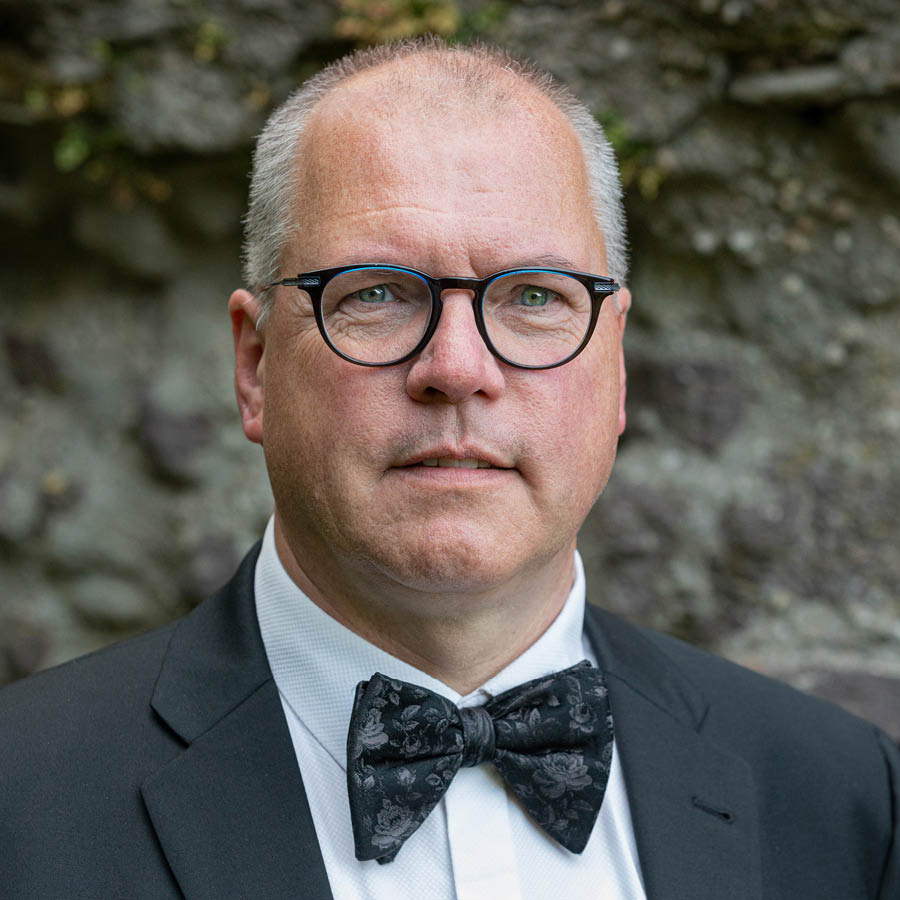
Per Atlanta Opera General and Artistic Director Tomer Zvulun, “Getting people like Vinke here is a triumph. Siegfried is massive. It is a very bold step forward for us as a company. To have this trio of giants, Vinke, Lindstrom and Grimsley (Lise Lindstrom and Greer Grimsley, who will sing Brünnhilde and Wotan, respectively) is a serious deal. People are recognizing that Atlanta is a place with a lot going on.”
There has been a lot going on at the company itself as they prepare for this challenge. ArtsATL sat down with Vinke during a break in a long day of rehearsal to discuss his anticipated Atlanta debut.
Let’s talk about this famous role of yours. At any given time, only four or five singers in the world can tackle Siegfried at all, let alone sing it well. Why are guys like you so rare?
It’s a question of stamina, in the same way that Tristan is or Rienzi or Tannhauser. It has to do with tessitura, the length of the role and with the size of the orchestra. All this comes together to make these roles more or less unsingable. Siegfried sits high, but for my voice that is very good, because I come from a sacred music background. I sang some countertenor and learned how to sing high and easily in that music. I am not, as so many heldentenors are, a former baritone who lifts the voice to sing the tenor rep; I’m coming from the opposite direction. Maybe this is what has made it easier for me than for some others who study Siegfried.
Does this role have particular test moments that define its challenge?
I would say the forging scene at the end of Act 1. That is the most important and most challenging scene. It is big singing, high and loud and powerful from the moment he grabs the hammer until the end of the act.
Or it can become difficult if the break after the first act is too short, and you go into Act 2 with the Waldweben (the famous “forest murmurs”), which is very lyrical. If you do too much in the first act, it is difficult to go back and find the lyric colors of your voice.
What is your greatest satisfaction in singing this role?
One thing I must tell you: Even now, after 129 performances, I still have fun doing it from the first note to the last. I know how to trust and pace myself, and I can just have fun and not fight it anymore. I can just let it out and enjoy myself, which is a big satisfaction.
You speak of your work with such joy. You seem to love singing very much.
Oh, I do! I do in rehearsals as well. I love rehearsals. I have two wonderful rehearsals this afternoon and I can’t wait. I sing out fully in rehearsals, I don’t just mark. Some people go to the gym, I go to rehearsals!
What can Atlanta’s audience expect from this production?
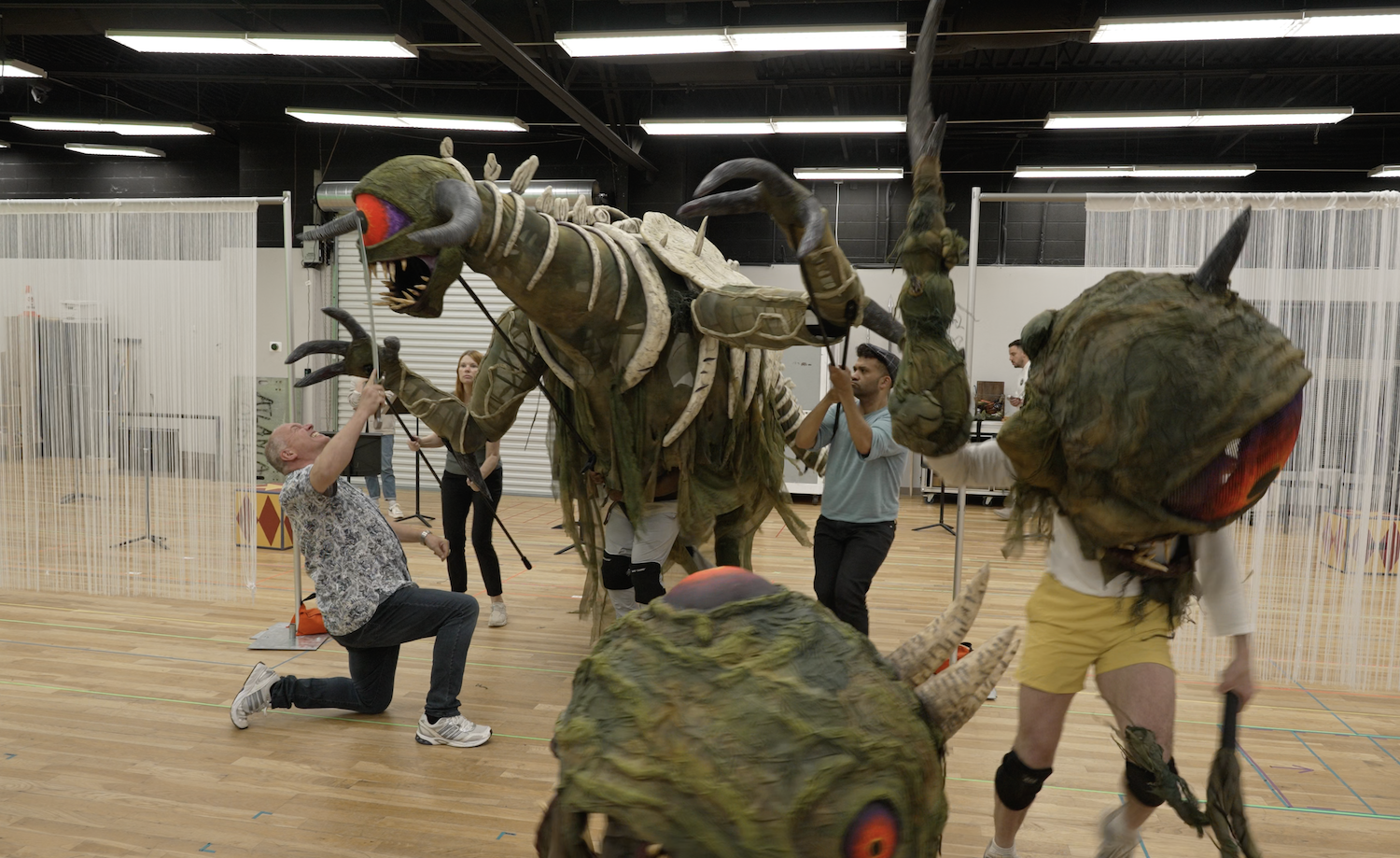
They are going to see this opera as it should be done. Tomer is telling the story that Wagner wrote. A hammer is a hammer, and an anvil is an anvil. Whoever sees this production will go out knowing what Wagner intended, even those who are seeing this opera for the first time. I have known Greer and Lise for a long time, and it is amazing to be working with them again. The set is amazing. The dragon is unbelievable. We have a terrific Mime (tenor Rodell Rosel), who is everything you want a mime to be. I can’t even describe it — you better come see the show!
Is there anything in particular you want Atlanta’s audience to know about you?
I have to mention something about all this. When I was at Covent Garden doing the Ring cycle with Antonio Pappano, Tony stopped rehearsal and called me to the edge of the stage. You know what that does to a singer when that happens. He asked, “Stefan, do you love what you are doing?” When I said that, of course, I loved it, he said, “Then show that love to everyone! Show that to the orchestra, the audience, everyone.” That sentence from Pappano changed my way of living my life onstage. It was a life changer, and I am thankful to him still.
“Every time I enter a stage now, I tell myself to have fun. I tell myself to do everything I can to project my joy to the audience because maybe someone will take that into their lives and out of the theatre and have an operatic experience to carry with them for a long time.”
Where & When
Atlanta Opera’s Siegfried will be performed at 6:30 p.m. April 26, April 29 and May 2; and at 2 p.m. May 4. $25-$196. Cobb Energy Performing Arts Centre, 2800 Cobb Galleria Parkway, Atlanta. 404-881-8801, atlantaopera.org.
::
Mark Thomas Ketterson is a Chicago-based arts critic and writer. He was the longtime Chicago correspondent for Opera News and has also written for Playbill, the Chicago Tribune and other publications.
STAY UP TO DATE ON ALL THINGS ArtsATL
Subscribe to our free weekly e-newsletter.

PLEASE SUPPORT ARTSATL
Your Gift Sustains the Coverage You Count On!
Related Posts