
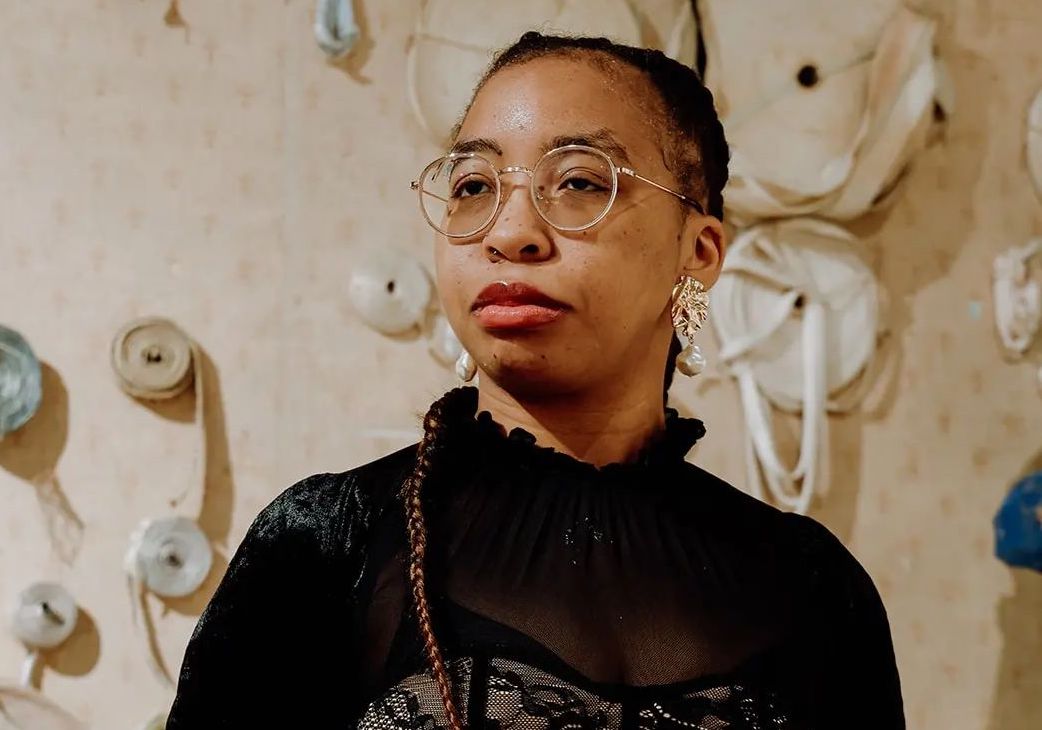
Review: Yah Yah Scholfield’s ‘On Sundays …’ is a modern take on gothic Southern horror
The horror genre has seen a resurgence in the post-pandemic period, and it’s not difficult to guess why. The world is traumatized, and trauma is a subject that horror is uniquely equipped to explore through its focus on the grotesque and taboo and its objective of instilling discomfort and fear.
In their debut novel, On Sundays She Picked Flowers (Saga Press), out January 26, Atlanta writer Yah Yah Scholfield (they/them) proves this, using lush prose, complicated characters and a deep sense of pervasive violence to build a distinctly literary horror novel that is as rich and complex as it is unsettling.
The novel opens in Atlanta in 1965, when an elderly Black woman known as Ma’am cracks her 41-year-old daughter’s skull against a wall. The brutal beating, worse for the casual air with which Ma’am delivers it, is the latest in a lifetime of cruel acts, and, not long after, the daughter, Jude, murders her mother with a cleaver. The murder unfolds in minute and gory detail, and afterward Jude absconds to an abandoned plantation manor on the outskirts of the Okefenokee Swamp in south Georgia.
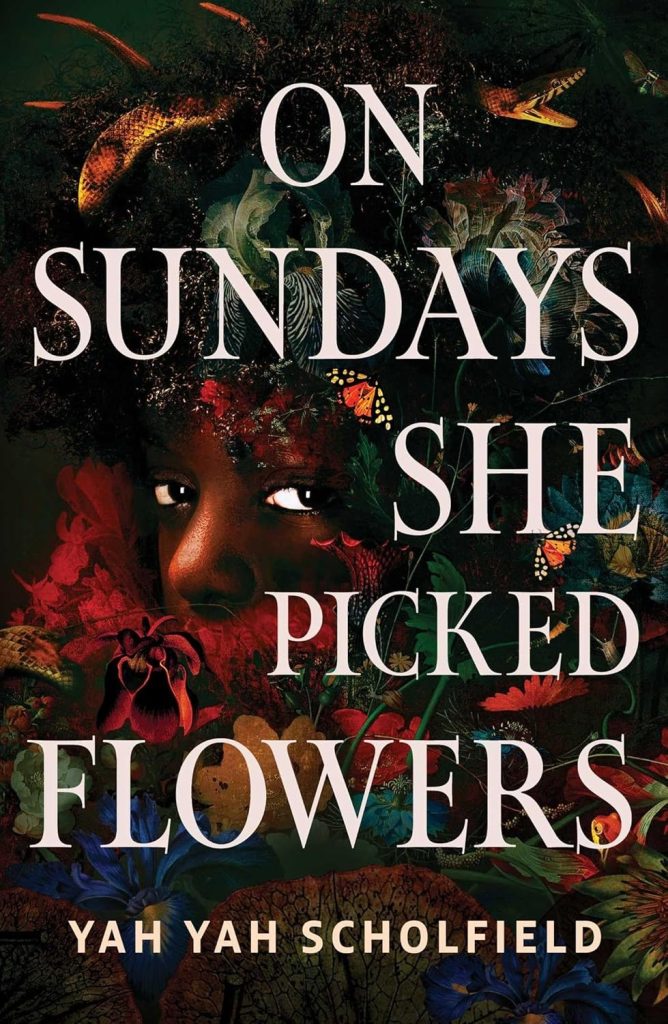
Jude names the house Candle, and the entire property is haunted by a horde of haints — spirits of the generations of enslaved people who were born, lived and died there — who act in concert, bringing Candle to life. Scholfield imbues the house with a distinct personality: mischievous, possessive and temperamental. Jude cares for the manor like a mother would care for a naughty but beloved child, while building a sense of who she is on her own terms.
Still, Jude’s rage over her past sometimes overwhelms her, giving her a disturbing penchant for violence, and though she’s desperate to be loved, she’s terrified of what her trauma might lead to. When the strange, magnetic Nemoira appears at Candle’s doorstep, however, Jude cannot resist her allure, and her fierceness begins to falter.
Scholfield depicts both the violence Jude experiences and the emotional trauma that follows with visceral precision, leaving nowhere for the reader to hide as it unfolds. In the author’s capable hands, the story’s surreal and horror elements work on both the literal and figurative levels, building tension and fear while abstracting Jude’s trauma, breaking it down into its component parts to find where the pain lies. And though Scholfield treats Jude with care and compassion, they do not treat her as wholly innocent, laying Jude’s darkest, most hateful thoughts bare beside her most desperate hopes and deepest desires.
At its best, On Sundays brings to mind Toni Morrison’s unflinching look at the furious ghosts that linger long after the end of chattel slavery in Beloved and Zora Neale Hurston’s use of folklore in exploring how Black communities function — or don’t — in Their Eyes Were Watching God. Scholfield’s lyric prose is vivid and mysterious. It’s as full of life, color and shadow as the Okefenokee swamp where much of the story takes place, enveloping readers in the world of the novel while the author’s wry observational humor lowers their defenses against the next horror.
With care, sensitivity and a great deal of blood, Scholfield tells a story that’s as haunting as it is cathartic, as beautiful as it is devastating. On Sundays She Picked Flowers is the kind of horror novel that shows just how powerful a literary force the genre can be and proves Scholfield a talent to watch.
::

Rachel Wright has a Ph.D. from Georgia State University and an MA from the University College Dublin, both in creative writing. Her work has appeared in The Stinging Fly and elsewhere. She is currently at work on a novel.
STAY UP TO DATE ON ALL THINGS ArtsATL
Subscribe to our free weekly e-newsletter.

