

Review: Moser, Hamelin perform lean, retro avant garde music at Spivey Hall
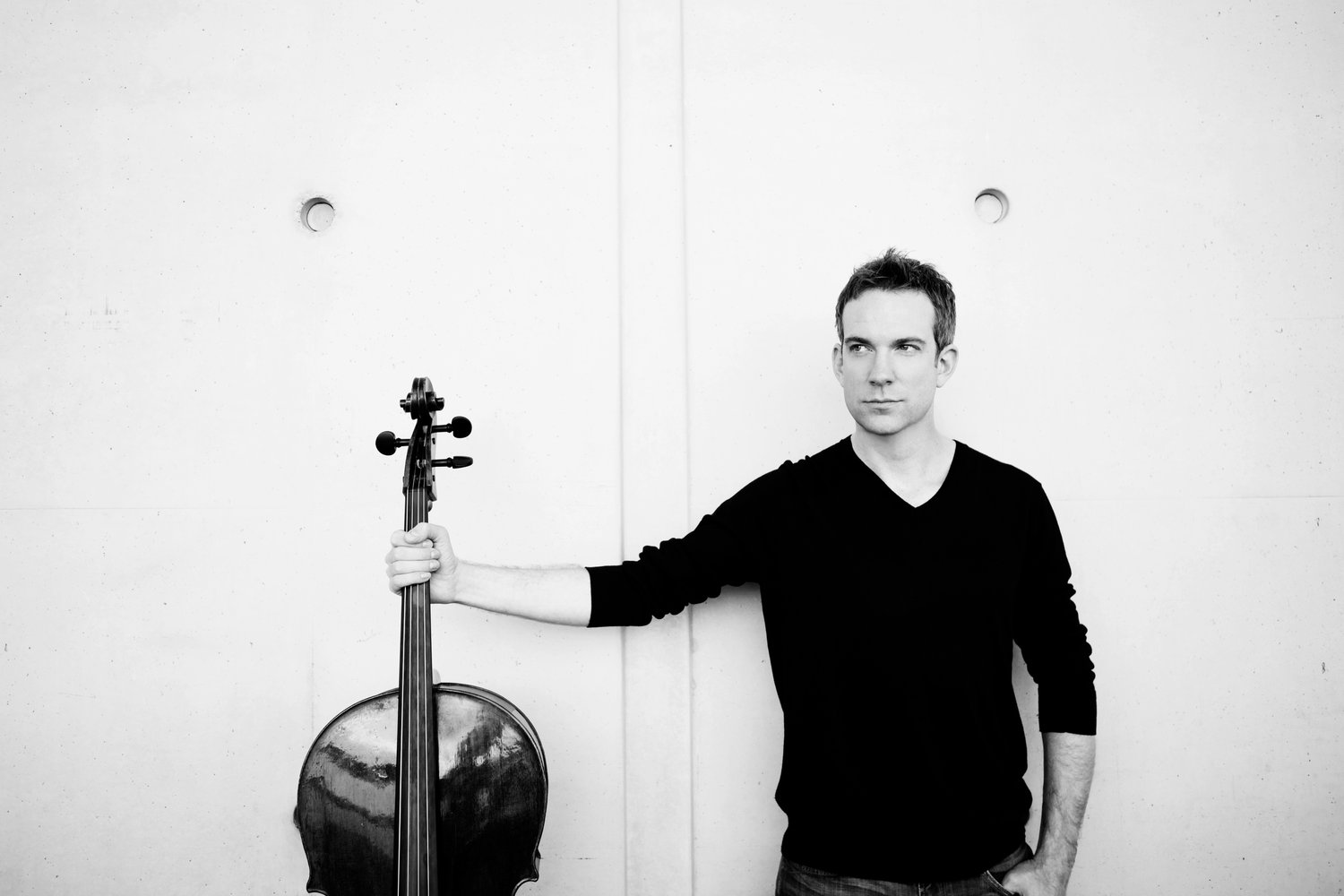
Saturday afternoon at Spivey Hall, a powerhouse duo — celebrated German cellist Johannes Moser and celebrated Canadian pianist Marc-André Hamelin — performed a mostly French program that didn’t fit their style but offered an abundance of, well, powerhouse playing.
They were at their virtuosic best in abstract expressionist music that the pianist himself composed in 2016 for the picturesque La Jolla SummerFest in California. Although the program notes describe it as “brutal modernism,” Hamelin’s Four Perspectives for Cello and Piano would be better titled “Four Mysteries” according to cellist Moser, introducing the work. It’s more about “questions than answers.” (To that, Hamelin quipped, “I couldn’t have said it better myself!”)
The four short movements, lasting about 12 minutes total, were cool in temperature and almost devoid of emotion. The music, mostly in shades of gray, held pale echoes of Hungarian composer György Kurtág’s wispy (yet colorful) soundworld, where a detailed image is glimpsed only in a flicker of light and where a story is told in a sigh.
Hamelin’s first piece opens with bleak solo cello lines, just partial phrases and unexplained silences. After a minute or two, the piano enters with solemn, widely spaced chords. When the cello gets agitated, the piano follows suit, and it cuts off clean with a sudden uptick. In the second piece, the cello starts all scratchy and static, interrupted violently by a thunderclap from the piano. Some plucky pizzicato lines from the cello. It fades to black, with a brief coda. All questions, no answers. Intricate and dazzling.
Where the third piece conveys anxiety and nonstop scurrying, the fourth gets more interesting, with hints of jazzy bebop rhythms that take us to a new place. But, in an instant, the mood bottoms out and we’re left with the cello, scraping and alone, performing an etude composed for a construction site.
At Spivey Hall concerts, we hear so much pianistic Bach and pounding Rachmaninoff that it’s an unexpected pleasure to hear a lean, retro avant garde style in this splendid acoustic. Moser and Hamelin nailed the Four Perspectives or, perhaps, jackhammered it.
The three other French-Parisian works on the program, also jackhammered, never felt as comfortable.
They opened the afternoon with a beautiful rarity, Nadia Boulanger’s Three Pieces for Cello and Piano, composed in 1911 as music for pipe organ, then arranged as chamber music three years later. Boulanger was among the great composition teachers of the 20th century, and her status among young Americans was unparalleled: Her students ranged from Aaron Copland and Philip Glass to Burt Bacharach and Quincy Jones.
As you’d expect, Boulanger’s own music is precise and technically perfect. The first of her pieces is lush, dreamy and melancholy, with long lyrical cello lines above rippling accompaniment from the piano. The second piece is conversational, with the instruments echoing each other’s phrases. The finale is a bit more fierce as it anticipates the 1920s modernism of composers like Ravel — insouciant and a touch spikey.
Moser and Hamelin took Boulanger’s Three Pieces at face value — perhaps her music is structured such that performers don’t have much choice otherwise. But in Claude Debussy’s Cello Sonata and César Frank’s Violin Sonata in A Major (also popular with cellists), they boldly announced that music is the universal language and thus they’d play both composers as if they were Austro-German. They shouted definitive answers but seemed unaware of the nuanced questions.
To be fair, their muscular, extroverted interpretations were more my problem as a listener than theirs as performers. Moser and Hamelin’s musical partnership is supple and supportive; they match each other in phrasing and attitude and tonal weight, and they are astonishingly sophisticated musicians. Still, the old quip about Herbert von Karajan’s conducting of Pélleas et Mélisande — “Debussy for people who really love Wagner” — rang true in spirit for Sunday’s concert.
For long moments, it clicked. In the Debussy sonata, although Moser’s playing was too bright and too forceful in the opening movement, the pizzicato-driven middle movement was swanky, seductive and moved with feline grace. In the expansive parts of the finale, their tight partnership soared. (Full disclosure: In a previous job, in 2012, I hired Moser to perform as concerto soloist with orchestra.)
In Franck’s popular sonata, a big-boned work, their approach worked better in parts. Loud and assertive throughout, they still managed to find beautiful, introspective moments. Both the Debussy and Franck are masterpieces of the genre. There are many paths that reveal its secrets.
After lusty cheers and a standing ovation from the Spivey audience, the cellist and pianist returned for an encore: Saint-Saëns’ graceful and poignant “The Swan,” delivered without emotion as a stainless steel bird revolving on a concrete floor.
::
Pierre Ruhe was the founding executive director and editor of ArtsATL. He’s been a critic and cultural reporter for the Washington Post, London’s Financial Times and The Atlanta Journal-Constitution and was director of artistic planning for the Alabama Symphony Orchestra. He is publications director of Early Music America.
STAY UP TO DATE ON ALL THINGS ArtsATL
Subscribe to our free weekly e-newsletter.

PLEASE SUPPORT ARTSATL
Your Gift Sustains the Coverage You Count On!
Related Posts

