Review: Burning Bones’ ‘Hysteria’ contains layers of motion and thought-provoking messages
Using a variety of poetry, live music and film to provide extra depth to modern dance pieces choreographed by Frankie Mulinix, the Burning Bones Physical Theatre production Hysteria — onstage at Windmill Arts Center through November 24 — explores aspects of the psychological condition and how it affects perceptions of gender.
Primarily, Hysteria is a non-narrative dance performance featuring Thomas Bell, Sharon C. Carelock, Hiroko Kelly, Elizabeth Sears and Holly Stevenson. Interludes between dances feature music, stories and poetry from Mykal Alder June. Mulinix, who directed the show, appears in two short films.
The troupe — which last performed a movement-rich play called Small Mouth Sounds — specializes in butoh dance theater, a Japanese style that defies simple categorization and features slow, hyper-controlled motion.
The show uses a queer lens to explore suggested symptoms associated with hysterics: religious experiences, witchcraft, mental illness, sexuality, desire and identities considered “other.”

Thus, moments of the show are overtly sensual, seemingly angry or challenging and political. Yet because the seven titled dances are interpretive, there are layers of messages contained.
In the section “#tradwife,” for instance, the full company emerges in pocketed aprons, holding mixing bowls and kitchen utensils at waist level, stirring to create percussive noise. The piece is otherwise without music and builds until pleasure from the acts of creation, both baking and biological, are linked. Additionally, the traditional, submissive role of the 1950s housewife is eroticized and imbued with power by the performers.
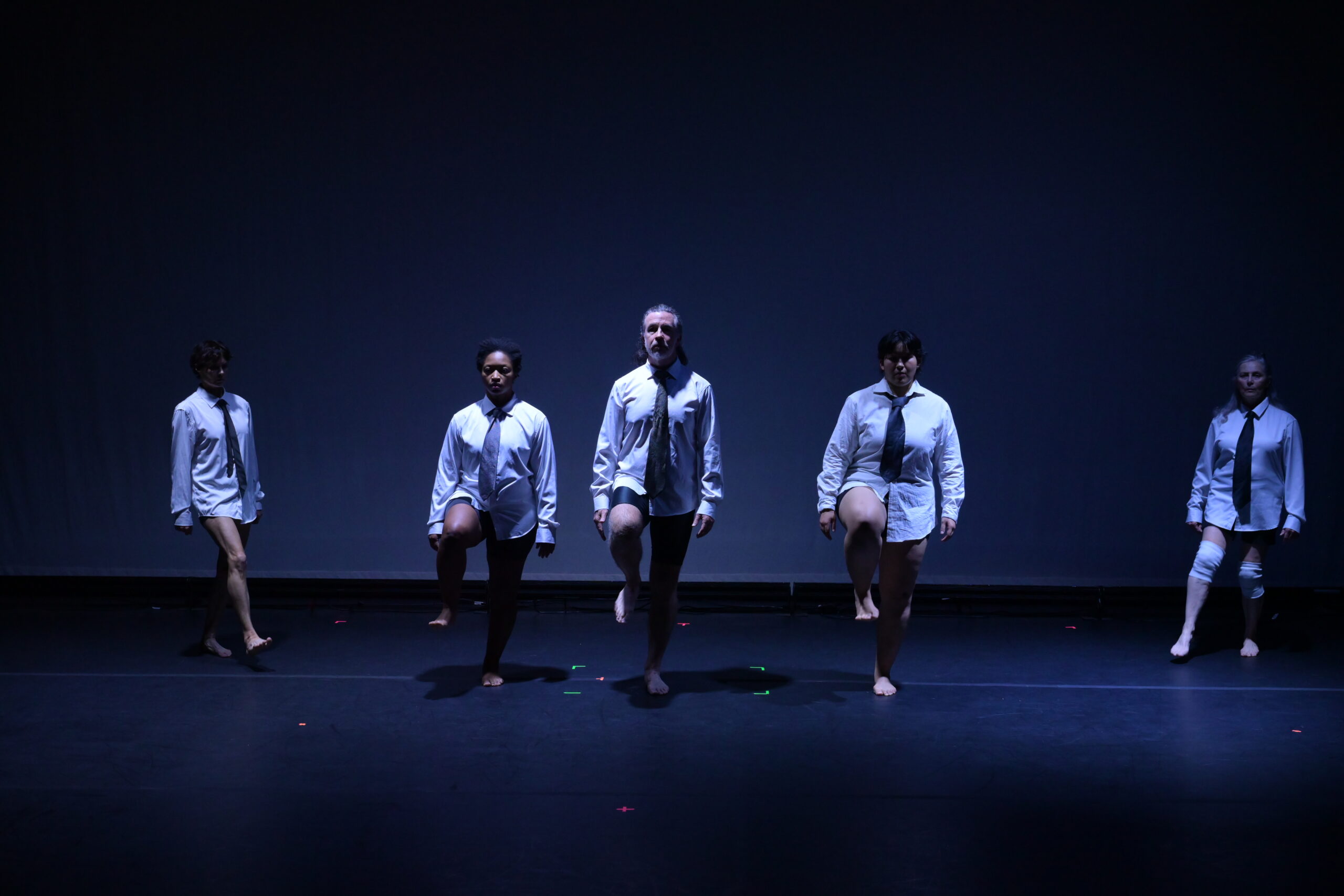
Another moment titled “Why Do I Only Hear You When You Scream?” dresses the dancers in white dress shirts and ties. The repeated movements suggest the daily activities of a working stiff: riding a commuter train, typing on a computer and participating in a frustrating, never-ending cycle set against a percussive soundtrack. Eventually, this culminates in a scream from Carelock, one of the most cathartic moments of the show.
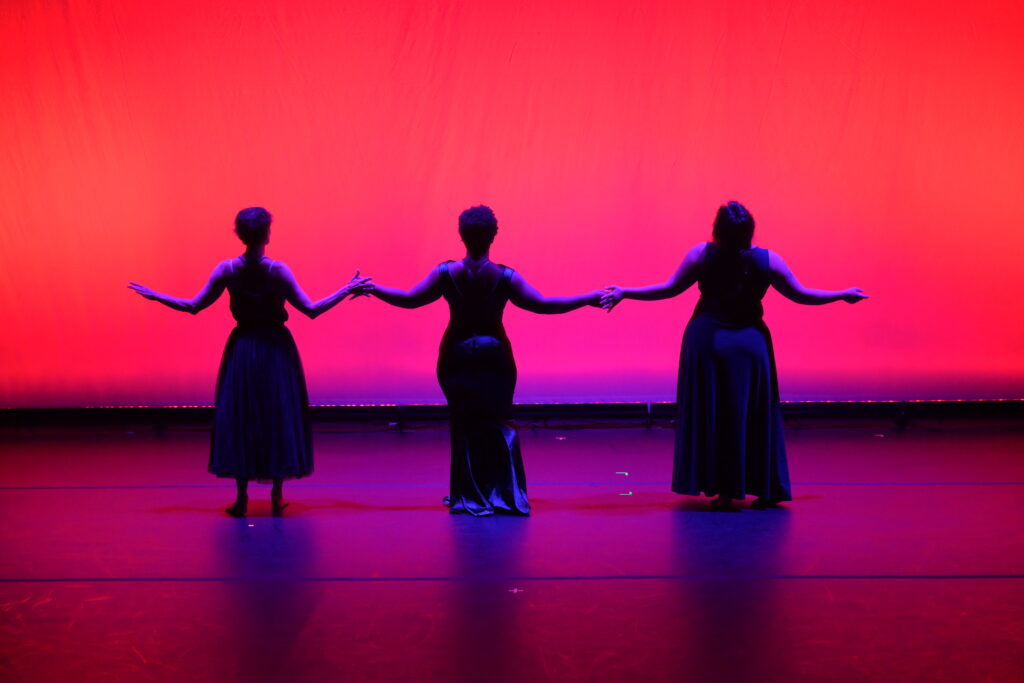
Among the performers, Carelock is a standout, her face expressive with emotion and her technique beautiful. Kelly and Bell’s opening dance is excellent, the two of them mirroring movement and attempting connection. The entire ensemble is strong.
The films starring Mulinix use minimal editing, often focusing on her face and hands as she seems to dance with the pictures created by her own shadow.
June’s poetry — drawn from her experiences as the descendant of immigrants from the Philippines, a trans woman and a parent — provides the most heartbreaking, compelling moments of the show for fans of storytelling and narrative. One of the longtime hosts of Write Club Atlanta, June has fantastic stage presence, particularly when she’s holding an electric guitar. Her perspective on gender and queerness is unique, and the conclusion she reaches at the close of the show provides something unexpected in these trying times for women, immigrants and trans people: a battered yet optimistic possibility of positivity and hope, leaving Hysteria on final notes of richness and depth.
::

Benjamin Carr is an ArtsATL editor-at-large who has contributed to the publication since 2019 and is a member of the American Theatre Critics Association, the Dramatists Guild, the Atlanta Press Club and the Horror Writers Association. His writing has been featured in podcasts for iHeartMedia, onstage as part of the Samuel French Off-Off Broadway Short Play Festival and online in The Guardian. His debut novel, Impacted, was published by The Story Plant.
STAY UP TO DATE ON ALL THINGS ArtsATL
Subscribe to our free weekly e-newsletter.

PLEASE SUPPORT ARTSATL
Your Gift Sustains the Coverage You Count On!
Related Posts