Review: “Alabama Story” illustrates the perils of book banning with comedy and cleverness
Georgia Ensemble Theatre’s latest production, Alabama Story, succeeds largely because of the charming performance of actress Shannon Eubanks and because of the unique anti-racism story the play takes from history.
Written by Kenneth Jones, the play doesn’t tell a story with the familiar focuses of abuse and trauma. Instead, Alabama Story tells a smaller tale about a children’s picture book on rabbits and how one librarian fights racists and conservative politicians in 1959 to keep the book on the shelves.
The tone of the production is familiar and comfortable. The characters depicted are mostly nice, polite Southerners who smile at each other when they pass on the street. Yet the politics of the play and the issues raised are still controversial and daring. It’s a shame this play might bother some crowds at Roswell Cultural Arts Center, where it runs through September 25. (There were a few walkouts and complaints at intermission during the opening night performance.) But its points about the ugly, insidious evil of racism are valuable messages.
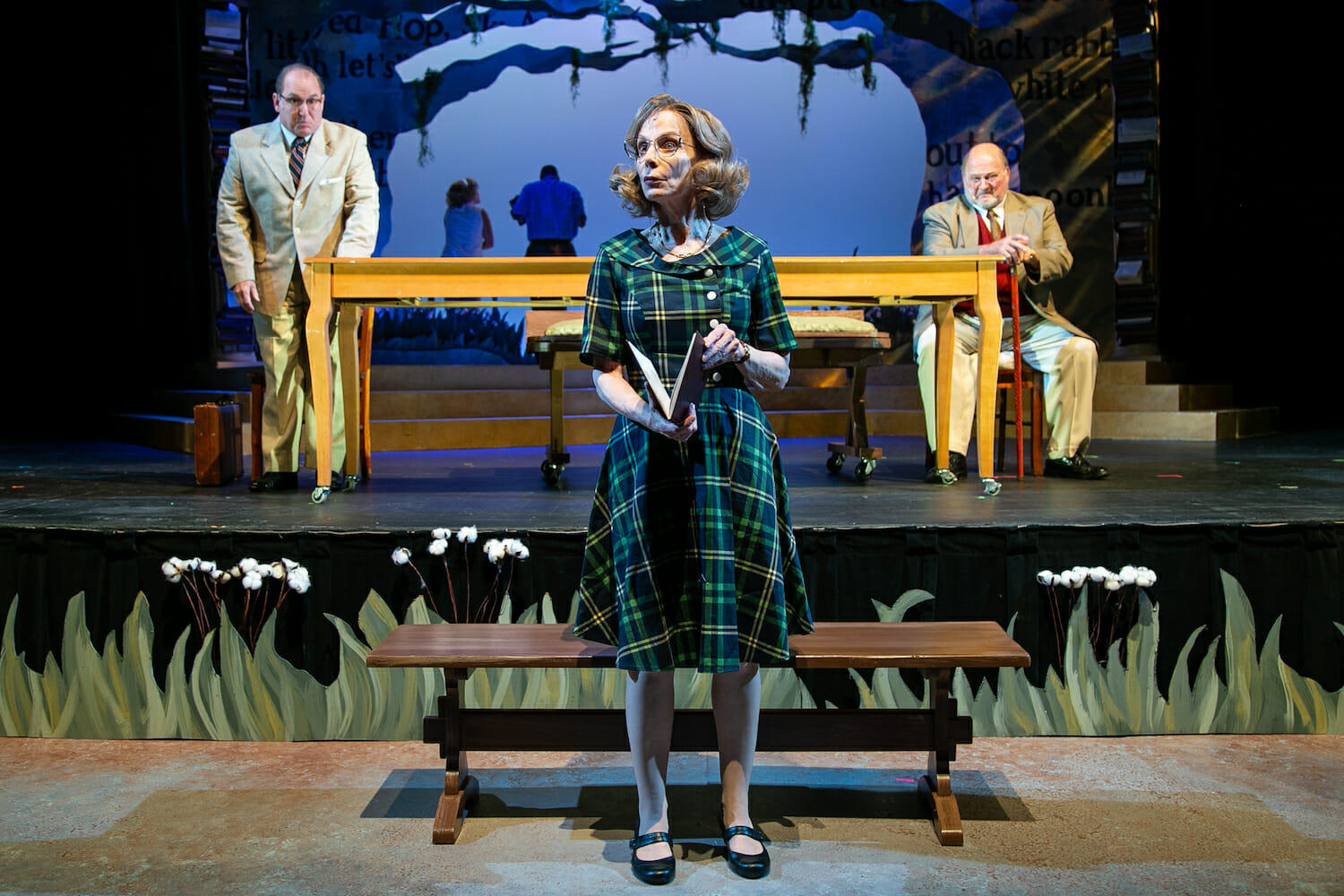
Hero librarian Emily Wheelock Reed, played by Eubanks, deserves a spotlight for knowing that free exchange of stories and ideas make the world a better place. Book bans are evil, and restrictions on what ideas our children receive don’t improve or inform society.
So why would adults object to a storybook about rabbits? Within the pages of Garth Williams’ The Rabbits’ Wedding, a fuzzy white bunny marries a fuzzy black bunny — which Alabama politicians suggested promoted racial integration to children.
In the play, Reed is a quiet, stubborn woman who selects books for libraries based upon recommended-reading lists and finds her life and livelihood threatened after Senator E.W. Higgins, played with villainous relish by an excellent Don Farrell, suggests banning The Rabbits’ Wedding throughout Alabama.
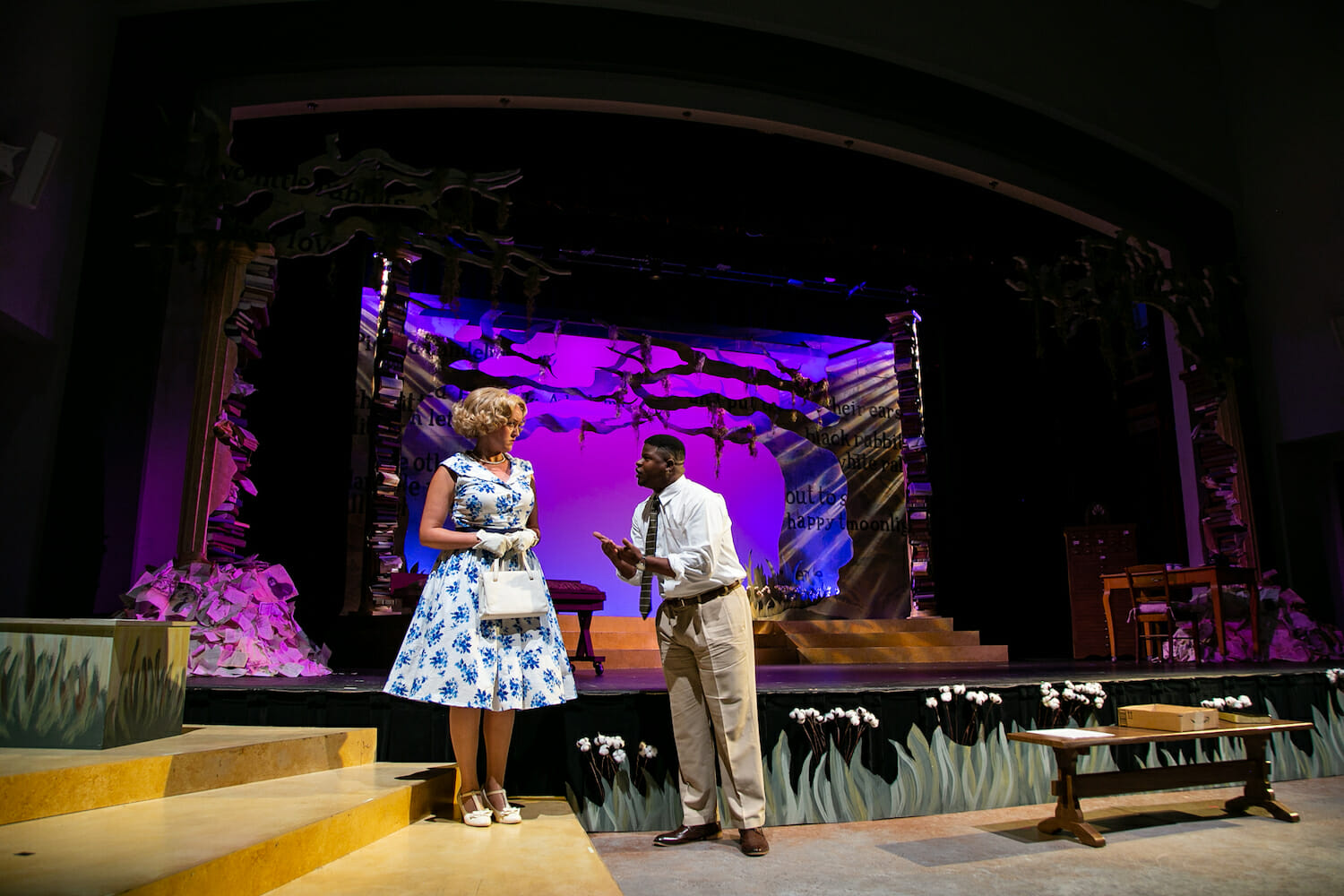
Meanwhile, a parallel story of a White woman named Lily (Emily Nedvidek) and a Black man named Joshua (Jontavious Johnson), who were friends as children and reunite in Montgomery, plays out during the controversy. Occasionally, their story, which has its own secrets and mysteries, takes on the charming elements of the picture book.
Yet, the central narrative of the librarian’s battle is much stronger than the subplot by design. This parallel story of old friends in a park exists to show us an actual interracial friendship and its power dynamics, presenting it as nothing to be particularly afraid of — even if it’s the sort of thing politicians fighting bunny books would fear the most.
The technical aspects of Alabama Story are particularly impressive. The set, designed by Isabel and Moriah Curley-Clay, looks like an enchanted forest, except there are words painted across the leaves and stacks of books that look like tree trunks. A hint of whimsical magic surrounds this story of government bureaucracy and reading lists.
Eubanks is a gifted longtime performer with perhaps the best comic timing in the state. Her remarkable voice seems to tremble with emotion at every delivered line, and she knows the effect of this instrument and plays it like a maestro. At one point, reflecting upon the deaths of her character’s parents, Eubanks places a pause before the end of every line, enriching the moment with feeling. During one monologue, she slowly makes her way across the steps onstage, owning the space and placing her character at a literal and emotional distance from others.
Perhaps Eubanks’ best moment comes when her assistant, Thomas, played by Justin Walker, instructs her on how to pronounce “Montgomery” like a native Alabamian instead of with her polished Midwestern delivery. Eubanks milks the scene for every hilarious note she can, covering her mouth in childlike shame as she dares to skip a syllable. She’s dynamite.
Walker, meanwhile, gives his character abundant warmth and charm, providing Eubanks’ character with a savvy local ally. The comic chemistry between Walker and Eubanks is terrific.
Rounding out the cast is Robert Wayne, playing multiple roles. But his most notable moments come when playing Garth Williams, who provides necessary context to his motivation for creating The Rabbits’ Wedding.
Director Thomas W. Jones II has created a solid, entertaining production, perhaps Georgia Ensemble Theatre’s best work of 2022. Like a Trojan horse, the script presents a 60-year-old situation in a pleasant veneer to the audience, then dares them to examine their feelings about its current ramifications. As a society, we should be much further along with tolerance and racial equality. Yet, Alabama Story shows us that there’s still a long way to go.
::
Benjamin Carr, a member of the American Theatre Critics Association, is an arts journalist and critic who has contributed to ArtsATL since 2019. His plays have been produced at The Vineyard Theatre in Manhattan, as part of the Samuel French Off-Off Broadway Short Play Festival, and the Center for Puppetry Arts. His novel Impacted was published by The Story Plant in 2021.
STAY UP TO DATE ON ALL THINGS ArtsATL
Subscribe to our free weekly e-newsletter.

PLEASE SUPPORT ARTSATL
Your Gift Sustains the Coverage You Count On!
Related Posts