

Prime film ‘Maxine’s Baby’ explores the Tyler Perry story and journey to Atlanta
One day in the early 1990s, a young, aspiring playwright and filmmaker put everything he owned into his Hyundai, left his home in New Orleans and drove to Atlanta to make his mark on the world. “New Orleans didn’t produce Tyler Perry,” his cousin Lucky Johnson said in Maxine’s Baby: The Tyler Perry Story, a forthcoming documentary from Amazon Studios. “Atlanta produced Tyler Perry.”
Today, Perry is a world-famous creator with a long list of credits to his name. From the runaway success of his Madea movie franchise to hit shows on OWN, BET and TBS, Perry has not just shaped the modern cinematic landscape — he’s revolutionized it. Like all creators, he also has an origin story, and tracing that story is a large part of what Maxine’s Baby sets out to do. The result is a tender, intimate and at times devastating account of Perry’s young life, recounting his traumatic childhood, his dogged determination to build a career as an artist and his close bond with his mother, Maxine.
“[Maxine] was the whole reason he did all these things,” said Armani Ortiz, who co-directed the documentary with Gelila Bekele. Both directors are close friends of Perry’s: Ortiz has directed episodes of several Tyler Perry TV productions, and Bekele is Perry’s former partner and the mother of his son, Aman. ArtsATL spoke with the directors in Atlanta while they were in town for a pre-release screener at Rialto Center for the Arts. The film will be released on Prime November 17.
Born Emmitt Perry Jr. in New Orleans in 1969, the boy who became Tyler Perry endured a harrowing early life, one that he nearly didn’t survive but which also profoundly shaped the work he produces today. His father was violently abusive, savagely beating Perry from the time he was small and terrorizing the family. The dangerous streets of New Orleans in the ’70s and ’80s were not a nurturing place for kids, but Perry found safety and love with his mother and aunts, who later inspired many of the female characters he created — especially his most famous, the hilarious and tenderhearted Mabel “Madea” Simmons.
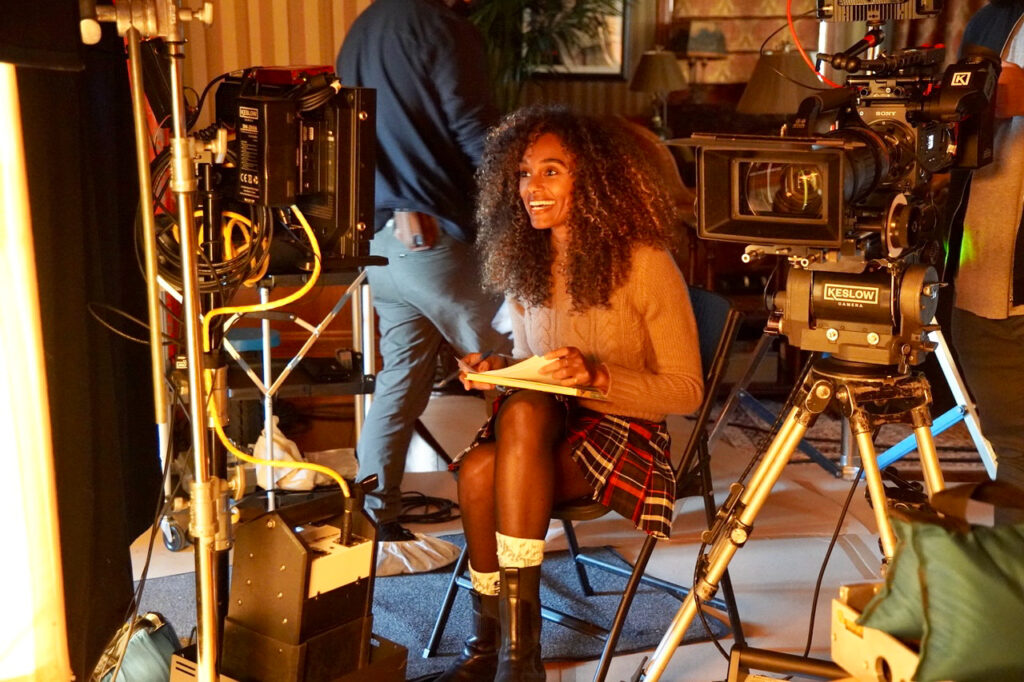
Ortiz and Bekele rely on a wide range of sources to tell the story of Perry’s life, from a star-studded selection of his collaborators and friends to archival footage of his early life and work. Those less familiar with Perry’s oeuvre may be surprised to learn that he got his start in theater, taking his early shows on the road and building a grassroots audience single-handedly. As early footage of the uproarious crowds at his first plays makes clear, audiences loved him from the start.
Then and now, those audiences are largely Black. Throughout his career, Perry has unapologetically made stories for, by and about Black Americans, and though many Hollywood power brokers were dismissive of his ideas — including the idea of marketing to Black audiences in the first place — the runaway popularity of his films is undeniable.
It makes sense that Atlanta, the Black mecca of the South, helped launch Perry into the stratosphere. “Like his cousin said, Atlanta really did produce Tyler,” Ortiz said. “He saw people thriving here where he didn’t think it could have been possible. I think it allowed him the canvas to dream a little bit bigger.”
Before his current, sprawling 300-acre film studio, Perry cycled through several studios in Atlanta, including a brief stint on Krog Street. Local viewers of the documentary will enjoy the “remember when” footage of what’s now the busy Beltline intersection at Krog Street Market, back when it was the abandoned Atlanta Stove Works, and Perry was trying to figure out how to turn it into sound stages.
That plan failed, but Perry eventually made good in 2014, purchasing the former Confederate Army base Fort McPherson in Southwest Atlanta and building one of the biggest production facilities in the country — Tyler Perry Studios. He named the 12 sound stages after some of America’s most legendary Black actors, including Sidney Poitier, who officially inaugurated the complex at a celebrity-packed opening gala in 2019. Hearing the story of Poitier’s reaction to that moment is reason enough to see the film.
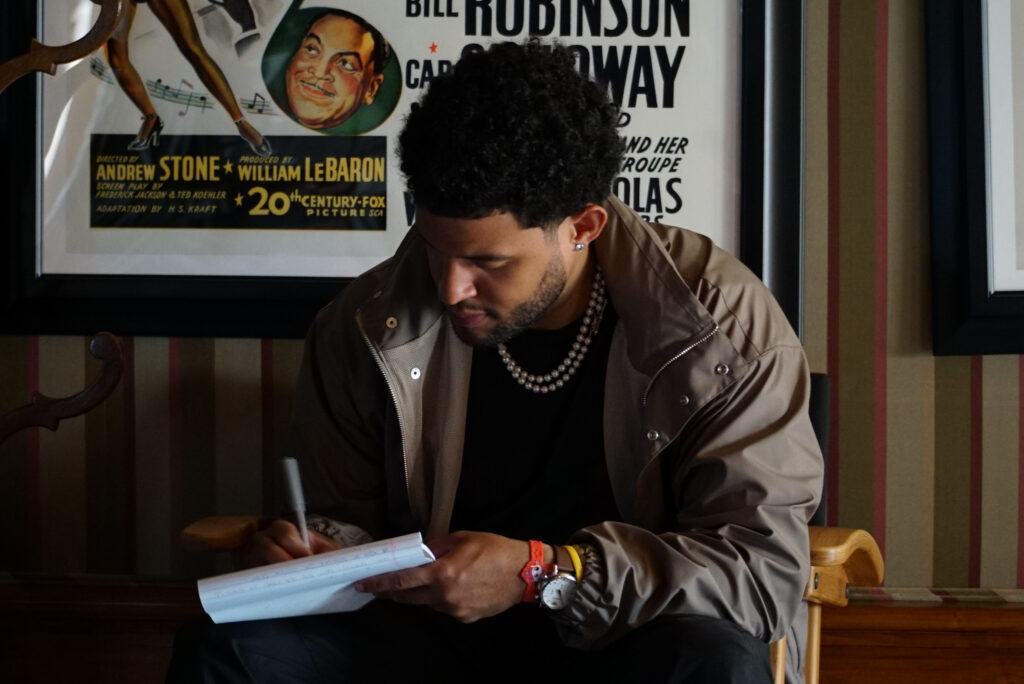
Perry’s mother, Willie Maxine Perry, passed away after a lengthy illness in 2009. She lived long enough to see her beloved son rise to stardom, and Perry has spoken openly about the influence she had on his life and his work even long after her death. To tell the story of their relationship, Ortiz and Bekele unearthed never-published footage from Perry’s earliest years, as well as recordings of his mother speaking about her son.
“We asked for forgiveness, not permission,” Ortiz said with a laugh, explaining how he and Bekele sifted through materials Perry had stored in a safe in the studio to include in the documentary. Hearing his mother’s voice come alive through the film was a powerful moment for Perry. “That really hit home for him,” Ortiz said.
Maxine’s Baby originally began as an archival project to document Perry’s transformation of Fort McPherson, but, over time, Bekele and Ortiz realized the film had something much larger to say. Yet, trying to tell the story of the artist was a daunting proposition, Bekele admitted. “How do you paint a painter? How do you make a film about a person who’s done it all?”
It wasn’t until Perry saw the film and they witnessed his reaction that they felt they’d done what they set out to do. “I think he understood that the [film] wasn’t just about the accolades and being a mogul,” Bekele said. “It was really about the origin of this human story — about his heart, about his mom.”
::
Rachel Garbus is a writer, editor and oral history maker in Atlanta. She’s a contributor at Atlanta magazine and the editor-in-chief of print for WUSSY Mag, which covers queer culture with a Southern lens. She performs improv and sketch comedy around town and has been known to pen the odd satire. She lives in North Druid Hills with her wife and her anxious dog.
STAY UP TO DATE ON ALL THINGS ArtsATL
Subscribe to our free weekly e-newsletter.

