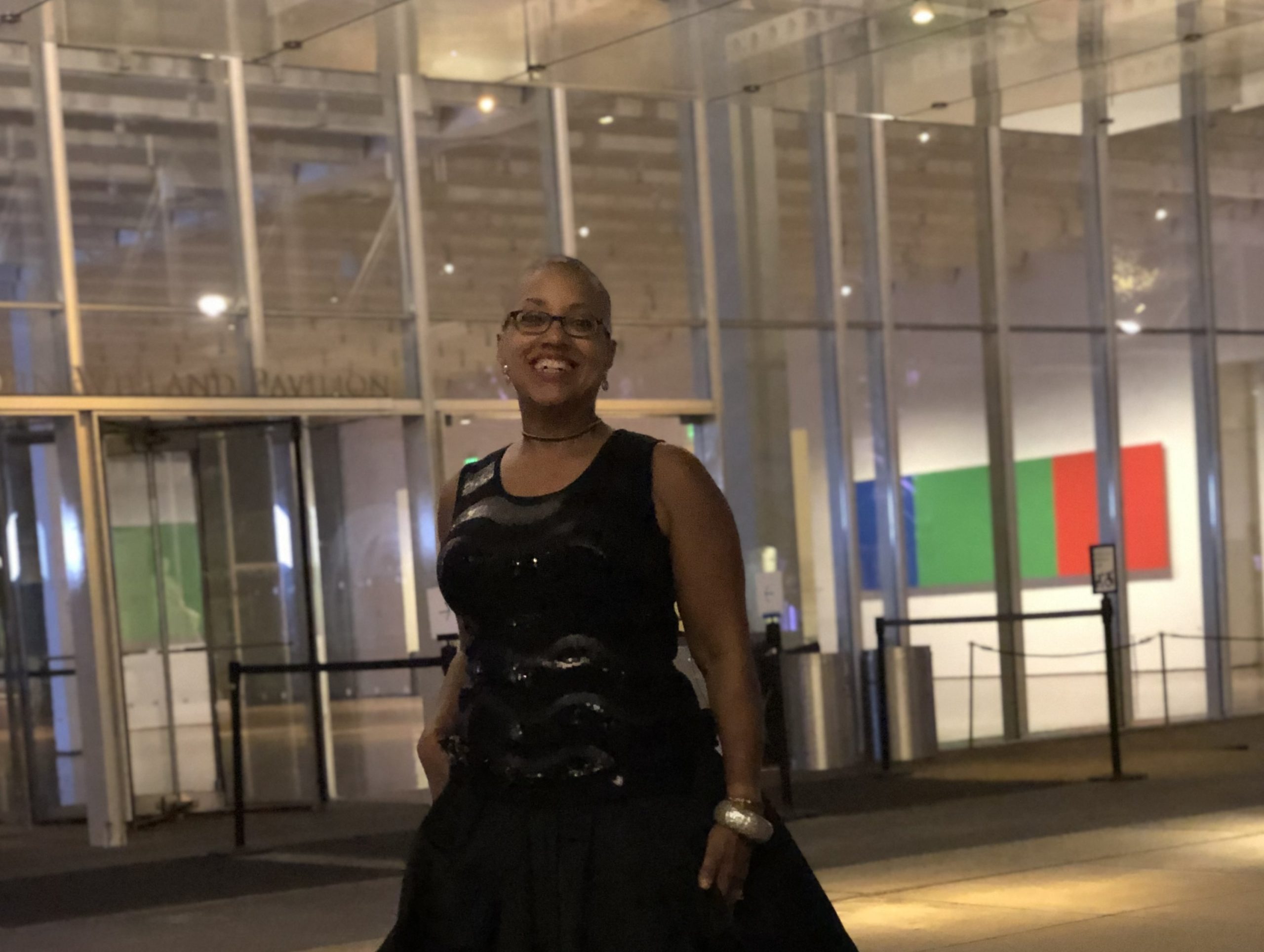
Managing director Chandra Stephens-Albright retires from True Colors confident in its future
Chandra Stephens-Albright is neck-deep in budgets as the fiscal year turns over. Before retirement arrives — for real this time, she says — she has one more board meeting and enough deadlines to fill her calendar until the last minute of her tenure. But at 5 p.m. on July 31, she’ll do something she hasn’t done in nearly a decade: “I tell everybody my plans are to forget what day of the week it is.”
It’s a fitting end to a chapter she never expected to write.

Since 2017, Stephens-Albright has served as managing director of Kenny Leon’s True Colors Theatre Company, helping guide one of Atlanta’s most influential Black theater institutions through artistic expansion, national recognition and the unprecedented uncertainty of the Covid-19 pandemic. Before that, she spent 22 years in another Atlanta institution: The Coca-Cola Company. The journey between the two wasn’t planned. It began during one of the hardest weeks of her life in 2013.
The Emory University graduate majored in chemistry with a minor in art history and built her corporate career in Coca-Cola’s Research and Development division “with the innovation guys,” she says. She had always been drawn to the intersection of art and science. Then came the company’s restructuring.
“Monday, I found out my job was eliminated, and Thursday, my dad died,” she says. Her father had battled illness for two years. Around the same time, she was approaching her 50th birthday.
“So that was just like” — she searches for the words — “I was like, ‘I’m done. I can’t.’”
After some time, friends encouraged her to explore nonprofit work. Stephens-Albright was working in youth development when another unexpected opportunity arrived: Kenny Leon was looking for a managing director.
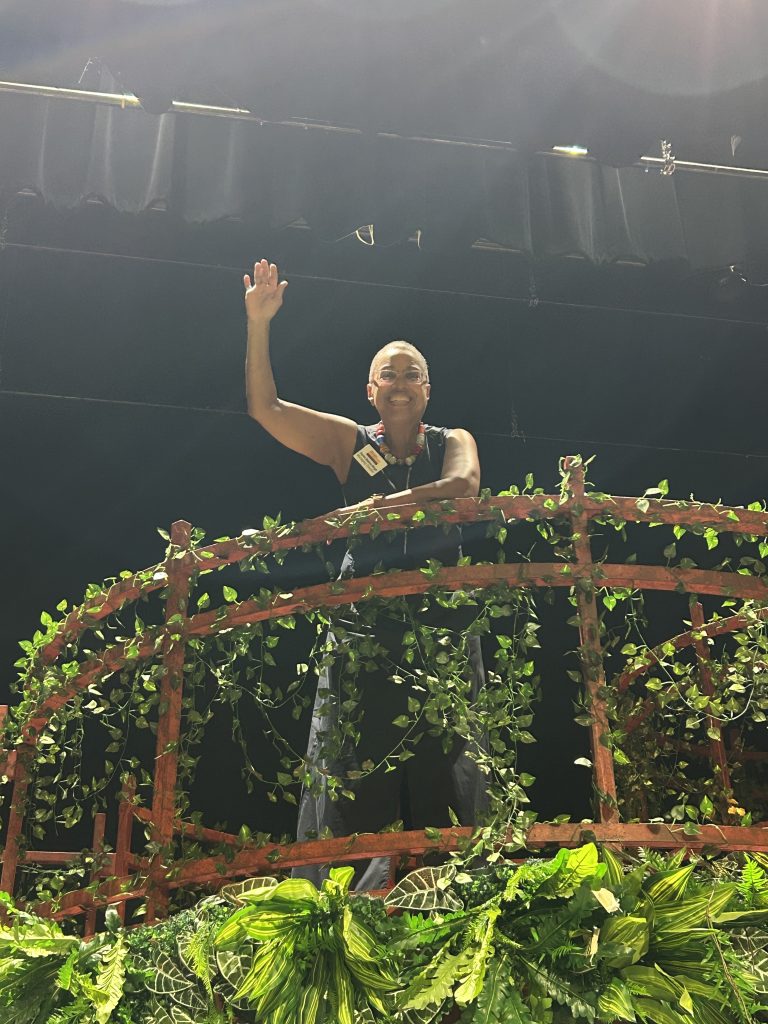
“He had confidence in me; he trusted me to do it; and that really meant a lot to me,” she says.
The two didn’t know each other well, but both were members of Cascade United Methodist Church where Leon had noticed her executive instincts. The timing carried a familiar symmetry.
“Monday I met with Kenny. Thursday I had a job,” she says.
It was quite a leap from Coca-Cola, but Stephens-Albright wasn’t a stranger to the arts. Growing up in Atlanta, she played piano and violin until college. Her parents and sister were deeply connected to Jomandi Productions, the groundbreaking Black theater company which grew out of the Neighborhood Arts Center, one of the pillars of the city’s Black Arts Movement.
While her sister loved drama, Stephens-Albright was mesmerized by the methods behind the curtain. Many years ago, Lisa Watson, now True Colors’ production manager, would invite her into the tech booth during Jomandi performances. Then in her 30s, Stephens-Albright watched cues transform the stage in real time, and those moments unlocked something for her. And watching strangers become an ensemble over weeks of rehearsal never stopped feeling like a miracle. She also admired the attentiveness of the actors and crew.
“They’re really there — they’re not on the surface,” she says.
As the managing director, Stephens-Albright brought a corporate systems approach to True Colors’ artistic energy. That proved crucial when the pandemic caused stage closures nationwide, and she relied on her past resilience to keep the company from panic.
“When we got to a position where we thought the bottom could fall out, I thought, ‘Oh, no. It’s OK. I’ve had a bottom fall out before,’’’ she says. “‘And here’s what we did to still be alive.”

Today, she’s especially proud of True Colors’ growing national profile under her leadership alongside Artistic Director Jamil Jude, from new play commissions to expanded educational initiatives and national grants.
And she’s proud of the company’s artistic vision. After a three-year Sankofa cycle leading into its 20th anniversary, True Colors launched its current programming arc, Blackness is Not a Monolith, which continues through 2027.
“For these three years,” Stephens-Albright says, “we’re programming shows about the breadth and depth and beauty of Blackness from an African Diaspora perspective.”
But beyond representation, this programming era is about stewardship and validation. In a moment when Black history and culture face increasing attempts at erasure and simplification, True Colors is asserting that Black stories belong to Black storytellers and that the Diaspora is far too expansive to fit into a single narrative.
“Black doesn’t only mean African-American, Christian, straight,” she says. “It also means African, Caribbean, Afro-Latino, queer, Muslim — it’s everybody. Black is everywhere. Black is everything.”
As her final day approaches, Stephens-Albright leaves True Colors stronger and more secure. Her ultimate hope is that the individual donor base grows and continues to back the work that keeps live theater going.
And she is looking forward to seeing that growth and seeing the rest of that arc unfold from the audience side of the stage.
::

Angela Oliver is a proud native of old Atlanta who grew up in the West End. A Western Kentucky University journalism and Black studies grad, daily news survivor and member of Delta Sigma Theta, she works in the grassroots nonprofit world while daydreaming about seeing her scripts come alive on the big screen.
STAY UP TO DATE ON ALL THINGS ArtsATL
Subscribe to our free weekly e-newsletter.

PLEASE SUPPORT ARTSATL
Your Gift Sustains the Coverage You Count On!
Related Posts