Jennie T. Anderson’s “Next to Normal” sheds light on mental illness
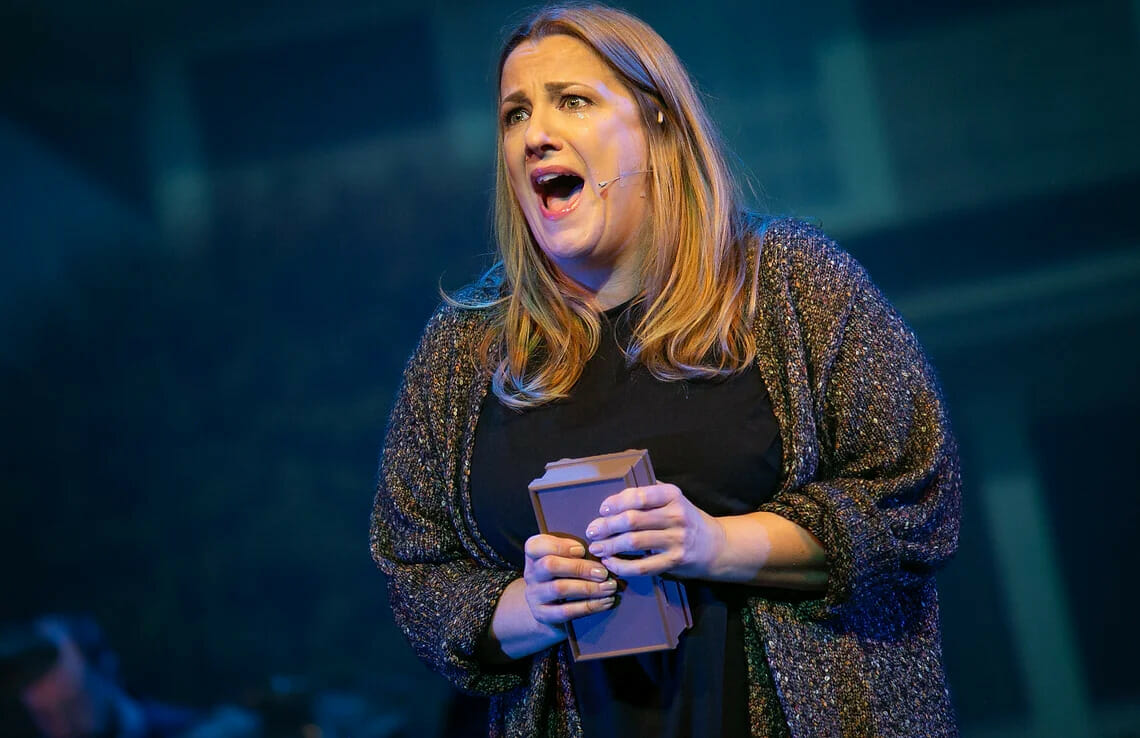
“Our health-care system in America is broken. Period, full stop,” says Amanda Wansa Morgan, director of Jennie T. Anderson Theatre’s acclaimed production of the Tom Kitt and Brian Yorkey musical, Next to Normal, onstage at Jennie T. Anderson Theatre February 16 through 26. Morgan is referring specifically to the institution of mental-health care, but really, she is zeroing in on just one way in which discussions around mental health have changed since Next to Normal first opened on Broadway in 2009. Even more relevant now than it was then, the show continues to encourage difficult conversations about the way we view mental illness in our society and the struggle of maintaining hope in the face of overwhelming illness.
This production by Jennie T. Anderson Theatre originally opened in July 2022 and is now returning after popular audience demand, with the entire creative team and most of the original cast reprising their roles. The musical focuses on the collective efforts of the Goodman family to cope with mother and wife Diana’s diagnosis of bipolar disorder. Next to Normal won the Pulitzer Prize for Drama in 2010, one of only 10 musicals in history to do so, and has been lauded by critics and audiences for its unflinchingly honest portrayal of mental illness.
Mental-health discourse has shifted considerably since the show originally opened on Broadway. One of the first things that Amanda Wansa Morgan confesses is that her direction is inspired by her own experiences with loved ones who have struggled with mental illness, and yet prior to the Broadway opening of Next to Normal, she was reticent to talk about it openly. “When I saw the show on Broadway, originally, mental health and mental illness were not spoken about the same way. It was still kind of like a little secret everybody wanted to keep. Even though everyone had somebody in their life who was personally touched by it, everyone was still keeping it a secret — myself included! You just didn’t talk about it.”

This sentiment is echoed by many members of the cast who chimed in to add that they too have had family members, close friends or partners who have grappled with mental illness — or that they have dealt with it themselves. However, performing Next to Normal has afforded them the chance to discuss these experiences in a more open way and even commiserate with others who have felt similarly stifled. Morgan even recounts an experience in which a man drove from out of state to see the show during its original run because he felt so moved by the subject matter, and conversed with her after the show about how mental illness has impacted his life.
Morgan hopes the show can continue to not only encourage conversation about mental illness, but begin to normalize it so that those who struggle with it do not feel so alienated. “There’s so much conversation around mental health and mental illness. I think it’s even more resonant now, because people are seeing themselves and they’re seeing themselves in this story — and it’s OK. And that’s kind of the message: It’s OK. It’s OK to feel this way. It’s natural. This is the most human thing to have a mental illness or struggle with mental health. Everyone is susceptible and capable of the fragility that it witnessed in this show.”
Next to Normal makes a particular point of highlighting how someone’s mental illness may also impact their loved ones, as emphasized by Golbanoo Setayesh, who plays Natalie, Diana’s neurotic, exasperated teenage daughter. She details a moment in which Dan, Diana’s husband and Natalie’s father, tries and fails to assure Natalie that Diana will come through her new treatment: “I think it shows this really cool point of view where Dan, as a father, doesn’t really know if things are gonna be OK; he doesn’t know if things are gonna be fine, and that’s really all that Natalie wants is some sense of comfort that she’s really desperately searching for but hasn’t felt much ever from her mom.”
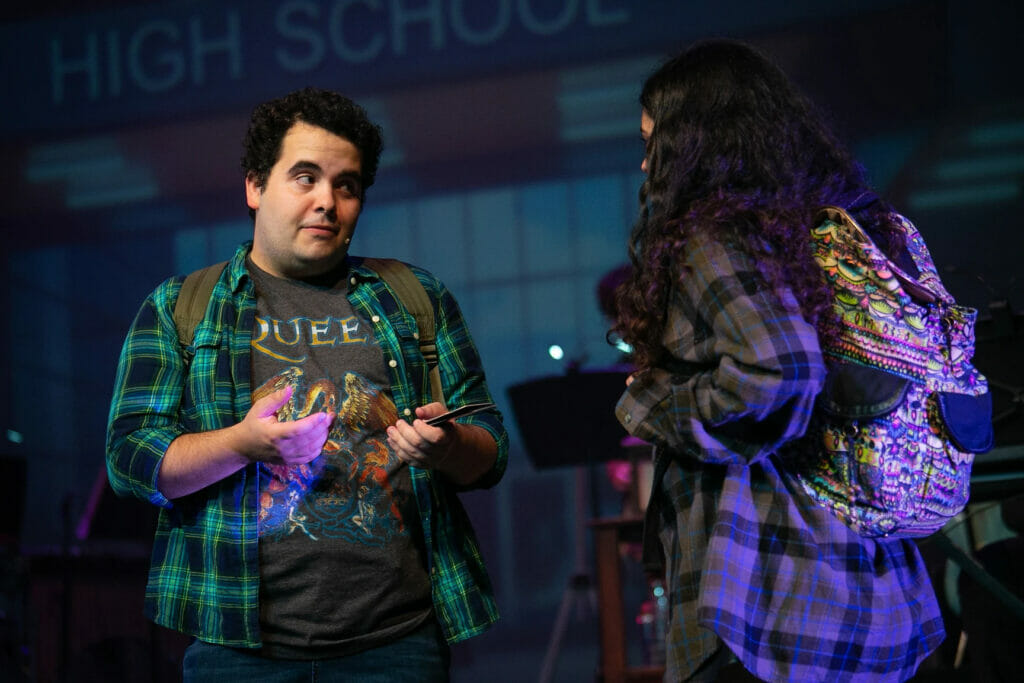
Showcasing how Diana’s mental illness affects her family, while maintaining a focus on Diana’s own happiness, helps to emphasize the interconnected nature of relationships. Diana’s struggles are her own, and they are unlike those of her family, and yet her family’s struggles compound hers and vice versa. “I think that’s a struggle that a lot of children, specifically a lot of daughters, experience in our world.”
Morgan makes note of the difference between mental illness and issues with mental health, two terms that are so often conflated. “Mental health and mental illness are two different things. Mental illness is something that someone can be diagnosed with and manage for their entire life, just like an underlying disease, versus mental health which is our temporary state that we exist in. So one could be grappling with mental illness but be in a good state of mental health for a particular amount of time, or vice versa.”

As this production is a remount, it affords certain opportunities to reevaluate things that did not work as well during the initial run, as well as take advantage of new opportunities for how the story might take shape. For example, the pandemic has highlighted many of the flaws in the health-care system, and Next to Normal presciently touches on how those problems manifest in mental-health treatment. This production casts Kayce Denise in the dual role of Diana’s doctors, a role that is usually played by a man, to emphasize Diana’s misplaced attraction to him. Denise is the only member of the cast who was not part of the show’s initial run last year, and Morgan hopes that casting a woman in the role will create a dynamic in which Diana seeks comfort from a seemingly all-knowing professional who is just as entrenched in the faulty system as Diana herself.
The most long-lasting works of theater not only speak to the time in which they were written but to more timeless truths that can be applied even after the world has undergone significant changes. Next to Normal is one such show that highlights how far we’ve come in our understanding of mental illness and reveals how far we still have to go. In the wake of a pandemic that has had significant impacts on the world’s mental health and opened our eyes to unseemly truths about the systems we have in place, it’s more important than ever that mental health and mental illness remain relevant topics. The cast and the creative team at Jennie T. Anderson comprehends this importance, as well as the power of recognizing issues that were once so often hushed.
::
Luke Evans is an Atlanta-based writer, critic and dramaturg. He covers theater for ArtsATL and Broadway World Atlanta and has worked with theaters such as the Alliance, Actor’s Express, Out Front Theatre and Woodstock Arts. He’s a graduate of Oglethorpe University, where he earned his bachelor’s degree, and the University of Houston, where he earned his master’s.
STAY UP TO DATE ON ALL THINGS ArtsATL
Subscribe to our free weekly e-newsletter.

PLEASE SUPPORT ARTSATL
Your Gift Sustains the Coverage You Count On!
Related Posts